CCSD code G5100: Bypass of duodenum billing guide
CCSD code G5100 bills a bypass that leaves the duodenum in place CCSD code G5100...

Last Updated: Oct 16, 2026
G0283 is the HCPCS Level II code for electrical stimulation (unattended), to one or more areas for indication(s) other than wound care, as part of a therapy plan of care.
The clinical side of that is simple. The billing side is where practices lose money. One modality carries two different codes, and the right one depends entirely on who is paying. Send Medicare the CPT version and the line comes back denied.
Two facts drive everything else about this code. It is untimed, and it is unattended. Get those straight and the units, the modifiers, and the documentation all fall into place.
Let Pabau's smart automation suggest the right codes, reduce claim denials, and keep your practice compliant—effortlessly.
Automate repetitive tasks and focus on what matters most—your patients.
Reduce coding errors and ensure compliance with the latest regulations.
Clean claims, fewer denials, and faster reimbursements.
Powerful insights and reporting to help your practice thrive.
HIPAA compliant SOC 2 certified GDPR-compliant Trusted by 4,000+ clinics worldwide

HCPCS code G0283 covers unattended electrical stimulation for anything other than wound care under Medicare Part B.
Medicare rejects CPT code 97014 for this service, while most commercial plans still expect it.
G0283 pays as one untimed unit per day per discipline, however many areas you treat.
Facility and office rates are identical in 2026, roughly $12.69 before your locality adjustment.
Practice management software like Pabau pre-fills the claim from the record and checks required fields before you send it.
G0283 is a permanent Level II HCPCS code maintained by CMS. Its official long description runs as follows. Electrical stimulation (unattended), to one or more areas, for indications other than wound care, as part of a therapy plan of care.
Three conditions have to hold before you can bill it:
When the therapist stays with the patient and delivers current one-on-one, the service becomes CPT code 97032 instead. That one is timed and bills in 15-minute units, so the two are never interchangeable.
G0283 is untimed, so it bills as a single unit per day per discipline. Two areas is still one unit. Twenty minutes and forty minutes bill exactly the same way.
Because the code is untimed, it also sits outside the 8-minute rule. There is no threshold to reach and no minutes to total on the claim line. Your note still records the areas treated, the parameters used, and how the patient responded.
Supervision level is a separate axis from timing. Unattended delivery is written into the G0283 descriptor, while a stress echo reported as 93351 bundles physician supervision, tracing, and interpretation into one code.
Medicare requires G0283. Most commercial payers want 97014. The service on the treatment table is identical, which is exactly why the mistake is so easy to make.
The two codes cannot share a claim for the same date of service. Put both on there and an edit fires, which usually denies one line and sometimes both.
Medicare pays roughly $12.69 for G0283 nationally in 2026, and the setting makes no difference to that figure. Facility and non-facility relative value units are identical for this code, so there is no site-of-service payment differential to plan around.
That national figure is a starting point, not your payment. The Geographic Practice Cost Index, known as the GPCI, adjusts it for your locality. Practices in California, New York, and Massachusetts see more per claim, and rural localities see less.
Verify the current amount for your own locality with the CMS fee schedule tool before you build it into a forecast. Rates move every year with the fee schedule final rule, and this code has no cushion in it.
Run a fee schedule audit every January. Pull your top 10 HCPCS and CPT codes through the CMS lookup tool and compare the new rates against your charge master. For G0283, check that your fee still clears the Medicare amount by enough to cover the cost of billing the line at all.
Without a signed, current therapy plan of care, a G0283 claim has no basis for payment. The descriptor itself makes the plan a condition of the code, which is why reviewers go looking for it first.
Medicare and its contractors audit after payment, so the record has to be complete on the day of service. Nothing you write after a denial arrives will carry the same weight. Here is what a clean G0283 chart holds:
Medical necessity is where most charts thin out. A shoulder that fails Neer’s test and cannot reach a top shelf is an impairment a reviewer can follow. The claim’s diagnosis then has to match that story, whether the injury is acute or a sequela coded like sequela coded like S43.121S.
Component checklists work the same way elsewhere in the fee schedule. A transthoracic echocardiogram billed as 93307 has to document every required view, or it drops to a limited study.
Capturing all of this is far easier at the front of the visit than at the end of the month. Digital intake forms put the plan’s required fields in front of the clinician. A structured physical therapy intake form does the same while the patient is still in the room.

A physician or non-physician practitioner has to certify the initial plan within 30 days of the evaluation that produced it. After that, the plan needs recertification at least every 90 days for the episode to keep billing.
Recertification goes down easier when there is something concrete to compare. An evaluation code like 97161 sets the baseline, and a repeat functional status questionnaire shows whether the patient has moved since.
Calendar windows govern other code families too. Remote loop recorder monitoring reported as 93298 covers a 30-day period, and the claim waits until that period closes.
Medicare wants GP, GO, or GN on every outpatient therapy line, and G0283 is no exception. The modifier tells the contractor which discipline delivered the care. Leave it off and the line denies, which makes this the most preventable denial on the list.
For most physical therapy practices, GP goes on virtually every G0283 line. Assistants change that picture. When a PTA or an OTA furnishes the service, CQ or CO joins the discipline modifier. Medicare then pays that line at 85% of the fee schedule amount.
The hard therapy cap disappeared in 2018 under the Bipartisan Budget Act, so the old cap language is out of date. What remains is the KX modifier threshold.
For 2026 it sits at $2,480 for physical therapy and speech-language pathology combined, with the same amount again for occupational therapy.
Once a patient’s year-to-date therapy total passes that figure, KX goes on the line to attest that the care is still medically necessary.
A separate targeted medical review threshold of $3,000 also applies, and claims above it may be selected for review. The CMS therapy services page publishes both figures each year.
Modifier 59 is the one to use sparingly. It belongs on a genuinely separate service, not on a line you are trying to push through an edit. The AAPC HCPCS lookup shows the bundling edits that tell you which situation you are in.
Standalone billing is another line the edits police. Doppler work reported as 93320 is an add-on that pays only alongside the base echocardiogram, whereas G0283 stands on its own line.
The code is easy. The handoffs around it are where claims fall over. A clean G0283 line travels through seven steps, and every one of them is a place where something can go missing.
Step three is the one practices underestimate. A note written two days later tends to lose the detail that justified the modality, and that detail is what an auditor reads.
The wider mechanics of physical therapy billing follow the same pattern, so fixing the habit pays off across every code you bill.
G0283 denials cluster around a short list of repeat offenders. None of them are clinical. Each one is a workflow problem you can close off before the claim leaves the building.
Reading the remittance properly is half the job. Two lines can deny for very different reasons behind similar wording, so map your denial codes to a fix once, then reuse it. Steady denial management beats reworking claims one at a time.
Report content drives a share of denials in every specialty. A transesophageal study billed as 93312 needs the probe placement, the image acquisition, and the written interpretation in one record.
At roughly $12.69 a unit, one denied G0283 line will never reach the $200 needed for an Administrative Law Judge hearing.
Medicare lets you combine claims to reach that amount. That is why practices batch these denials by reason instead of appealing them one by one.
Medicare’s appeal process runs to five levels, and most correctable denials end at the first or second.
Those windows close quietly. Automated workflows that timestamp each denial and count down to the filing deadline stop claims aging out while someone means to get to them.
G0283 sits in a small cluster of stimulation codes, and two questions separate them. Was the clinician in constant attendance, and was the target a wound?
Wound care is the split that trips people up. G0281 covers unattended stimulation on specific chronic ulcers that have not healed after 30 days of standard treatment.
G0282 picks up the other wound-care indications. G0283 excludes wound care outright, so the therapeutic goal in your note is what decides the code.
Sibling codes elsewhere split on who performed the work rather than on the treatment goal. Stress echocardiography reported as 93350 covers the imaging alone when another physician supervises the stress portion.
Confirm each of these codes is still active at the start of every year. The CMS annual code list is the source for that, and most billing systems will not warn you when a code retires.
Build a one-page code card for the treatment room. Put G0283, G0281, G0282, 97014, and 97032 side by side. Next to each, note only the deciding factor. Attended or unattended, wound or not, Medicare or commercial. A laminated card at each workstation stops most wrong-code submissions before they start.
Picture a Friday afternoon. A biller is working through 50 claims, and the patient on line 12 is Medicare while the last five were commercial. Nothing on screen says so. That is how 97014 ends up on a Medicare claim, and no amount of coding knowledge prevents it.
Practice management software like Pabau works from the record instead of from memory. The code attached to the service lands on the charge line, and the diagnosis pulls from the client’s recorded problem list. ICD-10 and CPT or HCPCS lookup libraries sit behind a search icon, so a biller can check a descriptor without leaving the claim.
Required claim fields also have to be complete before the send button unlocks, which is what stops half-built claims reaching a payer. Claims management software then submits through the clearinghouse for your region, and returns eligibility checks, claim status, and remittance posting to the same screen.
The payoff is that documentation and billing stop living apart. Whether the practice runs on physical therapy EMR or occupational therapy software, everything lands in one record. The plan of care, the visit note, and the claim are all there when a reviewer asks.
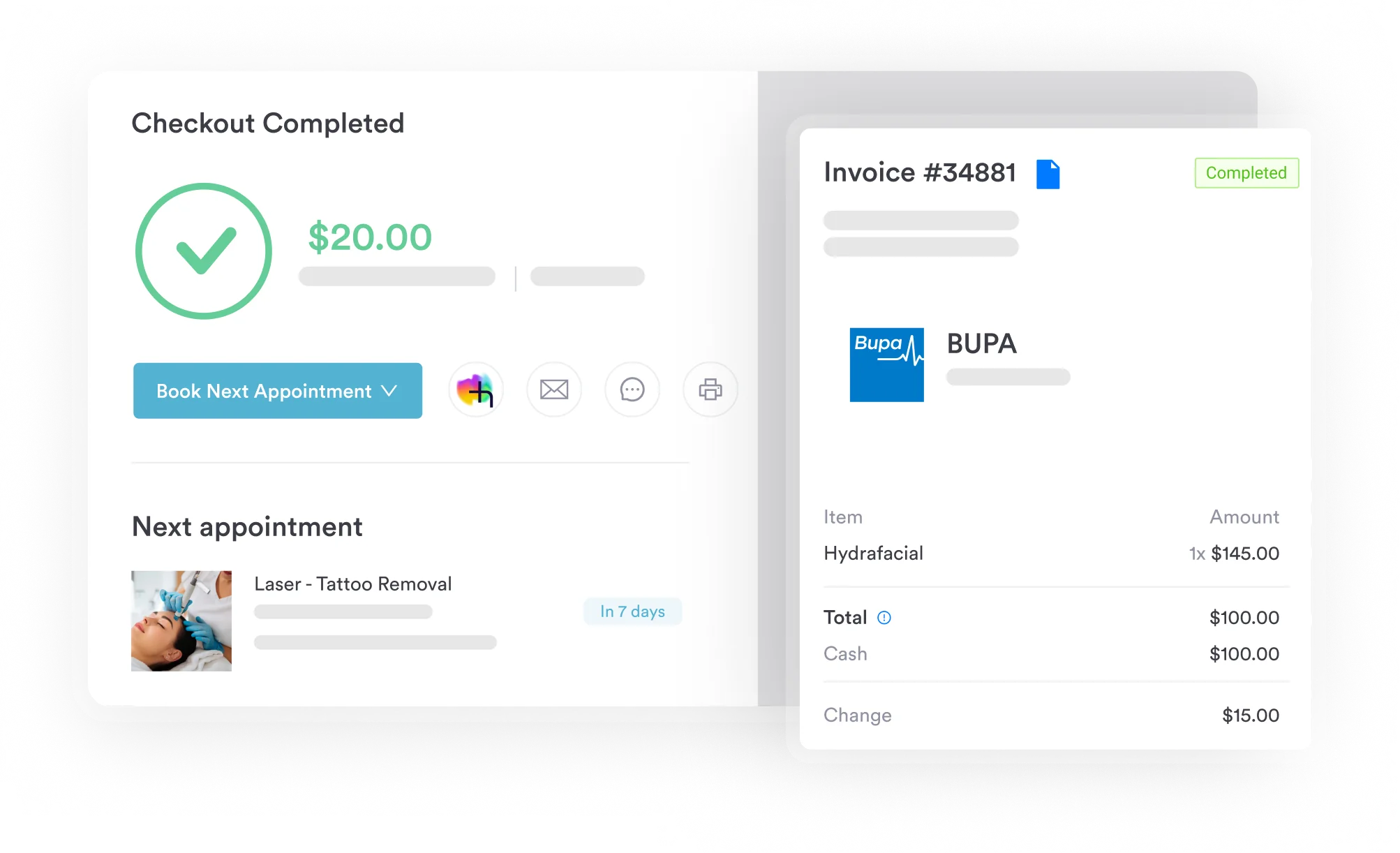

Pabau pre-fills claims from the client record, checks required fields before submission, and keeps the plan of care beside the charge. See how it works for a therapy practice.

G0283 is a simple code with three rules attached. Medicare gets it instead of 97014. It bills as one untimed unit a day, and every line needs a discipline modifier plus a signed plan of care. Nearly every denial it produces traces back to one of the three.
The economics are what should shape your process. At roughly $12.69 a unit, no single line is worth an appeal. The controls belong ahead of submission, well before anything reaches your denials queue. Fix the claim template and the plan-of-care check once, and this code stops costing you money to bill.
Would you rather keep the plan of care, the visit note, and the claim in one place? Book a demo to see how Pabau handles therapy billing from evaluation through to remittance.

Billing electrical stimulation for a wound instead? G0281 sets out the coverage rules for chronic ulcers that have not healed after 30 days.
Treating patients on commercial plans? 97014 covers the CPT side of unattended stimulation, including the documentation commercial payers expect.
Billing a Vyvgart infusion claim? Efgartigimod alfa injection billing guide explains why the IV and subcutaneous Vyvgart formulas need separate codes on a claim.
Billing a Vyvgart Hytrulo injection? Vyvgart Hytrulo billing guide covers the subcutaneous myasthenia gravis biologic and the unit rule its claim needs.
Billing the evaluation that starts the episode? 97161 covers the low-complexity physical therapy evaluation and what the note has to show.
No. Medicare’s chiropractic benefit covers manual manipulation of the spine only, so electrical stimulation in a chiropractic office is statutorily excluded. Bill the patient directly, or append modifier GY when you need a formal denial for a secondary payer.
No. A home unit is durable medical equipment and bills on its own supply codes through the DME contractor. G0283 only covers stimulation delivered in your practice as part of the therapy plan of care.
G0281 or G0282, never G0283. G0281 applies to specific chronic ulcers that have not healed after 30 days of standard care. G0282 covers other wound-care indications. G0283 rules wound care out in its own descriptor.
Yes, whenever you expect Medicare to deny the line, such as care that no longer meets medical necessity. Have the patient sign the advance beneficiary notice before the visit, then bill with modifier GA. Skip it and you absorb the cost.
Yes. G0283 is a supervised modality and therapeutic exercise is a timed, one-on-one procedure, so both can sit on the same claim. Each needs its own documentation, and the modality still bills as a single untimed unit.