

HCPCS Code L0472: Hyperextension TLSO billing guide
HCPCS code L0472: Official descriptor and device definition HCPCS code L0472 des...

Last Updated: Nov 5, 2026
67121 is the CPT code for removal of implanted material, posterior segment; intraocular. It covers a pars plana (vitreous) approach to extract silicone oil, a dislocated intraocular lens or a posterior-segment drug implant from inside the eye.
Retained lens fragments are native lens material, so their removal is reported with 66850 or 66852 instead. 67121 carries a 90-day global period, and Medicare contractors generally expect an RT or LT modifier.
Let Pabau's smart automation suggest the right codes, reduce claim denials, and keep your practice compliant—effortlessly.
Automate repetitive tasks and focus on what matters most—your patients.
Reduce coding errors and ensure compliance with the latest regulations.
Clean claims, fewer denials, and faster reimbursements.
Powerful insights and reporting to help your practice thrive.
HIPAA compliant SOC 2 certified GDPR-compliant Trusted by 4,000+ clinics worldwide

CPT Code 67121 describes removal of implanted material from the posterior segment of the eye, distinct from retinal detachment repair codes such as 67108.
Retained lens fragments are native lens material, so their removal is reported with 66850 or 66852 rather than 67121.
A 90-day global surgical period applies. Routine follow-up is bundled, and modifier 78 or 79 applies only to a return to the OR.
Medicare contractors generally expect RT or LT on eye procedures, and a missing laterality modifier is a frequent cause of denial.
Claims management software such as Pabau scrubs each claim for missing or invalid details and tracks insurer authorizations before a 67121 claim goes out.
CPT Code 67121 is defined by the American Medical Association as “Removal of implanted material, posterior segment; intraocular.” In plain language, the surgeon uses a vitreous approach to extract implanted material from the posterior segment of the eye. That is the region behind the lens, which includes the vitreous chamber, retina, choroid, and optic nerve.
The procedure applies to removal of silicone oil, intraocular lenses displaced into the vitreous, posterior-segment drug implants, and similar implanted material. Retained lens fragments after cataract surgery are native lens material, not an implant, so their removal is reported with 66852 (or 66850), not 67121. The code does not cover anterior segment removals or purely anterior approach procedures.
CPT Code 67121 is correctly applied when the operative report documents a posterior/vitreous approach specifically for material removal. It does not bundle the removal with concurrent retinal repair, vitrectomy for other indications, or anterior segment work. A vitrectomy that treats the retina with endolaser panretinal photocoagulation is 67040, not 67121.
Several posterior-segment codes in the 67xxx range of the CPT code library share similar anatomical territory. The operative intent and surgical approach are the decisive differentiators.
When a surgeon removes silicone oil and repairs a retinal tear in the same session, the operative report decides which procedure was the primary purpose. Retinal repair with vitrectomy is reported with 67108, and NCCI edits govern whether both codes may be billed. The chart below sorts the common scenarios by what the surgeon removed or treated.
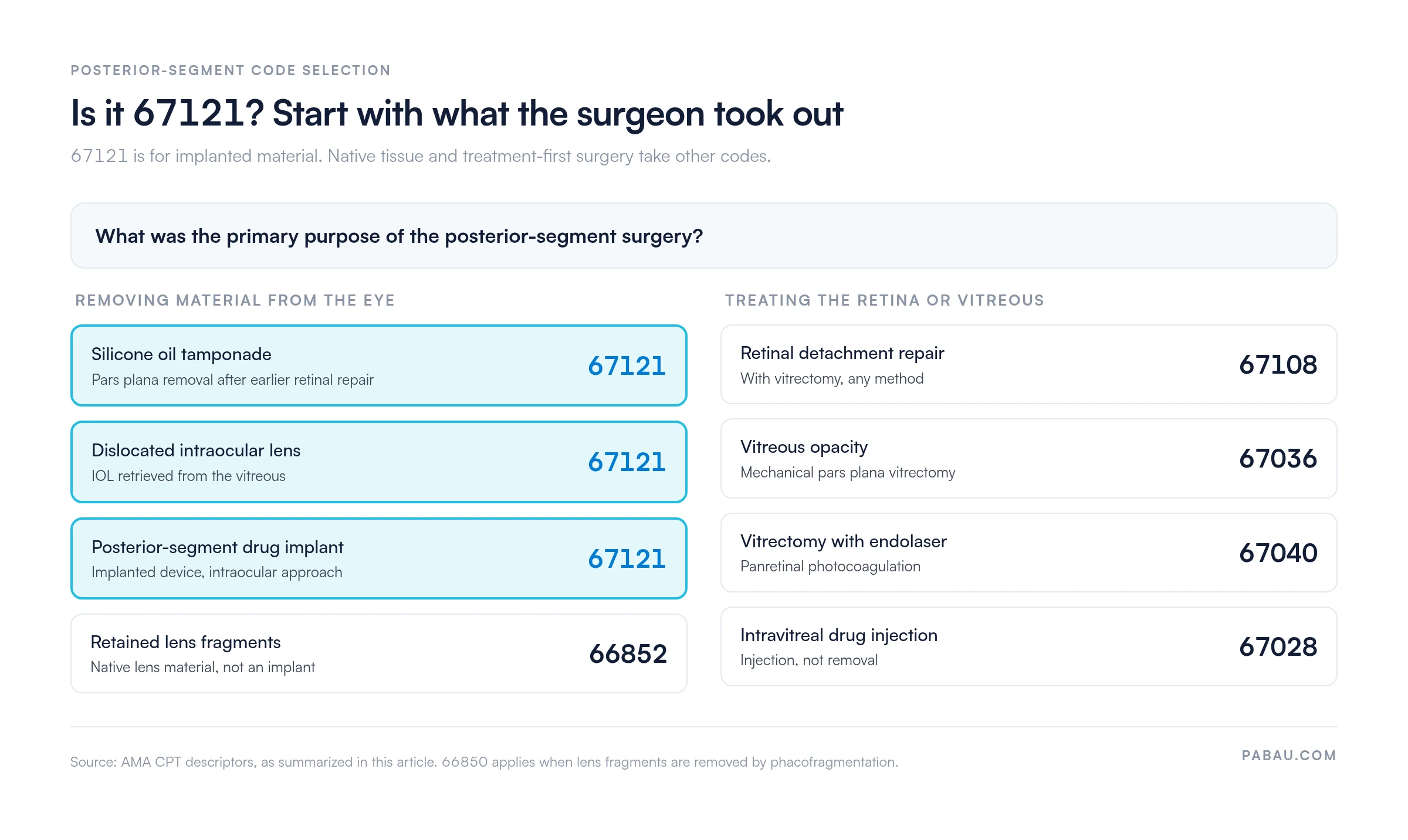
Every CPT Code 67121 claim requires a supported ICD-10-CM diagnosis code. The diagnosis must establish medical necessity for the implant removal. The pairings below come from categories H44 (disorders of globe), H33 (retinal detachments and breaks), H59 and T85.
Confirm code specificity to laterality (right eye, left eye, bilateral) where the ICD-10-CM code requires a 6th character. A mismatch between the eye in the diagnosis code and the laterality modifier on the CPT claim is a frequent denial trigger.
Modifier choice decides whether a CPT Code 67121 claim pays as billed. Medicare contractors generally expect RT or LT on eye procedures, and a return to the OR within the global period needs its own modifier.
CPT Code 67121 carries a 90-day global surgical period under the CMS Medicare Physician Fee Schedule. Pre-operative visits on the day before or day of surgery are bundled into a single payment. So are intraoperative services and routine post-operative care within 90 days. They cannot be billed separately without a modifier.
Services that fall outside the global package and may be billed separately include:
Confirm the applicable indicator in the CMS MPFS Look-Up Tool under the “GLOB DAYS” field for the current fee schedule year.
Track every post-operative appointment against the 90-day global period calendar. Flag the period end date in your practice management system at the time of surgery. Billing a follow-up visit as a standard E/M without checking the global status is a frequent compliance error. It is also an easy one to prevent.
CPT Code 67121 reimbursement under the Medicare Physician Fee Schedule varies by geographic locality. The table below reflects 2026 national values, which are the same in facility and non-facility settings. Use the FastRVU lookup tool or the CMS MPFS search for locality-adjusted figures.
When 67121 is performed in an ambulatory surgery center (ASC), the facility is paid separately under the CMS ASC payment system. That rate differs from the MPFS physician payment, so verify current ASC rates in the CMS ASC fee schedule.
Prior authorization requirements for CPT Code 67121 vary by payer type. Standard Medicare fee-for-service (Part B) does not require prior authorization for this procedure. Medicare Advantage plans operate independently and many do require PA. Always verify with the specific MA plan before scheduling.
Commercial insurers almost universally require PA for posterior-segment surgical procedures. Run insurance eligibility verification before the surgical date. It should confirm that a PA number has been issued and that it covers the specific eye.
A PA request for CPT Code 67121 should give the clinical rationale for removal, such as failed conservative management or a vision-threatening complication. Add the ICD-10 diagnosis code, laterality documentation, and the surgeon’s operative plan. Payers routinely deny PA requests that lack medical necessity language tied to specific functional impairment.
Adequate operative documentation is the foundation of a successful CPT Code 67121 claim. Medical-necessity denials on 67121 usually trace back to an operative report that never states why the material had to come out.
Reviewing clean claim requirements before submitting confirms all required data elements are present. The operative report for 67121 must include each of the following:
Pair the operative note with a compliant superbill capturing the correct CPT code, ICD-10 pairing, modifiers, place of service, and date of service before submitting.
The National Correct Coding Initiative (NCCI) defines which CPT codes cannot be billed together on the same date of service without a modifier. CMS updates NCCI edit tables quarterly, so verify any specific edit pair against the current table before submitting.
As a general rule for CPT Code 67121 and NCCI bundling:
The AAPC Codify lookup tool cross-references NCCI edits by CPT code pair and is a reliable resource for pre-submission bundling checks.
Denial patterns on CPT Code 67121 claims follow a predictable set of causes. Each one has a defined prevention and appeal pathway. Implementing a structured denial management workflow reduces recovery time on these codes significantly.
Ophthalmology practices billing 67121 juggle laterality modifiers, payer authorizations, NCCI edits and a 90-day global window. Tracked in a spreadsheet, each one is another place for the claim to fail. Claims software for ophthalmologists moves that work into the system that already holds the appointment and the operative note.
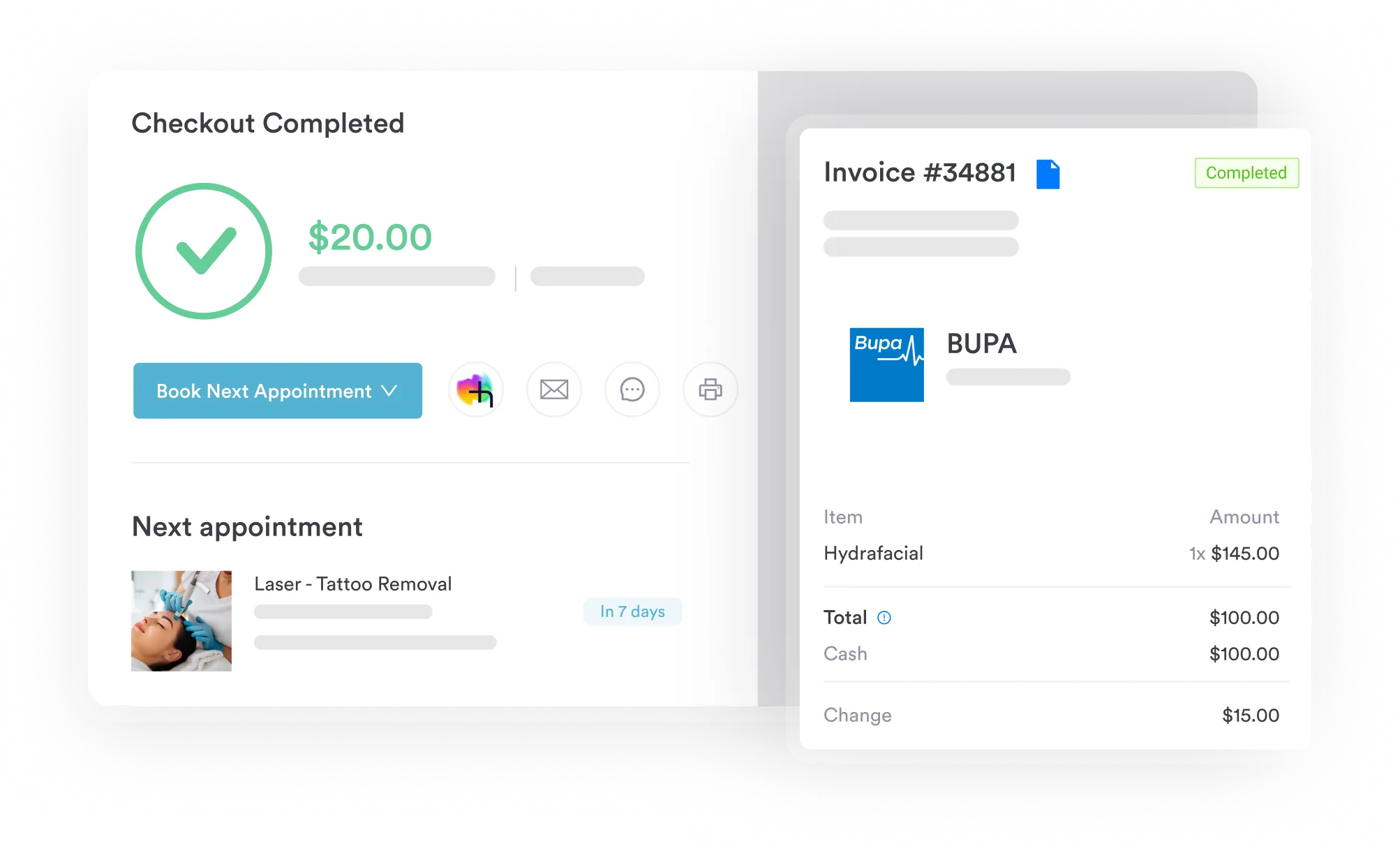
Pabau scrubs each claim for missing or invalid details before it leaves the practice. It then submits the CMS-1500 through Claim.MD, which connects to thousands of US payers. Real-time eligibility checks (270/271) run before the surgery date, and electronic remittance advice comes back into Pabau after payment.
Insurer authorizations are tracked as cases. The billing team can confirm a commercial plan’s approval is on file before the patient reaches the operating room. The coder still chooses the code and modifiers, but the claim leaves with the details a payer checks first.

Pabau scrubs claims for missing or invalid details, tracks insurer authorizations as cases, and submits CMS-1500 claims through Claim.MD. Eligibility checks and ERAs sit in the same system as the surgical appointment.

CPT Code 67121 is the right code only when implanted material comes out of the posterior segment. Lens fragments belong to 66852 or 66850, and a vitrectomy for opacity belongs to 67036. Getting that call right first matters more than any modifier.
Once the code is settled, the claim stands or falls on the operative note and the eye. Name the material removed, match RT or LT to the diagnosis, and leave routine follow-up inside the global package. A practice that checks those three before submission rarely has to appeal a 67121 claim.
Book a demo to see how Pabau scrubs and submits your surgical eye claims before they reach the payer.

Need to verify claim submission formats? How the 837 EDI file works explains the electronic claim format used for surgical procedure submissions including CPT 67121.
Dealing with ERA remittance reconciliation? Electronic remittance advice (ERA) explained covers how 835 remittance files map to your posted payments.
Researching denial codes on rejected surgical claims? Denial codes in medical billing maps common CARC codes to resolution steps.
CPT Code 67121 covers surgical removal of implanted material from the posterior segment of the eye via a vitreous approach. That includes silicone oil tamponade removal, retrieval of a displaced intraocular lens from the vitreous, and removal of posterior-segment drug implants. Retained lens fragments are native lens material and are reported with 66852 or 66850 instead.
Traditional Medicare fee-for-service does not require prior authorization for CPT 67121. Medicare Advantage plans and commercial insurers generally do require PA. Always verify with the specific plan before scheduling, since PA requirements differ by payer and plan year.
Common denial causes are a missing LT or RT modifier and missing or expired prior authorization. NCCI bundling conflicts with codes such as 67108 or 67040 are another. Thin medical necessity documentation in the operative report also triggers denials. So does billing a follow-up visit inside the 90-day global period without modifier 24, 78, or 79.
Yes, but only when the operative report documents distinct, separately reportable procedures. The implant removal and the vitrectomy for separate pathology must each have independent clinical justification. A modifier (typically 59 or XS) is required to bypass the NCCI bundling edit. Verify the current edit status in the CMS NCCI table before submitting.



