



CCSD code G5100: Bypass of duodenum billing guide
CCSD code G5100 bills a bypass that leaves the duodenum in place CCSD code G5100...

Last Updated: Oct 16, 2026
CPT code 27134 is the procedure code for revision of total hip arthroplasty involving both the acetabular and femoral components, with or without autograft or allograft. It applies when a surgeon removes and replaces both parts of a previously implanted hip replacement due to failure, loosening, infection, or instability.
Understanding this code correctly matters because confusing it with the single-component revision codes 27137 or 27138 is one of the most common billing errors in orthopedic practices, and the reimbursement difference is significant. This reference covers clinical indications, ICD-10 linkage, Medicare fee schedule rates, modifier rules, documentation requirements, and common denial causes.

CPT code 27134 covers revision of BOTH the acetabular cup and femoral stem in a single surgical session.
Use 27134 only when both components are revised. Use 27137 (acetabular only) or 27138 (femoral only) for single-component revisions.
The 90-day global surgery period bundles most post-operative visits, which affects how ancillary services are billed.
Missing documentation of medical necessity, laterality, and component scope is the leading cause of 27134 claim denials.
CPT code 27134 is defined by the American Medical Association as: “Revision of total hip arthroplasty; both components, with or without autograft or allograft.” The phrase “both components” is the operative distinction. It means the surgeon revised the acetabular component (the cup seated in the pelvis) and the femoral component (the stem placed in the femur) during the same operative session.
The “with or without autograft or allograft” language means bone grafting does not change the code. Whether the surgeon uses the patient’s own bone, donor bone, or no graft at all, 27134 remains the correct code as long as both components are addressed. Bone graft procurement may be billed separately when performed.
Revision total hip arthroplasty under CPT code 27134 is indicated when both the acetabular and femoral components of a prior hip replacement require surgical intervention. Payers require that the medical record clearly documents which implant components were addressed and why. Good medical billing workflows begin with thorough operative documentation capturing that scope before the claim is assembled.
Common clinical scenarios that justify reporting 27134 include the following conditions, each of which should appear in the diagnostic record with a corresponding ICD-10-CM code:
Coverage of revision THA is assessed under CMS’s medical necessity criteria. Most Medicare Administrative Contractors (MACs) reference the THA Local Coverage Determination (LCD L38689 or its regional equivalent) when processing claims for revision procedures. Verify the applicable LCD for your MAC before submitting.
The split between 27134, 27137, and 27138 comes down to one question: which components did the surgeon actually revise during the encounter? Intraoperative findings drive the code selection, not the pre-operative plan. If the surgeon entered planning to revise only the acetabular cup but encountered a loose stem and revised that too, 27134 is the correct code.
Billing 27137 or 27138 when both components were actually revised constitutes undercoding and leaves reimbursement on the table. Billing 27134 when only one component was revised constitutes upcoding and triggers audit risk. The operative report must state clearly which components were removed and implanted, including manufacturer and lot numbers where required by the facility.
Every claim for CPT code 27134 requires at least one ICD-10-CM diagnosis code that establishes medical necessity. The T84 series (complications of internal joint prostheses) and Z96 series (presence of orthopedic implants) dominate this code’s diagnosis pairing. The table below lists the most frequently used ICD-10 codes; the list is not exhaustive, and the coded diagnosis must reflect the documented clinical condition.
Seventh-character extensions matter here. The “A” suffix applies at the encounter when treatment is active; “D” applies at subsequent encounters; “S” applies to sequelae. Most revision surgery claims should carry the “A” extension. Confirm the correct extension with your coding team and against the AHA Coding Clinic guidance for prosthesis complication codes.
Medicare reimburses CPT code 27134 through the CMS Physician Fee Schedule, with the actual dollar amount varying by geographic locality and place of service. The 2026 national average Medicare payment for 27134 in a facility setting (hospital inpatient or outpatient) is approximately $1,900 to $2,400 for the physician’s professional component. Non-facility rates are higher because they include practice expense reimbursement. Verify your exact locality rate using the CMS fee schedule lookup tool or FastRVU’s 2026 RVU lookup.
Medicare’s conversion factor adjusts these RVUs to a dollar amount; the 2026 conversion factor is subject to final CMS rulemaking. Geographic Practice Cost Indices (GPCIs) further adjust each RVU component by locality, so practices in high-cost areas receive a higher payment than those in rural markets. Pabau’s integration with Claim.MD lets orthopedic practices submit claims through Claim.MD and receive electronic remittance data tied to each CPT code, making it straightforward to reconcile actual payments against expected fee schedule amounts.

Pabau connects CPT code selection, ICD-10 linking, modifier application, and claim submission in one platform, helping orthopedic practices reduce denials on complex revision codes like 27134.

Modifier selection for CPT code 27134 affects both payment and audit risk. The most common errors involve omitting a laterality modifier or misapplying modifier 22 without sufficient documentation. Check payer-specific modifier rules before submission, as commercial payer requirements may differ from Medicare guidance.
Modifier 22 deserves extra care. Payers expect the operative report to specify the factors making the revision substantially more complex than typical, such as severe acetabular bone loss requiring structural grafting, two-stage exchange for infection, or prior failed revision hardware. A bare “increased complexity” note without supporting clinical detail is grounds for denial or recoupment. Consult the AAPC coding resources for modifier 22 documentation guidance.
Claims for CPT code 27134 are among the highest-value orthopedic codes on the Medicare fee schedule, which means they draw scrutiny. Clean superbill documentation and a complete operative report are the two pillars of a defensible claim. Every element below should be present before the claim is submitted.
Insurance eligibility verification before the procedure reduces the risk of discovering authorization gaps after surgery. Practices using integrated practice management platforms can capture these documentation elements within the patient record and link them directly to the claim, reducing the manual reconciliation burden that leads to errors. Maintaining medical billing compliance standards throughout this process protects the practice in the event of a payer audit.
Run a pre-submission checklist for every 27134 claim: confirm laterality modifier matches the ICD-10 code’s 7th character, verify both components appear in the operative report narrative, and check whether modifier 22 documentation will withstand payer review. Flag claims missing any of these three elements before they reach the clearinghouse.
CPT code 27134 carries a 90-day global surgery period, as verified in the CMS Medicare Physician Fee Schedule. This means that virtually all post-operative evaluation and management visits, minor procedures, and wound checks within the 90 days following surgery are bundled into the surgical payment and cannot be billed separately.
For practices that handle their own 837 electronic claim files, the POS code on the CMS-1500 (box 24B) must match what was submitted to the facility. Mismatches between the professional claim and the facility claim are a common trigger for Medicare post-payment review.
Revision hip arthroplasty claims are denied at higher rates than primary THA because of their complexity and value. Denial management workflows for orthopedic practices should include a 27134-specific review step given the code’s audit exposure. The most frequent denial triggers are:
Submitting clean claim submissions from the start reduces denials more effectively than a reactive appeals process. Practices with robust revenue cycle management processes track denial rates by CPT code, making 27134 denial patterns visible and correctable at the workflow level rather than the individual-claim level.
Revision hip arthroplasty billing involves more variables than most orthopedic codes: component-specific code selection, laterality modifiers, ICD-10 seventh-character extensions, modifier 22 documentation, prior authorization tracking, and a 90-day global period that affects downstream billing. Manual workflows on these cases carry a high error rate.
Pabau’s claims management software supports orthopedic practices by connecting clinical documentation to billing codes within the same platform. When operative details are captured in the patient record, the billing team can pull that documentation directly into the claim without re-entering data, reducing the transcription errors that cause laterality mismatches and missing modifier documentation.
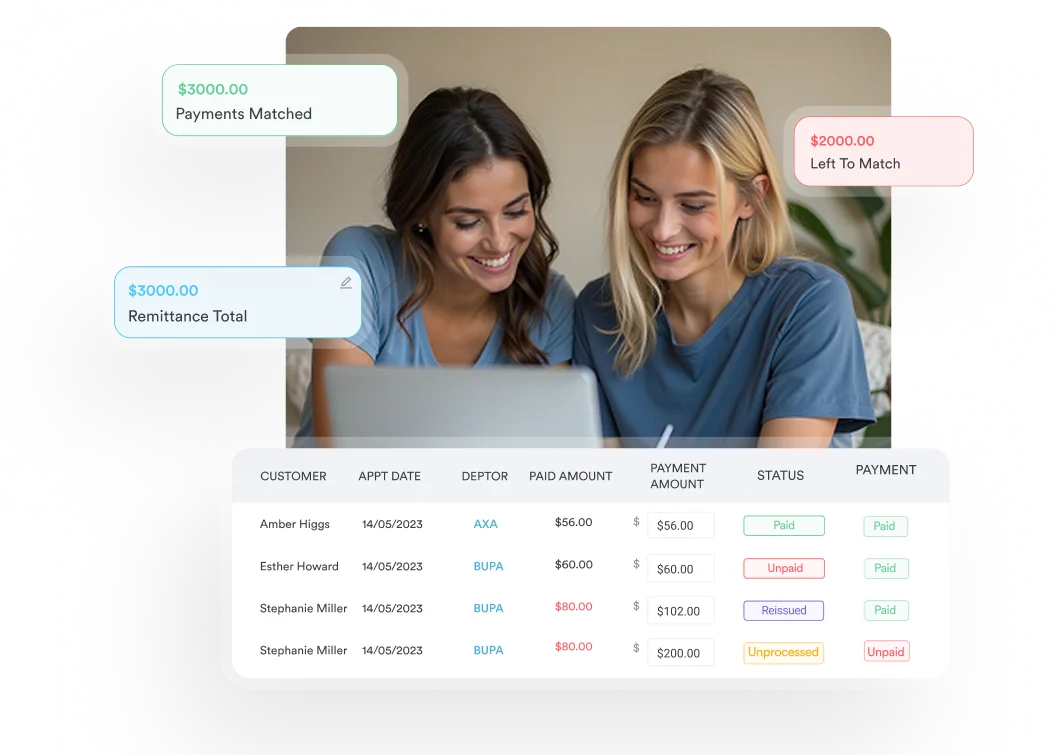
Pabau also integrates with Claim.MD for electronic claim clearinghouse submission, giving practices real-time claim status and electronic remittance data to reconcile 27134 payments against expected fee schedule rates.
For orthopedic and physical therapy practices managing high volumes of post-surgical follow-up within the 90-day global period, the platform’s scheduling tools make it straightforward to flag global-period visits so they are not inadvertently billed outside bundling rules. Understanding the full scope of revenue cycle management within orthopedic specialties helps practices identify where automation delivers the most value.
CPT code 27134 is a high-value, high-scrutiny code that rewards precise documentation and careful modifier selection. The difference between billing 27134 and its single-component counterparts (27137 or 27138) comes down entirely to what the operative report shows, making documentation the first line of defense against denials and audits.
Pabau’s claims management software connects clinical documentation to claim preparation, helping orthopedic practices capture the operative details that support clean 27134 submissions. To see how it fits your billing workflow, book a demo and explore how integrated practice management reduces revision arthroplasty denials.

Need to understand how claims reach payers? Medical claims clearinghouse guide explains how electronic claim routing works from practice to payer.
Billing denials on orthopedic claims stacking up? Denial codes in medical billing covers the most common remittance denial codes and how to respond to each.
Working through a prior authorization gap? Getting credentialed with insurance companies walks through the payer enrollment and authorization process for surgical specialties.
CPT code 27134 covers revision of total hip arthroplasty involving both the acetabular component (cup) and the femoral component (stem) in a single surgical session, with or without bone grafting. It applies only when both implant components are revised; single-component revisions are coded under 27137 (acetabular only) or 27138 (femoral only).
The 2026 Medicare national average professional fee for CPT 27134 in a facility setting is approximately $1,900 to $2,400, depending on geographic locality. Geographic Practice Cost Indices (GPCIs) adjust payment by region, so practices in high-cost urban markets receive higher reimbursement than those in rural areas. Verify your exact rate using the CMS Physician Fee Schedule lookup tool.
CPT 27134 is used when both the acetabular cup and femoral stem are revised during one surgical session. CPT 27137 is used when only the acetabular component is revised and the femoral stem remains well-fixed. The operative report drives code selection, not the pre-operative plan, so intraoperative findings determine which code is correct.
CPT code 27134 carries a 90-day global surgery period. Routine post-operative office visits, wound checks, and minor services provided by the operating surgeon’s group within 90 days of surgery are bundled into the surgical payment and cannot be billed separately. Complications requiring a return to the operating room are billable with modifier 78.
The T84 series (complications of internal joint prostheses) is most commonly paired with CPT 27134. Frequently used codes include T84.030A and T84.031A (mechanical loosening, left/right hip), T84.50XA through T84.52XA (periprosthetic infection), and T84.012A (instability of internal hip prosthesis). The coded diagnosis must match the documented clinical condition and laterality.
Modifier 22 applies when the revision procedure is substantially more complex than the typical 27134 case, for example, severe acetabular bone loss requiring structural grafting, two-stage exchange for active infection, or revision of prior failed revision hardware. The operative report must explicitly describe the complexity factors; a generic notation of “increased complexity” is insufficient and commonly triggers recoupment.



