ICD-10 code S61.201A: Open wound of left index finger without nail damage
ICD-10 code S61.201A covers a left index finger wound of unstated type ICD-10 co...

Last Updated: Oct 16, 2026
Billable Code Specific Code
S60.426S is the billable ICD-10-CM code for blister (nonthermal) of right little finger, sequela.
Coders pair it with a second code naming the residual condition, and that second code goes first. Reach for S while the wound is still being dressed, or submit S60.426S on its own, and the claim comes back.
Let Pabau's smart automation suggest the right codes, reduce claim denials, and keep your practice compliant—effortlessly.
Automate repetitive tasks and focus on what matters most—your patients.
Reduce coding errors and ensure compliance with the latest regulations.
Clean claims, fewer denials, and faster reimbursements.
Powerful insights and reporting to help your practice thrive.
HIPAA compliant SOC 2 certified GDPR-compliant Trusted by 4,000+ clinics worldwide

ICD-10 code S60.426S reports the sequela of a nonthermal blister on the right little finger, and it is billable.
The 7th character S applies only after active treatment of the original blister has ended.
A sequela claim needs two codes. The residual condition is first-listed, and S60.426S follows it.
S60.426 without a 7th character is not billable, so a claim carrying it comes back rejected.
The code is valid for fiscal year 2026, from October 1, 2025 through September 30, 2026.
S60.426S is a billable, specific ICD-10-CM code, so it can carry a diagnosis on a submitted claim. It stays valid for HIPAA-covered transactions through fiscal year 2026, which runs from October 1, 2025 to September 30, 2026.
ICD-10-CM changes every October, so check the current tabular list on the CMS ICD-10 codes page at the start of each fiscal year.
Read the code left to right and each character removes options. S60 covers superficial injury of the wrist, hand and fingers. S60.4 narrows that to other superficial injuries of other fingers, S60.42 to nonthermal blisters, and the sixth character to the right little finger.
S60.426 on its own is not billable. Submit it without a 7th character and the claim gets rejected before a reviewer sees it.
The wording of S60.4 is worth a second look too. It says other fingers because the thumb has its own subcategory, S60.3, so a thumb blister sequela is S60.321S or S60.322S.
The CDC/NCHS ICD-10-CM web tool confirms every level of that tree against the tabular list, by fiscal year.
The 7th character says where the patient sits in the course of care. It is not a measure of elapsed time.
S60.426 takes three options. A marks the initial encounter, D the subsequent encounter, and S the sequela. They are not interchangeable, and the wrong one misrepresents the visit.
S applies once the blister is considered resolved and a residual condition brings the patient back. Scarring, a contracture, and lasting skin sensitivity all qualify.
One rule catches people out. The S attaches to the injury code only, never to the code for the residual itself. That rule sits in the FY2026 ICD-10-CM Official Guidelines.
Match the visit to one of the four situations below and the 7th character picks itself. The phase of care has to match what the provider wrote. A mismatch between the suffix and the note is a familiar audit trigger.
Never assign S60.426S while the blister is still being treated. The sequela phase starts only once the original injury is considered resolved.
A sequela claim carries two diagnosis codes, and S60.426S is the second of them. The first names the residual condition the provider is treating today. S60.426S then sits behind it to identify the injury that produced that residual.
Which code leads depends on what the note documents. Scarring is usually L90.5, lasting altered sensation points to R20.2, and pain in the digit to M79.644. Submit S60.426S on its own and the claim names an injury without naming the condition being treated.
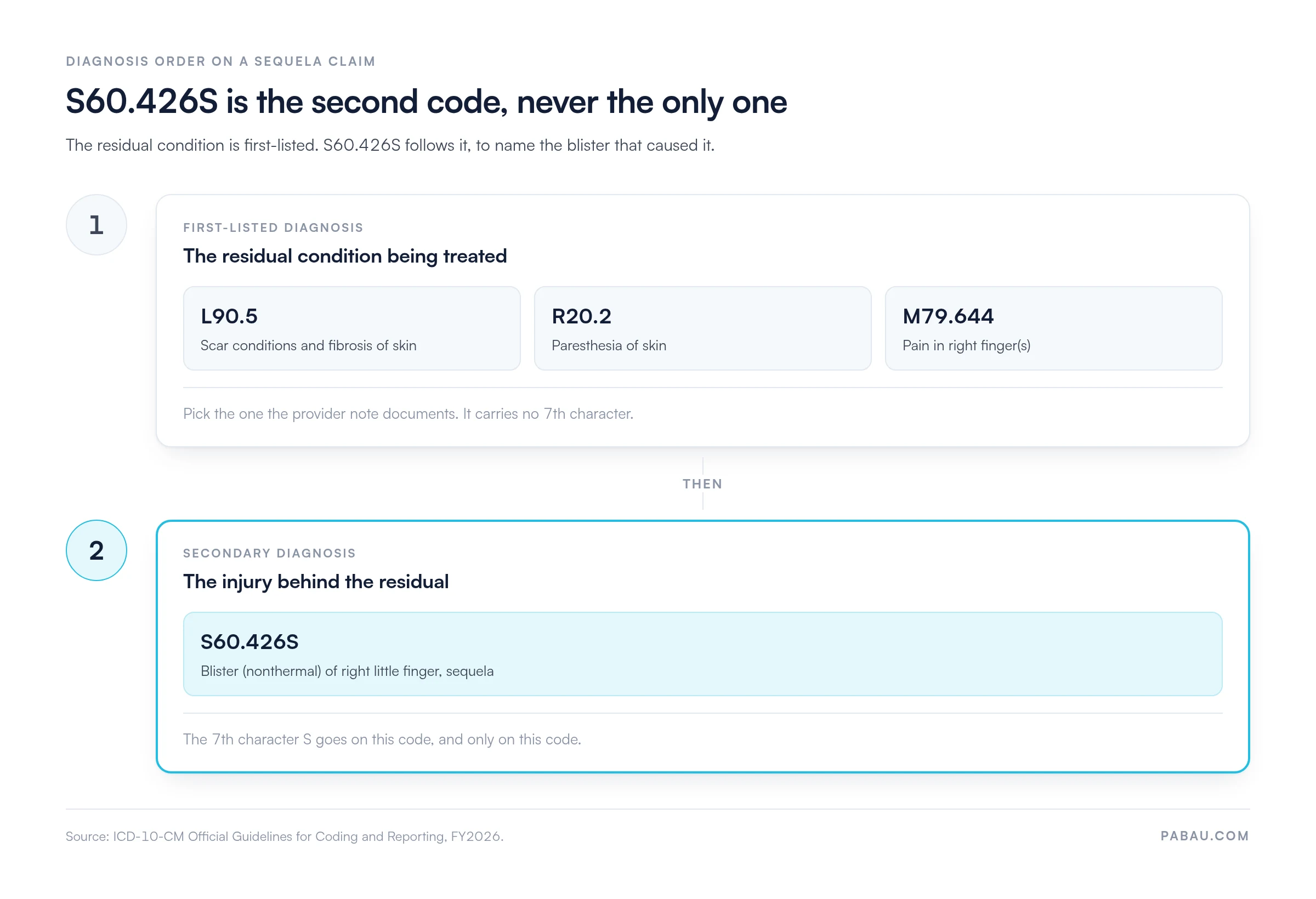
That order matters on the claim form, not only in theory. Payers read the first-listed diagnosis as the reason for the visit. A sequela code in that slot rarely supports medical necessity on its own.
The S60.42 range gives every finger its own code, split by side. That means the digit and the laterality both have to come from the note. Coders should never assume a side.
If the record says little finger with no side named, query the provider before assigning S60.426S. The wider diagnostic code library holds the sibling entries when you need to check one.
Avoid S60.429S when the record names both the digit and the side. Payers deny unspecified codes where the documentation supports a specific one, and this range covers every finger on both hands.
Four elements have to appear in the note before S60.426S is safe to assign. Miss one and the claim is open to a rejection or a documentation query.
Flag sequela encounters at check-in. When the chart shows a prior S60.42x code and the visit reason mentions scarring or sensitivity, alert the coder. Do it before the visit closes. Catching the A-versus-S question upfront removes the most common correction auditors make on this range.
An S60.426S claim passes through five stages before it pays. Knowing the route tells you where to look when it stops moving.
Three problems account for most of the trouble on this code.
A short scrub catches most of the avoidable denials on this code. Work down the list before you release the batch.
Those five checks are what separates a clean claim from a return-to-provider request on injury sequelae.
In most practices these problems surface late. The coder reads a note written days earlier, cannot tell whether the blister has resolved, and sends a query back to the provider. Meanwhile the claim waits.
Practice management software like Pabau moves that check to the point of care. Structured client records capture the side, the digit, and the phase of care while the provider writes. Nobody has to reconstruct the visit afterwards.
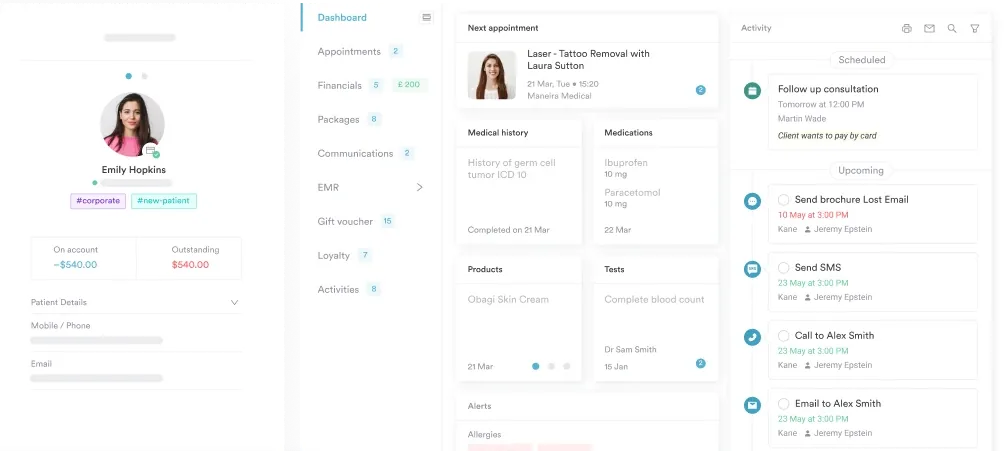
From there, cleaner claims management follows each claim through the clearinghouse and back. You can see which sequela lines paid and which came back, without opening a separate portal.
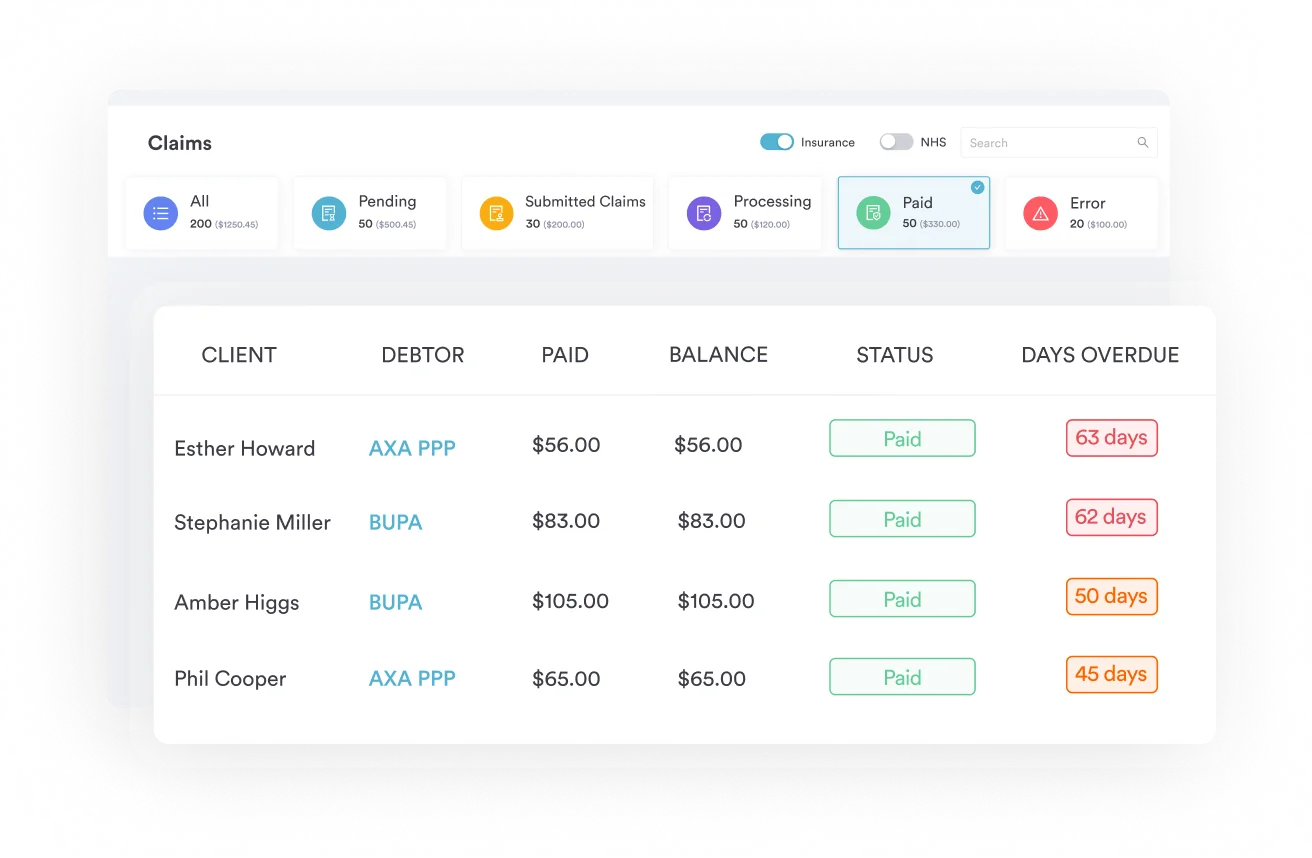

Pabau captures laterality and phase of care in the client record, then tracks each claim from submission to remittance. That means fewer coder queries and fewer returned injury claims.

S60.426S is a narrow code, and that is what makes it easy to get wrong. The digit, the side, and the phase of care all have to come from the note. Then the residual condition has to lead the claim, with S60.426S behind it.
Fix the documentation and the coding follows. Ask providers to state the phase of care in plain words, and most of the guesswork on this range disappears.
Practices handling injury follow-ups at volume gain more from tightening the note than from appealing denials one at a time. Book a demo to see how Pabau captures phase of care at the visit and tracks the claim that follows.

Coding a wrist injury with the same 7th character? ICD-10 code S60.219S applies the sequela rules to a contusion of the unspecified wrist.
Same finger, a different injury? ICD-10 code S60.152S covers a contusion of the left little finger with nail damage, sequela.
Managing claim rejections across injury code encounters? Denial management in healthcare covers the most common denial triggers and how to resolve them systematically.
Looking for a structured overview of medical billing fundamentals? Revenue cycle management explained breaks down how each billing step connects to claim payment.
Only if your state or your payer requires one. ICD-10-CM sets no national mandate for Chapter 20 external cause codes. When you do report one, give it the same 7th character as the injury code, so S for a sequela visit.
No. Aftercare Z codes do not apply to injuries. For an injury follow-up, use the injury code with the subsequent-encounter character, S60.426D. Switch to S once the blister has resolved and only a residual remains.
No. It has been in ICD-10-CM since the code set took effect on October 1, 2015. The FY2026 edition carries it unchanged, which is why the description and the 7th-character options look the same as last year.
No. Modifiers attach to CPT and HCPCS procedure codes, never to ICD-10-CM diagnosis codes. Laterality is built into the diagnosis itself, which is why S60.426S already says right little finger without an RT modifier.
Yes. ICD-10-CM has no combination code for blisters on more than one finger, so each digit gets its own code. Give each one the 7th character that fits that injury, since one finger can be a sequela while another still heals.