



CCSD code G5100: Bypass of duodenum billing guide
CCSD code G5100 bills a bypass that leaves the duodenum in place CCSD code G5100...

Last Updated: Oct 16, 2026

CPT Code 12014 covers simple repair of superficial wounds of the face, ears, eyelids, nose, lips, and/or mucous membranes measuring 5.1 cm to 7.5 cm.
Simple repair means single-layer closure of the epidermis, dermis, or subcutaneous tissue – no layered suturing required.
When multiple wounds of the same type and site are repaired, add their lengths together before selecting the code – a common source of undercoding.
Pabau’s claims management software embeds CPT code assignment directly in the clinical workflow, reducing transcription errors and audit risk.
CPT Code 12014 covers simple repair of superficial wounds of the face, ears, eyelids, nose, lips, and/or mucous membranes measuring 5.1 cm to 7.5 cm in total length. Simple repair means single-layer closure of the epidermis, dermis, or subcutaneous tissue, with no layered suturing of deeper structures.
This guide covers the 2026 reimbursement rates, applicable modifiers, documentation requirements, ICD-10 crosswalk, and the most common billing errors associated with the code.
CPT Code 12014 describes the simple repair of superficial wounds of the face, ears, eyelids, nose, lips, and/or mucous membranes measuring 5.1 cm to 7.5 cm. The code is maintained by the American Medical Association (AMA), which publishes the full CPT code set and its official descriptors annually.
Simple repair involves closure of a superficial wound using a single layer of sutures, staples, or tissue adhesive. The wound must not require layered closure of deeper tissues – that distinction determines whether 12014 or an intermediate repair code applies.
Selecting the wrong repair type is the single biggest coding error in wound repair billing. The AMA defines three repair classifications, and each maps to a distinct code series. CPT Code 12014 sits firmly in the simple repair category – but understanding where intermediate and complex repair begin prevents upcoding and audit exposure.
If a repair involves contaminated wound preparation or single-layer closure in a wound requiring only one layer, that is simple repair territory.
The moment layered closure of subcutaneous or deeper tissues becomes necessary, the claim should move to the intermediate series – typically 12051 or 12052 for the face, ears, eyelids, nose, lips, and mucous membrane site grouping.
Complex repair splits into two separate code families depending on the site, and the two are easy to mix up. Eyelids, nose, ears, and lips fall under 13151-13153, while forehead, cheeks, chin, mouth, neck, axillae, genitalia, hands, and feet fall under 13131-13133.
A complex neck repair paired with a diagnosis such as S11.82XS belongs in the 13131-13133 series, not the facial-feature codes.
CPT Code 12014 is one of several simple repair codes organized by anatomical site and wound length.
Coders need the full series to confirm 12014 is the right code – not an adjacent one – and to handle multiple wound scenarios correctly. These CPT code billing workflows follow a consistent pattern: site first, then length.
The series runs as a continuous, non-overlapping sequence from 12011 through 12018 for this site family – each code picks up exactly where the previous length range ends.
Coders looking up the series via the AAPC Codify CPT lookup should confirm which of the seven codes matches the total measured wound length before submitting the claim. The boundary between adjacent codes, such as 7.5 cm versus 7.6 cm, changes both the code and the reimbursement, so precise measurement matters.
A dermatology EMR platform makes it easy to document lesion measurements that determine which code applies.
Medicare reimbursement for CPT Code 12014 is calculated using relative value units (RVUs) multiplied by the Medicare conversion factor, which CMS publishes annually. Because rates change each January, always verify current figures using the CMS Physician Fee Schedule lookup tool before citing specific dollar amounts in your billing workflows.
RVU values for CPT Code 12014 span three components. Use the FastRVU 2026 RVU lookup tool to retrieve current work, practice expense, and malpractice RVU figures for this code at your geographic location.
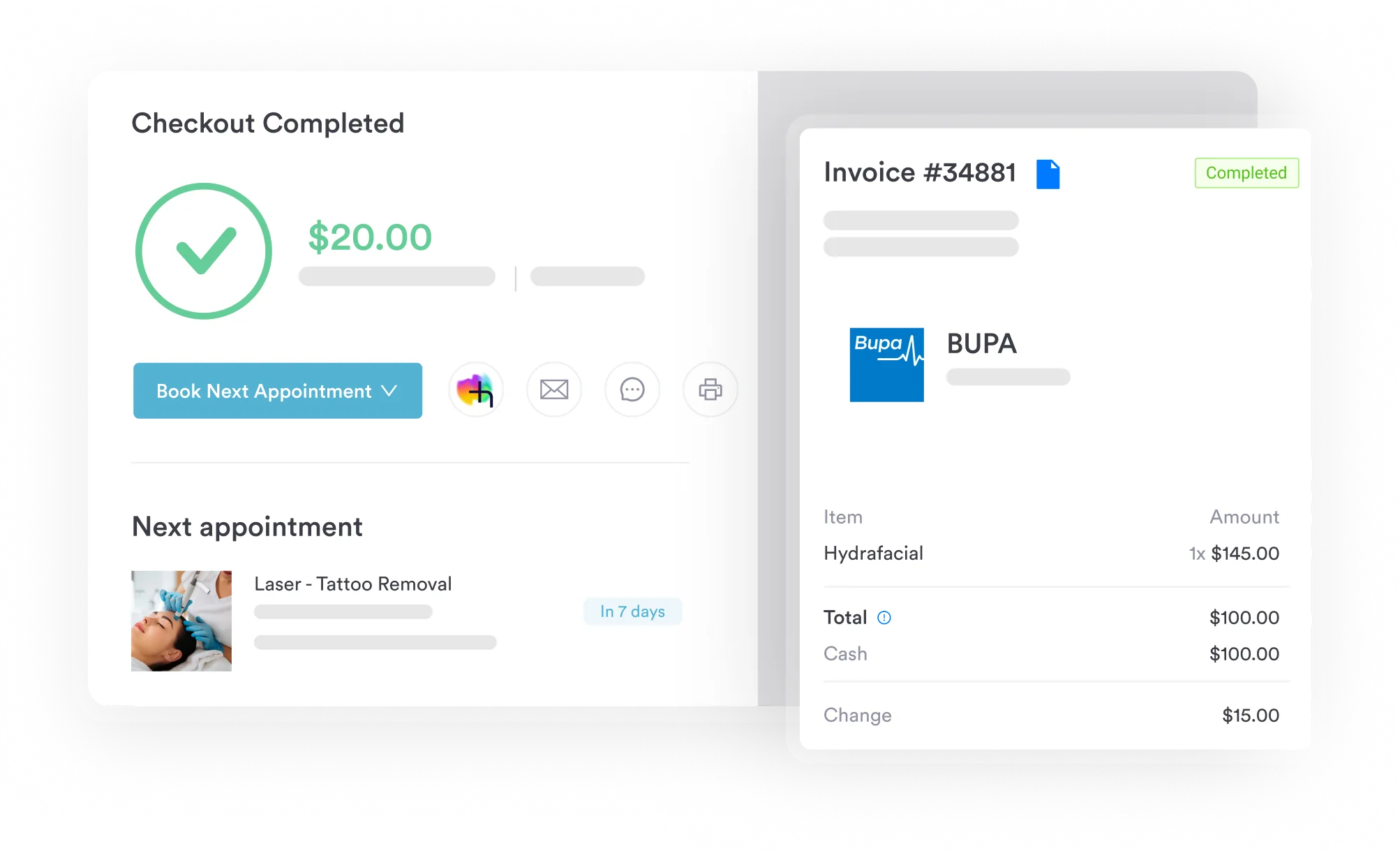
Commercial payer rates for CPT Code 12014 often exceed Medicare rates – typically ranging from 110% to 130% of MPFS, depending on the payer contract. Verify your specific contracted rates before assuming Medicare reimbursement is the ceiling. Where a practice does not bill the payer directly, the patient needs an itemized statement carrying this code and its charge.
Run a quarterly audit of your wound repair charges against the CMS fee schedule for your locality. Practices operating in high-cost geographic areas receive a location adjustment multiplier that meaningfully increases reimbursement above the national base rate.
Modifiers clarify billing circumstances without changing the code itself. The wrong modifier – or a missing one – is among the most common reasons CPT Code 12014 claims are denied or downcoded by payers.
Modifier 25 is the most frequently misapplied modifier in wound repair billing. It belongs on the E&M code only when the visit involves a clinically distinct, separately documented reason beyond the repair itself – for example. Appending modifier 25 to CPT Code 12014 directly is incorrect.
Missing or incomplete documentation is the primary driver of CPT Code 12014 claim denials on audit. The note must support every element of the code – repair type, wound site, and measured length.
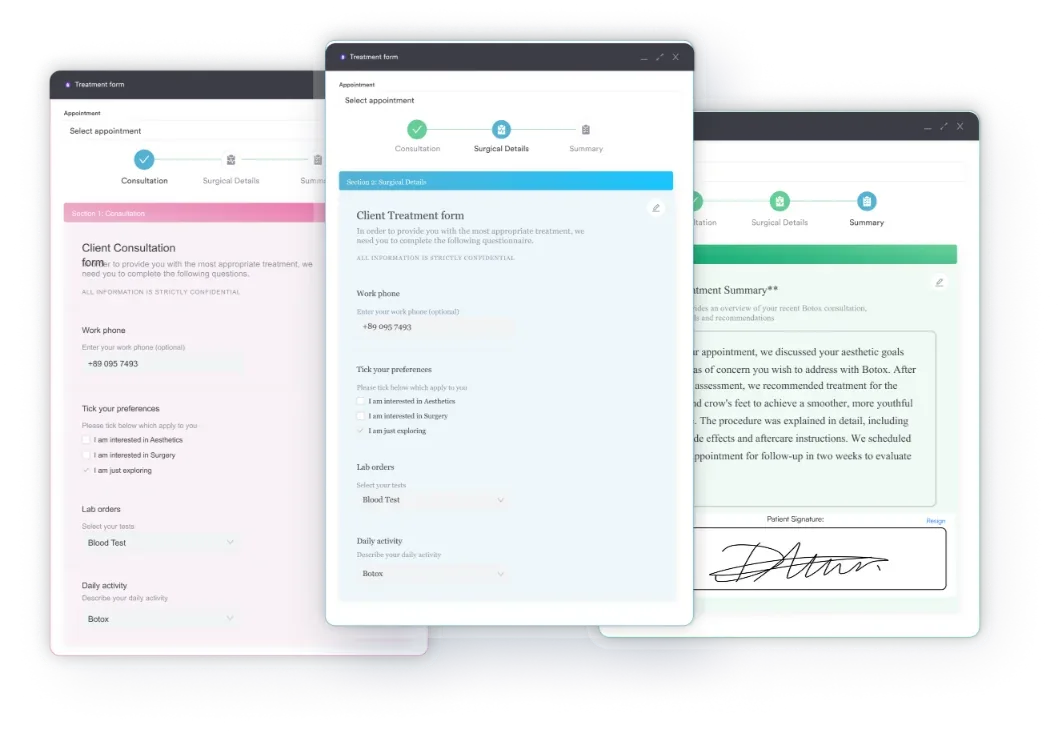
Using medical forms at your practice that prompt clinicians to capture these data points at the point of care significantly reduces the need to reconstruct documentation after the encounter.
Maintaining HIPAA-compliant documentation practices means the clinical note must include all of the following before a claim is submitted:
Leverage digital intake and clinical forms with structured fields for each of these elements. When the note auto-populates structured data into the billing workflow, transcription errors that cause CPT Code 12014 mismatches become far less likely.
Every CPT Code 12014 claim requires at least one ICD-10-CM diagnosis code that justifies medical necessity. The diagnosis must reflect the wound’s location and nature.
The without-foreign-body codes below only apply when no foreign material remains in the wound. A later encounter for a retained fragment. Practices with a skin clinic practice management workflow often handle multiple wound sites, and the ICD-10 crosswalk below covers the most common pairings.
ICD-10-CM codes are updated annually by the Centers for Disease Control and Prevention (CDC). Verify all diagnosis codes in your claims against the current CDC/NCHS ICD-10-CM web tool before the new code year takes effect each October 1.
Even coders familiar with the wound repair series make systematic errors when billing CPT Code 12014. Most arise from incorrect wound length measurement, improper site grouping, or misunderstanding what can be billed alongside the repair on the same date. Claim scrubbing catches the mismatches that would otherwise come back as a denial two weeks later.
Tracking these patterns through CPT billing workflows with built-in charge auditing catches recurring errors before they become payer disputes. The most common mistakes are:
The AMA’s wound repair guidelines establish a clear aggregation rule: when the physician performs multiple simple repairs at anatomically related sites during the same session, the lengths of all wounds in that grouping are added together to select a single code. The rule applies only within the same repair type and the same anatomical site family.
Different repair types on different sites are reported with separate codes, each with its own aggregated length. Attempting to combine a simple repair and an intermediate repair into a single code is incorrect regardless of wound location.
A trauma patient can present with a facial wound and a separate thumb injury reported under ICD-10 code S63.121A. The thumb-site open wound takes its own S61.- code, so its closure aggregates with the extremities group, never with the face total.

Pabau embeds CPT code assignment directly in the clinical workflow so your team codes from the note, not from memory. See how structured documentation and claims management work together in a live demo.

Practices lose the most revenue in the space between a correctly documented wound repair and a correctly coded claim. Pabau’s claims management software closes that space by embedding CPT code assignment within the clinical note, so the coder works from structured, verified data rather than reconstructing the encounter after the fact.
Wound site, measured length, repair type. Those fields map directly to the claim, eliminating the manual transcription step that introduces errors in conventional two-system workflows.
Practices operating across multiple locations can manage this through a single practice management platform rather than reconciling separate billing systems per site.
Pabau’s automated billing workflows can also flag claims that fall outside expected CPT code ranges before submission – catching wound length mismatches and missing modifier combinations at the point of charge entry rather than post-denial.
Review your wound repair charge lag report monthly. Claims for CPT Code 12014 submitted more than 72 hours after the procedure date have higher denial rates at many commercial payers. Structured clinical notes that auto-populate billing fields at close of encounter dramatically reduce that lag.
CPT Code 12014 rewards practices that document wound repair encounters with precision. The most common billing failures – incorrect wound length aggregation, missing modifiers, and repair type misclassification – are all preventable with structured documentation at the point of care.
Pabau’s claims management software ties clinical note fields directly to CPT code selection and claim submission, so the data captured during the repair encounter drives an accurate, audit-ready claim. Speak with the team to see how Pabau handles wound repair documentation and CPT billing in practice.

Coding a related electrolyte imbalance? ICD-10 code for low potassium identifies hypokalemia, serum potassium below 3.5 mEq/L, in adults and children.
Want to reduce incomplete documentation that causes claim denials? Capture Forms software lets clinicians complete structured wound documentation at the point of care, so every required field is populated before the encounter closes.
Documenting a related metabolic diagnosis? hypoalbuminemia ICD-10 code covers abnormally low serum albumin under the plasma-protein metabolism disorders category.
CPT Code 12014 is used to bill simple repair of superficial wounds of the face, ears, eyelids, nose, lips, and/or mucous membranes when the total wound length measures between 5.1 cm and 7.5 cm. Simple repair means single-layer closure of the epidermis, dermis, or subcutaneous tissue without layered closure of deeper structures.
Simple repair (codes 12001-12021) involves single-layer closure of superficial tissue only. Intermediate repair (codes 12031-12057) requires layered closure of one or more deeper subcutaneous layers in addition to the skin surface. If the wound required only one layer of closure, it is simple repair regardless of wound depth.
The clinical note must include the specific wound site, the measured wound length in centimeters (5.1-7.5 cm for 12014), the repair type (simple/single-layer), the closure method and suture material used, anesthesia type, and a description of wound condition. Missing any of these elements creates audit exposure and may trigger claim denial.
The most commonly applied modifiers with CPT Code 12014 include modifier 25 (on the same-day E&M code for a separately identifiable service), modifier 51 (multiple procedures), modifier 59 (distinct procedural service to address NCCI bundling edits), and LT/RT to designate bilateral structures such as ears or eyelids. Modifier 25 is never appended to 12014 itself.
Common ICD-10-CM pairings include S01.81XA (laceration without foreign body of other part of head, initial encounter), S01.311A/S01.312A (laceration of right or left ear), S01.511A (laceration without foreign body of lip), S01.21XA (laceration of nose), and S01.111A (laceration of right eyelid). Always verify codes against the current CDC/NCHS ICD-10-CM tool as codes update each October 1.
Yes, an E&M service may be billed on the same day as CPT Code 12014 when the evaluation and management service is separately identifiable and documented beyond the repair itself. Modifier 25 must be appended to the E&M code, not to CPT Code 12014, to avoid bundling. Payer-specific policies on same-day E&M and wound repair billing vary, so confirm with individual contracts.
The 2026 Medicare reimbursement rate for CPT Code 12014 varies by geographic location and facility versus non-facility setting. Use the CMS Physician Fee Schedule lookup tool at cms.gov or the FastRVU 2026 RVU lookup to retrieve the current payment rate for your specific practice location – rates change annually and citing an outdated figure creates billing discrepancies.
Measure the wound in centimeters after appropriate preparation of the wound edges. When multiple wounds of the same repair type and anatomical site grouping are repaired in the same session, add the individual lengths together to determine the correct CPT code. A wound measured in inches rather than centimeters will fail code validation and should be converted before documentation is finalized.



