HCPCS Code S0115: Deleted bortezomib billing code
HCPCS Code S0115 is a deleted Level II S-code that described bortezomib, 3.5 mg,...

Last Updated: Oct 5, 2026
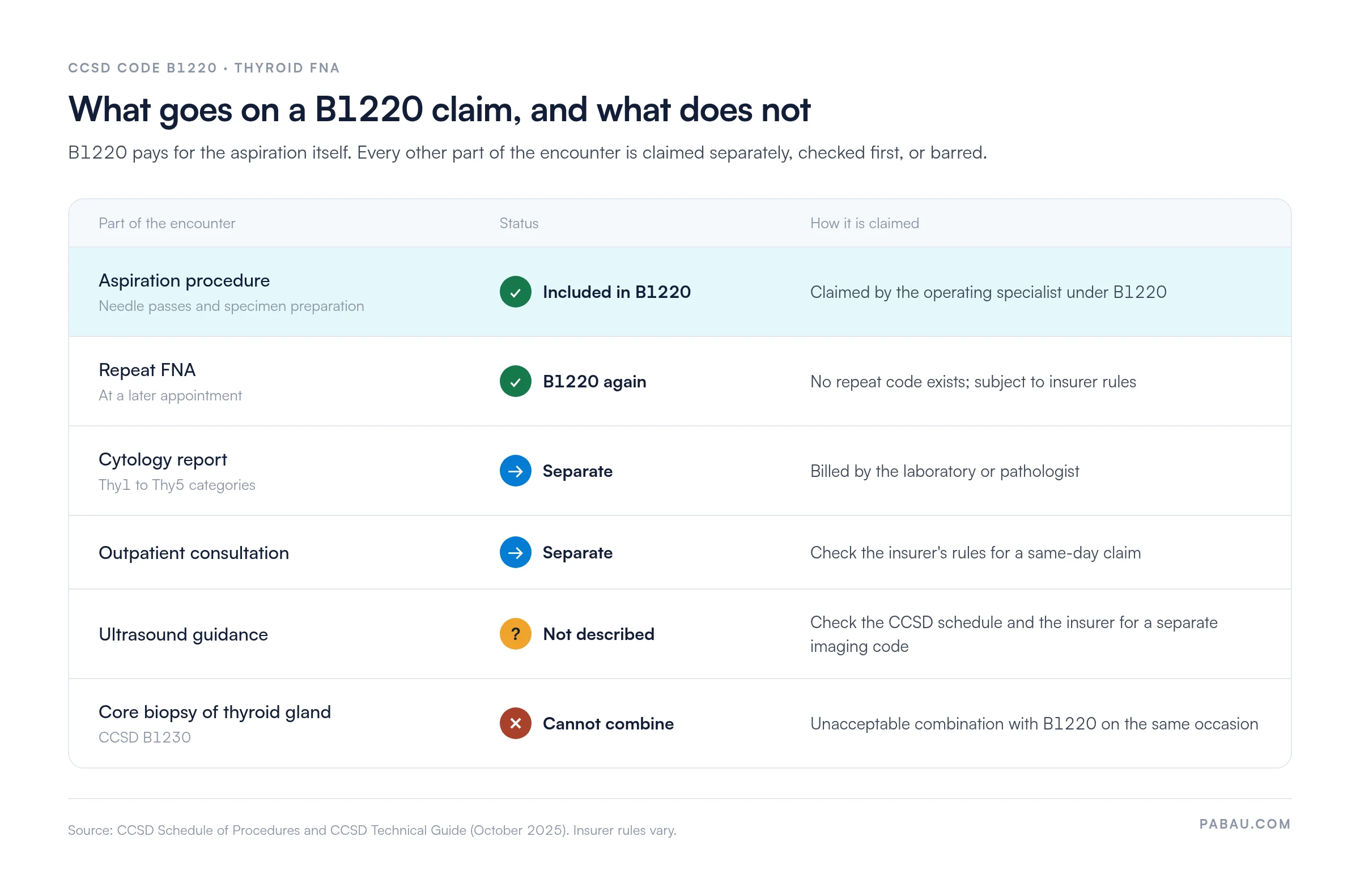
B1220 is the CCSD code for fine needle aspiration of thyroid gland. It pays the specialist's fee for passing a fine needle into a thyroid nodule, aspirating cells and preparing the specimen for cytology.
The laboratory's cytology fee and the outpatient consultation are claimed separately, and ultrasound guidance is not described in the code. CCSD lists B1220 and B1230, core biopsy of thyroid gland, as an unacceptable combination, so the two cannot be claimed together.
Let Pabau's smart automation suggest the right codes, reduce claim denials, and keep your practice compliant—effortlessly.
Automate repetitive tasks and focus on what matters most—your patients.
Reduce coding errors and ensure compliance with the latest regulations.
Clean claims, fewer denials, and faster reimbursements.
Powerful insights and reporting to help your practice thrive.
HIPAA compliant SOC 2 certified GDPR-compliant Trusted by 4,000+ clinics worldwide

CCSD Code B1220 covers the procedure fee for fine needle aspiration of the thyroid gland, not the cytology report or the consultation.
Ultrasound guidance is not described in B1220, so check the CCSD schedule and the insurer for whether a separate imaging code applies.
CCSD lists B1220 and B1230 (core biopsy of thyroid gland) as an unacceptable combination, so the two cannot be claimed together.
Bupa, AXA Health and Vitality usually require prior authorisation before the procedure, while Aviva and Cigna UK decide case by case.
Pabau’s claims management software supports CCSD code entry, insurer-specific fee schedules and Healthcode submission for UK private practices.
CCSD Code B1220 is the procedure code for fine needle aspiration of the thyroid gland in UK private healthcare billing. It pays the specialist’s fee for passing a fine-gauge needle into a thyroid nodule or mass, aspirating cells and preparing the specimen for cytology.
The laboratory’s fee for analysing the aspirate sits outside B1220, and so does the outpatient consultation. Ultrasound guidance is not described in the code, so check the CCSD schedule and the insurer for whether a separate imaging code applies. The chart below shows where each part of the encounter lands.
B1220 sits in the CCSD Schedule of Procedures, which UK private medical insurers such as Bupa, AXA Health, Vitality, Aviva, WPA and Cigna use. The full CCSD code list shows its neighbouring procedures. The CCSD Technical Guide (October 2025) sets out the business rules for applying these codes, including unacceptable combinations.
A thyroid FNA takes between five and fifteen minutes. Knowing the steps helps coders check that the documentation matches the procedure performed and supports B1220.
The procedure note generated at step six is the primary document supporting a B1220 claim. If it is absent or incomplete, insurers are likely to decline payment.
B1220 is appropriate when a clinician performs fine needle aspiration to characterise a thyroid nodule or mass that warrants cytological evaluation. UK consultants generally follow the British Thyroid Association (BTA) guidelines. These grade nodules on ultrasound from U1 to U5 and recommend FNA for U3 to U5.
Size cut-offs such as 1 cm for high-suspicion nodules come from the US American Thyroid Association (ATA) 2015 scheme, not the BTA. Under ATA 2015, intermediate-suspicion nodules qualify at 1 cm, low-suspicion at 1.5 cm and spongiform nodules at 2 cm.
The claim file should link the indication to the U grade and nodule features on the ultrasound report. A U2 nodule, such as a purely cystic one, is unlikely to be covered, because the BTA does not routinely recommend aspirating benign-appearing nodules.
B1220 describes the aspiration only. Ultrasound guidance is not described in B1220, so check the CCSD schedule and the insurer for whether a separate imaging code applies.
Where a separate imaging code does apply, confirm it against the current CCSD Schedule of Procedures, as codes in this area are reviewed periodically. The Bupa code search tool lets practitioners check CCSD procedure codes against Bupa’s agreed fees before submission.
B1220 sits beside two other CCSD thyroid codes. The one that causes claim disputes is B1230, because CCSD lists B1220 and B1230 as an unacceptable combination. They cannot be billed together.
B1250 covers revision surgery, so it does not compete with B1220 on the same claim. Verify each descriptor against the current CCSD Schedule of Procedures before use, as the schedule is revised periodically.
Check the procedure note before choosing between B1220 and B1230. Cells sent for cytology point to B1220, and a tissue core sent for histology points to B1230. Claiming both on the same occasion breaks the CCSD unacceptable-combination rule, so the insurer is likely to reject one.
A B1220 claim is only as strong as the procedure note supporting it. Insurers auditing this code will request the clinical record, and a claim without the elements below is vulnerable to denial or clawback. Keeping them in electronic patient records means they can be produced on demand.
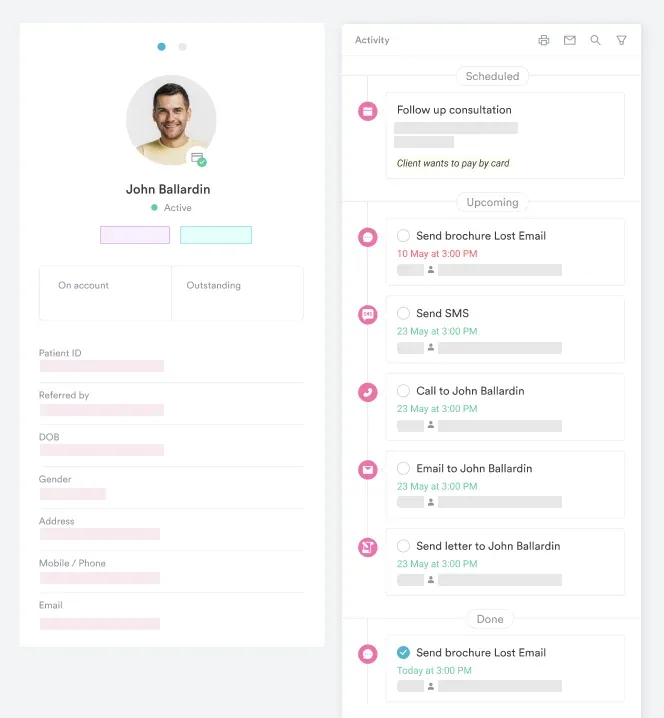
UK GDPR requires patient records supporting private healthcare claims to be kept securely. In Pabau’s digital clinical forms, consent and procedure notes are captured in a structured, audit-ready format. Staff then spend less time retrieving them when an insurer asks for evidence. Check that your retention periods cover each insurer’s audit window.
Most major UK private medical insurers require prior authorisation (pre-auth) before a thyroid FNA is performed. Proceeding without it is a common reason for a B1220 claim to be declined in full. Our guide to Bupa CCSD codes covers Bupa-specific submission rules.
Pre-auth rules change without notice. Always confirm the current requirement directly through each insurer’s provider portal before the procedure date. The authorisation number must appear on every invoice submitted for B1220.
Denials for B1220 cluster around a small set of avoidable errors. The table below maps each root cause to the corrective action that prevents recurrence.
B1220 covers fine needle aspiration of the thyroid gland as a procedure and sets no limit on the number of passes within one aspiration episode. Multiple passes into a single nodule to obtain an adequate specimen are standard technique and do not generate a separate B1220 claim. The question arises when a clinician aspirates two anatomically distinct nodules in the same sitting.
When nodules in different lobes are aspirated in the same appointment, a separate claim for each nodule may be clinically justified. However, most UK private medical insurers treat duplicate B1220 submissions on the same date as a potential billing error unless the procedure note explicitly documents:
Without this documentation, insurers are likely to pay only one unit and query the second. If you expect to bill B1220 twice on the same date, contact the insurer’s provider line before the procedure. Some insurers pre-authorise each nodule individually. Rules vary by insurer, so verifying in advance is the only reliable safeguard.
Document each aspirated nodule as a numbered entry in the procedure note: ‘Nodule 1: right lobe lower pole, 14mm, 3 passes. Nodule 2: left lobe mid pole, 22mm, 2 passes.’ This format gives the insurer’s reviewer an unambiguous audit trail if a duplicate-claim query arises.
The cytological analysis of the FNA aspirate is a separate professional service performed by a pathologist or cytopathologist. It is not included in B1220 and is billed separately. In practice, the laboratory or pathology department invoices for the report, and the operating consultant submits B1220 on their own invoice.
UK thyroid cytology is reported in the BTA and Royal College of Pathologists (RCPath) Thy categories, from Thy1 (non-diagnostic) to Thy5 (malignant). The Bethesda system is the US equivalent. The Thy category drives clinical management but does not change the procedure code, so B1220 applies whether the result is Thy1 or Thy5.
A Thy1 result often leads to a repeat FNA. CCSD has no separate repeat-FNA code, so the second aspiration is billed as B1220 again, subject to insurer rules.
Where the operating consultant is also the cytopathologist (unusual in UK private practice), the procedural and laboratory components should still be claimed separately. Confirm the correct pathology code with the laboratory and the insurer, as cytology billing is revised periodically.
Accurate code entry and fee mapping in your practice management system stop the most common administrative errors before a claim reaches the insurer. The steps below apply to any UK private practice using software that supports CCSD billing. Pabau’s private practice claims software supports CCSD code entry, insurer-specific fee schedules and Healthcode submission.
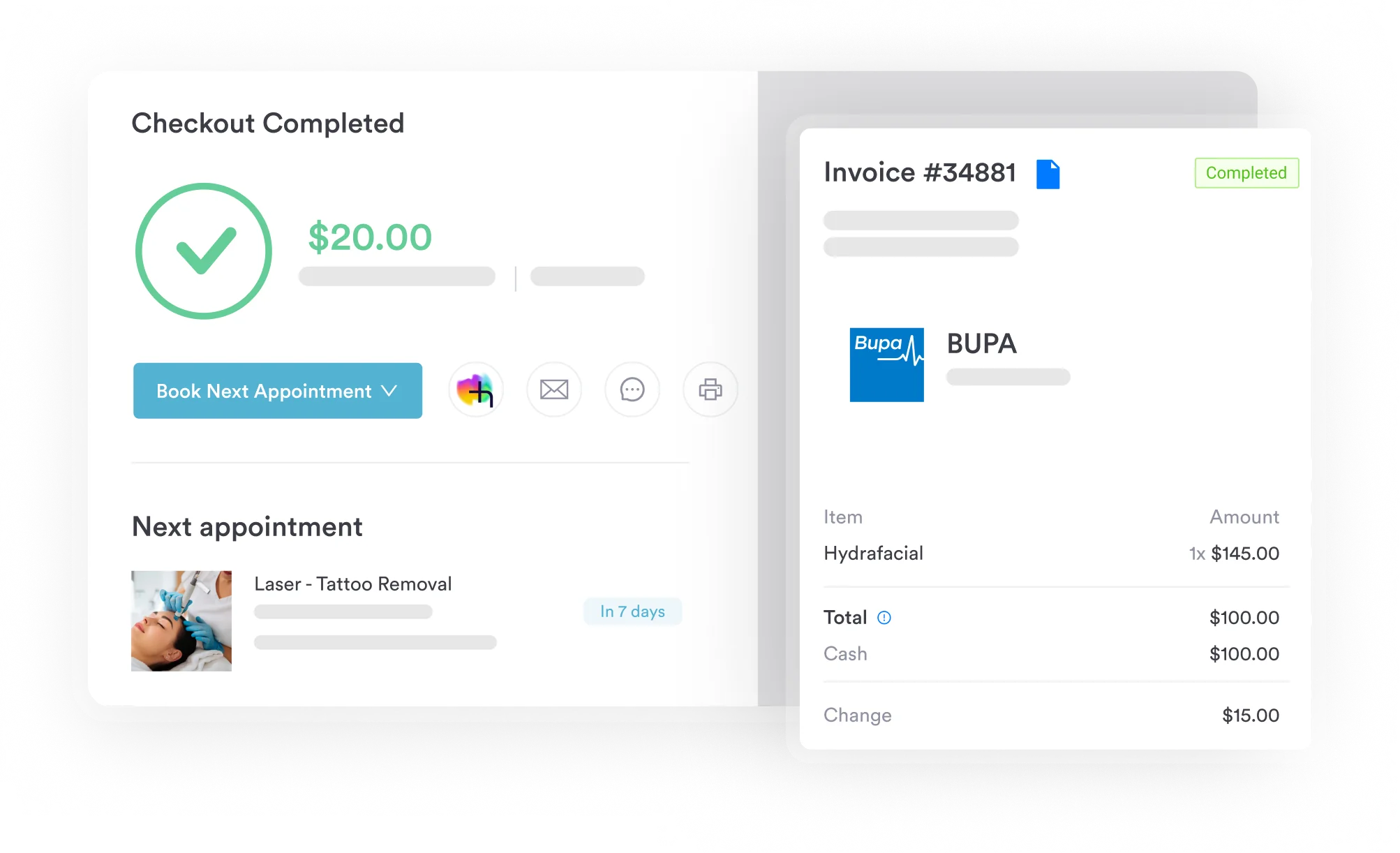
When the booking, consent form, procedure note and invoice live in separate places, the authorisation number gets retyped at each stage. In Pabau they sit on one patient record, so staff check each B1220 claim in a single file. Comparing tools? Start with our guide to UK medical billing software.

Pabau supports CCSD code entry, insurer-specific fee schedules and Healthcode submission, with procedure notes and consent stored on the patient record. See how it fits your endocrinology or surgical practice.

B1220 is narrowly scoped, which makes it a straightforward CCSD code to get paid on first submission. Most avoidable B1220 denials start before the procedure, with a missing pre-auth or an indication the ultrasound report does not back up.
So put the effort upstream. Secure the authorisation at booking and record the U grade in the note. Settle on B1220 or B1230 before the needle goes in, because the two cannot share a claim.
If your team retypes the same authorisation number into three systems, that is where the next denial will come from. Book a demo to see how Pabau keeps B1220 bookings, procedure notes and Healthcode claims on one record.

Need the full Bupa CCSD code reference? Bupa CCSD codes and fee schedule covers Bupa’s procedure codes, submission rules and fee structure for UK private practice.
Taking a tissue core instead of cells? CCSD code B1230: core biopsy of thyroid gland explains when core biopsy applies and why it cannot share a claim with B1220.
Is the next step a hemithyroidectomy? CCSD code B0860: partial thyroidectomy covers the billing rules for the surgery that often follows an indeterminate FNA.
Choosing software for CCSD billing? Best medical billing software in the UK compares the platforms UK private practices use to code and submit insurer claims.
CCSD Code B1220 covers fine needle aspiration of the thyroid gland. It pays the specialist’s fee for inserting a fine-gauge needle into a thyroid nodule, aspirating cells and preparing the specimen. It does not include cytological analysis or the outpatient consultation, and ultrasound guidance is not described in the code.
Usually, yes. Bupa, AXA Health, Vitality and WPA usually require prior authorisation before a thyroid FNA, while Aviva and Cigna UK decide case by case. The authorisation number must appear on the invoice. Confirm the current rule through each insurer’s provider portal before the procedure date, as rules change without notice.
The most common reasons are a missing prior authorisation number, an absent or incomplete procedure note, and the wrong code. Examples of the last are B1230 used for an FNA, or B1220 and B1230 claimed together. An undocumented clinical indication is another cause. Most are preventable with a pre-submission checklist and a structured procedure note template.
Enter B1220 with its official descriptor and map each insurer’s agreed fee separately. Record the pre-authorisation number at booking and link a structured procedure note template to the code. Before submission, check that the authorisation reference and clinician recognition number are present.