



CCSD code G5100: Bypass of duodenum billing guide
CCSD code G5100 bills a bypass that leaves the duodenum in place CCSD code G5100...

Last Updated: Oct 16, 2026

Specifically, CPT 11103 is an add-on code for each additional tangential skin biopsy lesion beyond the first.
Therefore, it cannot be billed without its primary code, CPT 11102, on the same claim.
Add-on codes are exempt from modifier 51, while modifiers 59 and XS separate distinct lesion sites.
Medicare pays less for 11103 than for 11102, so check current rates in the CMS fee schedule.
Ultimately, practice management software like Pabau keeps biopsy documentation and claim submission inside one patient record.
CPT code 11103 describes a tangential biopsy of skin for each separate additional lesion beyond the first. Because it is an add-on code, it cannot be submitted without its parent code, CPT 11102. As a result, dermatology and primary care practices report this pair when a tangential biopsy covers more than one lesion in a single encounter.
In 2019, the American Medical Association replaced the old single biopsy code with three technique-specific pairs. As a result, CPT 11103 sits in the tangential pair alongside 11102. Code selection follows the technique documented in the note, so a shave, a punch, and an incisional biopsy each carry their own primary and add-on code.
The AMA rewrote this descriptor in 2019. Specifically, the current wording names the technique directly: “Tangential biopsy of skin (e.g., shave, scoop, saucerization, curettage); each separate/additional lesion (List separately in addition to code for primary procedure).”
The instruction to list it separately is what most denials on this code come back to. Therefore, dermatology EMR software that carries the parent code through to the claim keeps that pairing intact.
Code selection depends on the biopsy technique, not the diagnosis. For example, a provider who shave-biopsies three lesions bills 11102 once and 11103 twice. If that provider also punch-biopsies a fourth lesion, it needs its own primary code, primary code, 11104, and its own add-on chain.
A tangential biopsy removes tissue with a blade passed parallel to the skin surface. Consequently, it samples the epidermis and part of the superficial dermis, without creating a full-thickness wound. Practitioners still call it a shave biopsy, and the AMA’s 2019 wording also covers scoop and saucerization.
Recording the technique word for word matters more than it looks. That is why skin clinic software that pre-populates biopsy fields keeps the note and the code speaking the same language.
Choosing the wrong biopsy family is the most consequential error in this code set. If the note documents a shave but the claim reports 11104, the record and the code disagree. Consequently, that mismatch is exactly what payer audits look for.
Tangential biopsy is also easy to confuse with shave removal, which is a different code family entirely. For instance, removal codes such as 11302 and 11311 describe taking a lesion off, not sampling it. If the intent was removal rather than diagnosis, the biopsy codes do not apply.
CPT 11102 reports the first tangential biopsy lesion and covers the baseline work. In contrast, CPT 11103 captures each later lesion taken by the same technique in the same encounter. Therefore, neither code carries the encounter on its own once multiple lesions are involved.
When three tangential lesions are biopsied, the claim reads 11102 x 1 and 11103 x 2. In other words, the unit count for 11103 is always the total number of tangential lesions minus one.
Count your tangential lesions before you submit. Bill 11102 once, then 11103 for every lesion above the first. For example, three lesions means 11102 x 1 and 11103 x 2. Document each biopsy site separately so the unit count is auditable.
Reimbursement for CPT 11103 varies by setting, payer, and locality. Because it is an add-on code, its relative value units sit below those of the primary code. Therefore, the CMS Physician Fee Schedule lookup tool is the authoritative source for current Medicare rates by locality. Check it before you submit, because CMS updates the schedule every year.
Important: The range above is an industry estimate built from aggregated fee schedule data. Actual Medicare payment depends on the 2026 conversion factor, the geographic practice cost indices, and the final CMS rule. Therefore, verify every rate through the CMS lookup before you submit.
Add-on codes follow modifier rules of their own. CPT 11103 sits in the AMA’s modifier 51 exempt list, so appending modifier 51 is incorrect and invites a rejection.
Confirm modifier preferences with each payer before you submit. For instance, some commercial plans follow National Correct Coding Initiative edits closely and prefer the granular X modifiers over modifier 59. AAPC’s code lookup shows which NCCI edits apply, which beats waiting for a denial to tell you.
Solid HIPAA-compliant documentation at the point of service also supports the modifier during a payer review. Specifically, the note has to show two anatomically distinct sites, not just two units on a claim line.
Medical necessity for a tangential biopsy rests on the diagnosis code attached to the claim. In other words, the diagnosis has to support the clinical rationale for taking tissue. Otherwise, a generic skin code with no documented suspicion invites a medical necessity denial. Therefore, a CPT-to-ICD-10 crosswalk tool can confirm payer coverage policies before you submit. Denial rate by code shows which services are worth a process fix and which are one-off errors. Under current evaluation and management rules, the counted elements changed but the need to show reasoning did not.
These are commonly cited examples rather than an exhaustive medical necessity guide. Instead, payer local coverage determinations (LCDs) set out which ICD-10 codes support coverage for skin biopsies. Therefore, check the applicable determinations first, especially for Medicare Advantage plans that apply stricter criteria.
Weak documentation is the second most common cause of 11103 denials, after incorrect pairing. Consequently, the procedure note has to stand on its own as justification for every lesion biopsied.
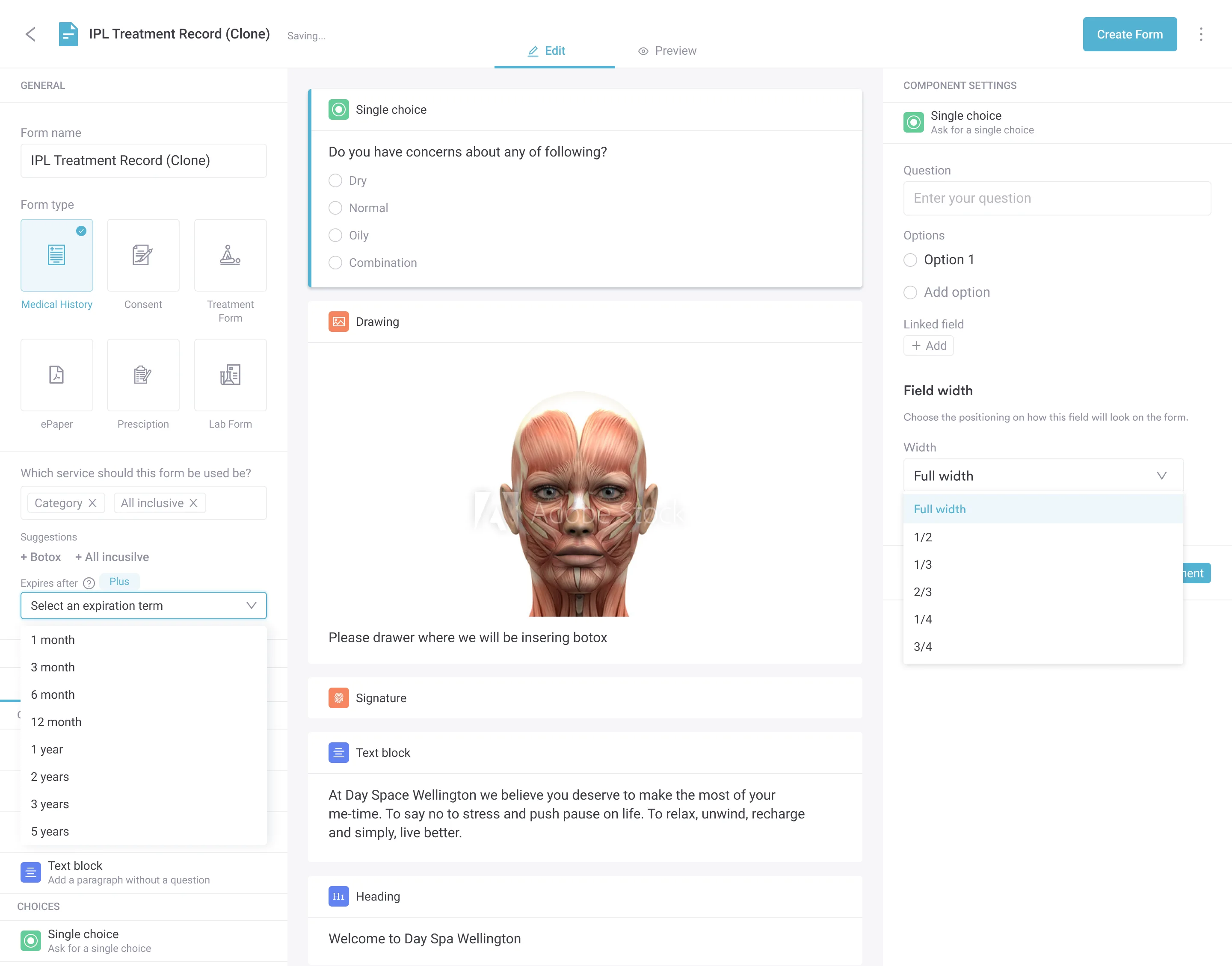
Digital intake forms that capture biopsy-specific fields at the point of care keep that record complete. In turn, standardized medical forms hold the format steady whichever provider performs the biopsy.
The stacking rule is simple once the formula is clear. Report 11102 once for the primary lesion, then 11103 once for each additional tangential lesion. However, no ceiling applies to how many times 11103 can be reported in one encounter. Even so, each unit still needs its own documented lesion in the procedure note.
Some payers apply quantity edits to 11103, flagging claims above four units for review. Therefore, when you bill high unit counts, send the records with the claim or expect a request for them.
Most 11103 denials trace back to a handful of repeatable errors. For example, compliance management tools catch them before submission rather than after the denial arrives, and a structured pre-submission check does the same job by hand.
Run a monthly audit on your 11103 claim lines. Then pull every claim where 11103 appears without 11102 on the same date of service. Ideally, that list should come back empty. If it does not, your charge capture process is generating automatic denials.
CPT 11103 sits inside a wider set of skin procedure and pathology codes. Knowing the neighbors prevents cross-code errors and captures everything billable from a biopsy encounter. For example, the same primary-plus-add-on pattern turns up elsewhere in dermatology, including 11043 for debridement measured by area.
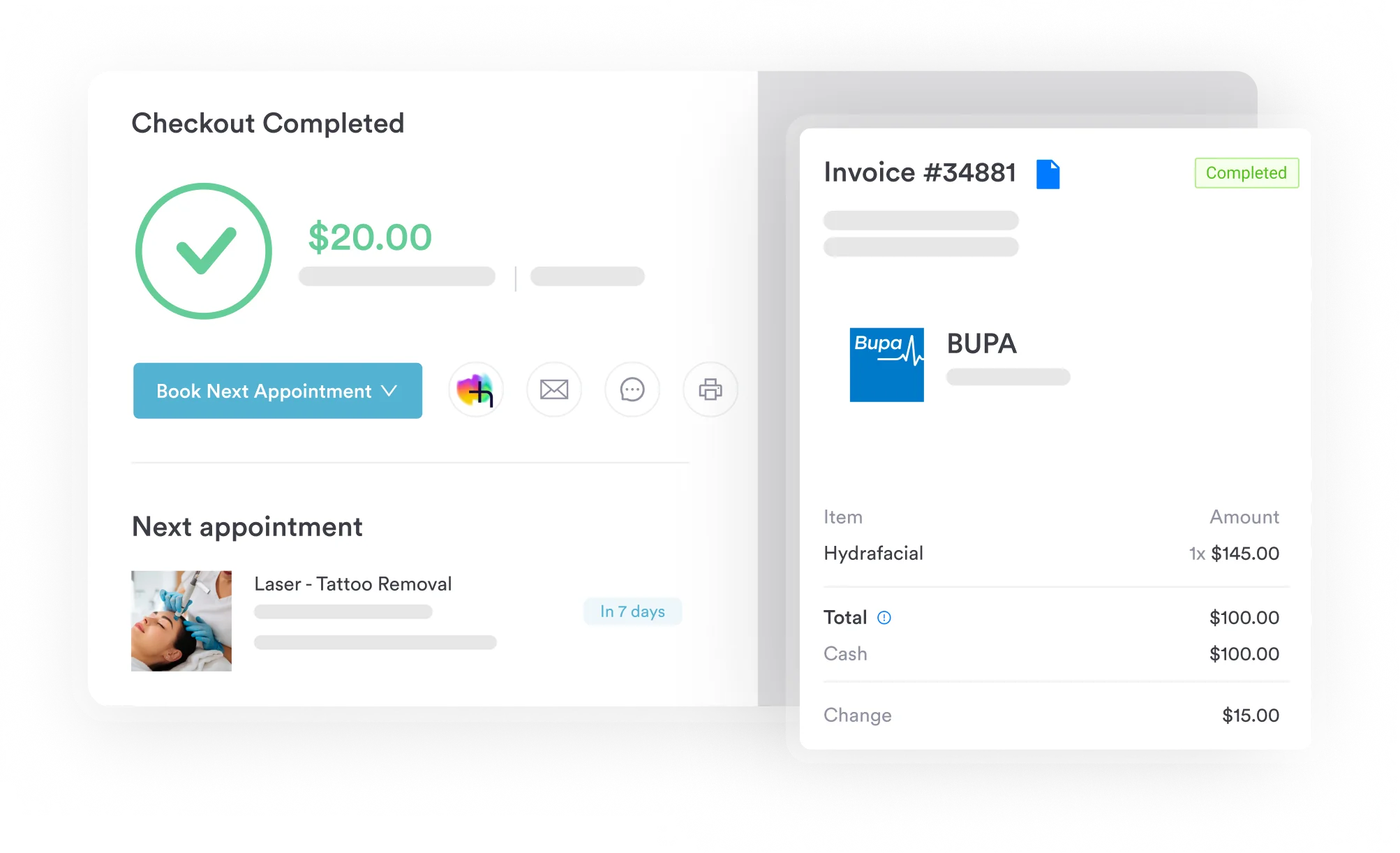
Dermatology practices billing tangential biopsy codes run a chain from the procedure note to the claim. Consequently, detail drops out at every handover. Pabau is an all-in-one practice management system, so the clinical note, the specimen record, and the invoice sit on one patient file.
When a clinician records a tangential biopsy of three lesions, the billing team can see the technique, the lesion count, and where each specimen went. As a result, structured medical records mean nobody reconstructs that from paper or a second system.
Pabau’s claims management software then runs a completeness check on each claim before it goes out. It confirms that the details insurers need, such as membership numbers and authorization codes, are present. However, it does not validate CPT pairings for you, so the add-on rules in this guide still sit with your coder.
For groups running several locations, one shared record structure keeps every provider’s biopsy documentation in the same format. As a result, that makes an audit response faster to assemble and easier to defend.
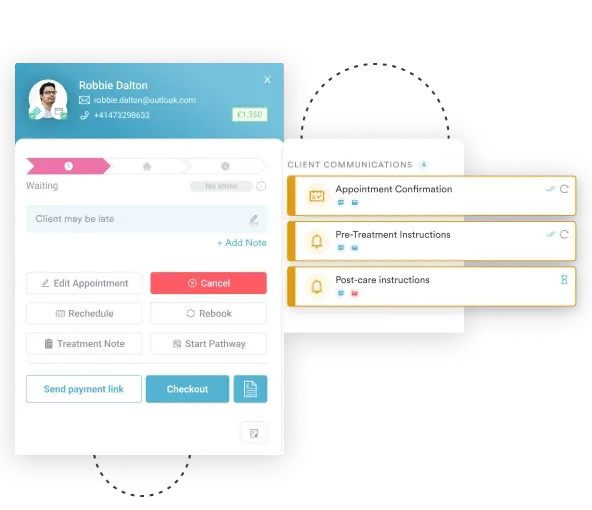

Pabau records biopsy technique, site, and specimen details in the patient file, then carries those details into the claim. Your billing team works from the clinical note instead of chasing it.

Get the pairing right and 11103 stops being a problem code. In short, the rules are few, and every one of them is settled before the claim leaves your practice.
The judgment worth keeping is that this is a documentation question dressed up as a billing one. Payers do not argue about whether 11103 exists. Instead, they argue about whether your note proves a second lesion was sampled by the same technique.
Fix the note and the claim takes care of itself. Book a demo to see how Pabau keeps biopsy documentation and claim submission on one patient record.

Coding a donovanosis diagnosis? ICD-10 code A58 guide covers the clinical definition, diagnostic criteria, and documentation practices for granuloma inguinale.
Verifying an STD diagnosis code? ICD-10 code A64 guide explains when to use this code for a suspected STD and the audit risk of a vague diagnosis.
Coding a nonvenereal syphilis case? ICD-10 code A65 guide explains how bejel differs from venereal syphilis in pathogen, transmission, and coding chapter.
Need the code for psittacosis? ICD-10 code A70 guide covers the billable code for psittacosis, ornithosis, and parrot fever, with no subcodes required.
Coding a Q fever diagnosis? ICD-10 code A78 guide covers the single billable code for acute and chronic Coxiella burnetii infection.
CPT Code 11103 is an add-on billing code for the tangential biopsy of skin, covering each separate additional lesion beyond the first. Specifically, it must always be reported alongside CPT 11102, which covers the first tangential biopsy lesion. In other words, it cannot be billed as a standalone code.
Modifier 59 or modifier XS may be used when payer edits bundle 11103 with another procedure. In either case, both signal that the lesion sites are anatomically distinct. Modifier 51 should not be appended, because add-on codes like 11103 are modifier 51 exempt.
Common ICD-10-CM codes paired with CPT 11103 include L57.0 for actinic keratosis, D23.x for benign skin neoplasms, and C44.x for malignant skin neoplasms. However, always check that the paired diagnosis meets the payer’s local coverage determination for skin biopsy.
Medicare reimbursement for CPT 11103 varies by locality and setting. For instance, non-facility office rates are generally higher than facility rates. Industry estimates place the non-facility rate between $38 and $55 for 2026, but those figures are estimates only. Therefore, verify current rates in the CMS Physician Fee Schedule lookup tool before you submit.
No. Shave removal codes such as 11302 and 11311 report therapeutic removal of a lesion. In contrast, CPT 11103 reports a diagnostic sample taken by the same blade technique. The distinction is intent, and the note has to state it.



