CPT code 93503: Swan-Ganz catheter billing and modifiers
CPT code 93503: Official descriptor and procedure overview In the AMA CPT code s...

Last Updated: Oct 23, 2026

CPT Code 17000 covers destruction of the first premalignant lesion using any accepted method, including cryosurgery, electrosurgery, laser, or chemical treatment.
CPT 17003 covers each additional lesion destroyed in the same session, for lesions 2 through 14.
CPT 17004 replaces both 17000 and 17003 when a session treats 15 or more lesions.
The most common denial trigger is miscoding premalignant lesions (17000) as benign lesions (17110) or the reverse, which drives both code selection and audit risk.
Practice management software like Pabau surfaces the correct code series contextually and tracks denial patterns, so you catch 17000 series errors before a payer does.
CPT Code 17000 is the billing code for destruction of the first premalignant lesion in a session, most often an actinic keratosis. Two companion codes extend the series. CPT 17003 covers each additional lesion up to 14, and CPT 17004 applies as a flat-fee code once a session reaches 15 lesions.
A single counting error anywhere in that series can mean under-coding by dozens of units. It can also trigger a Recovery Audit Contractor (RAC) review for overcounting.
This reference covers everything billing staff, coders, and practice managers need to apply CPT Code 17000 correctly.
CPT Code 17000 is the billing code for the destruction of a single premalignant lesion, first lesion. The American Medical Association (AMA) maintains this code.
Its official descriptor reads: Destruction (eg, laser surgery, electrosurgery, cryosurgery, chemosurgery, surgical curettement), premalignant lesions (eg, actinic keratoses); first lesion.
The most commonly destroyed lesion type is actinic keratosis (AK), a UV-induced precancerous skin change. If left untreated, AK carries a risk of progressing to squamous cell carcinoma. For dermatology billing workflows, this code is one of the highest-volume procedure codes in the practice.
Three points define when CPT Code 17000 applies:
The AMA’s parenthetical examples are illustrative, not exhaustive. Any of the following methods qualifies, provided the clinical indication is premalignant:
Documenting the specific method used is still required in the operative note, even though it does not change the code. Payers expect to see it, and its absence is a common denial trigger.
This is the section where most billing errors occur. The 17000 series uses a tiered structure that changes depending on total lesion count in a single session. According to the CMS Physician Fee Schedule and the AMA CPT codebook, the rules are as follows:
A worked example: a dermatologist treats eight actinic keratoses on the scalp and forearms in one visit. The correct claim is 17000 x1 plus 17003 x7. Reporting 17000 x8 is incorrect and will be denied. Reporting 17004 is also incorrect: the threshold is 15, not 8.
Add-on code billing structures like 17003 exist to handle exactly this kind of error. Yet these mistakes still account for a high proportion of claim rejections in high-volume skin practices.
CPT 17003 is reported with one unit per additional lesion, not as a single line with a quantity. Some practices stack it incorrectly as a single unit with a modifier. Payers expect individual line items or the correct unit count on a single line, depending on their specific claim format requirements.
Confusing CPT 17000 with CPT 17110 is one of the most audited coding errors in dermatology. The clinical distinction is fundamental: 17000 is for premalignant lesions; 17110 is for benign lesions (up to 14 lesions per session). Getting it wrong does not just affect payment; it creates an audit trail that Recovery Audit Contractors actively monitor.
Both codes can be reported on the same day when the patient has genuinely distinct premalignant and benign lesions treated in the same session. Modifier -59 (distinct procedural service) is required to override the Correct Coding Initiative (CCI) bundle. The clinical documentation must clearly distinguish the two lesion types and their anatomic locations.
The diagnosis code on a CPT 17000 claim must reflect a premalignant skin condition. Using a benign or unspecified skin diagnosis alongside CPT 17000 is a leading denial cause.
The CDC/NCHS ICD-10-CM web tool is the authoritative source for current code validity. The most commonly paired codes are below. Understanding ICD-10-CM code pairing logic matters for any high-volume procedure code.
Code specificity matters. L57.0 is the most commonly accepted primary diagnosis. Where the documentation supports a more specific anatomic site (e.g., lip, ear, face), use the corresponding D04 subcategory.
Avoid submitting CPT 17000 with a benign lesion ICD-10 code such as L82 (seborrheic keratosis). That pairing will flag immediately as a code mismatch and deny.
Modifiers for CPT Code 17000 serve two main purposes: indicating laterality or anatomic distinctness, and distinguishing a separately identifiable E/M service on the same day. Using the wrong modifier, or omitting one where required, is one of the top reasons claims route to manual review.
Accurate documentation should always specify when and why a modifier applies, a rule that also governs malignant lesion destruction codes.
A common modifier error: appending -25 to the 17000 line itself rather than to the evaluation and management (E/M) code. The modifier belongs on the E/M code to signal that a separate visit-level service occurred. Placing it on the procedure code will cause it to be ignored or rejected.
Medicare reimbursement for CPT Code 17000 varies by geographic region and practice setting. Based on CMS Physician Fee Schedule data, the 2026 national average non-facility reimbursement is approximately $66.47, and the facility rate is approximately $47.76.
These figures shift with each annual CMS update and with MAC locality. Always verify current rates using the CMS MPFS search tool for your specific Medicare Administrative Contractor (MAC) region before quoting expected reimbursement.
Several factors affect the final payment amount:
CPT Code 17000 carries a 10-day global period per CMS global surgery billing rules. This means routine follow-up care during the 10 days post-procedure is bundled into the 17000 reimbursement and cannot be billed separately using an E/M code. Understanding the CPT coding series global period framework is essential for any high-volume procedure.
What the global period covers:
What can be billed separately during the global period:
Insufficient documentation is the single most preventable denial cause for CPT Code 17000 claims. The operative or procedure note must contain all of the following elements. Following HIPAA-compliant documentation practices also means ensuring these records are stored securely and retrievable for audit purposes.
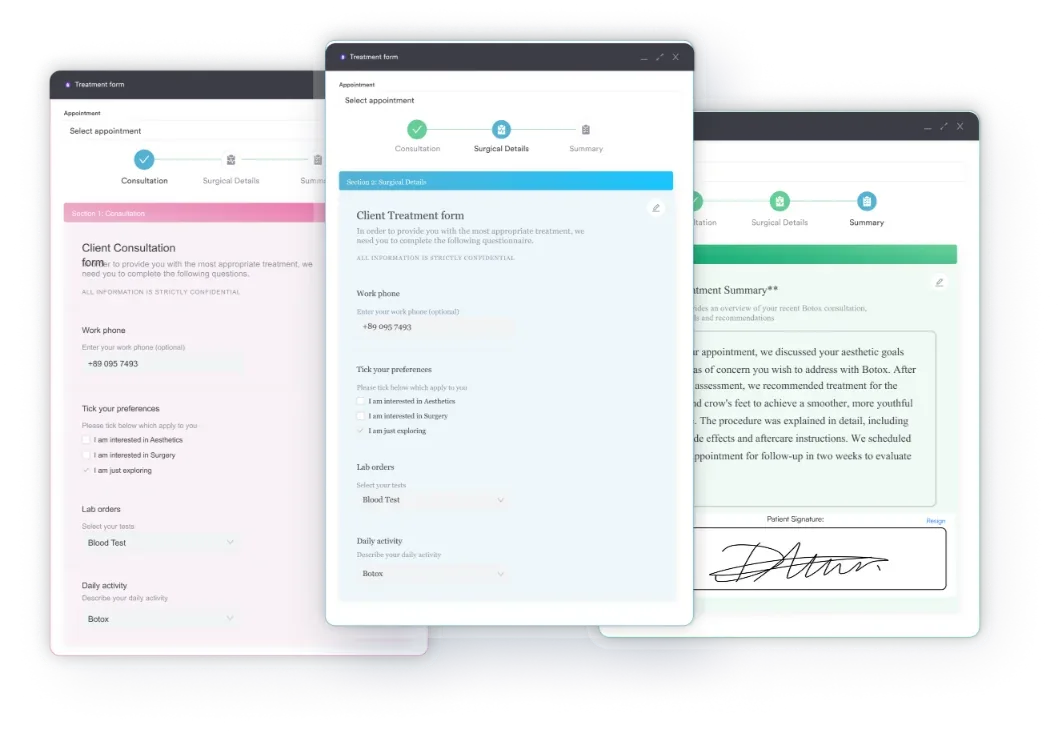
Digital intake forms can prompt for each of these data points at the point of care. This significantly reduces the chance of incomplete notes reaching the billing team. A structured template for lesion destruction documentation captures method, count, and site in a consistent format that satisfies payer audits.
Audit your last 30 CPT 17000 claims. Check whether every operative note specifies lesion count, anatomic sites for each lesion, destruction method, and the premalignant diagnosis. Any note missing two or more of these elements is a denial waiting to happen. Fix the documentation template first, then re-audit.
Most CPT Code 17000 denials trace back to a small set of recurring mistakes. The CMS RAC program has identified excessive units of premalignant lesion destruction as a known audit topic.
Tracking diagnosis code accuracy across your claims prevents these issues from compounding, the same discipline needed for benign lesion excision codes.
Medicare coverage for CPT Code 17000 is governed by Local Coverage Determinations (LCDs) set by each Medicare Administrative Contractor.
The CMS ICD-10 coverage database is the starting point for verifying which diagnoses your MAC accepts as medically necessary for this code. Coverage policies differ between Medicare and commercial payers in several key ways:
The 17000 series errors described above share a common root cause. Coders are working from incomplete notes or relying on memory to apply the tiered billing rules correctly. Practice management software that connects clinical documentation directly to billing closes that disconnect.
Pabau’s claims management software surfaces the correct code series contextually, so coders do not need to cross-reference billing rules manually for every encounter.
Three specific workflow improvements matter most for CPT Code 17000:
Practices using integrated skin clinic practice management tools report fewer rework cycles because the documentation and billing layers share the same data source. When the procedure note captures lesion count and method at the point of care, that data populates the claim automatically. It no longer needs to be re-keyed from handwritten notes.

Pabau connects your clinical notes directly to billing and surfaces the correct CPT code series at the point of care. It also tracks denial patterns across your practice before payers do.

Run a monthly denial report filtered to CPT 17000 and 17003 claims. Group denials by reason code. If CO-4 (incorrect code for service) or CO-97 (bundling) appears more than twice, treat it as a systematic coding error in your workflow. It is not a one-off mistake. Fix the template, retrain the relevant staff, and re-submit the denied claims within the timely filing window.
CPT Code 17000 billing errors are systematic, not accidental. The tiered structure across 17000, 17003, and 17004, the premalignant-versus-benign split from CPT 17110, and strict documentation demands all create predictable failure points.
These recur in RAC audits and payer denials. Fixing them means connecting clinical documentation directly to coding, rather than asking coders to memorize more reference rules.
Pabau’s integrated claims management workflow captures lesion count, method, and diagnosis at the point of care. It routes that data directly to your billing team, cutting manual re-entry errors and surfacing the correct 17000 series code automatically. To see how it handles high-volume skin procedure billing in practice, book a demo with the Pabau team.

Coding otosclerosis when the ear isn’t specified? ICD-10 code H80.20 covers when this code applies and related ear diagnoses ENT coders often handle together.
Coding vertigo as a manifestation code? ICD-10 code H82.1 covers why payers reject this right-ear code without the underlying disease sequenced first.
Coding left-ear vertigo from an underlying disease? ICD-10 code H82.2 covers its billable status, the Code First convention, and its laterality siblings.
CPT Code 17000 is the billing code for destruction of the first premalignant lesion, most commonly an actinic keratosis. It covers procedures such as cryosurgery, electrosurgery, laser surgery, chemosurgery, and surgical curettement performed on a single premalignant skin lesion. It applies only to the first lesion in a session; additional lesions in the same session are reported using companion codes 17003 or 17004.
CPT 17000 is reported once for the first premalignant lesion destroyed in a session. CPT 17003 is an add-on code reported once per each additional lesion destroyed in the same session, for lesions 2 through 14. A session treating 5 lesions is billed as 17000 x1 plus 17003 x4, not 17000 x5.
CPT 17000 applies to premalignant lesions such as actinic keratoses. CPT 17110 applies to benign lesions such as warts or molluscum, covering up to 14 lesions as a single flat-rate code. Coding a premalignant lesion as 17110 (or vice versa) is a clinical and billing error that can trigger payer audits. The distinction must be supported by the documented clinical or pathological diagnosis.
CPT 17004 replaces both 17000 and 17003 when 15 or more premalignant lesions are destroyed in a single session. It is a flat-fee code reported once (x1) regardless of whether the count is 15 or 50. Do not report 17004 alongside 17000 or 17003 for the same session.
The global period for CPT 17000 is 10 days. Routine post-procedure follow-up during those 10 days is bundled into the procedure reimbursement and cannot be billed separately as an E/M visit. Unrelated problems or separately identifiable services during the global period can still be billed with the appropriate modifier (-24 on the E/M code).
ICD-10-CM code L57.0 (Actinic keratosis) is the most commonly paired diagnosis code with CPT 17000. Actinic keratosis is the most frequent premalignant lesion treated by this procedure. D04 codes (carcinoma in situ of skin by site) are also valid pairings when pathology confirms the diagnosis.