

ICD-10 Code S42.444P: Medial epicondyle fracture, right humerus
ICD-10 Code S42.444P: full descriptor and code validity ICD-10 Code S42.444P car...

Last Updated: Oct 13, 2026
Billable Code Specific Code
T32.53 is the billable ICD-10-CM code for corrosions involving 50-59% of body surface with 30-39% third degree corrosion.
Let Pabau's smart automation suggest the right codes, reduce claim denials, and keep your practice compliant—effortlessly.
Automate repetitive tasks and focus on what matters most—your patients.
Reduce coding errors and ensure compliance with the latest regulations.
Clean claims, fewer denials, and faster reimbursements.
Powerful insights and reporting to help your practice thrive.
HIPAA compliant SOC 2 certified GDPR-compliant Trusted by 4,000+ clinics worldwide

ICD-10 code T32.53 covers corrosions involving 50-59% of body surface with 30-39% third degree corrosion, and it is billable for FY2026.
T32 codes cover chemical corrosions only. Thermal burns belong under T31, and confusing the two is an auditable coding error.
T32.53 has only five characters, so an X placeholder fills the sixth position. Submit T32.53XA, T32.53XD, or T32.53XS, never T32.53A.
Use T32 as the primary code only when the corrosion site is unspecified. Once the site is documented, it is a supplementary code alongside T20-T25.
Practice management software like Pabau captures total body surface area, causative agent, and encounter type in the clinical note. Coders then have everything the code needs.
ICD-10 code T32.53 is a billable diagnosis code for corrosions involving 50-59% of body surface, where 30-39% of body surface is third degree. It became effective October 1, 2025 under the FY2026 code set.
T32.53 carries only five characters, so an X placeholder fills the sixth position before the mandatory 7th character. That means the code you bill is T32.53XA, T32.53XD, or T32.53XS. T32.53A on its own will reject.
The T32 category is maintained jointly by the Centers for Medicare and Medicaid Services (CMS) and the National Center for Health Statistics. Both publish the annual update that takes effect each October 1.
Here is what a coder needs before the claim goes out, including the form of the code that is actually submittable.
Verify current-year validity in the CDC ICD-10-CM web tool, particularly after October 1 when the annual update takes effect. Practices that refresh their code sets on the first day of the fiscal year avoid a run of avoidable rejections.
Both figures in the description are shares of total body surface area, and both need support in the clinical note. Misreading either one produces the wrong code.
The first percentage (50-59%) is the share of total body surface area (TBSA) with corrosion of any depth. The second percentage (30-39%) is the share of total body surface area with third degree, full-thickness corrosion. The second figure is therefore a subset of the first. A coding error surfaces as a cash flow problem weeks later, which is why the healthcare revenue cycle is measured end to end.
The note has to state both numbers. A line that reads “extensive chemical burns” will not support the code. What the chart needs is a documented TBSA estimate alongside a depth assessment for each affected region.
Two methods are used clinically to estimate the surface area a corrosion has affected.
Wound care and dermatology practices get this right by capturing TBSA in a structured field rather than free text. A structured field in skin clinic software or dermatology EMR software keeps the number attached to the encounter, where the coder can find it.
Thermal burns and chemical corrosions look similar at the bedside, but ICD-10-CM classifies them under separate categories. Using the wrong one is an auditable error.
The record has to identify the causative agent. A note that says “burn injury” without naming heat or a chemical leaves the coder unable to make the T31 or T32 call. The parallel burn category uses the same extent bands, so T31.54 is structured exactly like a T32.5x code.
Payer auditors look for documentation that supports the code assigned. On large TBSA injuries, the T31 and T32 distinction is a known audit trigger.
Where the code sits tells you whether you have reached the highest available specificity. T32 is the category, T32.5 the subcategory, and T32.53 the billable code beneath it.
ICD-10-CM attaches a usage note to T32. Use it as the primary code only when the site of the corrosion is unspecified. When the site is documented, T32 becomes a supplementary code reported alongside a site-specific code from T20-T25.
The siblings at the T32.5x level differ only in the third degree percentage. Picking the wrong one because the note was not granular enough is a common error here. The same structure repeats at lower extent levels, so T32.43 and T32.43 and T32.31 read exactly the same way.
Confirm current descriptions and any attached coding notes in the AAPC ICD-10-CM code lookup before you submit.
T32.53 needs a 7th character, and it needs an X placeholder to get there. The code carries five characters, so X fills the sixth position and the encounter character goes seventh. Correct submittable codes are T32.53XA, T32.53XD, and T32.53XS.
T32.53A, T32.53D, and T32.53S are all invalid, and a claim carrying one will reject at the clearinghouse. Only the treating clinician can determine which encounter character applies.
“Initial encounter” does not mean the first time the patient has ever seen a provider. It means the active treatment phase. A patient transferred between facilities during active treatment still takes character A. Switch to D once active treatment has concluded.
For sequela encounters, report the specific late effect first, then T32.53XS as the secondary code.
The clinical note has to support every element of the code description. Digital clinical forms built around these requirements capture what a coder needs before the note is finalized.

Practices managing these cases benefit from structured patient records that prompt for each data point at the point of care. Capturing them during the consultation beats a retrospective chart review weeks later.
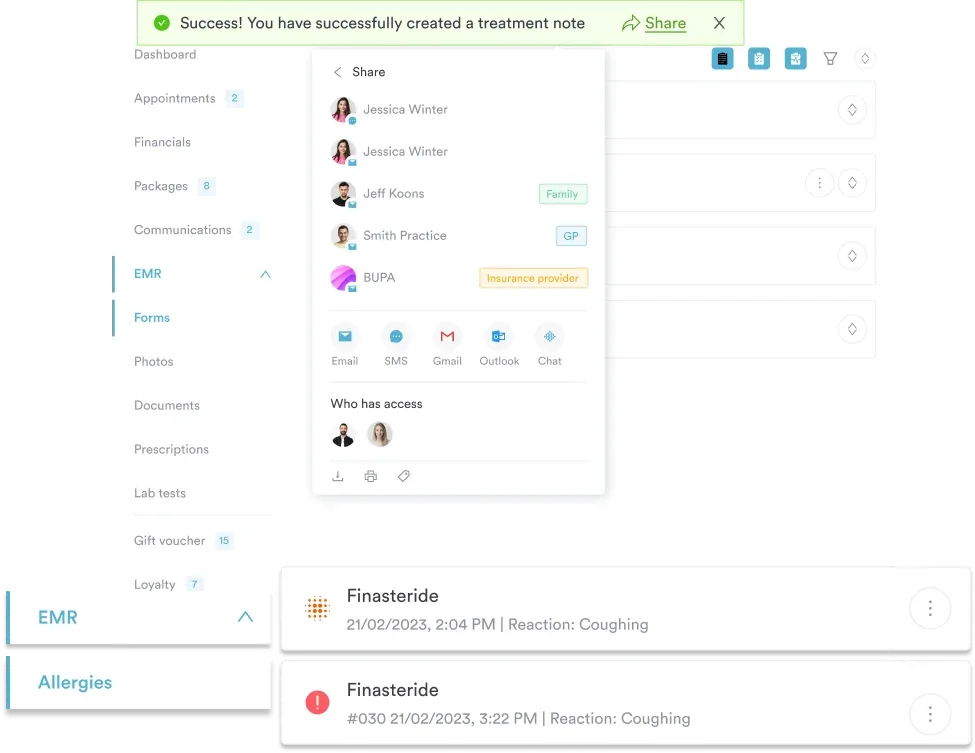
Flag T32.53 encounters for a coder review step before submission. Build required fields into your note template for total TBSA and the third degree share. Add a submission check that the code carries the X placeholder.
These are the error patterns worth checking before a T32.53 claim goes out.
Report an external cause code alongside T32.53 whenever the causative chemical is documented. X40-X49 covers accidental exposure to noxious substances. The pair answers the payer’s first question about an unusual TBSA presentation.
Documenting at the point of care, rather than retrospectively, is the most effective way to avoid these patterns. Compliance management workflows can flag an incomplete corrosion entry before it reaches the billing team.
The same discipline underpins medical billing compliance more broadly, since an audit tests the note as hard as it tests the code.
In a lot of practices this work is split across two systems. The clinician writes the note in one place, and a biller pulls the figures out afterwards to build the claim. Anything the note left out becomes a phone call or a rejection.
Pabau keeps both halves in one record. Digital forms capture TBSA, the causative chemical, and the encounter type while the clinician is still with the patient. Those fields sit on the encounter, so nobody has to reconstruct them later.
From there, claims management runs off the same record. Pabau submits and tracks electronic claims through its Claim.MD integration, so the encounter you documented is the encounter the payer receives.
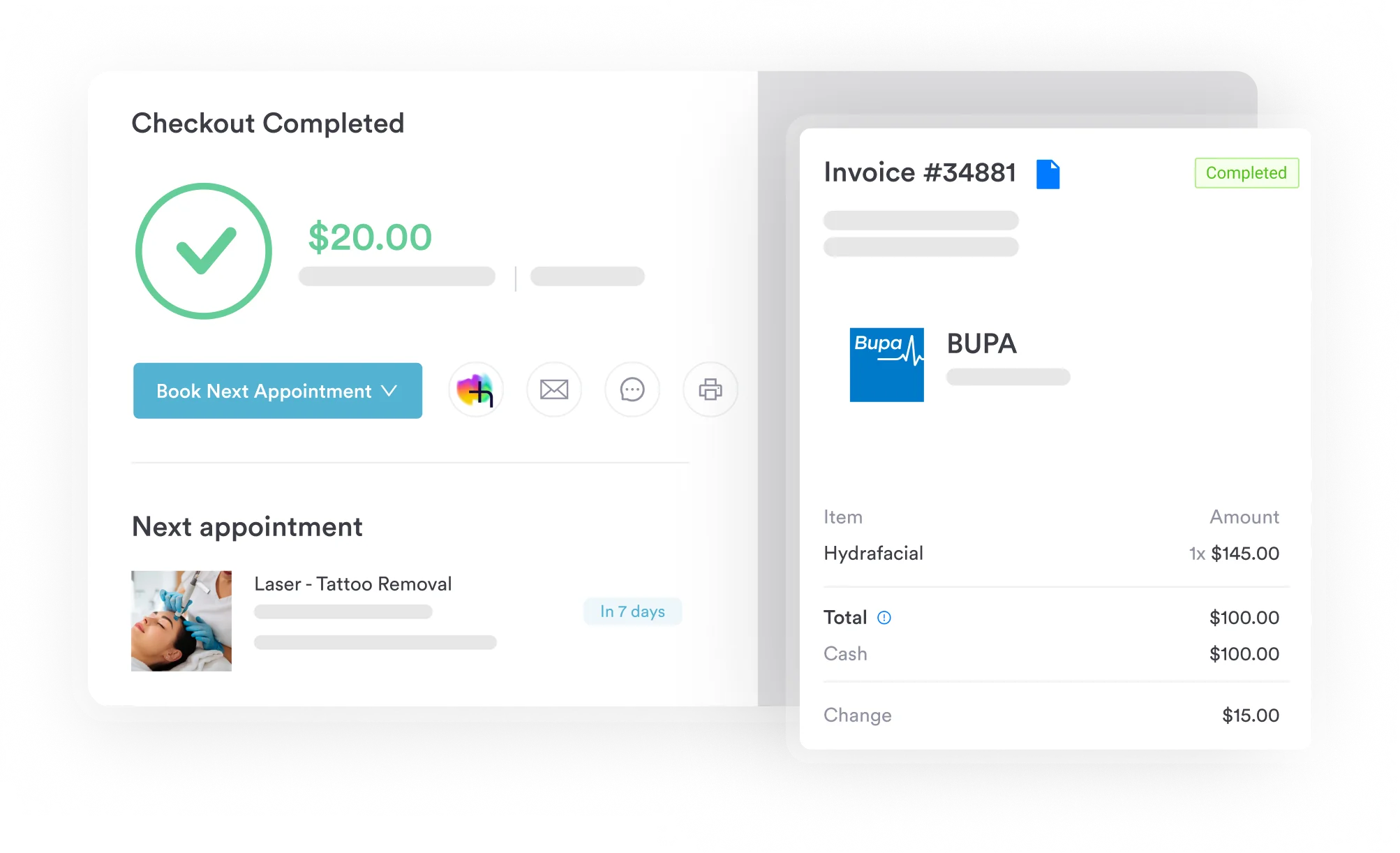
The payoff is fewer rounds of rework. A clean claim leaves less for the billing team to chase, and denial management stops one missing field costing you twice.

Pabau captures total body surface area, the causative chemical, and the encounter type in the clinical note itself. Claims then go out through the Claim.MD integration from the same record, so nothing has to be reconstructed at billing.

T32.53 is a code you can get right on the first pass, provided the note was written with the claim in mind. The two percentages and the encounter type are clinical judgments, so they have to be captured while the patient is still in front of you.
The trade-off worth remembering is that a coder cannot repair a thin note. Add the X placeholder check to your submission routine and the rest is documentation discipline. Book a demo to see how Pabau captures corrosion documentation that holds up on audit.

Coding the surgical repair that follows? CPT code 15150 walks through billing tissue cultured skin autografts on large surface areas.
Reconstruction on the same admission? CPT code 14020 covers adjacent tissue transfer and the documentation each site needs.
Need a worked example of sequela coding? S61.314S shows how the S character behaves once an injury has healed.
Billing a follow-up hospital visit? Subsequent hospital care billing guide covers CPT code 99231 for follow-up care requiring straightforward or low-complexity decision making.
Billing a moderate-complexity hospital follow-up? Moderate-complexity hospital care billing guide covers CPT code 99232 for follow-up care requiring moderate decision making or at least 35 minutes.
ICD-10 code T32.53 is a billable diagnosis code for corrosions involving 50-59% of body surface, with third degree corrosion covering 30-39% of body surface. It sits in the T32 category for chemical corrosions classified by extent of body surface involved. The code took effect October 1, 2025 for FY2026.
T32.53 takes A for an initial encounter, D for a subsequent encounter, or S for a sequela. Because the code has only five characters, an X placeholder fills the sixth position first. Only the treating clinician can decide which encounter character applies.
Clinicians estimate TBSA at the bedside using the Rule of Nines for adults or the Lund-Browder chart for children. The Lund-Browder chart adjusts for age, which matters because head and leg proportions change. The clinician documents the total and the third degree share separately, and a coder cannot estimate either figure.
The siblings within T32.5 are T32.50 for 0% to 9% third degree corrosion, then T32.51, T32.52, T32.54, and T32.55. Those four cover 10-19%, 20-29%, 40-49%, and 50-59% respectively. Each band sits within the same 50-59% total body surface range.
Only when the site of the corrosion is unspecified. ICD-10-CM attaches a usage note to T32 that limits it to that situation. Once the note documents the site, report a site-specific code from T20-T25 first and use T32.53XA as a supplementary code.




