ICD-10 Code S42.444P: Medial epicondyle fracture, right humerus
ICD-10 Code S42.444P: full descriptor and code validity ICD-10 Code S42.444P car...

Last Updated: Oct 13, 2026
Billable Code Specific Code
S62.630K is the billable ICD-10-CM code for displaced fracture of distal phalanx of right index finger, subsequent encounter for fracture with nonunion.
It is a billable, specific code. The current ICD-10-CM edition runs October 1, 2025 through September 30, 2026. According to the CMS ICD-10 codes page, it is eligible for submission on HIPAA-covered transactions.
Payers check the code set edition against the date of service at claim adjudication. S62.630K itself has not changed since it was introduced on October 1, 2015. What matters is that the edition you bill from matches the date of service.
Let Pabau's smart automation suggest the right codes, reduce claim denials, and keep your practice compliant—effortlessly.
Automate repetitive tasks and focus on what matters most—your patients.
Reduce coding errors and ensure compliance with the latest regulations.
Clean claims, fewer denials, and faster reimbursements.
Powerful insights and reporting to help your practice thrive.
HIPAA compliant SOC 2 certified GDPR-compliant Trusted by 4,000+ clinics worldwide

ICD-10 code S62.630K describes a displaced fracture of the distal phalanx of the right index finger. You report it at a subsequent encounter, once the fracture shows nonunion.
The 7th character K applies when a follow-up visit documents fracture nonunion. Choosing A, D, or G instead invites a denial.
S62.630K is billable and valid for HIPAA-covered transactions. The current ICD-10-CM edition runs October 1, 2025 through September 30, 2026.
Practice management software like Pabau captures laterality, encounter type, and fracture status in structured fields at every visit.
Every character in S62.630K carries clinical meaning. Understanding the structure prevents substitution errors when coding adjacent phalanx fractures or different encounter types.
The zero in S62.630 confirms the right index finger, and the left index finger uses S62.631x. Laterality mix-ups are the most common clean-claim failure on finger fracture codes. The physician’s note has to say “right” for this code to hold up on audit.
Side and site live in the code body, while the final character reports the stage of care. A left hip code such as S70.222S follows that split, ending in S for the sequela.
Check laterality documentation before submitting any S62.630x code. If the operative or clinical note says ‘index finger’ without specifying left or right, query the provider before coding. Payers routinely deny laterality-ambiguous fracture claims on audit.
The 7th character K says the patient came back after active treatment ended, and the fracture has failed to achieve bony union. That single letter changes the clinical story the code tells a payer. It also drives medical necessity for orthopedic hardware and physical therapy authorizations.
Review the full set of valid 7th characters for S62.630 before coding any follow-up visit. The same character logic runs across the wider S62 family, including wrist codes such as S62.185K.
The practical distinction between D, G, and K comes down to imaging and physician documentation. Delayed healing (G) describes a fracture that is still progressing toward union, only slower than expected. Nonunion (K) means bony bridging has stopped and the fracture line persists on imaging.
Malunion (P) means the fracture healed in an incorrect position. Without explicit physician documentation of one of those outcomes, D (routine healing) is the only defensible choice.
Choosing that final letter works the same way on every fracture family in this chapter. Femur codes force the identical decision, and S72.012B shows how it lands.
The S62.630 base code covers a displaced fracture of the distal phalanx of the right index finger. All sibling codes share that anatomy, and only the encounter type changes. The table above lists all seven valid siblings. For a nondisplaced fracture in the same location, the base code is S62.660 instead.
For left index finger equivalents, the series starts at S62.631. For the other digits on the right hand, the code body shifts again:
Each of those follows the same 7th character rules described above. Open fractures in the same family take a B rather than a K, as in S62.601B.
S62.630K sits inside a nested ICD-10-CM hierarchy. Coders often need the parent codes to navigate crosswalks and DRG groupers. Some payer coverage policies also reference the category rather than the full billable code.
No placeholder X is involved anywhere in this code. The placeholder only fills empty character positions in codes shorter than six characters that still need a 7th character. S62.630 already runs to six characters, so K attaches directly as the 7th. The same rule covers related hand codes such as S62.202P.
Outside the hand, femur codes nest through identical levels. S72 narrows to a segment and a side before a billable code like S72.022Q appears.
Fracture coding under ICD-10-CM follows the episode-of-care model set out in the ICD-10-CM Official Guidelines. The encounter type follows the phase of care rather than the patient’s status as new or established.
Nonunion and malunion are separate outcomes, so the follow-up code changes with whichever one the physician records. A right femur that healed crooked is reported with S72.021R rather than a nonunion character.
For practices managing return-to-play timelines with sports medicine software, the switch from D to K carries weight downstream. Authorization for further imaging, surgical consultation, and extended therapy all depend on the nonunion code being in place.
Practices that capture injury history and prior treatment at every visit through digital intake forms keep that documentation retrievable at coding time.
S62.630K requires specific elements in the clinical record. A note that says “fracture follow-up” is not sufficient. Payers auditing nonunion claims look for six documentation anchors:
Practices with HIPAA-compliant documentation workflows reduce audit exposure, because every required element lands in a structured field rather than free text. That discipline matters most when hand therapy runs alongside orthopedics, which is where occupational therapy software keeps both sets of notes in one record.
Precision about the site matters just as much on the long bones. The radiology note has to name the femoral neck before a displaced code such as S72.043B can stand.
ICD-10-CM separates displaced from nondisplaced fractures at the code level. The physician’s documentation controls which series applies; coders cannot infer displacement status from mechanism of injury alone.
When documentation is ambiguous, ICD-10-CM guidelines instruct coders to default to displaced. If imaging shows a nondisplaced fracture and the physician notes it as such, S62.660K is the correct nonunion code. Using S62.630K for a documented nondisplaced fracture is an error that gets flagged on audit.
That displaced and nondisplaced split runs through the femur codes as well. A nondisplaced fracture at the femur epiphysis carries its own entry, S72.024A.
S62.630K is grouped within Medicare Severity Diagnosis Related Groups (MS-DRGs) for inpatient billing under CMS. The specific DRG assignment depends on the presence of complicating or comorbid conditions (CC) and major complicating conditions (MCC). According to the AAPC ICD-10-CM coding reference, S62.630K falls within the musculoskeletal injury DRG groupings. Revenue cycle management treats coding, submission and collection as one process rather than three handoffs.
For outpatient and physician billing, MS-DRG grouping does not apply directly. S62.630K maps instead to standard APC (Ambulatory Payment Classification) groupings for outpatient hospital claims.
The CMS MS-DRG grouper files carry the current classifications for inpatient verification. Check DRG weights against the most recent CMS IPPS final rule, since the values update every October 1.
Verify S62.630K’s MS-DRG assignment each October using the CMS MS-DRG grouper file released with the annual IPPS final rule. DRG weights and CC/MCC logic update each fiscal year, and using prior-year groupings causes reimbursement calculation errors.
Coding references and documentation systems use several clinical terms interchangeably with S62.630K. These index terms appear in the ICD-10-CM alphabetic index and help coders locate the code when documentation uses non-standard phrasing.
Any of these synonyms can map to S62.630K, as long as the record carries all four required elements. Those are right laterality, displaced classification, distal phalanx location, and confirmed nonunion. Practices using claims management software can flag notes that use a synonym without the matching code.
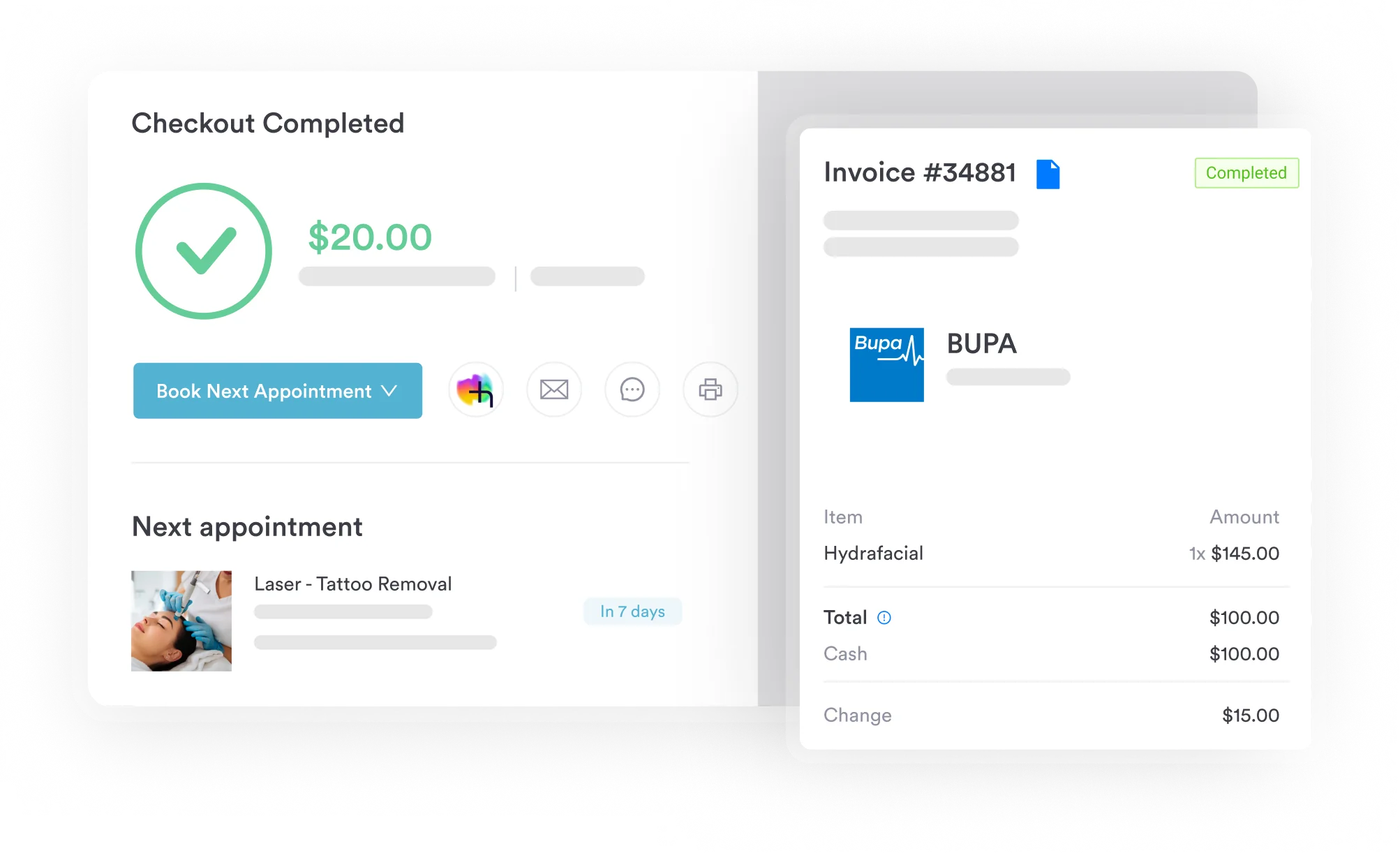
Accurate use of S62.630K depends on the record capturing the right details at the right time. Practice management software like Pabau holds injury date, laterality, fracture type, and encounter sequence in structured client records. Coders stop piecing the episode together from free text at billing time.
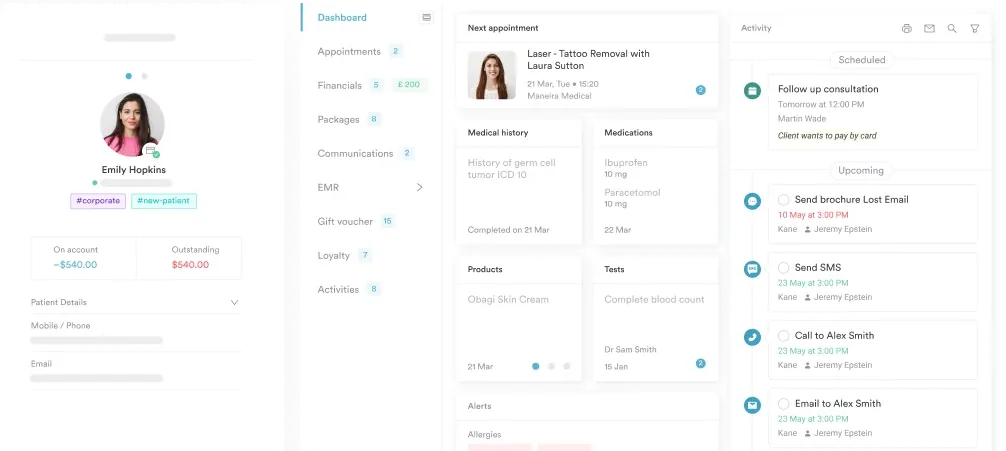
For practices running orthopedic rehabilitation alongside coding, Pabau Scribe, our AI scribe, captures consultation detail in structured form without adding to charting time. The result holds up to payer audit on nonunion cases, where several providers add to one record over months.
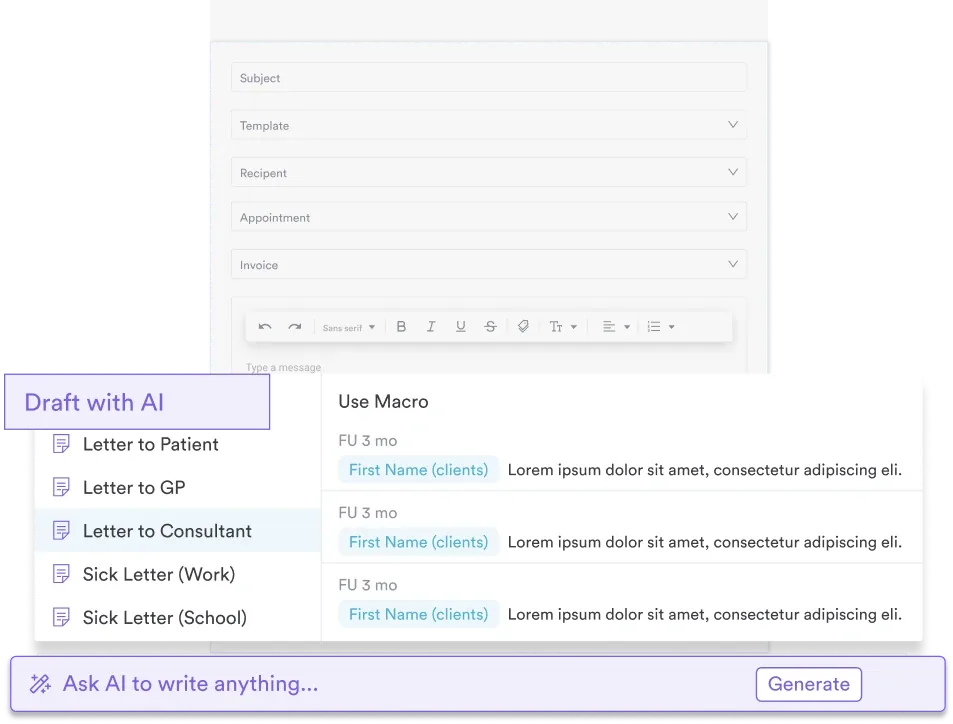
Pabau also carries the coded diagnosis through to the claim, so billing and clinical notes stay in step. Every subscription includes every feature, so none of this sits behind a higher tier.

Pabau records laterality, encounter type, and fracture status in structured fields as the visit happens. Coders get everything they need to bill S62.630K without chasing the physician for a clarification.

Three elements have to line up before S62.630K is the right code. You need a subsequent visit, a displaced distal phalanx fracture on the right index finger, and confirmed nonunion. Miss any one of them and the claim is exposed on audit.
The fix sits upstream of the coder. If the physician’s note names laterality, displacement, and the nonunion finding at the visit itself, the code follows without a query. If it does not, no amount of billing review will recover it later.
Pabau records those elements at the point of care, so the billing team is not chasing documentation weeks after the visit. Book a demo to see how Pabau handles fracture episode coding across multi-provider practices.

Coding nonunion outside the hand? S72.451K applies the same 7th character logic to a displaced supracondylar femur fracture.
Coding a jaw reconstruction case instead? Mandibular osteotomy billing explains CPT code 21196 and when payers require prior authorization for sagittal split fixation.
Coding an open metacarpal fracture instead? S62.349B shows how the B character changes the encounter picture for an open fracture.
Coding a mandible bone graft instead? Mandible bone graft billing covers CPT code 21215, the RVUs, modifiers, and 2026 fee schedule for autogenous bone grafts.
Coding an ear cartilage graft instead? Ear cartilage graft billing covers CPT code 21235, its 90-day global period, RVUs, and bundling rules with tympanoplasty.
S62.630K is a billable ICD-10-CM code for a displaced fracture of the distal phalanx of the right index finger. It applies at a subsequent encounter where the fracture shows nonunion. The code is accepted for HIPAA-covered transactions, and the current edition runs through September 30, 2026.
Use S62.630A for the first encounter when active fracture treatment is being provided, including the initial injury visit, closed reduction, or surgical fixation. Use S62.630K only after active treatment has ended and the patient returns with documented nonunion on imaging. Using A for follow-up visits after active treatment is complete is a coding error that invites audit.
Fracture nonunion means the fracture has stopped progressing toward bony union despite adequate healing time. In ICD-10-CM fracture coding, the 7th character K captures nonunion across all applicable fracture codes. The physician must explicitly document nonunion before the K character can be assigned. Imaging showing a persistent fracture line and no callus formation is the usual support.
Yes. S62.630K is a billable, specific ICD-10-CM diagnosis code accepted on HIPAA-covered transactions. It has been in the code set since October 1, 2015, and the current edition runs through September 30, 2026. You can report it on its own, with no more specific child code needed.
S62.630D covers a subsequent encounter where the fracture is healing routinely. S62.630K covers a subsequent encounter where the fracture has failed to heal and nonunion is confirmed. The distinction needs imaging evidence and explicit physician documentation. Coders cannot infer nonunion from the number of elapsed visits.
S62.630K groups into musculoskeletal injury MS-DRGs for inpatient billing. The specific DRG number and weight depend on complicating or comorbid conditions. Those groupings update annually with the CMS IPPS final rule. Check the current assignment against the CMS MS-DRG grouper file for the applicable fiscal year.