



HCPCS code E0198: Water pressure pad billing guide
HCPCS code E0198 is a water pad for a standard mattress HCPCS code E0198 is the ...

Last Updated: Oct 13, 2026

CPT code 21196 covers reconstruction of the mandibular rami and/or body by sagittal split, with internal rigid fixation.
CPT 21195 describes the same osteotomy without internal rigid fixation, so the two codes differ by fixation and not by laterality.
CMS designates CPT 21196 as an inpatient-only procedure (status indicator C under OPPS), meaning it cannot be billed in outpatient hospital or ASC settings.
Never append Modifier 50 to CPT 21196, and use Modifier 52 when the surgeon completes the sagittal split on one side only.
Practice management software like Pabau submits and tracks CPT 21196 claims, and keeps operative notes and imaging on the patient record.
CPT code 21196 covers reconstruction of the mandibular rami and/or body by sagittal split, with internal rigid fixation. The code is inpatient-only under Medicare rules, and most commercial payers require prior authorization before surgery.
The pairing that causes the most confusion is 21195 against 21196. Internal rigid fixation is what separates them, and the number of sides the surgeon operated on plays no part. Coding forums often suggest otherwise, so read the operative note for plates and screws.
According to the American Medical Association (AMA), CPT codes are maintained annually and subject to descriptor updates. Confirm the current code descriptor against the latest CPT book before billing.
CPT code 21196 describes reconstruction of the mandibular rami and/or body, sagittal split, with internal rigid fixation. The descriptor carries no laterality wording at all. The code sits in the mandibular osteotomy and orthognathic surgery family, within the Musculoskeletal System, Head range. Surgeons use it to correct skeletal malocclusion, jaw deformity, and mandibular airway obstruction. A clean claim carries the code, the modifiers and the diagnosis in agreement, and needs no rework before payment. Missing a provider identifier or a diagnosis code sends a reimbursement claim straight back, so a reimbursement receipt lists both.
The surgeon divides the mandible through a sagittal split, repositions the segments into the planned occlusion, and secures them with plates and screws. That hardware is what makes 21196 the correct code. If the segments are stabilized without internal rigid fixation, report 21195 instead.
This is major surgery performed under general anesthesia, nearly always in a hospital inpatient setting. Oral and maxillofacial surgeons (OMFS) are the primary billers.
CPT 21196 takes no laterality modifier. The descriptor never says one side or two, and the code is valued for work on both, so a single unit covers the operative session. The modifier question only arises when the surgeon does less than that.
The reason sits in the code’s own history. Its descriptor once read ramus, in the singular, and was later changed to rami, in the plural. The relative value units were built around that plural scope. One unit of 21196 therefore pays for a bilateral sagittal split, without any modifier doing the work.
Modifier 50 tells a payer that a normally unilateral procedure was performed on both sides. Appending it to 21196 asks to be paid twice for work the valuation already includes. Most payers reject the line outright. The ones that pay it create an overpayment your practice refunds later, often with an audit attached.
Append Modifier 52 (reduced services) to CPT 21196 when the surgeon completes the sagittal split on one side only. The modifier reports a service the surgeon deliberately reduced, which is exactly what a unilateral split is against a bilaterally valued code. Support it with an operative note that states which side was treated.
Modifier 52 is not a way of choosing between 21195 and 21196. That choice turns on internal rigid fixation and nothing else. Fixation decides the code, and laterality decides whether a modifier is needed at all.
Bilateral and reduced-service handling is procedure-specific and payer-specific, so treat the rules above as your starting point. Check the bilateral surgery indicator for CPT 21196 in the CMS Physician Fee Schedule. Then confirm the commercial payer’s own reimbursement policy in writing before the claim goes out.
Medicare reimbursement for CPT code 21196 comes from the Medicare Physician Fee Schedule (MPFS). The schedule converts relative value units (RVUs) into a dollar amount using the annual conversion factor. RVU values and payment rates change every January 1. Use the FastRVU lookup tool or the CMS MPFS search to retrieve current-year figures for CPT 21196 in your geographic region.
Because CPT 21196 is inpatient-only, the facility rate applies exclusively. Non-facility payment rates are not relevant. Configure RVU-based fee schedules per payer rather than once for the whole practice, because contracted rates differ.
Verify CPT 21196 RVU values each January when CMS publishes the final MPFS rule. Run a targeted search in the CMS fee schedule tool filtering by your MAC jurisdiction and place of service code 21 (inpatient hospital). Flag any claim where expected payment sits more than 10% below your contracted rate. A shortfall that size usually points to a missing modifier or the wrong place of service code.
Clinics managing post-surgical rehab often chart it in an EMR built for physical therapy.
Every claim for CPT 21196 requires at least one ICD-10-CM diagnosis code that establishes medical necessity. Payers scrutinize these pairings closely for orthognathic procedures because coverage policies vary significantly between medical and dental benefits.
The diagnosis has to describe a skeletal problem, not a dental one. The table below lists the ICD-10-CM codes most often accepted on CPT 21196 claims.
Do not assume a specific ICD-10 pairing guarantees coverage. Medicare coverage for orthognathic surgery is limited and payer-specific. Commercial insurers often require the diagnosis to meet functional (not cosmetic) criteria. Always confirm payer-specific local coverage determinations (LCDs) before submitting.
Missing or incomplete documentation is the single largest driver of denials for CPT 21196. Payers audit orthognathic surgery claims closely because of the procedure’s high cost and the overlap between medical and dental benefit coverage.
Maintaining HIPAA-compliant documentation practices for surgical records is a baseline requirement. Beyond HIPAA, payers expect a specific documentation package for CPT 21196 claims. Use digital intake forms to standardize this package across your surgical team.
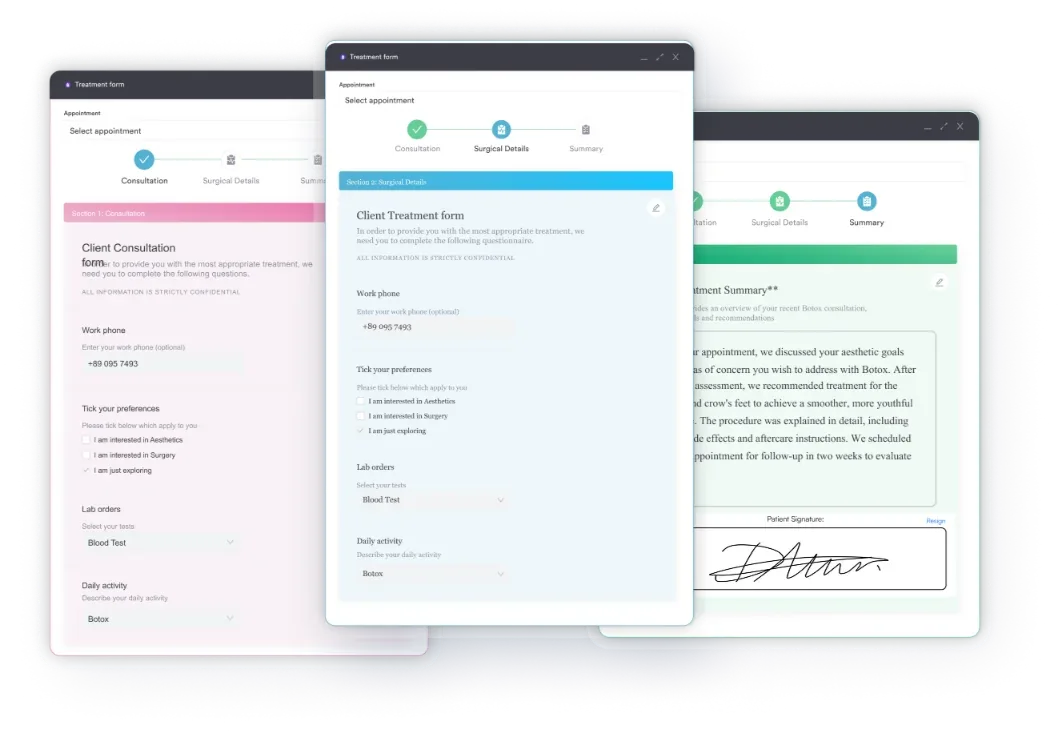
Prior authorization requirements for jaw surgery vary by payer and change frequently. Most commercial insurers require prior auth for CPT 21196 given the cost of the procedure. For a Medicare Advantage patient, pull the individual plan’s policy rather than working from the traditional Medicare criteria.
Submit the full documentation package with the prior auth request, not just the medical necessity letter. Many denials at the authorization stage stem from incomplete submission rather than clinical ineligibility. Maintain a checklist tied to each auth request so your billing team can track what has been submitted and what is pending.
Selecting the wrong code from the mandibular osteotomy family causes bundling errors and denials. Three distinctions decide it: internal rigid fixation (21195 vs. 21196), a bone graft (21193 vs. 21194), and segmental movement (21198 vs. the ramus and body codes).
The critical distinction between CPT 21195 and CPT 21196 is internal rigid fixation—check the operative note for plates and screws before choosing. In bimaxillary surgery, 21196 is typically billed alongside a Le Fort I code, where bundling edits need checking first.
Neighboring codes cause similar errors. Graft harvesting is bundled into 21194. Fracture repair sits outside the family.
CMS designates CPT 21196 as an inpatient-only procedure under the Outpatient Prospective Payment System (OPPS). This designation carries a status indicator of C, meaning the procedure may only be performed and billed in a Medicare-covered inpatient hospital setting.
Billing CPT 21196 as an outpatient hospital claim or an ambulatory surgery center (ASC) claim under Medicare will result in automatic denial. CMS updates the inpatient-only list annually as part of the OPPS final rule, published each November for the following calendar year. Verify CPT 21196’s inpatient-only status in the current-year CMS OPPS tables before billing.
CPT 21196 carries a 90-day global period as a major surgical procedure. Routine postoperative care inside that window is not separately billable. Confirm the global indicator in the current Medicare Physician Fee Schedule file, since CMS republishes those values every year.
The same 90-day clock runs across the musculoskeletal range. Log every visit against the surgery date so your billers can see when the window closes.
Bimaxillary cases pair 21196 with a Le Fort I code, and that combination is where bundling denials cluster. Check the quarterly NCCI procedure-to-procedure edits for the specific pairing before submitting. Where an edit permits a modifier, the operative note has to show the separate anatomic site and the separate surgical work.
Medically unlikely edits cap the units a payer will accept for one date of service. Because 21196 is valued as a bilateral procedure, a claim for more than one unit invites review even before the MUE applies. Look up the current MUE value in the CMS NCCI tables rather than working from a figure someone quoted in a forum.
OMFS billing teams consistently encounter the same denial patterns on CPT 21196 claims. Recognizing them before submission is faster than working denials post-adjudication.
Oral and maxillofacial surgery billing is document-heavy. Each CPT 21196 claim needs an operative report, pre-op imaging references, orthodontic records, and prior authorization correspondence. All of it travels together, linked to the correct diagnosis codes. Managing this manually across multiple patients and payers creates predictable bottleneck points.
Practice management software like Pabau gives surgical billing teams one workspace for that paperwork. Pabau’s claims management software pulls the patient and payer details already held on the record into a claim, then submits and tracks it through Claim.MD.
Eligibility checks, claim status, and electronic remittance advice arrive in the same place. Your billers stop switching systems to find out where a 21196 claim stands.
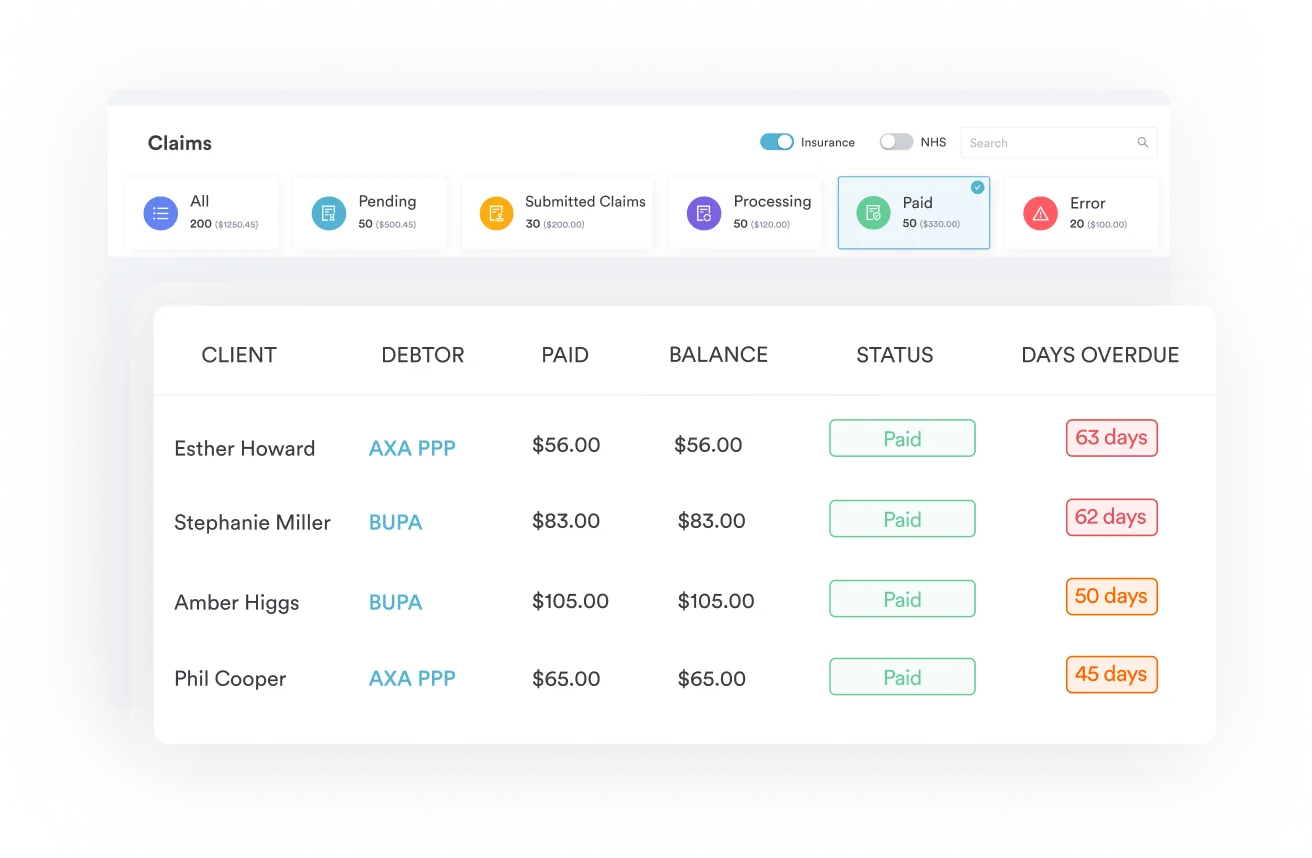
For OMFS practices managing several providers across inpatient and outpatient settings. Operative notes, imaging. When a payer asks what supported the claim, your team can answer from one screen.
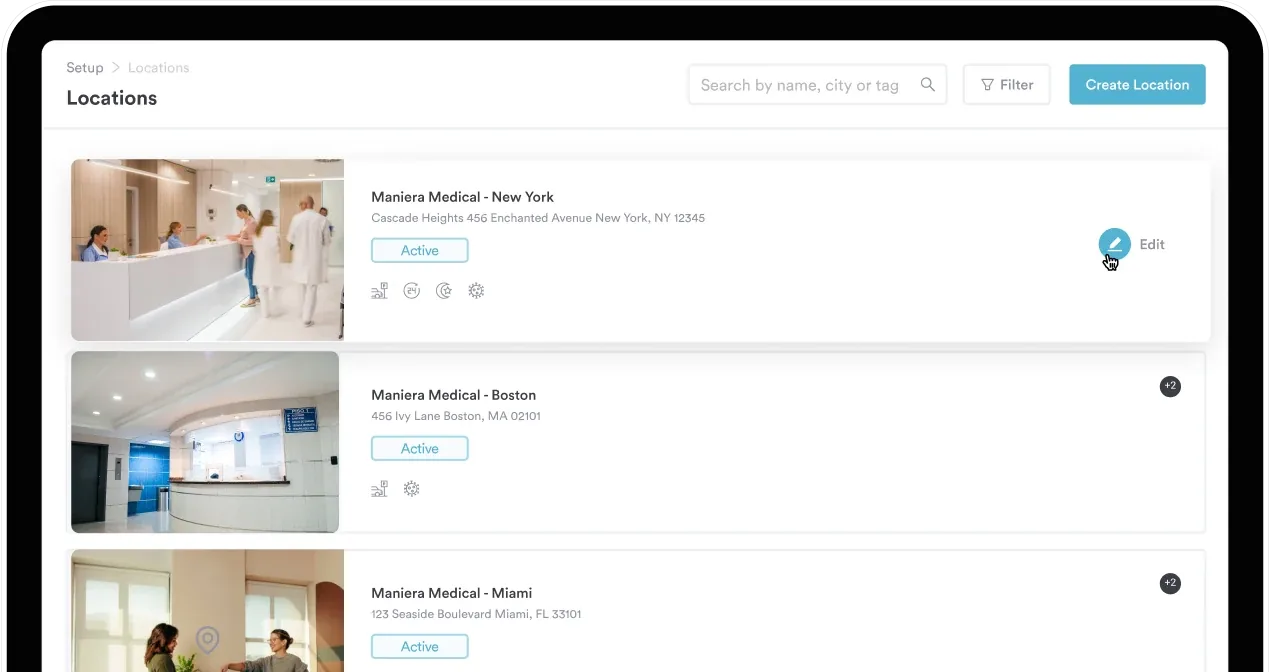
Surgical billing sits inside a wider set of practice management workflows. Holding scheduling, documentation, and claims in one platform cuts the coordination work that high-volume surgical coding creates.

Pabau pulls the patient and payer details already on the record into a claim, then submits and tracks it through Claim.MD. Eligibility checks, claim status, and remittances all land in one workspace.

Two decisions carry most of the risk on a CPT 21196 claim. Choose between 21195 and 21196 on internal rigid fixation, never on how many sides the surgeon operated. Then bill a single unit, add Modifier 52 only when the split was unilateral, and keep Modifier 50 off the claim entirely.
The rest is documentation discipline. An operative note naming the approach, the sides treated, and the hardware placed answers most payer questions before they are asked. Inpatient place of service and an authorization number on the claim close out the two denials that are easiest to prevent.
Pabau submits each claim through Claim.MD and tracks its status, while the operative notes and imaging stay on the patient record. Book a demo to see how Pabau handles surgical billing workflows for an OMFS practice.

Coding a facial soft tissue excision instead? CPT 21013 covers subfascial removal from the face or scalp, with sizing and documentation rules of its own.
Billing a neck procedure from the same code family? CPT 21705 covers division of the scalene muscle with rib resection, including its modifier and documentation rules.
Billing age-related physical debility? ICD-10 code R54 covers R54 billing and the documentation that satisfies medical necessity for geriatric claims.
Coding syncope with no confirmed cause? ICD-10 code R55 covers syncope and collapse coding, including its 13 Excludes1 conditions and DRG grouping.
CPT code 21196 is reconstruction of the mandibular rami and/or body by sagittal split, with internal rigid fixation. The descriptor contains no laterality wording. The defining element is the internal rigid fixation, normally plates and screws, placed once the segments have been repositioned.
No. CPT 21196 is valued as a bilateral procedure, so one unit already covers work on both sides in the same session. Modifier 50 would ask the payer to pay twice for work the relative value units include, which is why most payers reject the line.
Append Modifier 52 (reduced services) to CPT 21196 when the surgeon completes the sagittal split on one side only. The operative note should state which side was treated. Bilateral and reduced-service policies vary between payers, so confirm the requirement with the payer as well.
Yes. CMS designates CPT 21196 as inpatient-only (status indicator C under OPPS). Medicare claims submitted with an outpatient place of service will be denied. Verify the current-year CMS OPPS inpatient-only list each January, as CMS updates the list annually.
The two codes differ by internal rigid fixation alone. CPT 21195 covers the sagittal split osteotomy without internal rigid fixation, and CPT 21196 covers the same osteotomy with it. Neither descriptor mentions laterality, so the number of sides operated never decides between them.



