



HCPCS code E0198: Water pressure pad billing guide
HCPCS code E0198 is a water pad for a standard mattress HCPCS code E0198 is the ...

Last Updated: Oct 13, 2026

CPT code 21215 describes a bone graft of the mandible, and the code already pays for harvesting the donor bone.
Because harvesting is bundled, reporting a separate harvest code such as 20900 or 20902 alongside 21215 triggers an NCCI edit and a denial.
For 2026, CPT 21215 carries 11.92 work RVUs, 21.57 total facility RVUs, and 123.35 total non-facility RVUs.
At the CY2026 conversion factor of $33.4009, that pays about $720 in a facility and about $4,120 in an office, before GPCI adjustment.
Practice management software like Pabau links the operative note to the claim, so coders can see the documentation that supports 21215 before submission.
CPT code 21215 has one official descriptor published by the American Medical Association (AMA): Graft, bone; mandible (includes obtaining graft). It sits in the Repair, Revision, and/or Reconstruction Procedures on the Head section of the CPT manual, inside the 21120-21296 code range.
The code covers the whole surgical episode of placing autogenous bone onto the mandible. Harvesting the graft from a donor site is part of that episode.
Medicare treats 21215 as a major surgical procedure with a 90-day global period. For 2026, the code carries 11.92 work RVUs, 21.57 total RVUs in a facility, and 123.35 total RVUs in an office. At the CY2026 conversion factor of $33.4009, that is about $720 in a facility and about $4,120 in an office before geographic adjustment.
Two errors drive most denials and refund requests on this code. The first is billing a separate graft-harvest code that the descriptor already covers. The second is a place-of-service mismatch, because the office rate runs about 5.7 times the facility rate. This guide covers the 2026 RVUs, payment rates, modifiers, global period, ICD-10 pairings, and the documentation payers expect.
CPT code 21215 is used when a surgeon grafts autogenous bone onto the mandible to repair a defect, augment existing structure, or support reconstruction.
It is performed by oral and maxillofacial surgeons, craniofacial surgeons, and by plastic surgeons managing complex facial trauma. Their operative records sit in a plastic surgery EMR or a regenerative medicine EMR, depending on the practice.
The critical billing point is the parenthetical “(includes obtaining graft)”. It means the surgeon harvests donor bone from a secondary site during the same operative session. That harvesting work is already priced into the code. Common donor sites include the iliac crest (hip), calvarium (skull), or rib. Billing a separate harvest code alongside CPT code 21215 creates an NCCI conflict.
If the bone graft is performed in conjunction with another mandible procedure, such as open reduction of a fracture, review NCCI edits first. They determine whether CPT code 21215 can be reported separately or is bundled into the primary procedure code.
Relative Value Units (RVUs) determine how Medicare calculates payment for CPT code 21215. Three components combine into a total RVU. That total is multiplied by the Medicare conversion factor (CF), then adjusted by the Geographic Practice Cost Index (GPCI) for the practice location. The table below carries the 2026 national values from the CMS Physician Fee Schedule relative value files. First-pass rate measures how often a claim is paid without anyone touching it again.
Two CY2026 policy changes moved these numbers. CMS finalized an efficiency adjustment that cuts work RVUs by 2.5% for most non-time-based services, which took 21215 from 12.23 work RVUs to 11.92. CMS also reduced the share of indirect practice expense allocated by work RVU for services furnished in a facility.
Between them, the facility rate for 21215 fell about 7.5% against 2025, while the non-facility rate rose about 6.3%.
Reimbursement formula: Total RVU x GPCI-adjusted CF = Medicare payment. The CY2026 Medicare Physician Fee Schedule final rule (CMS-1832-F) set two conversion factors. They are $33.4009 for most clinicians and $33.5675 for qualifying participants in advanced alternative payment models.
CMS released the rule on October 31, 2025 and published it in the Federal Register on November 5, 2025. It took effect on January 1, 2026.
Non-facility PE is far higher than facility PE because the office setting assumes the practice buys the supplies, staff time, and equipment itself. In a facility, the hospital or ASC bills for those costs separately. Use the CMS Physician Fee Schedule lookup tool to compute locality-specific rates.
Medicare reimbursement for CPT code 21215 is not a flat national figure. The GPCI multiplier adjusts payment up or down based on practice location. A surgeon in San Francisco is paid more than one in rural Alabama for the same procedure. Commercial payers negotiate rates independently and often pay above Medicare for surgical codes in this range.
These figures use the national unadjusted 2026 RVUs and no GPCI adjustment. Pull the exact amount for your MAC locality from the CMS Physician Fee Schedule lookup before you submit a claim or quote a rate. Commercial payer rates are negotiated separately and will differ from Medicare.
Check the place of service before the claim goes out, not after the denial. The 2026 office rate for CPT 21215 is about 5.7 times the facility rate, a spread of roughly $3,400 on a single claim. A claim keyed to POS 11 for surgery performed in a hospital overstates payment by that amount, which creates a refund and audit exposure. Re-verify your GPCI values every January too, because CMS updates locality figures with each final rule.
A chiropractic platform links every spinal or joint procedure to its treatment schedule and the outcome you record.
CPT 21215 is a major surgical procedure, and in nearly every case it is performed in a hospital operating room or an ambulatory surgical center. Report POS 21 for inpatient, POS 22 for hospital outpatient, and POS 24 for an ASC. All three pay the facility rate.
The facility rate looks small because it is only the surgeon’s professional fee. The hospital or ASC bills its own technical payment under the outpatient prospective payment system or the ASC payment system. CPT 21215 is on the Medicare ASC covered procedures list, so an ASC receives a separate facility payment for the case.
The distance between the two 21215 rates is unusually wide for the facial bone family. That makes the code worth a standing rule in your claim scrubber. Any 21215 claim carrying POS 11 should stop for review before it reaches the payer.
Correcting one mis-keyed claim is routine. A pattern of them invites a post-payment audit of the whole code.
CMS assigns CPT 21215 a 090 global period, so 90 days of routine post-operative care is already paid for inside the code. The global package also covers the pre-operative visit on the day before or the day of surgery. Anything billed separately in that window needs a modifier that explains why.
Re-billing 21215 for a revision inside the global period without -58 or -78 is a routine denial. Record the reason for the return to the operating room in the operative note. Code the complication too, so the modifier holds up if the claim is reviewed.
Modifiers change how CPT code 21215 is interpreted by payers. Using the wrong modifier, or omitting one when it is required, is a common cause of underpayment and post-payment audits. Verify current modifier applicability against NCCI edits before submitting any claim.
Every CPT code 21215 claim requires a supporting ICD-10 diagnosis code that establishes medical necessity. Claims with mismatched or unsupported diagnosis codes are a leading trigger for medical review requests. The table below lists commonly paired ICD-10 codes. The same pairing logic applies across the facial bone family.
Always use the most specific ICD-10-CM code available. For fractures, laterality and encounter type affect code selection, so check whether the encounter is initial, subsequent, or a sequela. For neoplasm cases, confirm whether primary or secondary malignancy applies. Verify supported diagnosis pairings against your payer’s own medical policy before claim submission.
CPT code 21215 occupies a specific position within the facial bone reconstruction family. Choosing the wrong adjacent code is a common audit trigger. Watch for a graft to a different facial bone, non-autogenous material, or a combined plating procedure. Neighboring mandible and midface codes include CPT code 21199 and CPT code 21255.
The closest of those neighbors is CPT 21210, which covers a bone graft placed in the nasal, maxillary, or malar area. Both codes bundle the harvest, so the recipient site in the operative note decides which one goes on the claim.
The most frequent billing confusion around CPT code 21215 involves the dental bone graft codes. Those come from the ADA Code on Dental Procedures and Nomenclature. Both code sets describe autogenous bone grafting in the jaw region. They apply to entirely different provider types, payer systems, and settings.
Oral and maxillofacial surgeons who hold both MD/DO and dental credentials may face questions about which code set to use. The determining factor is the payer benefit structure rather than the provider’s credentials.
If the claim is going to the patient’s medical insurer, use CPT. If it is going to their dental plan, use CDT codes. Billing CPT 21215 to a dental plan, or CDT codes to a medical plan, will typically be denied.
The National Correct Coding Initiative (NCCI) edits govern which codes can be billed together with CPT code 21215. Bundling violations are a primary audit trigger for mandible and facial bone codes.
Denials on 21215 cluster into a short list, and every item on it can be caught at the scrubbing stage. Build these checks into your pre-submission review rather than working them as appeals.
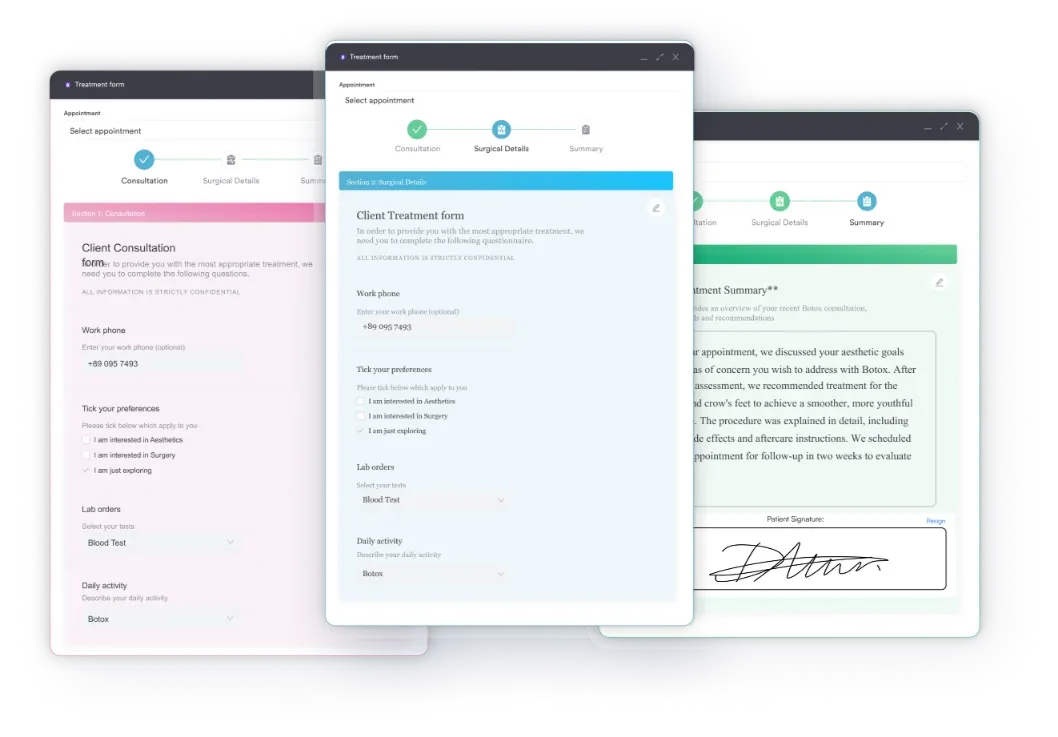
Incomplete documentation is the second most common reason for CPT code 21215 claim denial, behind NCCI edit violations. Payers expect the operative report to support every element of the code’s descriptor. Practices that use digital intake and operative forms capture structured documentation at the point of care rather than reconstructing it later.
Medicare does not require prior authorization for CPT 21215 under most MACs. Commercial payers and Medicaid managed care plans frequently do, and requirements vary by plan.
Payers reviewing a 21215 request usually look for a functional or reconstructive indication rather than a cosmetic one. Imaging that shows the defect, a named planned donor site, and evidence that earlier treatment failed all strengthen the request. Confirm the requirement with each payer before the procedure is scheduled, and carry the authorization number onto the claim.
Complex surgical codes like CPT code 21215 fail at the claim level more often than evaluation and management codes. They carry documentation requirements, NCCI bundling rules, place-of-service rules, and modifier decisions that all have to line up before submission. A split workflow makes that harder, because the surgeon documents in one system while the billing team codes in another.
Practice management software like Pabau keeps both halves in one record. When the operative note is written in Pabau, the billing team codes from that same note. They attach modifiers and route the claim through the clearinghouse without manual re-entry.
That visibility matters most on the two errors that cost the most here. A missing donor-site description and a wrong place of service are both visible in the record before the claim goes out. Both are fixable at the point where the note is signed.
It also tells you whether documentation, a modifier, or the ICD-10 link is behind each denial.

Connect clinical documentation to claim submission in one workflow. Pabau flags coding conflicts, tracks denial rates by procedure code, and helps surgical practices submit cleaner claims from day one.

CPT code 21215 covers a clinically and administratively complex procedure, and two rules carry most of the financial risk. The graft harvest is already included, so a separate harvest code will fail an NCCI edit. The place of service has to match where the surgery actually happened, because the 2026 office rate is about 5.7 times the facility rate.
Get those two right, keep the donor site in the operative note, and watch the 90-day global period on any revision. That removes the majority of denials on this code before an appeal is ever needed.
For practices handling mandible reconstruction and other facial bone procedures, an integrated workflow removes the manual steps where these errors appear. Pabau connects the operative note to coding and submission in one platform. Book a demo to see how it handles surgical billing in your specialty.

Coding a complicated nasal fracture instead? CPT code 21330 covers open treatment with skeletal fixation, including the RVUs and global period.
Billing a panfacial fracture repair? CPT code 21433 walks through the open treatment coding, modifiers, and documentation payers expect.
Working on a temporomandibular joint case? CPT code 21050 covers condylectomy coding, the global period, and the diagnosis pairings that support it.
Reconstructing the orbit with bone grafts? CPT code 21268 covers orbital repositioning with multiple craniotomies, including the RVUs and payment rates.
Grafting soft tissue rather than bone? CPT code 15260 sets out full thickness graft billing and the denials that follow a thin operative note.
CPT code 21215 is a surgical procedure code describing a bone graft of the mandible, including obtaining the graft from a donor site. The official AMA descriptor is: “Graft, bone; mandible (includes obtaining graft).” The code covers the complete episode of autogenous bone placement on the mandible. It also covers harvesting donor bone from a secondary site such as the iliac crest or calvarium.
For 2026, Medicare pays about $720.46 for CPT code 21215 in a facility setting and about $4,120.00 in an office setting. Both figures are national and unadjusted. They come from total RVUs of 21.57 and 123.35 multiplied by the CY2026 conversion factor of $33.4009. Qualifying participants in advanced alternative payment models are paid on the higher $33.5675 conversion factor instead. Your GPCI locality moves the final amount, so verify it in the CMS Physician Fee Schedule lookup tool.
The 2026 work RVU for CPT 21215 is 11.92, down from 12.23. CMS finalized an efficiency adjustment in the CY2026 Physician Fee Schedule that reduces work RVUs by 2.5% for most non-time-based services. Total RVUs for 2026 are 21.57 in a facility and 123.35 in an office, with a malpractice RVU of 1.41 in both settings.
CPT 21215 carries a 090 global period, so 90 days of routine post-operative care is already paid for in the code. The package also covers the pre-operative visit on the day before or the day of surgery. A staged procedure inside that window needs modifier -58. A return to the operating room for a related complication needs modifier -78, and an unrelated procedure needs -79.
In practice it almost never is. CPT 21215 is a major surgical procedure performed in a hospital or an ambulatory surgical center, so claims should carry POS 21, 22, or 24. A non-facility rate does exist in the fee schedule. Reporting POS 11 for surgery performed in a facility overstates payment by roughly $3,400 and invites a refund request.
The most important rule is that graft harvesting is included in CPT 21215. Do not separately bill CPT 20900, 20902, or another harvest code in the same session. NCCI edits also govern combinations with fracture repair codes. When CPT 21215 is performed alongside a mandible fracture repair, a -59 or X-modifier with complete documentation may be required to bill both separately.
Use -51 when CPT 21215 is a secondary procedure in the same session. Use -59 or an X-modifier for a distinct procedural service, with documentation to support it. Use -62 for two surgeons of different specialties, and -80 for an assistant surgeon. Because the code carries a 90-day global period, -58, -78, and -79 also apply to post-operative work. Modifier -50 for bilateral procedures is rarely applicable to mandible grafting and should be confirmed with the specific payer before use.
CPT 21215 is a physician procedure code billed to medical insurance by surgeons performing mandibular reconstruction, trauma repair, or tumor resection. ADA code D7950 is a dental procedure code billed to dental insurance by dentists performing alveolar ridge augmentation for implant preparation. The determining factor is the payer benefit structure rather than the provider’s credentials, so CPT goes to medical plans and CDT goes to dental plans.
You need a complete operative report that names the procedure, the graft placement site, and the donor site. It must also record graft dimensions and the surgical technique for both harvest and placement. The preoperative record must establish medical necessity with a supporting ICD-10 diagnosis code and any imaging or biopsy confirming the mandibular defect. Payer-specific prior authorization documentation is required for commercial plans and many Medicaid managed care programs.



