GLP-1 diet plan
A GLP-1 diet plan is a structured eating framework for patients taking semagluti...

2
Last Updated: Oct 13, 2026

The ova and parasite test, or O&P, examines a stool sample under a microscope for intestinal parasites and eggs.
A standard O&P runs three techniques: a direct wet mount, a concentration step, and a permanent stained smear.
Standard O&P does not detect Cryptosporidium, Cyclospora, or Microsporidia, so those stains have to be ordered separately.
Parasites are shed intermittently, so one negative specimen rules out far less than most people assume.
Pabau sends lab requests from the patient record, tracks each specimen, and highlights results outside the reference range.
A patient comes home from a trip with three weeks of watery diarrhea, and the stool culture comes back clean. That is usually the moment someone orders an ova and parasite test.
The ova and parasite test, known as an O&P, looks at stool under a microscope. A trained scientist searches for parasites, their larvae, and their eggs. It answers a narrow question well, and it fails quietly when the sample or the order is wrong.
Most of the trouble starts long before the slide reaches the microscope. Preparation, collection, and the number of specimens all decide what the lab can see. Get those wrong and a negative result tells you almost nothing.
A standard O&P finds protozoa and worms that live in the gut. It does not find every organism that causes parasitic diarrhea, which is where clinicians get caught out. These are the organisms it reliably picks up, according to MedlinePlus:
Now the part that costs people a diagnosis. Cryptosporidium is missing from that list, and so are Cyclospora and Microsporidia. Labcorp says plainly that its standard O&P detects none of the three. They need a stain the routine exam does not run. Suspect one of them and you have to order that stain yourself.
Clinical presentation drives the order, not reflex. Good lab ordering software can put the test in front of you at the right moment. The indication still has to be there. The usual triggers look like this:
Travel history is the cue most often lost. It gets mentioned in the waiting room and never reaches the chart. Practices running travel clinic software tend to capture it earlier. Ask about it at intake and the answer is already there when symptoms drag on.
Patients need no fasting and no special diet before this test. What matters is what they swallowed in the days beforehand. Several everyday substances coat or destroy the organisms the lab is hunting for.
Reference labs are specific about this. Labcorp warns that specimens containing castor oil, bismuth, Metamucil, or barium will not give an optimal yield. It also asks for stool collected before antidiarrheal or antiparasitic therapy begins.
The windows below reflect common reference-lab collection instructions, so check your own lab’s sheet before you counsel a patient.
Medication holds are routine across diagnostics, and autonomic testing runs on the same principle. The trick is putting the hold in front of the patient early.
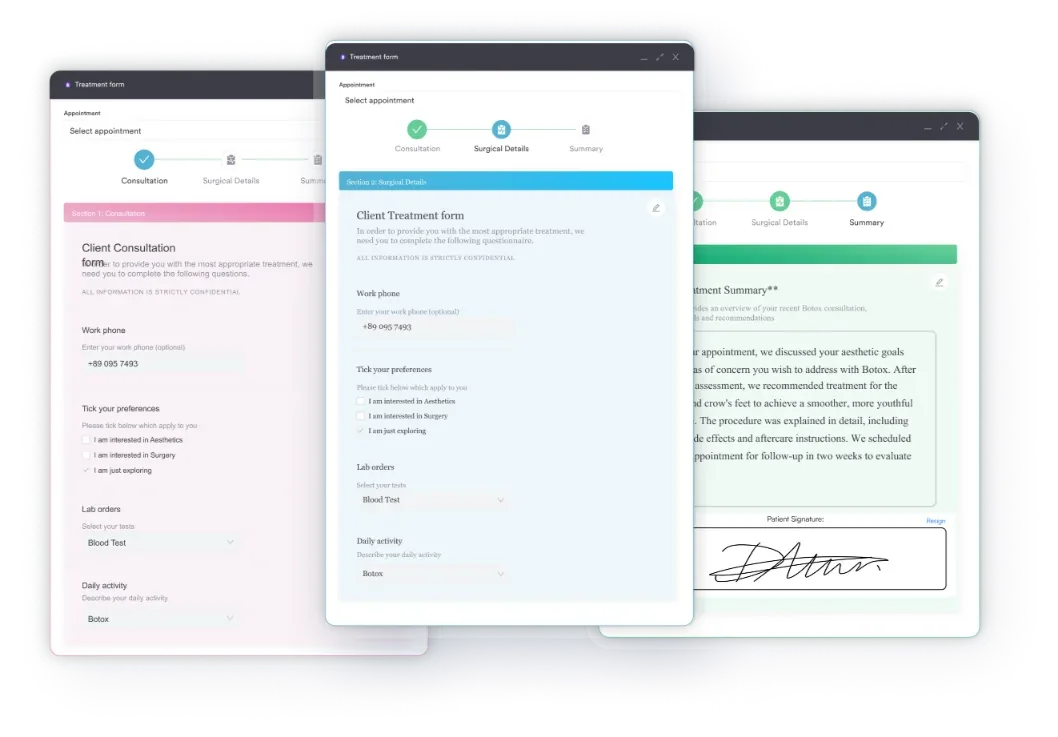
Digital intake forms that ask about bismuth, antibiotics, and recent barium studies catch the problem days ahead. The morning of collection is too late.
Collection is where patient-side errors cluster. The specimen has to reach the lab in usable condition, and the window for an unpreserved sample is short.
Before anything leaves the building, run through the list below. Every item on it is a reason labs send specimens back.
Label every container before the patient leaves, with a name, date of birth, collection date, and time. Labs reject unlabeled specimens and any name that does not match the request form. One rejection means the three-day series starts over.
One specimen is rarely enough. Parasites and eggs are shed intermittently, so a clean result on Monday says nothing about Wednesday. Labcorp recommends three specimens collected on separate days, and each one is charged separately.
A standard O&P at a CLIA-certified lab runs three techniques, and each one shows something the others cannot. That is why they are performed together rather than picked from a menu.
Most protozoan identification happens on that stained smear, because a wet mount cannot show nuclear detail.
There is one job it cannot do. Entamoeba histolytica and Entamoeba dispar are morphologically identical under the microscope, so no O&P technique separates them. Telling the pathogen from the harmless look-alike takes an antigen test or a molecular panel.
Getting that result back into the chart is its own problem. EHR integration for lab workflows drops the report straight into the patient file. That removes a round of manual re-entry and the errors that ride along with it. Lab-workflow support varies widely between platforms, as the DrChrono pros and cons illustrate.
The report itself is binary. Interpretation is not, and the two are easy to confuse. Advice on interpreting biomarkers applies here almost word for word.
A negative report usually reads “no parasites seen”, and that is the normal finding. It covers one specimen on one day, nothing more. If suspicion holds, ask for two more specimens on separate days before you call the workup done.
Take a patient with three weeks of loose stools after a camping trip. Specimen one is clean. Specimen two, collected four days later, shows Giardia lamblia cysts. Nothing about the patient changed in between. The shedding did.
A positive report names the organism, often with a rough burden such as rare, few, moderate, or many. Treatment then depends on the species, the symptoms, and the patient’s immune status. Not every finding needs treating. Entamoeba coli, for instance, is a commensal that causes no disease at all.
Record the organism, the specimen date, and any follow-up testing you ordered. Safer clinical notes protect the patient and the practice if treatment goes sideways or an audit lands. Filing the result against the patient’s file with patient record tools also keeps the whole diagnostic timeline in one place.
Sensitivity sits somewhere between 40% and 85%, depending on the species, the number of specimens, and how carefully the lab works. No single-specimen O&P reaches acceptable sensitivity for most organisms. Worth knowing before you act on a clean report:
Practices that work up chronic GI cases in depth feel these limits most. Functional medicine software with lab ordering and result tracking built in makes the supplementary tests easier to fire off on time. Three weeks after the first clean report is too late to be useful.
Partly, and the distinction matters. Home kits let a patient collect a stool specimen at home and mail it in. The collection happens at home. The examination still happens in a laboratory, run by trained scientists using the same three techniques.
So a home-collected specimen is clinically equivalent to one dropped at reception. It just has to be preserved and shipped inside the window. What changes is the oversight around it. Direct-to-consumer kits vary in which organisms they screen for and whether a clinician ever reads the result.
That variation is the risk. Someone buys a consumer test, gets a clean result, and stops looking. They may still have cryptosporidiosis, because the kit never ran an acid-fast stain. Home collection is a convenience worth offering. The order should still come from a clinician and go to a CLIA-certified lab.
The standard O&P is not one code. Labcorp bills its examination, test 008623, as 87177 and 87209 together. The concentration work and the stained smear are separate line items.
That pair does not buy you Cryptosporidium, Cyclospora, or Microsporidia. Acid-fast and modified trichrome stains are ordered separately, coded separately, and charged separately. Proprietary molecular panels sit outside this family too, under codes such as 0049U.
Payers also want a diagnosis that supports the order. A09 is one of the codes practices reach for when infectious gastroenteritis is suspected but not yet named. Confirm current codes with your billing team before you submit, since payer rules vary.
Right now, a three-day O&P series usually lives in somebody’s head. A paper request goes out, the patient collects at home, and results trickle back over a week. Then someone has to work out which specimen never arrived.
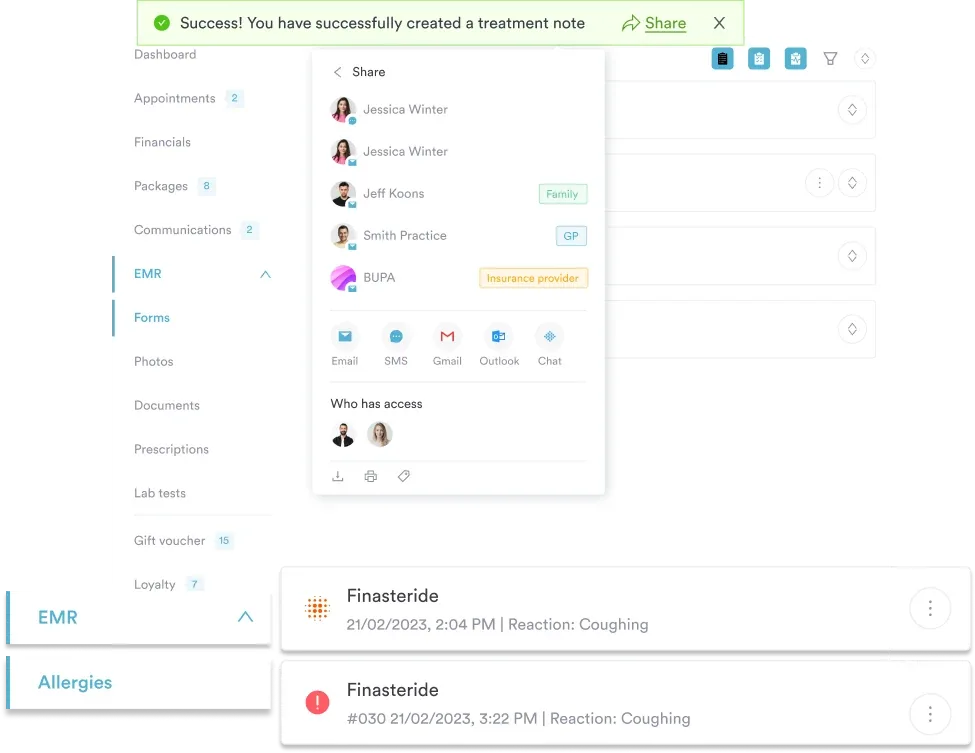
Practice management software like Pabau moves that tracking into the patient record. You raise the lab request from the client card, and Pabau prints the form and barcoded tube labels for you.
Every request then moves through four stages on the Labs dashboard, from backlog to requested, received, and reviewing.
Results land in a Lab Inbox and attach to the patient’s documents automatically. Any value outside the reference range is highlighted in red, so an abnormal finding stands out without reading every line. You can then share the reviewed result with the patient in one click, through the client portal or by email.
For an O&P workup, the effect is simple. Nobody has to remember that specimen three never came back, because the dashboard is already showing it.

Pabau sends lab requests straight from the patient record and tracks each specimen through to its result. Any value outside the reference range is highlighted for you. Your team can see which specimens are still outstanding without keeping a spreadsheet.

The O&P test answers a narrow question well. It reports what a microscopist could see in the stool you sent, on the day you sent it. A single clean result says nothing about the two days you did not sample.
Most of the wins here are operational. Order the right stain for the organism you suspect. Send three specimens when the symptoms warrant it, and label every one. Write the travel history on the request form, because the lab reads it.
Keeping all of that straight across a full patient panel is a tracking job, and that is where software earns its keep. Book a demo to see how Pabau handles lab orders, specimen tracking, and result review inside one patient record.

Interpreting a basic metabolic panel? BMP chart gives all eight values with normal ranges, sex-specific creatinine, and common collection errors.
Tracking a patient’s body measurements? Body measurement chart tracks waist, hips, bust, thighs, and arms, with tips for measuring accurately.
Streamlining how you send prescriptions? E-prescribing software compares platforms for issuing prescriptions without switching between separate systems.
Need a cleaner way to send lab requests? Blood test lab request form gives you a ready-made form covering patient details, clinical history, and the tests requested.
Curious how other specimen tests are run and reported? Bone marrow test covers the procedure, the recovery, and what the report actually tells you.
Labcorp’s standard ova and parasite examination is billed as 87177 and 87209 together. 87177 covers the direct smears, concentration, and identification. 87209 covers the complex special stain. Acid-fast stains for Cryptosporidium or Cyclospora are ordered and coded separately.
Labcorp publishes a turnaround of 3 to 7 days for its standard O&P examination, test 008623. Add-on stains and molecular panels run on their own schedules. Ask your reference lab for its current figures before you promise a patient a date.
No. A stool culture grows bacteria such as Salmonella, Shigella, and Campylobacter. An O&P looks for parasites under a microscope. Persistent diarrhea often needs both, because neither test substitutes for the other.
No. Fasting is not required and there is no diet to follow. Medications and contrast agents matter far more, so ask your lab about antacids, antibiotics, bismuth, and any recent barium study.
Rarely. Pinworm eggs are laid on the skin around the anus rather than passed in stool, so a stool O&P usually misses them. The standard method is a cellophane tape test taken first thing in the morning.