GLP-1 diet plan
A GLP-1 diet plan is a structured eating framework for patients taking semagluti...

2
Last Updated: Oct 13, 2026

A bone marrow test collects two samples, liquid marrow and a solid core, usually from the back of the hip.
Doctors order the test when a blood count looks wrong and a blood film cannot explain it.
The sampling itself takes about 10 to 20 minutes, and full pathology results usually arrive within one to three weeks.
Local anesthetic blocks the sharp pain, but most patients still feel a few seconds of deep pressure.
Practice management software like Pabau can automate the consent form, the aftercare message, and the results follow-up.
Most people first hear the words “bone marrow test” right after a blood count comes back wrong. The referral arrives fast. A clear explanation of what happens next often does not.
So patients turn up anxious, and staff spend the first 10 minutes answering questions the letter should have covered. The procedure itself is short and done under local anesthetic. Knowing the sequence, from the needle to the pathology report, takes most of the fear out of it.
A bone marrow test samples the spongy tissue inside your larger bones, where the body makes blood cells. Standard blood tests only show the cells that already reached your bloodstream. Sampling the marrow shows the factory instead of the output.
That difference matters clinically. A blood count tells a hematologist that something is wrong. Marrow tells them what, and often why. Patient care in hematology and oncology turns on how fast that answer lands.
Two sampling techniques do the job, and clinicians almost always perform them in the same session. The National Library of Medicine calls them complementary, because each one answers a question the other cannot.
People use the two names interchangeably, yet they describe different samples and different needles. Aspiration pulls out liquid marrow. Biopsy removes a solid core of bone and marrow. Knowing which is which helps when you read the report or call the lab.
Marrow aspirate also has a use outside diagnosis. Regenerative medicine practices concentrate it for joint injections, though that is a separate procedure from diagnostic sampling.
The referral follows an abnormal blood result that a blood film cannot explain. Cancer is only one of the reasons. According to the American Cancer Society, the procedure covers a wide span of blood disorders.
A complete blood count usually starts the chain. That first abnormal result often turns up in primary care or a functional medicine practice, months before a specialist sees the patient. An anemia chart helps track a falling hemoglobin between those visits.
The test does far more than confirm or rule out cancer. A pathologist reads the sample under a microscope, then adds specialist tests to build a full picture of marrow function.
This is where marrow beats any blood test. The liquid aspirate goes straight for molecular analysis, and several tests run side by side.
All of that runs on one aspirate. Nobody calls the patient back for a second needle just to collect genetic data.
Preparation is light for most patients. The hematology team sends written instructions ahead of the appointment, and the same handful of points comes up every time.
Put those details in the appointment confirmation email and most of the questions never reach the phone. Where a patient cannot consent for themselves, check whether a medical power of attorney already sits on file.
Cancellations on the day rarely come from anything clinical. Run this list before you confirm the slot.
Sampling takes about 10 to 20 minutes, from the first needle to the dressing, according to Mayo Clinic. Plan on one to two hours in the building, counting preparation and a short rest.
A hematologist or a specialist nurse does the sampling, and you stay awake unless you agreed to sedation beforehand. Where sedation is used, staff record baseline vital signs before the first needle and repeat them through that rest period. Coding treats marrow work as its own procedure, separate from an open bone biopsy such as 20245.
The sampling runs 10 to 20 minutes. Add check-in, consent, anesthetic, and a short rest afterward, and most patients leave within two hours.
Yes, but only for a few seconds. Local anesthetic numbs the skin and the bone surface, so the needle going in feels like pressure. The one place anesthetic cannot reach is the marrow cavity itself.
Patients describe that moment as a deep ache or a hard pulling feeling. It lasts one to three seconds, then stops. If pain or anxiety worries you, ask about stronger pain relief or sedation before the day, not on the table.
Serious complications are uncommon. Most patients go home with a bruise and a few days of soreness, and nothing else. Written aftercare still matters, because compliance slips when instructions are only spoken aloud.
Two groups need extra care. Patients on anticoagulants and patients with low platelet counts bleed more easily. Their teams adjust the preparation and watch the site for longer.
Most patients feel normal again within two or three days. Desk work is usually fine the next morning, though the site will remind you it is there.
Call the hematology team straight away if blood soaks through the dressing. The same goes if the site turns hot and swollen, or if the pain climbs instead of easing over 48 hours.
Full results usually take one to three weeks. That wait reflects the work behind them. Morphology, flow cytometry, cytogenetics, and molecular testing often run in parallel across different laboratories.
Not every diagnostic answer takes that long. A quick bedside exam such as the cremasteric reflex gives an immediate physical finding, without any laboratory wait at all.
Findings therefore arrive in pieces, which is why your hematologist waits for the full set before calling. Holding those pieces in centralized patient records makes it easier to compare this test against the last one.
The report itself covers six things, and each one answers a different question.
A normal report does not always mean nothing is wrong. Some conditions look quiet in the marrow, so your hematologist reads the result beside your symptoms and blood counts. Rules on sharing that result sit in the practice’s notice of privacy practices.
The clinical part of a bone marrow test lasts 20 minutes. The pathway around it runs for weeks, from referral to results call. That stretch is where practices lose time.
Most teams still run it by hand. Reception prints the consent form, someone phones to explain preparation, and a nurse repeats aftercare instructions at discharge. Then the report lands, and somebody has to remember to book the follow-up.
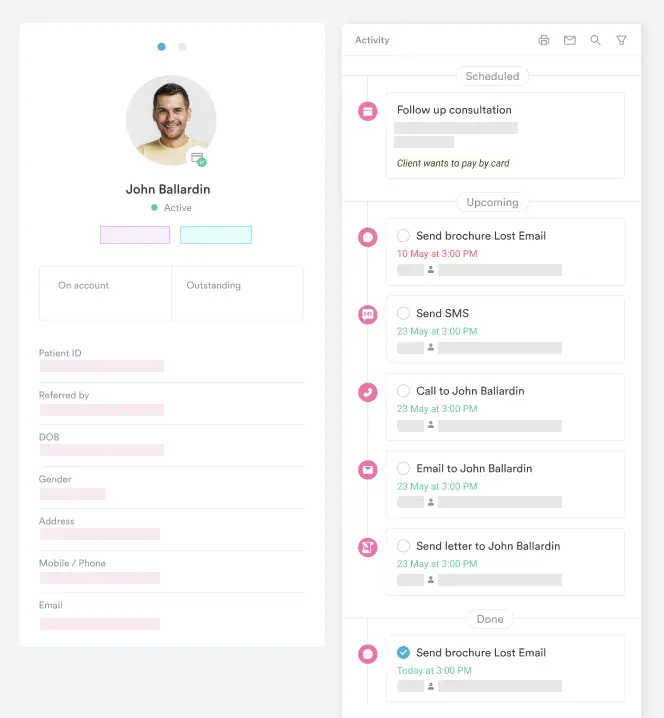
Practice management software like Pabau puts those steps on a timeline instead. Digital consent forms go out when the appointment is booked, so patients read them at home. Pre- and aftercare messages send themselves at set intervals.
The system also schedules the results call for the week the report is due. So your front desk fields fewer calls, and no patient sits waiting without a next step. Patient engagement before a frightening procedure comes down to contact that arrives on time.

Pabau sends consent forms, preparation reminders, and aftercare instructions automatically, then books the results call. Your team stops chasing paperwork, and patients always know the next step.

A bone marrow test is short, briefly uncomfortable, and very hard to replace. When a blood count raises a question that a blood film cannot answer, marrow answers it. The sample carries the cellular, chromosomal, and genetic detail that decides treatment.
If you are the patient, ask about pain relief and sedation before the day rather than on the table. Practices win the same way, by making the pathway around the test as predictable as the test itself.
That predictability is what patients remember months later. Book a demo to see how Pabau handles consent, aftercare, and results follow-up for every diagnostic appointment you run.

Comparing other diagnostic tests? Arterial blood gas test walks through another bedside test, from the sample to the numbers on the report.
Need a cleaner way to order labs? Blood test request form gives you a ready-made form that reaches the lab with nothing missing.
Tracking an unexplained anemia? Anemia chart helps you record hemoglobin and symptoms over time, so patterns show up before the referral.
Assessing liver function after a diagnosis? AST blood test template supports documentation and result interpretation for liver function screening.
Looking for ways to improve clinical documentation? Pabau Scribe helps clinicians write structured notes after consultations and results reviews without adding admin time.
No. A test takes a few milliliters for the lab. Donation collects a much larger volume for transplant, either through surgery under anesthesia or from the bloodstream.
A dry tap means the needle draws no liquid marrow. It happens when the marrow is packed with cells or scarred by fibrosis. The core biopsy still gives the lab a usable sample.
Yes. Children usually have the test under general anesthesia rather than local anesthetic. In babies, the clinician may sample the front of the lower leg bone instead of the hip.
Rarely anything noticeable. The needle leaves a puncture a few millimeters wide, not a cut, so it needs no stitches. Most patients end up with a small mark or nothing at all.
Aspiration from the sternum is possible in adults, but few teams choose it. The breastbone is thin and sits over the heart and major vessels. No one takes a core biopsy there.