Intake note template
An intake note is the clinical record a therapist or counselor writes at the sta...

1
Last Updated: Oct 22, 2026
The need to belong scale is a 10-item self-report questionnaire that measures how strongly a person is motivated to form and keep close social connections. Each statement is rated from 1 to 5, items 1, 3 and 7 are reverse-scored, and the total runs from 10 to 50.
Mark Leary and colleagues published the scale’s main validation study in 2013. Therapists, counselors and researchers use it for a quick, validated read on belonging motivation, and a higher total means a stronger need to belong.
Patients often raise loneliness, withdrawal or relationship strain without a shared measure to track it over time. The free PDF below gives you the full questionnaire, and this guide covers scoring and interpretation.
A one-page form with all ten NTBS statements, the 1-to-5 response key, and fields for the patient’s name, gender, assessment date and contact details. A total score line at the bottom makes it ready for intake and repeat administrations.
Download template
The need to belong scale is a 10-item self-report measure of social belonging motivation.
Three items (1, 3 and 7) are reverse-scored, so flip those responses before adding up all ten.
Totals run from 10 to 50, and a higher score means a stronger need to belong.
Scores indicate relative belonging need and are not a diagnosis of any condition.
Results are easier to compare over time when each one is stored on the patient record in Pabau’s practice software.
The need to belong scale is a validated psychological assessment that captures a person’s drive to form and keep meaningful relationships. It grows out of Baumeister and Leary’s 1995 belongingness hypothesis, which proposed that the need to belong is a basic human motivation.
Leary developed the scale as a short self-report tool, and the canonical instrument record is held in the APA PsycTests database. Because the NTBS is a self-report questionnaire rather than a clinical interview, it works best as one data point alongside your own assessment.
Belongingness theory holds that people are driven to maintain a minimum number of stable, positive relationships. When that need goes unmet, the effects show up in wellbeing, motivation and behavior.
The questionnaire contains ten statements answered on a five-point scale, from strongly disagree to strongly agree. Three statements (items 1, 3 and 7) are reverse-scored, so strong agreement with them lowers the total.
The reversed items are worded against belonging, such as not minding when other people don’t seem to accept you. The other seven are worded toward it.
Scoring takes about a minute once the reverse-scored items are flipped. Work through the form in order, so none of the three flagged items gets added unflipped.
The scoring key below shows which items flip and how each reversed answer converts.
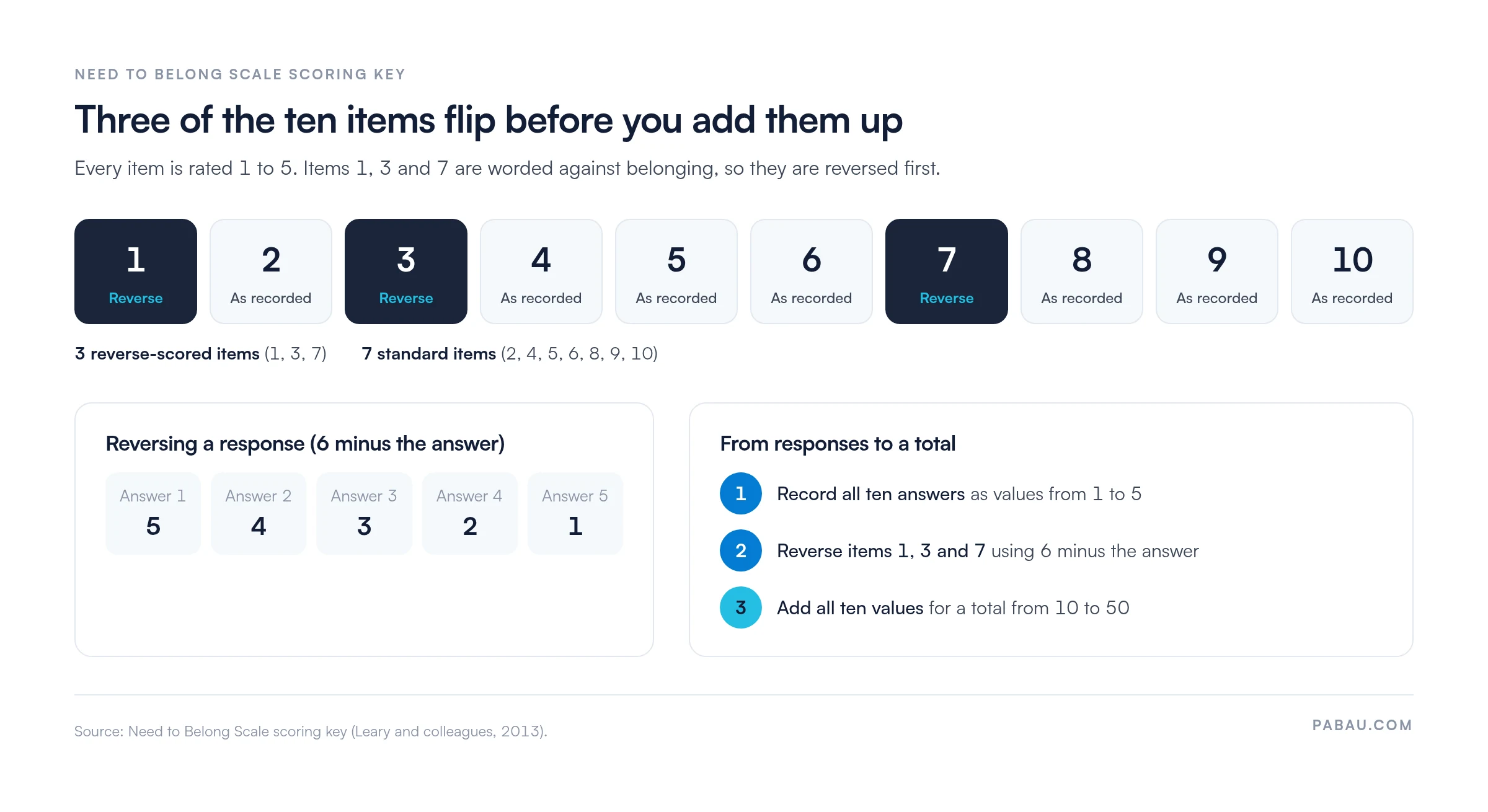
Higher totals indicate a stronger motivation to belong, while lower totals suggest a weaker felt need for close connection. Published cut-off scores are not universally established, so treat the bands below as indicative rather than diagnostic.
A high score links to loneliness and rejection concerns in the research literature, but it does not on its own indicate depression or anxiety. Interpret the total alongside history, presentation and other validated measures.
The UCLA loneliness scale and a social support scale pair well with it. They measure felt isolation and available support, which the need to belong scale does not.
Therapists and counselors typically use the scale at intake to add a structured view of social motivation to the clinical history. It sits comfortably inside a broader psychosocial assessment. Researchers use it to compare belonging needs across groups and to track change over a study period.
The need to belong scale measures motivation to form and keep relationships, whereas a sense of belonging scale measures how connected a person currently feels. The two constructs are related but answer different clinical questions.
Choose the need to belong scale when you want to understand how strongly someone is driven toward connection. Choose a sense of belonging measure when you want to know how included they feel in a specific setting such as work or school.
Validation work supports the scale’s construct validity. In their 2013 paper, Leary and colleagues mapped how NTBS scores relate to a wide range of personality and social measures. Mellor and colleagues used the scale in 2008 to study how unmet belonging need relates to loneliness and life satisfaction.
Reliability is reported as acceptable in the published studies, and a single-item version has also been validated. Check the original validation papers before reporting psychometric figures in a publication, as values differ across samples.
On paper, each completed questionnaire ends up in a folder. Comparing an intake score with a three-month score then means finding two sheets and re-adding both totals.
Pabau’s digital forms let you send the scale before a session, so the patient completes it at home. Each completed form is saved to the patient’s file with its date, so repeat administrations sit side by side.
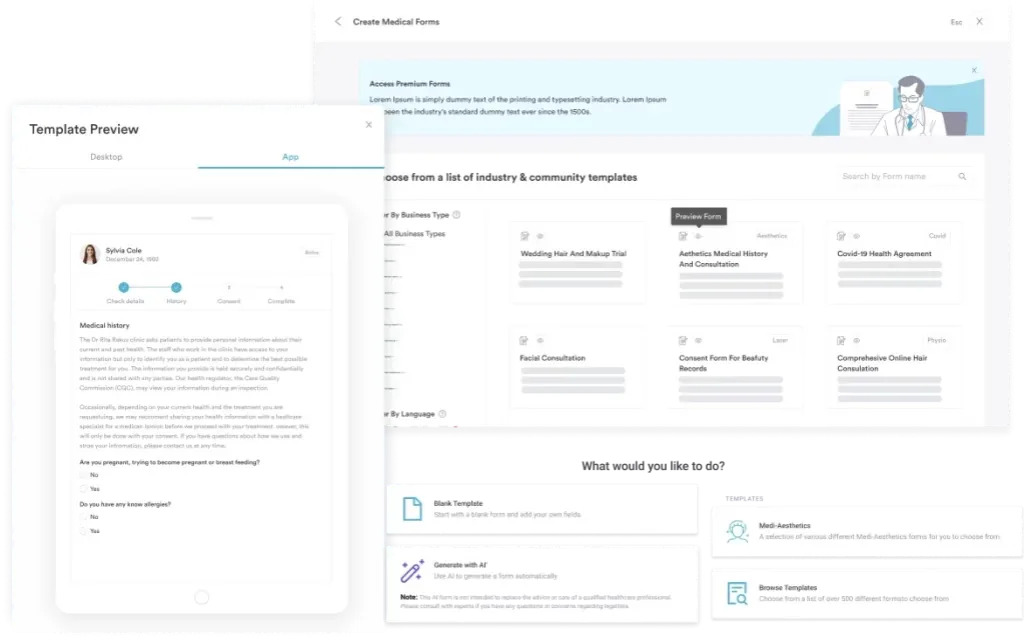
Forms, treatment notes and appointments share one record, so the latest score is on screen when you plan the next session. For a practice running several measures, that is where simpler therapy practice management saves the most time.

Pabau’s digital forms send the need to belong scale before appointments and store each result on the patient record. Repeat scores sit side by side, so progress reviews take minutes.

The need to belong scale earns its place at intake when loneliness, withdrawal or rejection sensitivity are part of the picture. It takes a patient a few minutes and gives you a number you can revisit later.
Score it carefully, because a missed flip on item 1, 3 or 7 shifts the total. Read the result as motivation rather than diagnosis, and pair it with a loneliness or support measure before acting on it.
The trade-off is that the scale has no universal cut-offs. Its value comes from repeat use with the same patient, which is far easier when every result lives on one record. Book a demo to see how Pabau stores and compares questionnaire results for therapy practices.

Measuring felt closeness instead of motivation? Social connectedness scale covers the items and scoring for a measure of how close patients feel to others.
Screening for persistent isolation? Chronic loneliness test pairs a short screening scale with guidance on when to refer.
Exploring attachment behind relationship worries? Adult attachment scale scores comfort with closeness, dependence on others and fear of rejection.
Is fear of judgment driving the withdrawal? Social interaction anxiety scale gives you the 20-item SIAS and its scoring key.
Need a quick read on attachment style? Relationship questionnaire sorts adults into four attachment styles with a short self-report form.
The need to belong scale is a 10-item self-report questionnaire that measures a person’s motivation to form and maintain social connections. It is based on Baumeister and Leary’s belongingness theory.
Mark Leary and colleagues developed the scale, and their main validation paper was published in 2013. Its theoretical roots lie in Baumeister and Leary’s 1995 paper.
Reverse-score items 1, 3 and 7 by subtracting each response from 6, then add all ten responses. Totals run from 10 to 50, and higher totals indicate a stronger motivation to belong.
There is no universally established cut-off. Higher totals out of 50 show a stronger need to belong, so compare a patient’s score with their earlier results and clinical picture.
Check the copyright and licensing terms in the APA PsycTests record before distributing the full instrument. Confirm usage rights for your setting before reproducing it.