Antipsychotic medication list
An antipsychotic medication list is a structured reference that organizes psychi...

2
Last Updated: Oct 13, 2026

The Social Connectedness Scale measures how strongly a person feels they belong, not how large their social network is.
Lee and Robbins published the original 8-item scale in 1995, and the 20-item revision arrived in 2001.
The 20-item SCS-R runs on a 6-point Likert scale, so totals fall between 20 and 120.
Ten of the 20 statements are negatively worded and have to be reverse-scored before you add anything up.
Recording each total in the client record turns a one-off screen into a progress measure you can act on.
The printable form carries all 20 statements, the 6-point response scale, and a total score box. Scoring notes, an interpretation guide, and a clinician signature block sit alongside it.
Download templateThe Social Connectedness Scale measures how integrated a person feels in their social world. Lee and Robbins built it in 1995 to capture belonging as a feeling rather than a headcount of friendships.
Two versions circulate, and sources mix them up constantly. The 1995 original carries 8 statements. The 20-item form that clinicians download today is the 2001 revision, the SCS-R, and it is now standard in mental health practice.
Below you get all 20 statements, the reverse-scoring key, a worked scoring example, and the score bands clinicians use to read a total.
The Social Connectedness Scale is a validated self-report measure of how connected a person feels to the people around them. It captures the subjective experience of belonging, not the size of someone’s social network.
That distinction does clinical work. A client can name a dozen friends and still score low, because the scale asks how close they feel, not how many people they know.
Lee and Robbins published the original scale in 1995 as an 8-item questionnaire. The measures available then covered social support and client satisfaction, but none of them asked about belonging itself. The 20-item revision, the SCS-R, followed in 2001 from Lee, Draper and Lee. Psychological assessment is only as useful as the record that keeps it comparable over time.
Clinicians now use it for three jobs: screening for isolation risk at intake, planning work on social withdrawal, and checking whether treatment has shifted anything.
The two versions differ in length more than in quality. Knowing which one you are holding matters, because their score ranges are not interchangeable.
Use the SCS-R unless you are replicating a study built on the 1995 original. It carries the broader validation record, and its positively worded statements make it harder for a client to agree with everything on autopilot.
Respondents rate every statement from 1 (Strongly Disagree) to 6 (Strongly Agree). Ten of the statements are negatively worded, and those are the ones you reverse. They are marked with an asterisk below and on the printable form.
So items 1, 2, 3, 4, 5, 6, 8, 10, 15 and 18 reverse. A response of 1 becomes 6, a 2 becomes 5, and so on down the line. Getting this step right is what separates a usable total from a meaningless one. Keep the key on the same page as the medical forms your team hands out.
Scoring takes about a minute once the reversals are handled. Follow these five steps.
Here is why step two earns its own line. Take a client whose answers repeat the pattern 5, 4, 6 all the way down the form. The raw sum is 99. Ten of those answers now have to flip.
The corrected total is 67, which sits in the middle band. Skip the reversals and you would file 99, a score that reads as healthy belonging. Same client, opposite clinical picture.
The SCS-R has no officially validated clinical cut-offs. The bands below are a practical way to read a total for triage. Treat them as a prompt for the next conversation rather than a verdict.
Read the number next to the interview, never on its own. A low total can point to genuine isolation, or to a client whose culture simply does not describe closeness in these terms.
The change between two administrations tells you more than either total. A drop of 15 points over three months is worth a session, even if both scores land in the healthy band.
The SCS-R has strong empirical support. Published research puts Cronbach’s alpha between 0.91 and 0.96, so the 20 statements reliably measure one thing.
Test-retest reliability sits at 0.96 over typical intervals. Scores stay stable when nothing in the client’s life has changed, which is what makes a genuine drop meaningful.
The scale converges with measures of social support and belonging, and separates cleanly from trait anxiety. Factor analysis keeps returning a single factor across student, community, and clinical samples.
Therapists in solo and group therapy practice use the scale at four points in a course of treatment.
Isolation deepens slowly, which is exactly the kind of drift a single session misses. A dated total in the record makes that drift visible and gives you something concrete to raise, which is half of client engagement.
Several validated instruments cover neighboring ground. The table below shows which one answers which clinical question.
The SCS-R wins on the subjective side. It tells you how connected the client feels, which in therapy usually matters more than how many people are in their contacts list.
Plenty of clinicians run the SCS-R and the UCLA Loneliness Scale together. One measures positive belonging, the other measures the distress of its absence, and the pair rarely move in perfect step.
Send or hand over the form before the first session. Score it while the client is still in the room, then record the total with a one-line interpretation. The same routine works for any scored instrument, from this scale to a motor assessment scale.
Keep the score where the rest of the clinical picture lives. A total filed in your client record system sits next to medications, history, and last month’s note. That context is where it starts to mean something.
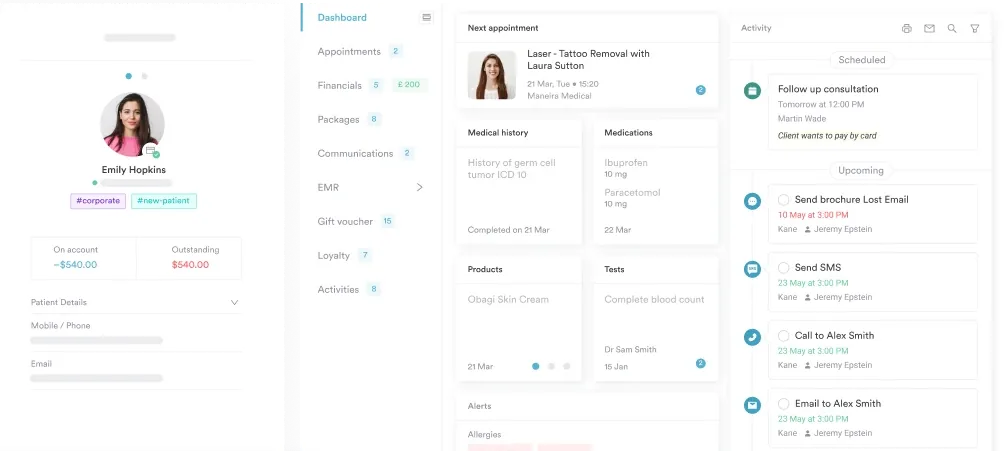
If a colleague picks the client up, the total travels badly on its own. Pass it on inside a structured handover such as an SBAR report so the number arrives with its context attached.
Data protection note: completed scales are clinical records. Store them under the same encryption and access controls as your notes. Confirm your system meets HIPAA in the US or GDPR in the EU.
Plenty of practices still run this on paper. Someone prints the scale, hands it over on a clipboard, adds up the ten reversals by hand, and types the total into a note. The paper then goes into a folder, so comparing session one with session twelve means digging.
Practice management software like Pabau sends the SCS-R out as a digital form before the appointment. It applies the reverse-scoring rules on submission, calculates the total, and files the result against the client record without anyone retyping it.
Because every total is stored as data rather than a scanned page, past scores line up on one timeline. You can see at a glance whether the work on social reconnection moved anything. That means walking into a review session already knowing the answer.
When a low total means a referral, the numbers are already there to quote. Pabau drafts the letter from the record, so the referral goes out the same day instead of joining a pile of admin.
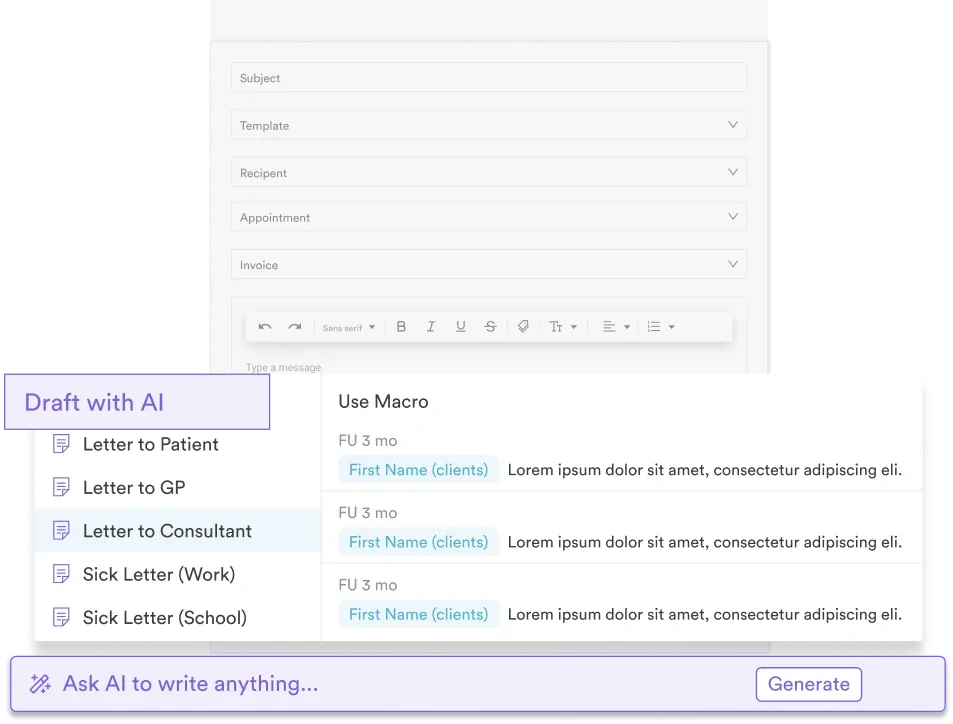

Pabau sends the SCS-R as a digital form, applies the reverse-scoring rules, and files each total against the client record. Your team stops adding up questionnaires by hand and gets a clear view of how belonging changes over a course of treatment.

The SCS-R earns its place because it puts a number on something a session note usually leaves implicit. Ask a client how connected they feel and you get an impression. Score it and you get something you can compare in three months.
The trade-off worth remembering is that the number is soft. Without validated cut-offs, a total is a reason to ask better questions, not a diagnosis. What it does reliably is show you movement.
Download the scale, add it to your intake pack, and score it the same way every time. Book a demo to see how Pabau scores the SCS-R for you and keeps every client’s trend in one place.

Need a worksheet for building coping skills? DBT therapy worksheet guides clients through mindfulness, emotion regulation, distress tolerance, and interpersonal effectiveness skill modules.
Screening for attention or focus concerns? DSM-5 ADHD checklist template sets out the clinical criteria clinicians use to evaluate attention, impulse control, and activity levels.
Assessing for generalized anxiety instead? DSM-5 generalized anxiety disorder checklist systematizes the screening and diagnostic evaluation of generalized anxiety disorder against current criteria.
Working with a client on eating patterns? eating disorder worksheet covers eating behaviors, body image, emotional regulation, food patterns, coping mechanisms, and recovery goal-setting.
Working with couples on conflict patterns? EFT cycle worksheet maps the emotional cycles couples experience during conflict and tracks their underlying attachment needs.
The Social Connectedness Scale is a validated self-report measure of how connected and integrated a person feels within their social world. The current 20-item version, the SCS-R, uses a 6-point Likert scale running from 1 (Strongly Disagree) to 6 (Strongly Agree).
The 1995 original has 8 items and a score range of 8 to 48. The SCS-R, published in 2001, has 20 items and a range of 20 to 120. The revision added positively worded statements and a much broader validation record, and it is the version used in contemporary practice.
Published studies report Cronbach’s alpha between 0.91 and 0.96, which indicates excellent internal consistency. Test-retest reliability sits at 0.96, so scores hold steady when nothing has changed. The scale also converges with social support measures and separates from trait anxiety.
Yes. It is freely available for clinical and research use without licensing fees. Cite Lee and Robbins (1995), or the relevant revision paper, whenever you publish results based on it.
Use it at intake to screen for isolation risk, during treatment to track progress toward social reconnection, and at discharge to evaluate the outcome. Re-administering every 8 to 12 weeks is enough to show a genuine trend.
Totals run from 20 to 120, and there are no officially validated cut-offs. As a practical guide, 20-50 suggests significant isolation, 51-80 moderate disconnection, 81-110 healthy belonging, and 111-120 very strong connectedness. Read the number alongside the clinical interview.
Yes. It is widely used in counseling, psychotherapy, psychology, and psychiatric settings, and it works with individual clients as well as groups. Store completed scales securely and check that your practice management system meets HIPAA in the US or GDPR in the EU.
The SCS-R has 20 statements, each rated from 1 (Strongly Disagree) to 6 (Strongly Agree). Ten of them are negatively worded and must be reverse-scored. The 1995 original had only 8 items, so check which version you are holding.