Mental health self-care checklist
A mental health self-care checklist is a structured daily tool for tracking the ...

5
Last Updated: Oct 20, 2026

A coping skills worksheet helps clients identify, evaluate, and build adaptive strategies for stress, anxiety, depression, and difficult emotions.
The worksheet separates healthy coping from avoidance, substance use, and other patterns that make things worse over time.
Good worksheets cover emotion-focused, problem-focused, and behavioral strategies, so no client ends up relying on one skill alone.
Debriefing a failed attempt at the next session matters more than the assignment itself.
Practice management software like Pabau delivers the worksheet digitally and files each response in the client record.
The worksheet walks a client through the strategies they use now, sorts them into healthy and unhealthy, and builds a personal toolbox. It includes space for a weekly commitment, an effectiveness rating, and a crisis plan.
Download templateA coping skills worksheet is a written record of what a client does under pressure and what they will try instead. It turns a vague conversation about calming down into a plan you can both review next week.
The template above is free to print or send digitally. Below it, you will find how therapists adapt the worksheet for adults, teens, anxiety, depression, and anger.
The worksheet earns its keep at the next session. When a client reports that a skill did not help, the debrief decides whether they try again. That conversation is covered here too.
A coping skills worksheet is an assessment and planning tool. It helps you see how a client manages difficulty now, then build better strategies with them. The page creates a structured dialogue about what already happens and what could work instead.
A clinical-grade worksheet does three things a generic stress-management handout cannot:
That structure comes from cognitive behavioral therapy (CBT) and dialectical behavior therapy (DBT). In both models, rehearsing a skill and writing it down does much of the therapeutic work.
Therapists use it during treatment planning, as a take-home assignment, or as a prompt for in-session practice. It suits clients with anxiety, depression, trauma, substance-use difficulties, and emotion-regulation problems. Any client leaning on a single strategy benefits from a wider toolkit.
The foundation of the worksheet is teaching clients to tell adaptive coping from maladaptive coping. That distinction reframes coping as choosing strategies that serve long-term well-being, rather than simply managing symptoms.
A well-designed worksheet helps clients map their own strategies onto this continuum. Many discover they already use adaptive coping without naming it. Others recognize a shame-driven pattern that keeps them stuck, and that recognition is the first shift toward change.
Avoidance often sits on top of a habitual defense. When substance use appears in the unhealthy column, a short screen such as the CAGE-AID questionnaire is a sensible next step.
Worksheets group strategies by therapeutic framework, so you can match the intervention to the client in front of you. The main categories are:
Covering the spectrum stops a client from leaning on one strategy alone. Someone who only distracts needs problem-solving and emotion-regulation options too. Aim for at least one skill from each category.
Adult versions address the places where stress collects: work pressure, relationship conflict, parenting, health worries, and money. Adults usually respond to problem-focused strategies first, because they value agency and direct action.
An adult worksheet normally has five parts:
That layout suits an adult preference for structure, autonomy, and visible progress. It also gives you something concrete to open the next session with.
Teens feel emotion intensely while the prefrontal cortex is still developing, so regulation is harder and impulsive coping is more likely. Effective teen worksheets speak to friendships, identity, and independence rather than clinical language.
Teen versions lean on concrete work: grounding and sensory techniques, peer support, and creative outlets such as art, music, or movement. Keep every practice brief, because teens abandon long forms.
Three additions build buy-in quickly. A coping playlist gives them songs that help. A safe people list names who to contact. A teen safety plan covers the moments when nothing works.
Anxiety work targets racing thoughts, physical tension, avoidance, and worry spirals. The strongest versions pair somatic techniques for the body with cognitive techniques for the mind.
Five strategies do most of the work:
Clients often ask for something to read between sessions. The American Psychological Association keeps a public page on coping with stress that works well as a handout.
For depression, lead with behavioral activation, because low motivation is the obstacle. Break inactivity into very small steps. Instead of exercising for 30 minutes, the first task is stepping outside for two minutes. Larger activities follow once small wins lift mood.
Anger work focuses on early recognition and de-escalation. Clients learn their warning signs, such as a clenched jaw, heat, or rising tension. An identifying triggers worksheet pairs well here, since the trigger usually lands before the client notices the body.
Then they rehearse one immediate response: stepping away, cold water on the face, grounding, or vigorous movement. The goal is to prevent an impulsive act while the anger runs its course.
CBT worksheets work the thought-feeling-behavior triangle. The client names a distorted thought, tests its accuracy, and writes a realistic alternative. A typical column layout runs trigger, thought, feeling, behavior, new thought, and outcome. A CBT cheat sheet helps clients who forget the distortion names.
DBT worksheets cover four skill modules: mindfulness, distress tolerance, emotion regulation, and interpersonal effectiveness. They run in a set order, so clients build one module before moving on. A DBT worksheet follows that sequence.
A coping toolbox is the meta-tool. It collects the client’s go-to strategies into one written menu they can reach for during distress. It usually asks five questions:
Clients often laminate or photograph the finished page, because recall fails at the moment they need it most. Writing the strategies down and revisiting them makes use far more likely.
The worksheet works best when it drives the conversation instead of replacing it. A therapist-led sequence looks like this:
Step five is where most worksheets go wrong. “Try the breathing technique when your shoulders tense” gives the client a cue. “Practice breathing this week” gives them homework they will forget.
A failed attempt is useful data. Work through four questions before you swap the skill for a different one:
Only then do you replace the strategy. Record the answer in your psychotherapy progress notes, so the next review starts from what you already learned.
In group work, members compare toolboxes, validate each other’s strategies, and practice skills in the room. If you run coping groups, a group therapy consent form should set expectations about sharing before the first session.
Paper worksheets go home at the end of a session, and plenty never come back. The next appointment then starts with reconstructing what the client tried. That quiet admin load feeds therapist burnout as much as caseload does.
Practice management software like Pabau closes that loop. You can publish the coping skills worksheet as a fillable digital form, then send it before or after the session. Clients complete it in the client portal on their own phone.
Their answers land in the client record automatically, so last week’s commitments are in front of you at the next appointment. You can name a specific skill in your notes and track it across an episode of care. For therapy teams, mental health practice software keeps assessment, planning, and outcomes in one file.
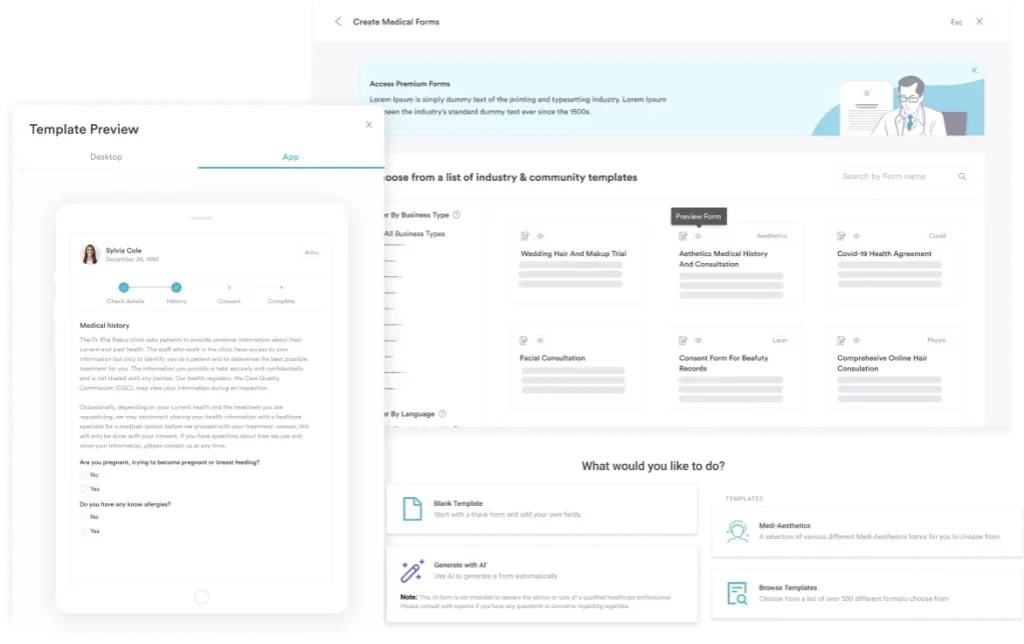
The result is less chasing, better follow-through from automatic reminders, and a searchable history of what each client actually uses. Solo practitioners get the same setup.

Pabau’s digital forms and client portal send the coping skills worksheet to clients, collect their answers, and file them in the client record. You start the next session with the client’s own words in front of you.

The download is the easy part. Outcomes turn on the loop around it. Assign one skill, attach it to a specific moment, then debrief honestly at the next session.
Start with one client this week. Print the template, fill it in together, and give the strategy a cue rather than a schedule. If they come back saying it did not help, treat that as the most useful session you will have with the worksheet.
The trade-off worth remembering is coverage against depth. A list of 40 skills impresses nobody mid-crisis, while three practiced skills will hold. Book a demo to see how Pabau sends the worksheet, collects the answers, and files them in the client record.

Need a communication skill to pair with it? Couple communication worksheet gives clients a structured way to raise a difficult topic without it escalating.
Working with a strengths-based client? Character strengths assessment helps them build coping around what they already do well.
Is sensory overload driving the distress? Highly sensitive person scale shows when everyday input is the thing to manage first.
Is poor sleep undoing the progress? Insomnia test screens for the sleep problem behind weak daytime coping.
Closing an episode of care? Therapy termination letter documents the ending and the coping plan the client leaves with.
It is a structured assessment and planning tool used by therapists, counselors, psychiatrists, and other mental health practitioners. Clients use it to recognize their patterns, commit to new skills, and keep a written record for moments of distress.
Yes. Members compare toolboxes, validate each other’s strategies, and practice skills together, which normalizes struggle and builds collective resilience. Group versions usually add space for peer feedback.
The first version is completed at intake or during treatment planning. Clients should revisit the toolbox before anticipated stress and whenever old patterns return. Many therapists prompt a review every four to eight weeks.
Emotion-focused coping regulates the feeling itself, through breathing, grounding, or mindfulness. Problem-focused coping addresses the cause, through planning, asking for help, or setting boundaries. Clients need both, since some problems cannot be solved immediately.
The template on this page is free to download and print. Many mental health organizations publish alternatives as well. Customize any of them to match your client population and your modality, whether that is CBT, DBT, or somatic work.
Practice management software like Pabau lets you publish the worksheet as a digital form in the client portal. Clients complete it electronically, and their answers populate the client record, giving you a searchable history of coping progress.