Journal prompts for mental health
Journal prompts for mental health are guided questions that help people process ...

2
Last Updated: Oct 13, 2026

The CORE-10 is the CORE System Trust’s 10-item short form of the 34-item CORE-OM, with each item scored 0 to 4 based on the last week.
It has three domains, not four: six problems and symptoms items, three functioning items, and one risk item. There’s no separate wellbeing domain.
Items 2 and 3 reverse-score before you total anything, and the single risk item is item 6, the ‘I made plans to end my life’ item, not item 10.
The Clinical Score is the raw sum of all 10 items (0-40). A score of 11 or above marks clinically significant distress, and pro-rating only works when exactly one item is missing.
A validated 10-item self-report questionnaire measuring psychological distress across problems and symptoms, functioning, and risk to self. Built for routine outcome monitoring in mental health and counselling practices.
Download templateA CORE-10 score of 18 sits in the moderate band. Drop to 8, and it falls below the clinical cut-off entirely. Getting from a stack of ticked boxes to that kind of judgement call takes two things many first-time users get wrong. One is reverse-scoring two of the ten items. The other is knowing which question matters most for safety: item 6, not item 10.
That mix-up isn’t cosmetic. Get it wrong, and a client who’s coping well can look distressed on paper. Or a genuine risk disclosure gets logged as an ordinary symptom question. Here’s how to score it properly and read the result on the scale it was actually built for.
The CORE-10 is a 10-item self-report questionnaire built by the CORE System Trust (Barkham et al.). It’s the short form of the same UK research group’s 34-item CORE-OM (Clinical Outcomes in Routine Evaluation – Outcome Measure).
Connell and Barkham published the validation study in 2007. It’s now one of the most widely used routine outcome measures in UK mental health and counselling services.
Clients rate each item on how true it’s felt over the last week, from 0 (“not at all”) to 4 (“most or all the time”). Ten items take most people one to two minutes to complete. That’s the whole point: it’s short enough to hand out every session without it becoming a burden.
It’s a screening and monitoring tool, not a diagnostic one. A high score tells you distress is present and roughly how severe it is. It doesn’t tell you why, and it doesn’t replace a clinical interview.
The CORE-10 covers three domains, not four. When the CORE System Trust cut the CORE-OM down from 34 items to 10, the wellbeing domain didn’t survive. Its items correlated too closely with the problems and symptoms items to earn a separate category, so the short form dropped it and kept the other three.
That last point is worth sitting with, because it’s the detail that gets miscopied most often. Item 6 is the risk item. Number 10 asks about unwanted images or memories, a trauma-symptom question, not a risk one.
Score item 10 as if it were the safety item, and you can end up underestimating an actual risk disclosure sitting three rows above it. Or you might read a trauma symptom as a safety flag when it isn’t one. Either way, check item 6 specifically every time you review a form, regardless of the total score.
The CORE-10 is validated for adults. It’s widely used across NHS Talking Therapies (formerly IAPT) services.
General counselling and primary care settings are where it’s most prominent, since PHQ-9 and GAD-7 remain the formal default measures in the Talking Therapies minimum dataset. If you’re already tracking outcomes session by session, it’s built for exactly that use case.
For younger clients, the CORE System Trust publishes a separate instrument, the YP-CORE, adapted in wording and reading level for ages roughly 11 to 16. Don’t administer the adult CORE-10 to that age group and adjust the interpretation afterward. Use the instrument that was actually validated for the population in front of you.
For non-clinical or general population screening, the CORE System Trust also publishes GP-CORE. It’s a 14-item version without a risk item, intended for primary care settings rather than mental health services specifically.
In a psychology practice platform, completed assessments file straight into the client record.
Scoring takes three steps, and skipping the first one is where most errors happen.
Worked example. A client completes all 10 items. After reversing items 2 and 3, the ten scores are 3, 2, 1, 2, 3, 0, 2, 2, 2, 1. Add them up and you get 18. That’s a raw Clinical Score of 18, sitting inside the 15-20 “moderate” band. It isn’t a 1.8 forced onto a 0-4 scale and misread as “mild.” The decimal-point version of that score would put you a full severity band too low. That’s exactly the kind of error the raw 0-40 scale is designed to prevent.
Confirm these five things before you finalize any score:
The clinical cut-off on the CORE-10 is 11. A raw score of 11 or above indicates clinically significant distress. That’s the same threshold logic used across the CORE suite, described in Connell and Barkham’s 2007 validation work and the CORE System Trust’s own guidance.
Everything below that splits into a non-clinical range; everything above it splits further by severity.
Back to the worked example: a raw score of 18 sits inside the moderate band, above the clinical cut-off but well short of severe. That single number, read on the wrong scale, could have been misread as mild. On the right scale, it’s a result worth a treatment review, not a footnote.
The CORE-10 is a short form, not a replacement, of the full CORE-OM. Reach for the short form when you need a quick, repeatable check-in. Turn to the full measure when you need the detail a comprehensive intake or a research protocol calls for.
The CORE System Trust’s own recommended workflow pairs the two. At intake and discharge, the full CORE-OM captures the complete picture. Between those points, the CORE-10 tracks the trend at every session, without asking clients to fill out 34 items each week.
The CORE-10 is free to use for clinical service delivery. It’s copyright protected by the CORE System Trust, so you can reproduce it for your own practice without asking permission first. You can’t edit the items or publish a derivative version, though. Using it in a research study needs separate authorization from the Trust.
One thing to flag if you’re using the printable CORE-10 template or any paper copy: the checkboxes follow the same 0-to-4 order for every item. There’s no visual cue that items 2 and 3 need reversing.
That’s normal; most CORE-10 paper forms work this way. It just means the reversal has to happen at scoring time, on paper or in a spreadsheet, not on the form itself. Build it into your process rather than expecting the sheet to remind you.
For the official source, referencing guidance, and derivative versions like YP-CORE and GP-CORE, the CORE System Trust’s CORE-10 information page is the page to bookmark.
Paper forms work, but they put the reversal and the summing on whoever’s holding the clipboard. Practice management software like Pabau can run the CORE-10 as a digital form, applying the reverse-scoring to items 2 and 3 automatically. It totals the Clinical Score and attaches the result directly to the client’s record.
The same system that handles a client’s counseling informed consent form can host CORE-10 right alongside it, so intake paperwork and outcome tracking live in one place.
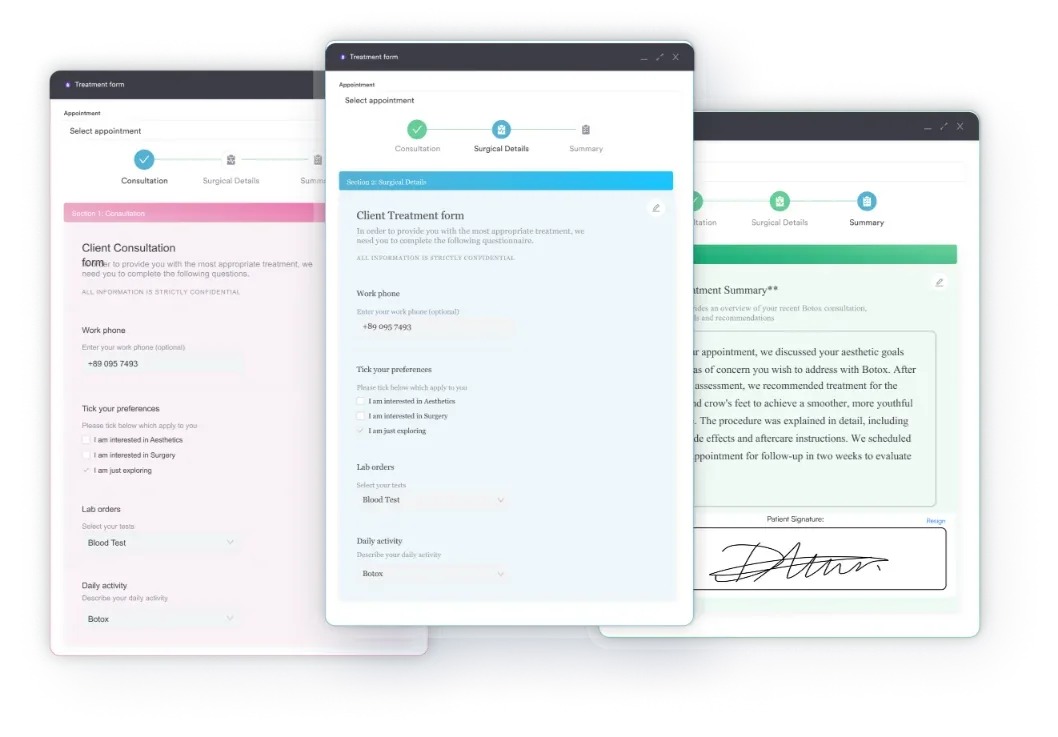
Digitizing the CORE-10 changes what you can actually do with it week to week:
That data only helps if the record around it is solid. Pair digital outcome tracking with clinical documentation AI to keep session notes and outcome scores in the same place. Compare how different practice management platforms handle mental health outcome data before you commit to one.
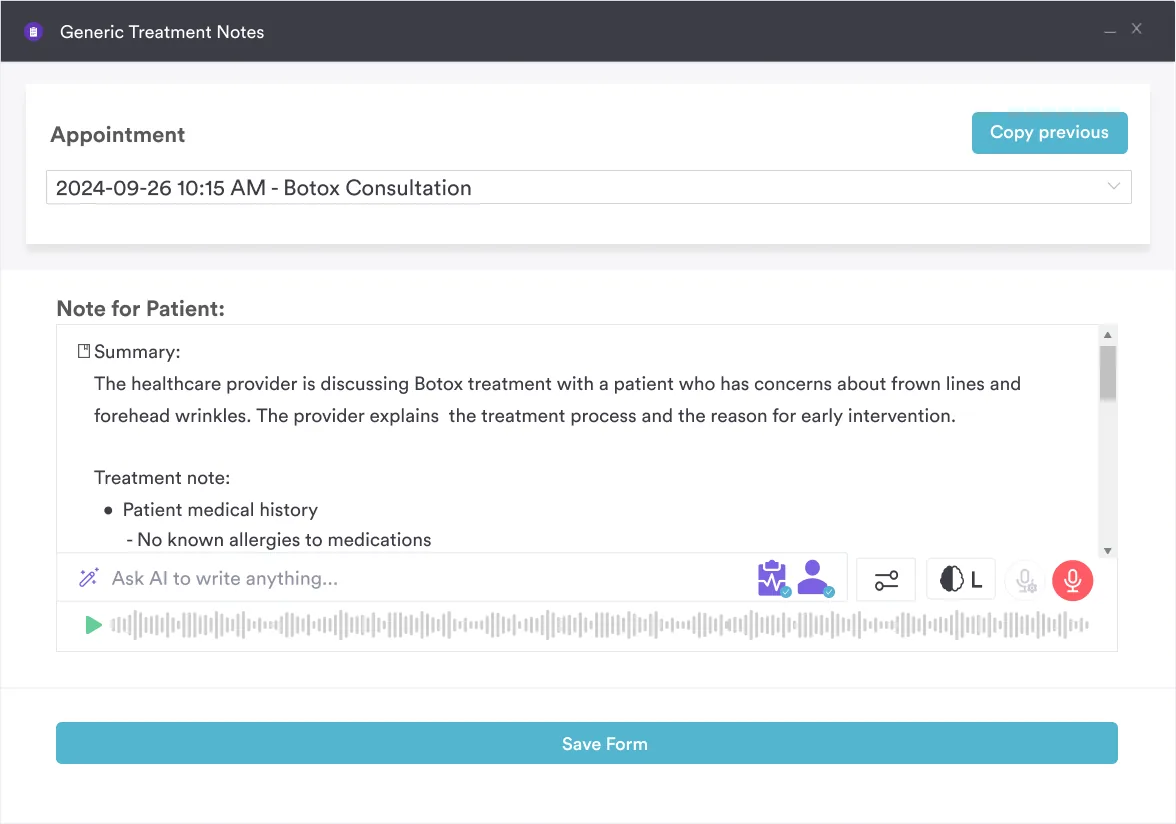
Standardize when you administer it. Explain what the score means before handing it over, so clients aren’t guessing at what a “4” versus a “2” implies. Pairing that conversation with practical take-home tools. Handle item 6 carefully.
A positive response there needs a same-day clinical conversation, not a note for next session, regardless of what the total score says. If risk indicators escalate, pair that conversation with a formal danger assessment.
Review trends, not single scores. Three sessions at 16 tells a different story than a jump from 8 to 16 in a week. The latest number can look identical either way. What matters is the trend behind it, not the single snapshot. A sustained rise like that is often the cue to revisit the treatment plan itself, not just the score.
Keep that history documented alongside your session notes so the pattern stays visible to anyone reviewing the case, not just the person who administered it.
The CORE-10 doesn’t target a single diagnosis. It’s a broader distress and functioning measure, which is why it works as a general intake and monitoring tool across a mixed caseload rather than a condition-specific screener.
Many UK services run all three together: PHQ-9 and GAD-7 to track named symptom clusters, CORE-10 to track overall distress and functioning session to session. None of them substitute for a clinical interview. They exist to make the trend visible between the interviews that actually do the diagnostic work.
A CORE-10 score is only useful if it’s scored the same way every time. Reverse items 2 and 3, and check item 6 as the risk item regardless of the total. Then read the result on the real 0-40 scale, not a mean forced back to 0-4. Get those three things right and a ten-item form tells you more than its size suggests.
Pabau handles that consistency automatically. It applies the reverse-scoring, flags item 6, and keeps every score attached to the client’s timeline. That makes a trend visible at a glance instead of buried in a stack of paper forms.

Automate CORE-10 scoring, display client progress longitudinally, and integrate outcome data into your clinical workflows.


Screening for binge eating patterns? Binge eating screening tool maps DSM-5 criteria to eating patterns and severity, with scoring guidance included.
Helping clients connect feelings to body sensations? Body sensations and emotions template maps physical sensations like chest tension or throat tightness to underlying emotional states.
Treating a patient’s insomnia with CBT? CBT for sleep worksheet combines a sleep diary, stimulus control instructions, and cognitive restructuring prompts for insomnia.
Yes. The CORE-10 is free for clinical service delivery. It’s copyright protected by the CORE System Trust. You can reproduce it in your own practice without permission, but you can’t alter the items or publish a derivative. Research use needs separate authorization from the Trust.
The CORE System Trust’s reliable change index for the CORE-10 is a drop of 6 points or more between two administrations (compared with 5 points on the full CORE-OM). A change below that could just be normal week-to-week variation, not a real shift in distress.
GP-CORE is a separate 14-item instrument built for primary care and general population screening. It has no risk item, unlike the CORE-10’s single risk question, and it isn’t intended as a mental-health-service outcome tool the way CORE-10 is.
Most services use it at every session, or at minimum every 2 to 4 sessions, plus at baseline and discharge. Weekly use suits brief or high-intensity work; less frequent use suits longer-term therapy. What matters most is keeping the interval consistent so the trend line means something.