Monika Lazarevska

Good character traits list
What is a good character traits list? A good character traits list is a structur...

3
Last Updated: Oct 30, 2026
Free PDF 1 page, print-ready Clinician-reviewed
Mental health bingo is a group activity where players tick off squares that name coping skills and self-care habits. It turns a heavy subject into an easy conversation. Therapists, school counselors, and workplace wellbeing teams use it for psychoeducation and awareness events, especially during Mental Health Month in May.
Because the prompts do the teaching, nobody has to lecture. Setup still matters. A badly chosen square or a competitive prize can push someone to overshare or feel left out. Below, you’ll find the free printable card, what to put on each square, a session plan, and how to keep the group safe.
A one-page printable listing 25 everyday self-care activities, from taking a walk to a break from social media, each with a tick box. It includes name and date fields, so participants can take it home after the session.
Start from scratch, or upload this PDF or any form you already use, and Pabau's AI Form rebuilds it with tick boxes, text fields and a signature. Attach it to the treatment once, and every patient gets it on time.
AI Form rebuilds the consent, history and aftercare forms you already use. You review each one, then publish.
Patients complete forms on their phone before they arrive, so the front desk stops retyping paper.
Every signed form is versioned and attached to the treatment record, ready when you need it.
Set how long a consent stays valid. Returning patients skip forms they have already signed.
Supports HIPAA and GDPR compliance AES-256 encryption 4.8 on G2 4.7 on Capterra Trusted by 4,000+ practices worldwide

Mental health bingo is a printable group activity for psychoeducation and awareness, built from 25 short prompts.
Squares work best as observable prompts, such as a coping skill or a self-care act.
Set group size, session length, and a debrief plan before the first square is called.
Keep play non-competitive, and never ask anyone to explain a square they marked.
Practice software such as Pabau can collect consent through digital forms before a group session begins.
Players mark a square when a prompt matches something they have done, noticed, or want to try. The first person to complete a line calls bingo, as in the standard 5×5 game. Because the teaching sits in the prompts, the facilitator can guide the room instead of lecturing it.
That makes the game a good fit for psychoeducation, where the goal is to give people patterns and language they can use later. The NIMH health topics pages are a useful plain-language reference when someone wants to read more after the session.
The card works anywhere a group needs an easy way into a hard topic. These are the settings where it turns up most:
May is the usual peak for these events. Mental Health America’s resources are a practical starting point for planning a Mental Health Month campaign.
Each square holds a short, specific prompt that players can recognize from their own lives. The free card uses 25 everyday self-care activities, such as taking a walk or turning off your phone before bed.
To build your own card, mix categories so it doesn’t push only one kind of behavior. Here’s how the main categories compare:
Before you print, run every square through this quick check:
Those last topics belong in a clinical conversation rather than a group game. Mind’s guidance on seeking help is a useful reference for the help-seeking squares.
Coping skills bingo is a variant where every square names a specific strategy, such as grounding, journaling, or asking for support. Therapists use it to rehearse skills between sessions and to give group members a shared vocabulary.
Adapt the squares to the treatment goals in the room. For example, an anxiety group’s card might include “Named five things I could see” and “Wrote down a worry, then set it aside.” A sleep-focused group would lean on evening routines instead.
Afterward, a coping skills worksheet helps each person plan when they’ll use the strategy that landed.
Self-care bingo leans on everyday habits such as hydration, rest, or time with friends. The free card above is built this way. It suits workplace challenges and social media campaigns in May, when teams look for simple ways to start conversations.
Keep the bar realistic. A square that asks people to run a marathon creates pressure. One that asks them to take a proper lunch break invites everyone in.
Facilitators need the same care. If you run several sessions a month, watch for signs of therapist burnout in yourself and your team.
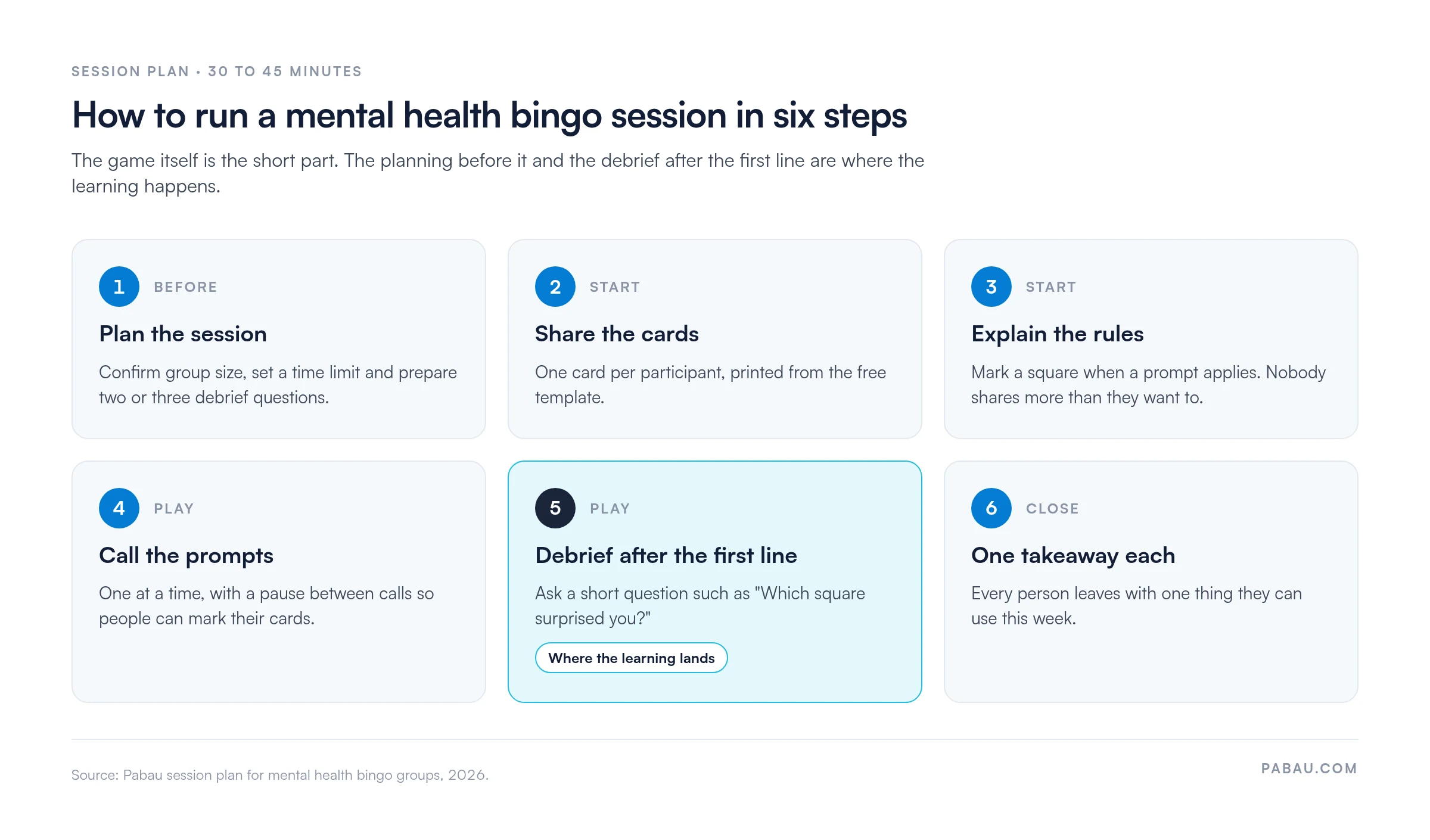
Plan before you hand out cards. Confirm group size, set a time limit, and prepare two or three debrief questions. A 30 to 45 minute session suits most groups.
The plan below puts those steps on one page, so you can print it next to the cards.
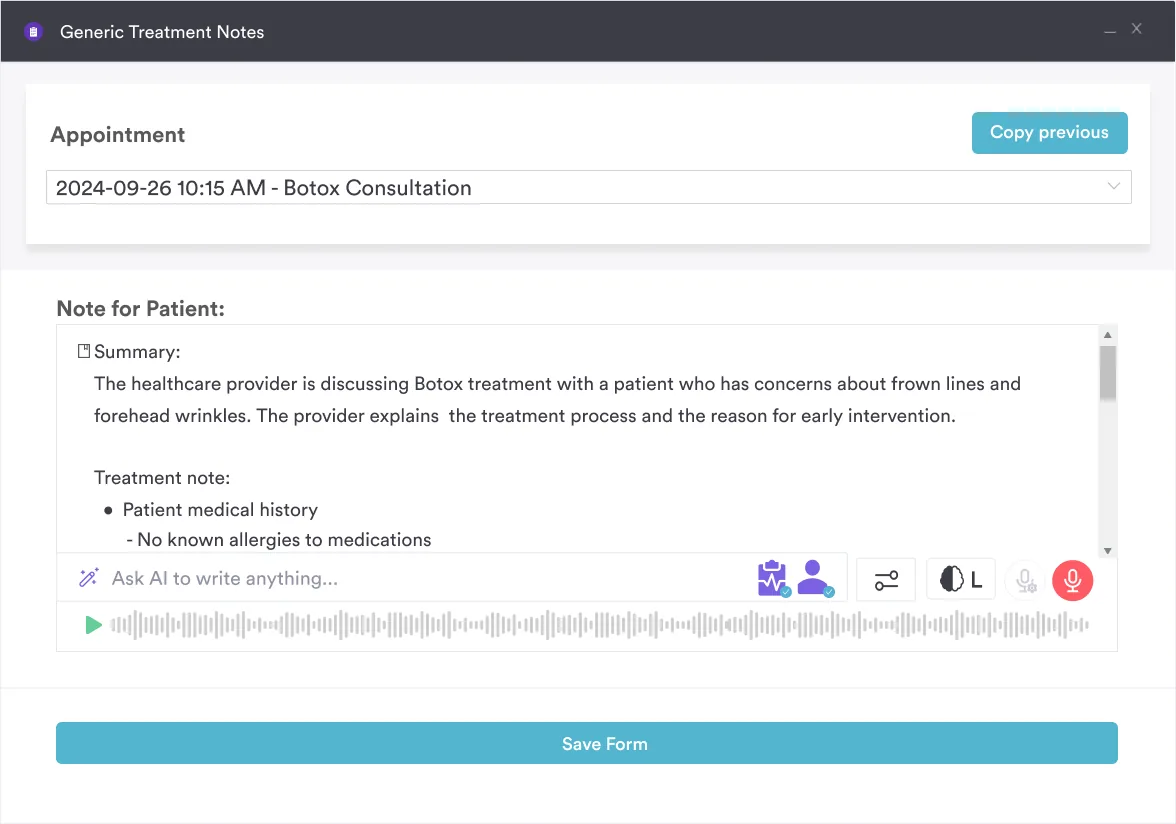
If you document the session, record participation and themes rather than personal disclosures. Pabau Scribe, our AI scribe, is a feature of the Pabau platform that can draft session notes from your summary. You review and approve every line before it enters the record.
Adults respond well to direct, practical prompts. A workplace card might cover breaks, boundaries, and asking a colleague for help. A clinical group might focus on stress and sleep routines instead.
Practices running structured programs often keep group records in a mental health EMR system. That way, attendance and themes stay consistent between sessions. Workplace sessions raise a few extra questions.
Should participation be voluntary? Yes, always. A staff member who sits out shouldn’t have to explain why.
Can managers see who marked which square? They shouldn’t. Let people keep their own cards, or collect them anonymously.
Which privacy rules apply? Depending on where you practice, HIPAA or GDPR may cover any personal information you gather. Check local rules before you collect names or notes.
Group games can be a poor fit for some participants, especially people with recent trauma or strong reactions to competition. Prizes, public calling of names, or pressure to share can increase distress. Offer a non-competitive version where the aim is reflection rather than winning.
Neurodivergent participants may need extra time between calls, larger print, or the option to mark squares privately. Offer these adaptations to everyone as standard practice. Before the first session, review group therapy informed consent so participants know what to expect.
Start every group by stating that bingo is a psychoeducation activity, not treatment. Name the boundaries out loud, including that no one has to explain what a square means to them. Then offer a quiet alternative card for anyone who would rather sit this one out.
Group programs often stall at the admin stage. Consent forms, attendance, and notes end up scattered across email threads and paper folders. The facilitator then spends the hour before each session chasing them.
Pabau’s therapy practice management software brings that admin together. Participants fill in digital intake forms, consent included, before they arrive. Every form is signed before the first card goes out.
Session notes and participant details then sit together in the Client records feature. The next facilitator sees attendance and themes without digging, and you spend your prep time on prompts instead of paperwork.

Pabau’s digital forms and Client records keep consent and session notes in one place. Your team spends less time on paperwork and more time with the group.

A bingo card looks simple, and that simplicity is why groups open up. The skill sits in the choices around it: prompts people recognize, a pace that suits the room, and a debrief that turns ticks into talk.
Start with the free card as written, then swap squares once you know your group. If a prompt makes the room go quiet in the wrong way, cut it next time. Remember the trade-off, too. A less competitive game produces fewer winners and more honest conversation.
If paperwork is what slows your groups down, book a demo to see how Pabau handles consent, attendance, and session notes for therapy teams.

Planning a group that may raise acute concerns? Crisis intervention strategies for clinicians is a useful reference when a session brings up urgent distress.
Want a weekly read on how participants are doing? Mental health check-in worksheet gives each person a structured way to reflect on their week.
Help-seeking squares left someone unsure where to start? Asking for help worksheet helps people plan how to reach out for support.
Building a self-care series after the game? Wellness worksheets carry the habits from the card into weekly practice.
Working with a group that struggles to name feelings? Emotional awareness worksheet helps participants recognize and label their emotions.
Yes. Share the card on screen and ask players to mark a printed or digital copy. Call prompts aloud, keep cameras optional, and run the debrief through chat for anyone who prefers not to speak.
Keep the same 25 prompts but shuffle their positions on each card. Players still share one vocabulary, but lines complete at different times, so the game doesn’t end with a crowd of winners. Keep one master list for calling.
Yes, with prompts written for their age, such as “Named a feeling” or “Helped a friend.” Add pictures for younger readers and shorten the session to fit their attention span.
No. Competition can raise distress in a mental health group, so small shared rewards work better than one big prize. A sticker for everyone who joins the debrief keeps the mood light.
No. It is an educational and engagement tool. It should never replace assessment, treatment, or crisis support.