A cancer nursing care plan is a structured tool that guides assessment, diagnosis, planning, intervention, and evaluation across all treatment phases.
NANDA-I taxonomy provides standardized nursing diagnoses for cancer (acute pain, imbalanced nutrition, risk for infection, fatigue, anxiety, anticipatory grieving) ensuring consistent, evidence-based care.
The template covers assessment parameters, SMART goals, nursing interventions with clinical rationale, and evaluation criteria to address physical symptoms, treatment side effects, and psychosocial needs.
Practice management software like Pabau integrates nursing assessment, treatment tracking, and patient communication in one platform, enabling real-time documentation and multi-provider access.
Download your free cancer nursing care plan template
A ready-to-use template covering patient assessment, NANDA-aligned nursing diagnoses, treatment goals, clinical interventions with evidence-based rationale, and outcome evaluation for oncology care settings.
A cancer nursing care plan is the clinical foundation for oncology nursing practice. This downloadable template provides a structured framework aligned with NANDA-I nursing diagnosis standards. It helps nurses deliver coordinated, evidence-based care across the entire cancer treatment journey, from initial assessment through palliative and end-of-life phases.
Found our content helpful?
What is a cancer nursing care plan?
A cancer nursing care plan is a comprehensive clinical document that systematically addresses the multifaceted needs of cancer patients. Unlike standard care plans, it integrates physical symptom management, treatment toxicity prevention, nutritional support, psychological coping, and end-of-life considerations into one coordinated workflow.
The plan uses integrated patient records to link assessment findings directly to diagnosis, goals, interventions, and outcome evaluation.
NANDA-I (North American Nursing Diagnosis Association-International) taxonomy standardizes the language nurses use to identify patient problems and plan interventions. For cancer patients, common NANDA diagnoses include acute pain, imbalanced nutrition, risk for infection, fatigue, anxiety, and anticipatory grieving.
This standardization ensures consistency across care teams, improves communication between oncology nurses and multidisciplinary providers, and creates a shared foundation for treatment planning.
The template covers five components: assessment cues, nursing diagnosis statements, measurable goals, nursing interventions with clinical rationale, and evaluation criteria. Each element serves a specific purpose in delivering safe, effective cancer nursing care. Documenting these components in real time lets every provider see current assessment data and treatment plans instantly.
How to use this cancer nursing care plan template
The template follows a five-step workflow that mirrors the nursing process used in oncology settings:
Conduct a systematic nursing assessment. Gather data on the patient’s physical status (pain, nutrition, infection risk, fatigue), functional ability, psychosocial status (anxiety, coping), and treatment-related side effects. Document specific assessment cues (e.g., “reports pain 8/10 during movement,” “unable to tolerate solid food due to mucositis”). AI-assisted documentation tools can accelerate this data capture and structure findings automatically.
Identify NANDA nursing diagnoses that match the assessment data. For example, if assessment reveals pain unrelieved by current medication, select the diagnosis “Acute Pain.” Each diagnosis must be supported by specific cues from your assessment. Use structured clinical documentation to ensure diagnoses are clearly linked to evidence.
Write SMART goals and expected outcomes. Goals must be specific, measurable, achievable, realistic, and time-bound. One example: “Patient will report pain reduced to 4/10 within 24 hours of opioid administration.” Another: “Patient will consume minimum 1,500 calories daily within 72 hours of nutritional intervention initiation.” Measurable outcomes make evaluation straightforward.
Plan nursing interventions with clinical rationale. For each diagnosis, list 3-5 evidence-based interventions and explain the rationale (the scientific reason each intervention helps). Example intervention for acute pain: “Administer prescribed analgesic 30 minutes before activity.” The rationale: medication reaches peak effect, allowing pain-free movement while reducing deconditioning and improving mood.
Evaluate outcomes and revise the plan. At the end of each shift or care cycle, assess whether the patient has met stated goals. If goals are met, document resolution and discontinue that diagnosis. If not met, revise interventions or timeline. Ongoing evaluation ensures the care plan stays responsive to the patient’s changing condition.
Nurses new to care planning can work through the same five ADPIE steps on a blank nursing process worksheet first.
Nursing assessment for cancer patients
A comprehensive cancer nursing assessment collects data across five domains. Use digital assessment forms to streamline data entry and ensure no critical information is missed. For patients with declining alertness. Intake forms completed on paper get transcribed, and transcription is where detail is lost.
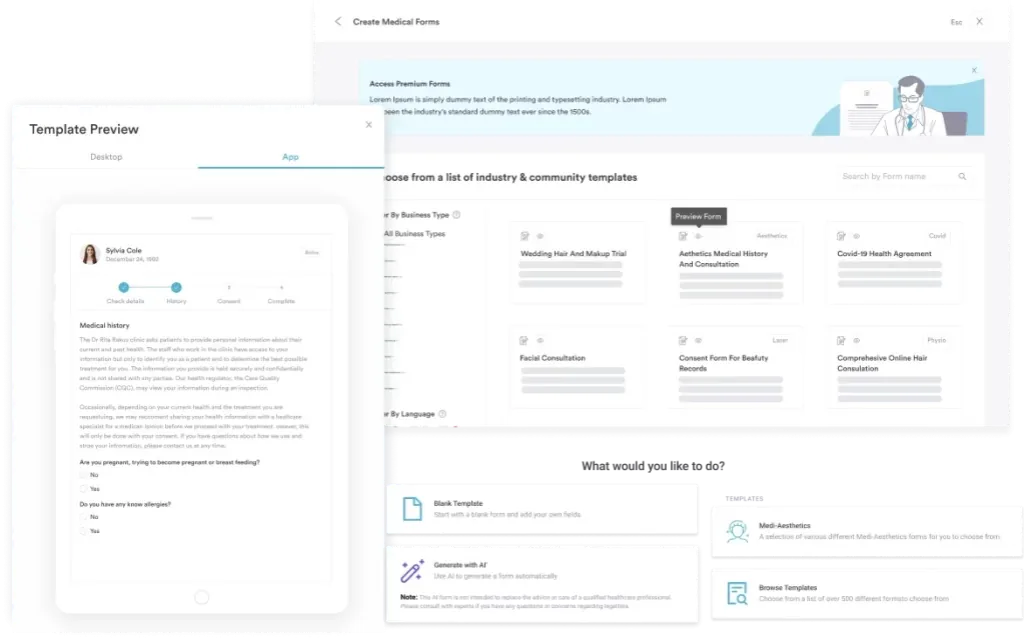
Pabau’s digital intake forms let oncology teams capture physical, functional, and psychosocial assessment data before every visit.
Assessment Domain
Key Parameters
Nursing Documentation
Physical Assessment
Pain intensity and character; vital signs; skin integrity; nutritional intake; bowel/bladder function; respiratory status; presence of surgical drains or lines
Document using standardized scales (e.g., 0-10 pain scale, Karnofsky Performance Score). Link findings to potential nursing diagnoses.
Functional Assessment
Activities of daily living (ADL) ability; mobility level; fatigue impact on self-care; ability to work or perform valued activities
Use validated tools (e.g., Eastern Cooperative Oncology Group Performance Status). Note realistic functional goals with the patient.
Psychosocial Assessment
Emotional state (anxiety, depression, fear); coping mechanisms; social support availability; spiritual/existential concerns; body image concerns; fear of death or treatment failure
Explore patient’s understanding of diagnosis, treatment goals, and prognosis. Document psychological risk factors and protective resources.
Treatment-Related Assessment
Current and planned treatments (chemotherapy, radiation, immunotherapy, surgery, hormone therapy); treatment schedule and expected timeline; known side effects and contraindications
Cross-reference treatment protocols with nursing diagnoses. Anticipate toxicities and plan preventive interventions.
Palliative/End-of-Life Readiness
Patient/family goals of care; advance care planning status; code status; symptom burden; comfort care priorities; family coping capacity
Document conversations about prognosis and preferences early. Use patient-preferred language. Revisit periodically as condition changes.
Common nursing diagnoses for cancer patients (NANDA-aligned)
The NANDA-I taxonomy provides standardized labels for patient problems. These are the most prevalent diagnoses in oncology nursing care plans:
Acute Pain – related to tissue damage from tumor, surgical intervention, or treatment toxicity
Imbalanced Nutrition: Less Than Body Requirements – related to anorexia, nausea, vomiting, mucositis, dysphagia, or increased metabolic demand
Risk for Infection – related to immunosuppression from chemotherapy, low neutrophil counts, or invasive procedures
Fatigue – related to cancer-related inflammatory cytokines, treatment effects, pain, or emotional distress
Anxiety – related to uncertainty about prognosis, fear of death, treatment side effects, or role changes
Anticipatory Grieving – related to anticipated loss of physical ability, role, relationships, or life itself
Impaired Oral Mucous Membrane – related to chemotherapy-induced mucositis or radiation to head/neck
Nausea – related to chemotherapy, radiation, opioids, or emotional distress
Disturbed Body Image – related to hair loss, surgical changes (mastectomy, colostomy), or cachexia
Death Anxiety – related to terminal diagnosis, unrelieved suffering, or incomplete life goals
When developing the care plan, select diagnoses supported by specific assessment cues. Clear documentation standards ensure each diagnosis links directly to assessment data and treatment goals.
Acute Pain related to tumor invasion or post-surgical tissue trauma as evidenced by verbalized pain rating and guarding behavior
Patient will report pain reduced to ≤4/10 within 2 hours of intervention. Patient will verbalize pain relief measures by end of shift.
Administer prescribed analgesic (e.g., morphine IV) 30 min before anticipated activity; rationale: medication reaches peak effect, enabling pain-controlled participation in care. Apply heat/cold therapy as tolerated; rationale: reduces muscle tension and promotes local vasodilation. Use non-pharmacologic techniques (guided imagery, breathing exercises); rationale: engages parasympathetic nervous system, reducing pain perception. Reposition every 2 hours; rationale: prevents pressure-related pain and improves circulation.
Goal met: patient reported pain 3/10 within 1 hour; participated in ADL. Continue current interventions. Reassess in 4 hours.
Nursing care plan: Imbalanced nutrition
Assessment Cues
Nursing Diagnosis
Goals (SMART)
Interventions & Rationale
Evaluation
Weight loss 5 kg in 6 weeks; reports nausea with eating; minimal food intake (500 cal/day); mucositis present; albumin 3.0 (low)
Imbalanced Nutrition: Less Than Body Requirements related to anorexia, nausea, and chemotherapy-induced mucositis as evidenced by weight loss and reduced intake
Patient will consume minimum 1,500 calories daily by day 3. Patient weight will stabilize within 2 weeks. Albumin will return to ≥3.5 within 4 weeks.
Administer antiemetic 30 min before meals; rationale: reduces nausea and enables nutritional intake. Offer small, frequent meals (6 per day); rationale: reduces volume per meal, improves tolerance. Recommend soft, cool foods (smoothies, yogurt, ice cream) due to mucositis; rationale: minimizes oral pain. Consult dietitian for high-protein, high-calorie supplement plan; rationale: specialized nutrition support addresses cachexia. Monitor intake/output and weekly weights; rationale: tracks efficacy of interventions.
Partial progress: patient consumed 1,200 cal on day 2, 1,350 on day 3. Nausea reduced. Continue interventions. Recheck labs in 1 week.
Nursing care plan: Risk for infection
Assessment Cues
Nursing Diagnosis
Goals (SMART)
Interventions & Rationale
Evaluation
ANC <500 (severe neutropenia); on active chemotherapy; recent central line placement; temp 37.8°C; at high risk due to immunosuppression
Risk for Infection related to chemotherapy-induced immunosuppression and neutropenia as evidenced by low ANC and invasive devices
Patient will remain afebrile. No signs of infection (wound erythema, purulent discharge, positive blood cultures) will develop during hospitalization. ANC will recover to >1,000 by day 10.
Monitor temperature every 4 hours; rationale: fever is earliest sign of infection in neutropenic patients. Maintain strict hand hygiene and use HEPA filter if available; rationale: reduces pathogen exposure. Inspect central line site daily for erythema, drainage; rationale: identifies local infection early. Educate patient on neutropenic precautions (avoid crowds, fresh fruit/vegetables); rationale: prevents exposure to environmental organisms. Administer prophylactic antibiotics as ordered; rationale: prevents bacterial translocation during severe neutropenia.
Goal on track: patient remains afebrile; no line site infection noted. ANC trending upward (100 to 200/mm³ over 3 days). Continue precautions until ANC >1,000.
Fever is the earliest sign of infection in a neutropenic patient. If it arrives with hypotension or altered mentation, a sepsis nursing care plan sets out the qSOFA thresholds and the hour-1 interventions to start.
Fatigue related to cancer-related inflammatory response and chemotherapy effects as evidenced by overwhelming tiredness and reduced activity tolerance
Patient will report fatigue reduced to 5/10 within 2 weeks. Patient will participate in 15-minute walk 3 times weekly within 1 week. Patient will return to work part-time by week 4.
Encourage gentle, graded exercise (walking, light stretching) 20-30 min daily; rationale: improves energy, muscle strength, and mood without overexertion. Recommend sleep hygiene (consistent bedtime, dark room); rationale: consolidates rest and improves daytime alertness. Prioritize energy for valued activities and delegate non-essential tasks; rationale: conserves limited energy for meaningful engagement. Administer iron supplementation or transfusion if anemic; rationale: addresses oxygen-carrying capacity. Monitor hemoglobin/hematocrit weekly; rationale: identifies anemia contributing to fatigue.
Partial progress: fatigue now 6/10 by day 5; patient completed 10-minute walk. Hemoglobin improved. Continue exercise progression.
Weekly hemoglobin checks separate treatment-related fatigue from anemia. When a result comes back low, the anemia care plan sets out the iron and transfusion steps that follow.
Occupational and physical therapy teams co-managing deconditioning can track functional recovery with a knee outcome survey. This helps when mobility loss follows lower-limb surgery or prolonged bed rest.
Nursing care plan: Nausea and vomiting (chemotherapy-induced)
Assessment Cues
Nursing Diagnosis
Goals (SMART)
Interventions & Rationale
Evaluation
Nausea onset 2 hours post-chemotherapy; vomited 3 times in 12 hours; refusing fluids; dry mucosa; electrolyte imbalance anticipated
Nausea related to chemotherapy emetogenic potential as evidenced by verbalized nausea and vomiting episodes
Patient will remain free of vomiting for 4 consecutive hours. Patient will tolerate small sips of fluids by 6 hours post-chemo. Nausea will reduce to ≤3/10 within 24 hours.
Administer prescribed 5-HT3 antagonist antiemetic (ondansetron) before chemotherapy and every 8 hours; rationale: blocks serotonin receptors in chemoreceptor trigger zone. Offer ice chips or clear broth in small amounts; rationale: provides hydration without overwhelming stomach. Use acupressure bands on P6 acupoint; rationale: non-pharmacologic technique proven effective for CINV. Maintain cool environment; avoid food odours; rationale: reduces nausea triggers. Monitor electrolytes and IV fluids; rationale: prevents dehydration from vomiting.
Goal met: no vomiting for 6+ hours; tolerating clear liquids. Nausea 2/10. Electrolytes normalizing. Continue antiemetic schedule.
Nursing care plan: Anxiety and psychosocial distress
Assessment Cues
Nursing Diagnosis
Goals (SMART)
Interventions & Rationale
Evaluation
Restlessness, insomnia; expresses fear of death, treatment failure; avoids discussion of prognosis; anxiety 7/10; withdrawn socially
Anxiety related to threat of death and uncertain prognosis as evidenced by verbalized fear, restlessness, and avoidance coping
Patient will report anxiety reduced to ≤4/10 within 3 days. Patient will verbalize one coping strategy used daily. Patient will engage in psychosocial counseling by day 2.
Establish therapeutic nurse-patient relationship; allow patient to verbalize fears without judgment; rationale: reduces isolation, builds trust. Teach deep breathing and mindfulness; rationale: activates parasympathetic nervous system, reduces physiologic anxiety. Refer to oncology counselor or therapist; rationale: specialized psychosocial support addresses existential concerns. Mental health EMR systems enable integrated psychological documentation. Involve family/support persons in care conferences; rationale: strengthens coping resources. Provide honest, compassionate information about prognosis and treatment; rationale: reduces anxiety from uncertainty.
Goal in progress: anxiety reduced to 5/10 by day 2; patient attended counseling session, reported benefit. Sleeping slightly better. Continue support.
Nursing care plan: Anticipatory grieving
Assessment Cues
Nursing Diagnosis
Goals (SMART)
Interventions & Rationale
Evaluation
Sadness, crying episodes; expresses loss of independence, role changes; fears impact on family; terminal diagnosis disclosed; wants to complete unfinished life goals
Anticipatory Grieving related to anticipated loss of self and lifestyle as evidenced by emotional expression, expressed concerns about role changes, and verbalization of life goals
Patient will express feelings of loss without overwhelming despair. Patient will identify 2 meaningful goals to pursue in remaining time. Family will participate in advance care planning discussions.
Create safe space for grief expression; listen without minimising; rationale: normalises grief, reduces sense of isolation. Help patient identify legacy projects (letters, recordings, advice for children); rationale: creates meaning and sense of control. Facilitate family meetings to discuss prognosis, values, end-of-life preferences; rationale: improves family understanding and reduces unfinished business. Refer to spiritual care/chaplain if desired; rationale: addresses existential and spiritual dimensions of grief. Introduce palliative care team early; rationale: shifts focus from cure to comfort and meaningful time together.
Patient expressing grief more openly; completed one legacy letter. Family meeting scheduled. Palliative care referral initiated. Grief process on track.
Nursing care plan: Impaired oral mucous membrane (mucositis)
Assessment Cues
Nursing Diagnosis
Goals (SMART)
Interventions & Rationale
Evaluation
Erythema and ulceration of oral mucosa; reports mouth pain 6/10; difficulty swallowing; halitosis; 5 days post-chemotherapy; WBC recovering
Impaired Oral Mucous Membrane related to chemotherapy cytotoxic effects as evidenced by visible ulceration and reported pain
Mucositis severity will reduce from Grade 3 to Grade 1 within 5 days. Patient will maintain oral intake of soft foods without significant pain. Pain will reduce to ≤3/10.
Perform gentle oral rinses with normal saline or baking soda solution every 2 hours; rationale: removes debris, reduces bacterial load, soothes irritated tissues. Apply topical anaesthetic (viscous lidocaine) before meals; rationale: reduces pain enabling nutritional intake. Recommend soft, cool foods and avoid acidic/spicy items; rationale: minimises further mucosal damage. Assess for secondary infection (oral candidiasis, herpes); rationale: infections delay healing. Administer oral antifungal if fungal overgrowth noted; rationale: prevents opportunistic infection in immunocompromised state.
Goal in progress: ulceration surface area reduced 30% by day 3; pain 4/10; tolerating soft diet. No fungal overgrowth. Continue rinses and topical care.
Palliative and end-of-life cancer nursing care
Palliative and end-of-life care represents a fundamental shift in nursing goals: from cure-focused treatment toward comfort, dignity, and meaningful time with loved ones. When a patient’s treatment focus shifts toward palliation, the nursing care plan emphasizes symptom relief, psychosocial support, and family presence over aggressive intervention.
Key palliative nursing diagnoses include:
Death Anxiety – addressed through honest conversations, spiritual support, and presence
Chronic Pain – managed with opioids, complementary techniques, and focus on comfort rather than complete elimination
Dyspnea – relieved with positioning, oxygen, anxiolytics, and fan therapy
Anticipatory Grieving – supported through family meetings and legacy work
Caregiver Role Strain – addressed via respite care, emotional support, and teaching
In palliative phases. The emotional labor of end-of-life care can lead to moral distress and burnout. Interdisciplinary team debriefs, access to counseling, and structured handoff communication help sustain nursing resilience.
How Pabau supports oncology care plan documentation
While the downloadable template provides the clinical framework, AI-assisted care plan documentation accelerates charting and keeps records consistent across care episodes. Pabau’s platform enables oncology nurses to:
Customize NANDA-aligned templates. Nurses adapt templates to specific cancer types, treatment protocols, and patient populations, embedding evidence-based interventions directly into the system.
Link assessment findings to diagnoses in real time. As nurses document assessment cues, the platform suggests matching NANDA diagnoses, reducing documentation time.
Track treatment side effects and adjust interventions dynamically. When a patient develops new symptoms, the care plan updates and shares instantly with the oncology team.
Enable multi-provider coordination. Nurses, physicians, nutritionists, and palliative care specialists access the same care plan, reducing duplicate assessments and improving communication.
Generate automated care plan reviews and compliance reports. Administrators can flag plans needing updates and confirm NANDA diagnoses are backed by documented assessment cues.
Support telehealth documentation. Nurses in remote settings can document care plans, consults, and patient education from any location.
Pairing downloadable templates with treatment tracking automation connects care planning to care delivery. Nursing diagnoses identified during assessment translate into interventions and measurable outcomes for cancer patients.
Streamline oncology care plan documentation
Pabau’s customizable care plan templates and AI-assisted documentation link assessment findings to NANDA diagnoses automatically. Oncology teams spend less time charting and more time with patients.
A cancer nursing care plan only works when it’s used consistently, not filed away after the first shift. Nurses who revisit assessment cues and SMART goals at every handoff catch complications like neutropenic fever or worsening mucositis before they escalate.
The NANDA framework gives every member of the oncology team a shared vocabulary. What matters more is whether documentation keeps pace with a patient’s changing condition. A plan that isn’t updated within hours of a new symptom is already out of date.
Pair this template with software that surfaces assessment data the moment it’s entered, so a change in one shift’s notes shows up in the next. Book a demo to see how Pabau keeps oncology care plans current across every shift and provider.
Continue your research
Managing a stroke patient’s recovery?CVA nursing care plan covers NANDA diagnoses for mobility, swallowing, and communication deficits after a stroke.
Triaging a patient in urgent care?Emergency nursing assessment template structures the ABCDE survey, SAMPLE history, and Glasgow Coma Scale scoring.
Caring for a patient on anticoagulation? The DVT nursing care plan template outlines assessment cues and bleeding-risk interventions for deep vein thrombosis.
Supporting a patient through a COPD exacerbation? The COPD nursing care plan template covers oxygenation goals and breathing-pattern interventions.
Planning post-surgical abdominal care? The appendicitis nursing care plan template details infection-prevention and pain-management steps after surgery.
Frequently asked questions
What are the main nursing diagnoses for cancer patients?
The most prevalent NANDA nursing diagnoses for cancer patients include acute pain, imbalanced nutrition, risk for infection, fatigue, and anxiety. Others are anticipatory grieving, impaired oral mucous membrane (mucositis), nausea, disturbed body image, and death anxiety. Selection depends on specific assessment findings and the patient’s cancer type and treatment phase.
How do you write a nursing care plan for a cancer patient?
Follow a five-step nursing process. First, assess the patient across physical, functional, psychosocial, and treatment-related domains. Next, identify NANDA diagnoses supported by specific assessment cues. Then write SMART goals: specific, measurable, achievable, realistic, and time-bound. Plan evidence-based interventions with clinical rationale for each diagnosis. Finally, evaluate goal attainment and revise the plan as the patient’s condition changes.
What nursing interventions are used for cancer-related pain?
Interventions include pharmacologic approaches, such as opioid and non-opioid analgesics timed before activity. Non-pharmacologic techniques such as guided imagery, breathing exercises, and heat or cold therapy also help. Repositioning every 2 hours prevents pressure pain, and palliative care specialists can manage complex pain syndromes. Pain assessment using standardized scales (0-10 scale) guides intervention selection and adjustment.
Is the downloadable cancer nursing care plan template customizable for different cancer types?
Yes. The template provides the structure and core NANDA diagnoses applicable across cancer types. However, specific interventions and assessment parameters should match the patient’s cancer type (breast, lung, colorectal, leukemia) and treatment modality (chemotherapy, radiation, immunotherapy, surgery). Individual response also shapes these choices. Many facilities adapt the template for oncology-specific protocols used at their institution.
How does a nursing care plan differ in palliative versus curative cancer care?
In curative care, the plan emphasizes preventing complications, managing treatment toxicities, and supporting patients back to baseline function. In palliative care, the focus shifts to comfort (pain/symptom relief), quality of remaining life, dignity, and family support. Goals change from measurable outcomes (e.g., “ANC recovers to >1,000”) to comfort-focused outcomes like “patient reports pain ≤3/10” or feeling comfortable with family present.
What regulatory standards govern cancer nursing care plan documentation?
Cancer nursing care plans follow NANDA-I taxonomy for standardized language. They also draw on American Nurses Association (ANA) standards of care, Oncology Nursing Society (ONS) clinical practice guidelines, and Joint Commission documentation standards. HIPAA regulations require secure storage and access controls. Most healthcare facilities integrate these standards into their care plan templates and electronic documentation systems.