EHR ROI: How to calculate and maximize your return
EHR ROI is the financial return a practice earns on its electronic health record...

Last Updated: Oct 15, 2026
A medical office supplies list is the checklist a practice uses to stock its exam rooms and reorder consumables before they run out. Ours sorts every item into eight categories, from exam room basics to sterilization supplies, so you can buy in priority order.
Start with the items you can’t see patients without: exam table paper, nitrile gloves, gauze, and sharps containers. Add diagnostic equipment as cash flow allows, then give each high-use consumable a reorder point so you never run short mid-clinic.
A checklist in eight sections: exam room supplies, clinical consumables, PPE, sterilization supplies, diagnostic equipment, medication supplies, office supplies, and waiting room items. Use it to stock a new practice or to run your monthly restock.
Download template
A medical office supplies list keeps clinical, diagnostic, and administrative items in stock through practice setup and every routine restock.
Supplies fall into eight categories: exam room, clinical consumables, PPE, sterilization, diagnostic equipment, medications, administrative items, and waiting room.
OSHA’s sharps rules, CDC infection control guidance, and HIPAA documentation requirements shape what you stock and how you record it.
Buy consumables first, add durable equipment as cash flow allows, and keep a two-week safety stock on high-use items.
Inventory tracking in Pabau, our practice management platform, flags low stock before an item runs out.
The checklist covers eight categories that support clinical work, patient safety, and compliance. Each one mixes consumables you reorder often with durable equipment you buy once and maintain.
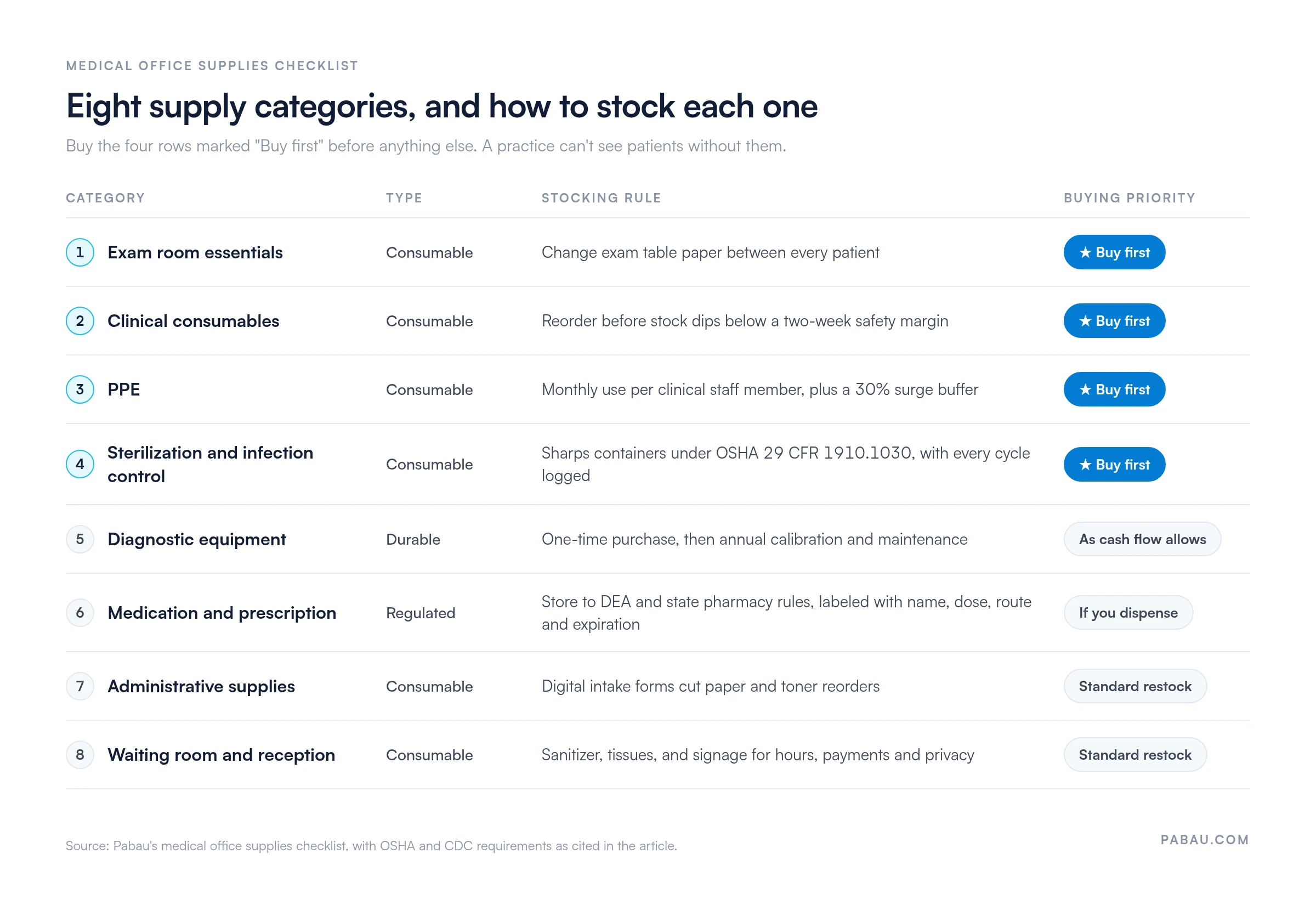
Leave a category out and you find the problem at the worst moment, like running out of exam table paper mid-morning. The grid below sets out the stocking rule and buying priority for each category.
Every exam room runs on the same base kit:
The CDC recommends changing exam table paper between every patient to prevent cross-contamination. That makes it the fastest-moving item in the room.
Syringes, needles, gauze, bandages, and specimen containers support both routine visits and procedures. Stock nitrile gloves in bulk, since latex allergies are common. Add sterile gauze pads, alcohol prep pads, adhesive and elastic bandages, and sterile saline solution.
Blood collection tubes, urine specimen cups, and swabs cover diagnostic testing. Set a reorder point for each item so stock never dips below a two-week safety margin.
OSHA and CDC standards call for nitrile examination gloves (preferred over latex), surgical masks, N95 masks, face shields, and isolation gowns. Work out monthly PPE use per clinical staff member, then add a 30% buffer for surge periods. Store it somewhere cool and dry, away from direct sunlight, so the material holds up.
Every medical office must keep sharps disposal containers under OSHA’s Bloodborne Pathogens Standard (29 CFR 1910.1030). Add disinfectants (70% isopropyl alcohol or EPA-registered hospital-grade products), hand sanitizer dispensers, autoclave sterilization pouches, and biohazard waste bags. Log every disposal and sterilization cycle, as CDC infection control guidelines advise.
Clinical instruments include blood pressure cuffs (manual and automated), stethoscopes, otoscopes, ophthalmoscopes, thermometers (digital and non-contact), pulse oximeters, and reflex hammers. These are usually one-time purchases, but they need annual calibration and maintenance.
The front desk runs on printer paper, toner, file folders, labels, and printed intake and consent forms. Any form that holds patient information has to be handled in line with HIPAA.
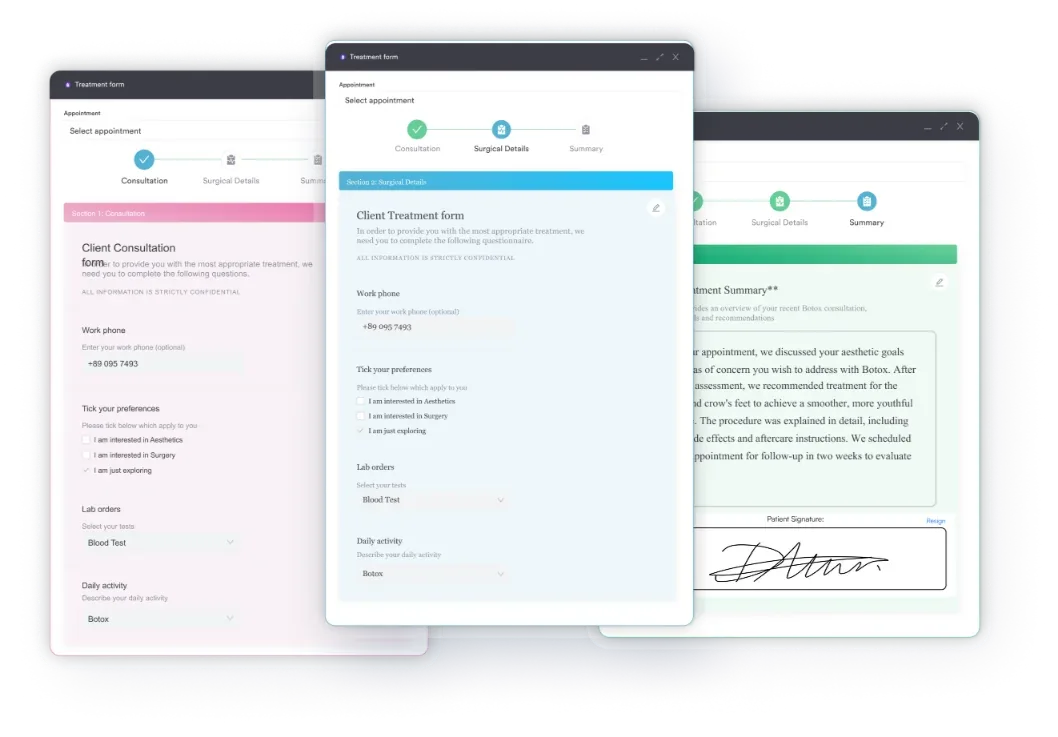
Digital intake forms cut paper and toner reorders and capture patient details more accurately. For the paper records you keep, folders and labeled storage make files easy to find during a compliance audit.
If your practice dispenses or administers medications, you’ll also need prescription pads, medication labels, and pill bottles with caps. Add syringes for injections and storage containers that meet DEA and state pharmacy regulations. Label every medication with the patient’s name, dosage, administration route, and expiration date.
Stock hand sanitizer stations, tissues, and patient education materials. Signage should cover your hours, payment options, and privacy notices. Comfort items such as pillows and blankets shape the patient experience before anyone sees a clinician.
The checklist only works if you track stock and reorder before you run out. Set a minimum level for each high-use item and treat it as the reorder trigger. Inventory management software automates this by alerting you when an item falls below its threshold.
A monthly audit then catches overstocking and waste. Our guide to healthcare inventory management goes deeper on par levels, counts, and audit routines.
Solo practitioners and small practices should buy exam room supplies, clinical consumables, and PPE before they invest in equipment. Exam table paper, gloves, gauze, and sharps containers come first, because you can’t see patients without them. Add a blood pressure cuff, stethoscope, and thermometer as cash flow allows.
Wholesale distributors like McKesson, Henry Schein, or Medline offer volume discounts even on smaller orders. If you’re opening from scratch, supplies are one step of many. Our checklist on how to start a medical practice walks through the rest.
McKesson and Henry Schein offer online ordering with next-day delivery in most US markets. Medline specializes in wound care and clinical consumables. Cardinal Health mainly serves hospitals and large health systems.
Compare pricing, minimum order quantities, and delivery times before you commit to one vendor. Many practices split orders between two suppliers. That protects them from shortages and gives them leverage on volume discounts.
A paper count sheet or a shared spreadsheet only works when someone remembers to update it. Counts happen at month end, and a missed reorder shows up when a room runs out of gloves.
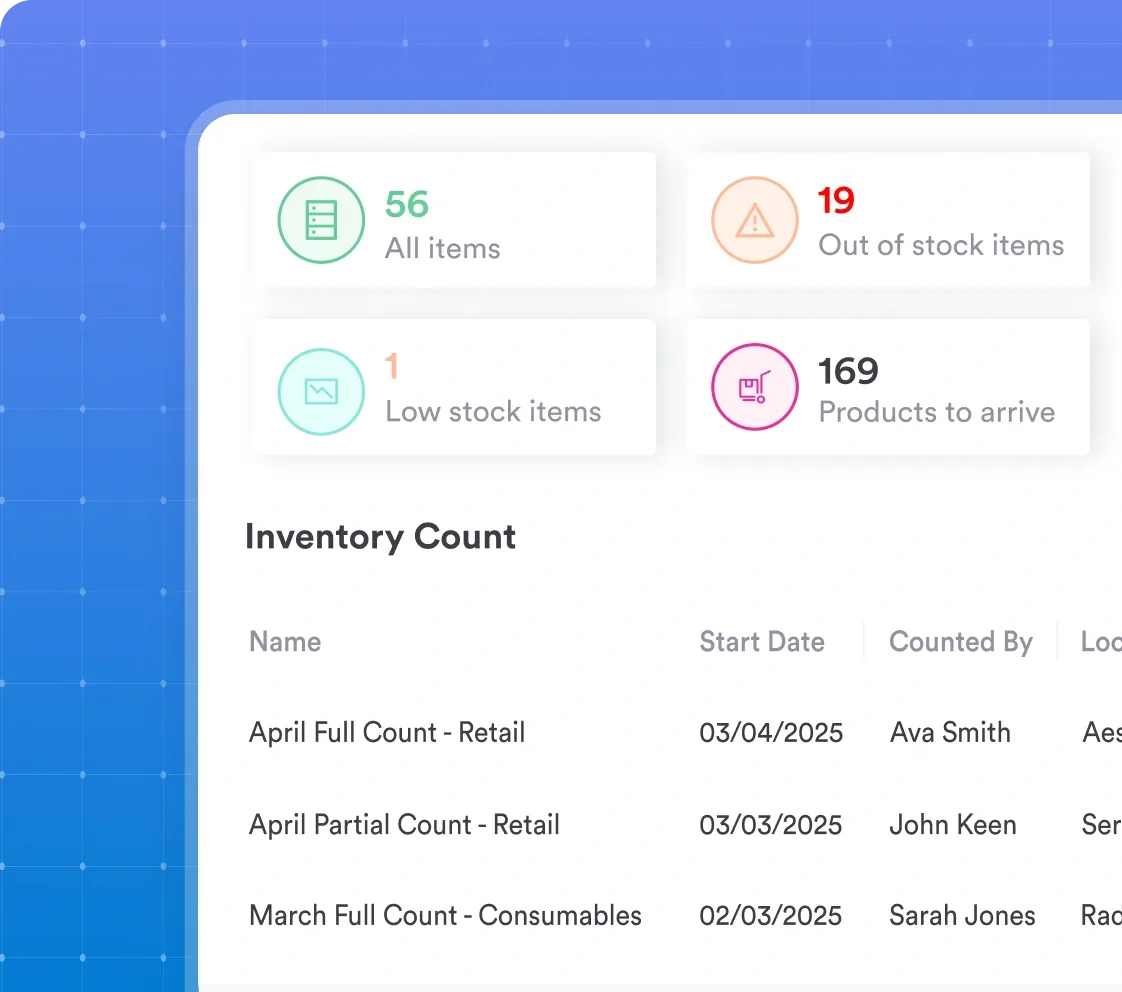
Pabau runs inventory inside the same software for medical offices that holds your appointments and patient records. You set minimum and maximum levels for each product, and Pabau prompts you when stock falls below par. Purchase orders go to the right supplier in a few clicks.
Consumables logged in a treatment note come straight out of stock, and barcode stocktakes replace the clipboard. Your restock list builds from what your team used, so emergency orders become rare.

Track stock levels, get low-stock prompts, and raise purchase orders in the same platform you use for scheduling and patient records.

Treat the checklist as a working document you come back to every month. Buy the consumables first, add equipment as cash flow allows, and give every high-use item a reorder point.
A manual count holds up while you run one or two exam rooms. Once patient volume grows, counts slip and emergency orders creep in, and that is the moment to move inventory into software. Book a demo to see how Pabau tracks your supplies and prompts reorders before a room runs short.

Choosing software for a small team? Best EMR for small practice compares eight systems built for smaller practices.
Comparing all-in-one platforms? Best medical practice management software ranks platforms that handle scheduling, records, and inventory together.
A medical office needs supplies in eight categories. Those are exam room consumables, clinical supplies, personal protective equipment (PPE), sterilization supplies, diagnostic instruments, medication supplies, administrative items, and waiting room materials. Exam table paper, nitrile gloves, gauze, and sharps containers are the first items to buy.
A medical office supplies checklist lists every consumable and piece of equipment by category. Ours covers exam room, clinical consumables, PPE, sterilization and infection control, diagnostic equipment, medication and prescription, administrative, and waiting room supplies. Working through it helps you meet OSHA, CDC, and HIPAA requirements.
Start with the free template above and cross out any category your practice doesn’t need. Give each item a minimum stock level based on patient volume and clinical workflows. Set reorder triggers at 20–30% of your typical monthly consumption, and let inventory software send the alerts. Review the list monthly and adjust minimums by season.
Core equipment includes diagnostic instruments such as a blood pressure cuff, stethoscope, otoscope, ophthalmoscope, thermometer, and pulse oximeter. Add exam tables with paper dispensers, sharps disposal containers, a waste management system, and storage cabinets. You’ll need an autoclave if you perform minor procedures. Capital costs vary widely by specialty, since surgical practices need more equipment than primary care practices.
Most medical offices buy through major distributors such as McKesson, Henry Schein, Medline, and Cardinal Health. Online ordering with next-day delivery is standard. Many practices use two vendors to negotiate volume discounts and protect against shortages. Specialty items like sterilization pouches may need dedicated suppliers, and group purchasing organizations (GPOs) help small practices reach volume pricing.
Small practices usually track stock in a spreadsheet or in practice management software with inventory tracking. Either way, set a reorder point for each item and run a physical count every month. Buying from wholesale distributors keeps per-unit costs down on smaller orders. As the practice grows, software replaces manual counts and cuts ordering errors.