CRM for chiropractors: how to manage patients, bookings and marketing
A CRM for chiropractors is a patient relationship management system built around...

Last Updated: Oct 13, 2026

Appendicitis is acute inflammation of the appendix requiring rapid surgical intervention; nursing care focuses on pre- and post-operative pain management, infection prevention, and patient education.
NANDA-I diagnoses commonly include acute pain, risk for infection, deficient knowledge, anxiety, and deficient fluid volume – each requiring tailored interventions and monitored outcomes.
The appendicitis nursing care plan template provides a structured framework to document assessment findings, prioritize nursing diagnoses, implement evidence-based interventions with scientific rationale, and evaluate patient response to care.
Pabau’s digital forms and clinical documentation features enable nurses to capture structured assessments, track intervention compliance, and maintain detailed records that support safe, compliant perioperative care.
A ready-to-use care plan template covering patient assessment, NANDA diagnoses, nursing interventions with rationale, expected outcomes, and post-operative recovery protocols for acute appendicitis and post-appendectomy patients.
Download templateAn appendicitis nursing care plan is a structured clinical tool that guides nurses through systematic assessment, diagnosis, planning, intervention, and evaluation for patients with acute appendicitis or post-appendectomy recovery. This evidence-based approach ensures consistent, safe, and compliant care across pre-operative and post-operative phases, reducing complications and improving patient outcomes.
Appendicitis is acute inflammation of the appendix, a small pouch attached to the large intestine. Without rapid surgical intervention, the appendix can perforate, triggering life-threatening peritonitis. A nursing care plan formalizes the clinical reasoning and protective interventions that prevent complications, manage acute pain, and support safe surgical recovery.
This structured care plan aligns with NANDA-International diagnostic taxonomy and incorporates Nursing Outcomes Classification (NOC) targets and Nursing Interventions Classification (NIC) actions, the gold standards for nursing documentation.
The care plan serves multiple functions: it communicates clinical priorities across the healthcare team, ensures compliance with regulatory standards (Joint Commission, facility policy), provides a learning tool for student nurses, and creates a legal record of nursing judgment and intervention.
For perioperative nurses, the plan is particularly critical. It documents the handoff from pre-operative assessment through surgical intervention to post-operative recovery, capturing risk factors, allergies, pain trajectories, and wound healing milestones that inform discharge safety.
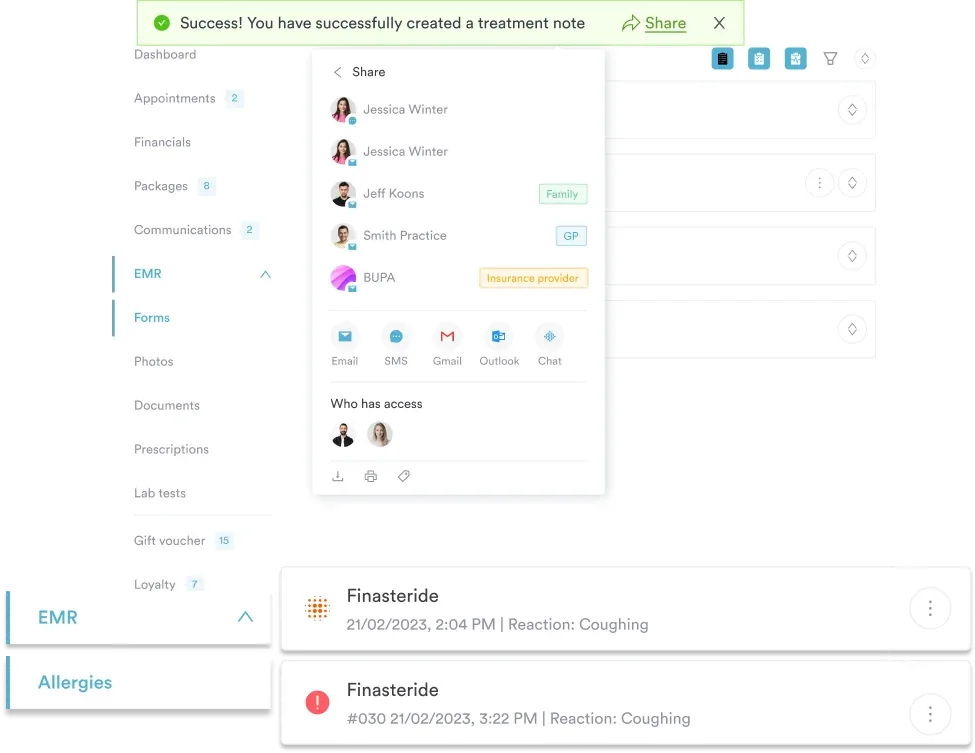
The first step in building an appendicitis nursing care plan is comprehensive patient assessment. This assessment gathers subjective data (patient-reported pain, nausea, medical history) and objective data (vital signs, laboratory findings, physical examination findings) that inform the NANDA diagnostic statement. Intake forms completed on paper get transcribed into the chart, and that transcription step is where detail often gets lost.
NANDA-International (NANDA-I) nursing diagnoses translate assessment findings into clinical statements that prioritize care and guide intervention selection. The five most common diagnoses in acute appendicitis are:
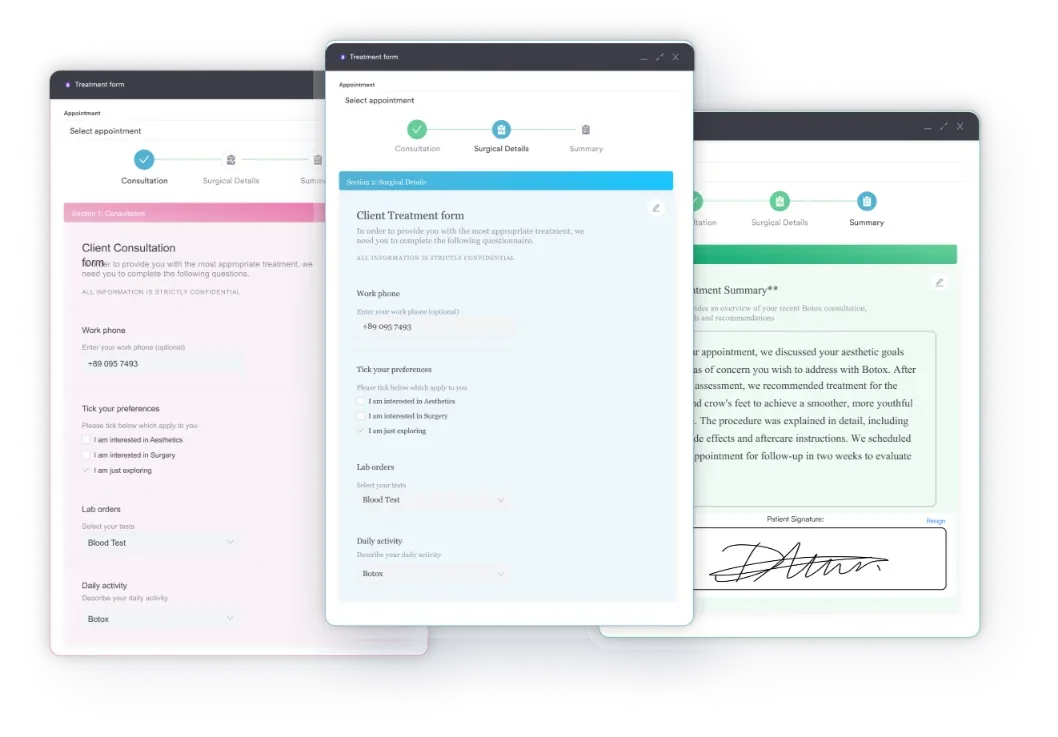
Practices using software for managing patients retrieve past forms in seconds during consultations.
Each NANDA diagnosis is addressed through a structured nursing care plan (NCP) table that specifies goals, interventions with scientific rationale, and evaluation criteria. Below are care plans for the five primary diagnoses:
The post-operative phase shifts focus to wound healing, pain progression, infection prevention, and functional recovery.
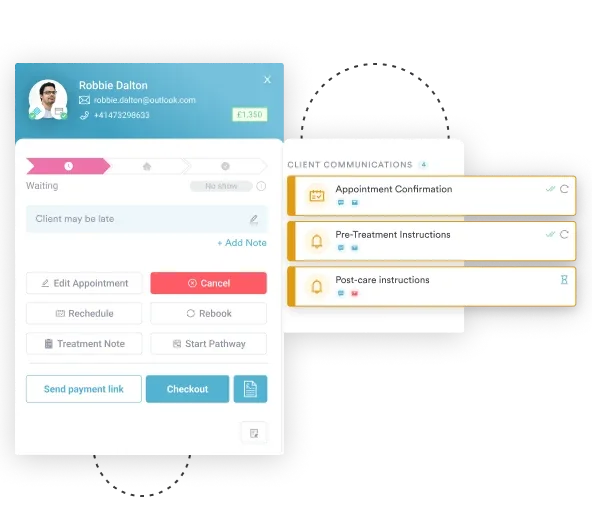

Pabau helps nurses create structured care plans, track interventions, and maintain detailed clinical records with built-in compliance checks and automated task reminders.

The appendicitis nursing care plan template is designed for rapid customization to individual patient needs. Follow these five steps to adapt the template to your facility’s workflow and patient presentation:
Discharge planning begins at admission and intensifies as the patient approaches discharge. Key discharge elements include wound care education, activity restrictions, medication instructions, dietary progression, and warning signs that warrant urgent follow-up.
Patient education must be documented in the nursing care plan: what was taught, how the patient responded, and whether understanding was demonstrated or still requires reinforcement. Written discharge instructions should mirror what was taught verbally.
Provide the patient with your facility’s emergency contact and follow-up clinic appointment information. For patients with co-occurring mental health conditions.
An appendicitis nursing care plan transforms clinical assessment into systematic, evidence-based interventions that reduce perioperative complications and support safe recovery. By documenting NANDA diagnoses, prioritized goals, evidence-linked interventions, and evaluation of patient response, nurses provide safe, compliant, reproducible care.
This template accelerates care planning, ensures no assessment finding is overlooked, and creates a legal record that supports the nursing team and protects the patient. See how Pabau’s clinical documentation tools help nurses implement structured care plans and track outcomes in real time.

Need to assess a patient’s overall wellbeing? Quality of life assessment template measures wellbeing across physical, emotional, social, and psychological domains.
Caring for a patient in respiratory distress? Respiratory failure nursing care plan provides NANDA-I diagnoses and interventions for respiratory compromise.
Want to ensure post-operative follow-up never gets missed? Pre- and post-care software sends discharge reminders, flags missed appointments, and escalates warning-sign reports so post-operative complications are caught early.
The five most common NANDA-I diagnoses for appendicitis are: Acute Pain (related to inflammatory process), Risk for Infection (related to surgical incision and peritonitis risk), Deficient Knowledge (related to lack of pre- and post-operative information), Anxiety (related to threat of surgery), and Deficient Fluid Volume (related to NPO status and vomiting). Additional diagnoses may apply based on individual patient presentation (e.g., Impaired Mobility if the patient is bedridden).
Nursing interventions for acute pain include: assessing pain every 1-2 hours, administering analgesics before pain peaks per physician order, positioning the patient for comfort (semi-Fowler’s position), and using non-pharmacologic techniques such as guided imagery, breathing exercises, cool compresses, and distraction. Each intervention is grounded in evidence that either reduces pain perception or augments medication efficacy.
Assessment of appendicitis includes: subjective data (pain onset, severity on 0-10 scale, associated symptoms like nausea, prior abdominal surgery), objective findings (fever, McBurney’s point tenderness, rebound tenderness, Rovsing’s sign, elevated WBC >10,000/mm³), and diagnostic imaging (CT scan or ultrasound confirming appendiceal inflammation). Documentation of these findings informs NANDA diagnosis selection and intervention prioritization.
The post-appendectomy care plan focuses on wound healing, pain progression, infection prevention, and functional recovery. Key interventions include: monitoring wound for infection signs, managing acute post-operative pain, progressing diet from NPO to clear liquids to full diet, advancing ambulation, monitoring drain output, and providing discharge education on wound care, activity restrictions, and warning signs that require urgent follow-up.
Expected outcomes (NOC targets) vary by diagnosis. For Acute Pain, the outcome is pain rated ≤3/10 with relaxed body posture. For Risk for Infection, the outcome is a clean, non-erythematous wound with afebrile status by post-op day 3. For Deficient Knowledge, the outcome is patient/family verbalization of understanding of pre- and post-operative care. For Anxiety, the outcome is reduced fear and participation in teaching. For Deficient Fluid Volume, the outcome is stable vital signs, adequate urine output, and normal electrolytes.
Patients should seek urgent medical attention if they experience: fever >38.3°C (101°F), increased wound redness, drainage, warmth, or separation; severe or uncontrolled abdominal pain; severe nausea or vomiting preventing oral intake; inability to urinate or pass stool by post-op day 3; signs of deep vein thrombosis (calf swelling, warmth, calf pain); or signs of peritonitis (severe abdominal rigidity, guarding, rebound tenderness). Early recognition of these warning signs prevents post-operative sepsis and other life-threatening complications.