CRM for chiropractors: how to manage patients, bookings and marketing
A CRM for chiropractors is a patient relationship management system built around...

Last Updated: Oct 13, 2026

An emergency nursing assessment is a systematic two-phase clinical evaluation — primary survey (ABCDE) to identify life threats, then secondary survey with SAMPLE history for comprehensive patient evaluation.
The ABCDE framework (Airway, Breathing, Circulation, Disability, Exposure) is the gold-standard approach taught by the Emergency Nurses Association and ACEP. It enables rapid prioritization of interventions.
Structured assessment templates reduce documentation errors, improve triage accuracy, and support compliance with EMTALA requirements and Joint Commission standards.
Pabau’s digital assessment forms let you customize emergency nursing templates, automate data capture, and maintain audit trails — helping your practice produce consistent, legally defensible documentation.
A ready-to-use assessment form covering patient vital signs, ABCDE primary survey, SAMPLE history, pain assessment using validated scales, Glasgow Coma Scale (GCS) scoring, and Emergency Severity Index (ESI) triage level assignment — all on a single structured template for emergency and urgent care assessment workflows.
Download templateEmergency departments operate in high-acuity, time-pressured environments where assessment accuracy directly affects patient outcomes. Yet many ED nurses still rely on memory or informal checklists instead of standardized frameworks. A structured emergency nursing assessment template replaces that guesswork with a repeatable protocol — one that catches every critical finding, improves triage accuracy, and creates legally defensible documentation.
This guide covers the two-phase assessment structure, the ABCDE primary survey approach, secondary assessment with SAMPLE history, pain and triage evaluation, and how to put assessment workflows to work in your practice. Whether you’re a solo practitioner or managing a multi-clinician practice, this template supports consistent, compliant emergency nursing assessment.
An emergency nursing assessment is a systematic clinical evaluation performed on every patient presenting to the emergency department. It consists of two distinct phases: primary survey (immediate life-threat identification) and secondary survey (comprehensive head-to-toe evaluation with detailed history). The goal is to rapidly identify critical conditions, prioritize care delivery, and establish appropriate treatment pathways.
Under EMTALA (Emergency Medical Treatment and Labor Act), every ED patient is legally entitled to a medical screening examination performed by qualified personnel. A structured assessment framework ensures compliance with this federal requirement while delivering safer, more efficient patient care.
The assessment feeds into triage — assignment of an urgency level (ESI 1-5) that determines waiting time and resource allocation. Accurate assessment prevents undertriage (missing sick patients) and overtriage (excessive resource use), directly impacting both outcomes and operational efficiency.
The primary survey uses the ABCDE framework, recommended by the Emergency Nurses Association (ENA) and the American College of Emergency Physicians (ACEP). This systematic approach ensures life-threatening conditions are identified and addressed in priority order. Each letter represents an assessment focus:
Assessment: Is the airway patent and protected? Check for stridor, hoarseness, inability to speak, or signs of obstruction. Look for foreign bodies, blood, vomit, or secretions. Assess level of consciousness (if altered, airway is at risk). Action: Position airway (head tilt, chin lift), remove obstructions, prepare oxygen/airway equipment. Document airway status and any interventions performed.
Assessment: Respiratory rate, symmetry, breath sounds (auscultate both sides), use of accessory muscles, oxygen saturation (SpO₂). Look for shallow breathing, asymmetrical chest rise, absent breath sounds (pneumothorax), or wheezing (asthma, anaphylaxis). Action: Apply oxygen if SpO₂ <94%, assess for tension pneumothorax (hypotension + absent breath sounds = needle decompression). Document RR, SpO₂, oxygen delivery method.
Assessment: Pulse (rate, rhythm, quality), blood pressure, skin color/temperature (pale/clammy = shock), capillary refill (<2 sec normal, >2 sec = hypoperfusion). Check for external bleeding, distended neck veins, or muffled heart sounds. Action: Initiate IV access, draw labs, prepare for fluid resuscitation if shock present. Document vital signs, peripheral perfusion, and bleeding control measures.
Assessment: Neurological status using Glasgow Coma Scale (GCS) scoring (Eye 1-4 + Verbal 1-5 + Motor 1-6 = total 3-15). GCS 13-15 = mild impairment, 9-12 = moderate impairment, 8 or below = severe impairment (airway protection needed). Check pupils and motor function. Action: If GCS ≤8, prepare for intubation, protect the spine if trauma is suspected, and document findings.
Assessment: Remove clothing to inspect full body for injuries, rashes, or other findings. Assess body temperature, skin turgor (dehydration). Protect privacy and maintain normothermia. Action: Cover patient to prevent hypothermia, collect any evidence (if trauma/assault). Document temperature, skin findings, and environmental safety measures.
After stabilizing immediate threats, the secondary survey conducts a detailed head-to-toe examination. Systematically inspect and palpate: head/scalp, eyes/ears/nose/throat, neck, chest/lungs, abdomen, extremities, back. Note any tenderness, deformity, or asymmetry.
Simultaneously, gather the patient’s clinical history using the SAMPLE mnemonic:
Document SAMPLE findings using a digital form or checklist. This structured approach keeps information complete and provides essential context for diagnosis and treatment planning. Patient intake that feeds the record directly keeps what was asked and what was filed identical.
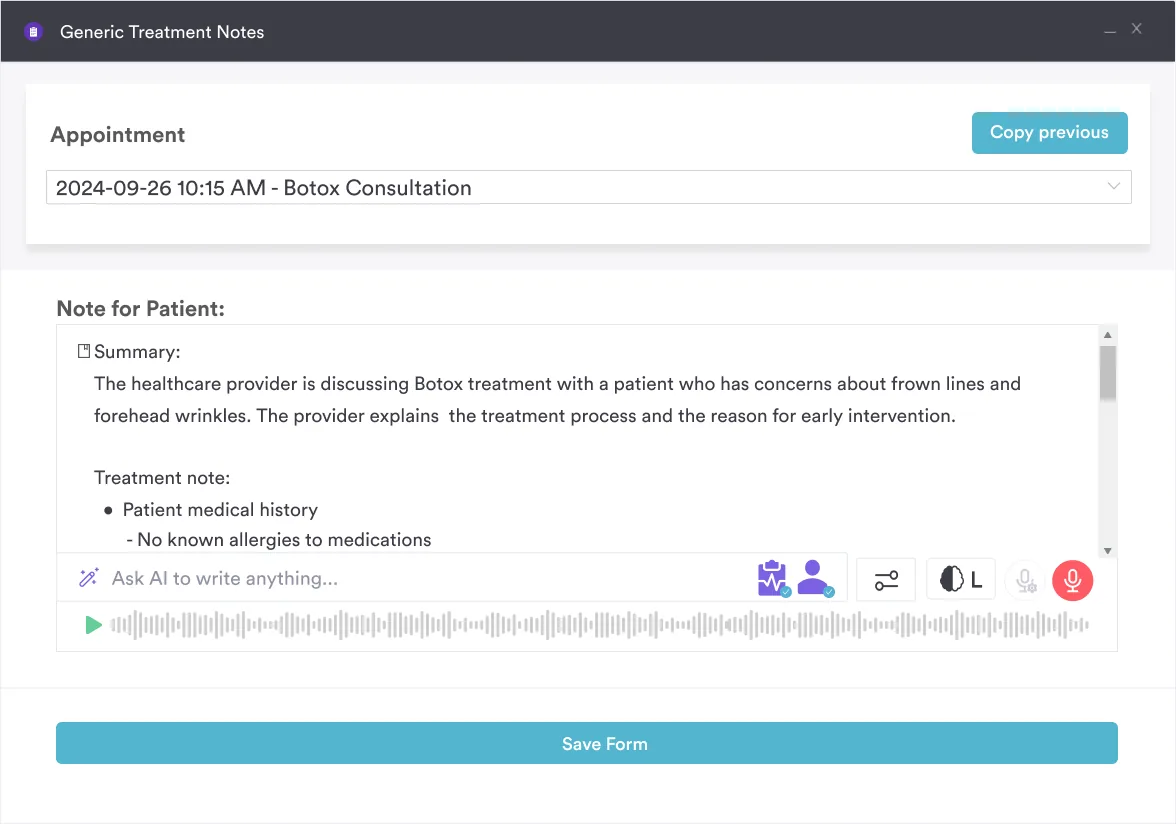
Practices that digitize paper scales with software for capturing forms cut scoring errors and filing time.
Pain Assessment: Use a validated pain scale. The Numeric Rating Scale (NRS, 0-10) is standard in ED settings (ask patient to rate pain severity). Reassess pain 30-60 minutes after analgesia and document trends. Note pain location, character, radiation, and factors that worsen/improve it. Severe pain (≥8/10) or sudden onset warrants urgent imaging/intervention.
Triage Categories (ESI 1-5): The Emergency Severity Index is the standard US triage system. ESI classifies patients by acuity and predicted resource needs, not by time — unlike time-based tools such as CTAS or the Manchester Triage System, it doesn’t define fixed wait times. The ranges below reflect common practice, not an ESI requirement:
Wait times shown reflect common practice, not an ESI-defined standard — ESI itself is a resource-prediction and acuity-based system rather than a time-based one.
Accurate triage prevents overcrowding and ensures high-acuity patients receive timely treatment. An undertriaged patient with an MI or stroke can deteriorate while waiting. Overtriage, on the other hand, wastes resources on low-risk cases.
Documentation is legally critical. Record every assessment finding in the patient’s medical record within minutes of evaluation. Required fields include:
Legal Tip: Documentation must be objective (“BP 140/90, RR 22”) not subjective (“patient very nervous”). Use your facility’s standard abbreviations. Avoid blank spaces — write “not assessed” if a finding was not evaluated. Timely, legible documentation protects both patient safety and your license.
For handoff, use the SBAR communication format (Situation, Background, Assessment, Recommendation) to transition care to the treatment team. This structured approach reduces miscommunication and ensures continuity.
Implement the emergency nursing assessment template as a five-step workflow:
Total time: 8-15 minutes from arrival to triage assignment, depending on complexity. A structured assessment template ensures no steps are skipped and documentation is complete.

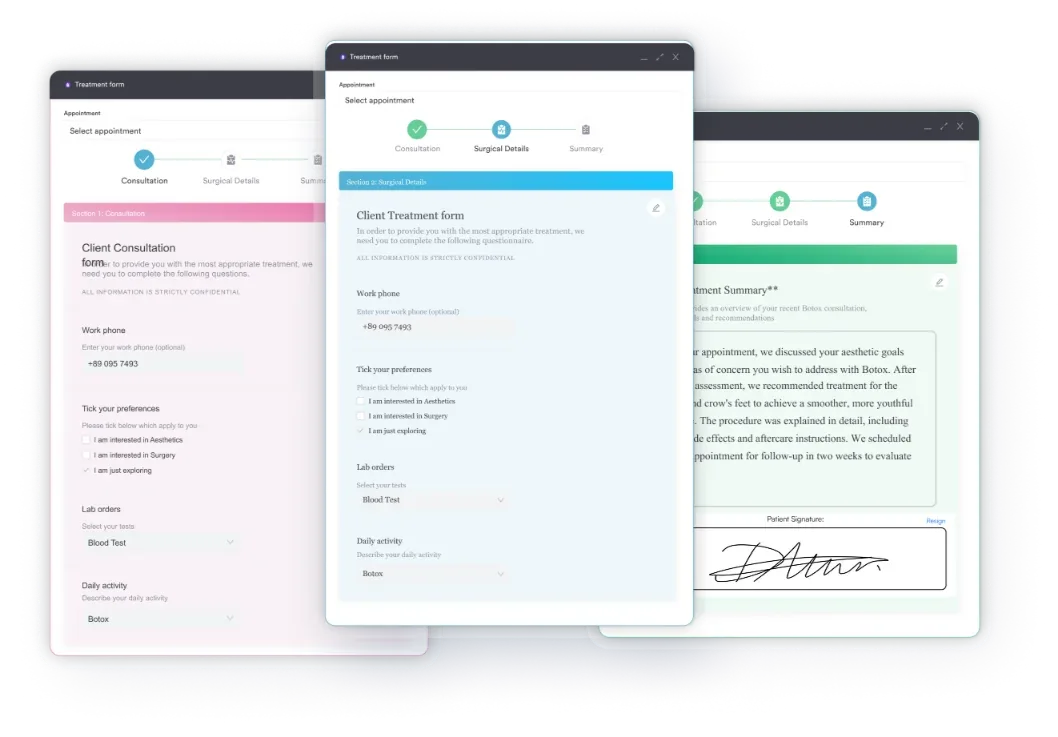
Pabau’s digital assessment forms let you customize emergency templates, capture data in real time, and maintain audit trails — so your team documents faster and more accurately.

Manual paper templates and typed notes slow down assessment workflows and create compliance risk .
Your team completes the assessment on a tablet or computer, triggering automatic data organization and triage assignment logic.
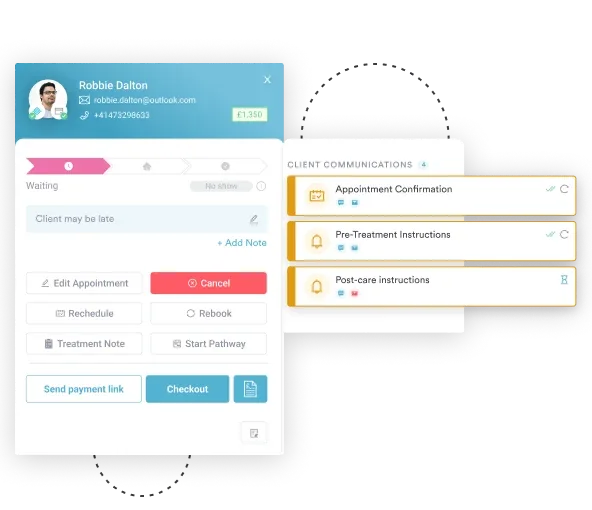
Benefits:
Every assessment is timestamped and linked to the patient record, making documentation legally defensible.
Clinical Accuracy: Standardized assessment reduces variability between clinicians and prevents missed documentation. No critical findings slip through because a step was forgotten.
Compliance: A structured template helps your practice meet these obligations and stay ready for regulatory review.
Patient Outcomes: Early, accurate identification of sepsis, MI, stroke, or trauma improves time-to-treatment and survival rates. Consistent adherence to clinical guidelines also supports stronger quality reporting and patient safety tracking for your practice.
Operational Efficiency: Systematic assessment prevents redundant questioning and speeds triage. Your practice moves faster because every clinician follows the same protocol.
Always reassess the patient 15 minutes after initial triage, especially if the complaint changed or pain worsened. ED presentations can deteriorate quickly, and a follow-up assessment may reveal a higher triage level is needed. Document the reassessment findings and any updated interventions.
Emergency nursing assessment is the foundation of safe, compliant emergency care. The ABCDE primary survey, secondary assessment with SAMPLE history, pain and triage evaluation, and structured documentation ensure rapid identification of life threats, appropriate prioritization, and continuity of care.
A downloadable assessment template standardizes your protocol across your team, reduces documentation errors, and improves patient outcomes. Ready to streamline your assessment workflows with a digital system? Book a demo to see how Pabau’s customizable assessment forms and automated workflows support your team.

Documenting a dental exam instead? perio chart form template helps dental practitioners record and monitor periodontal health consistently across every tooth site.
Need consent forms for a cosmetic procedure? porcelain veneer consent forms provide ready-to-use clinical forms and checklists that standardize the veneer patient journey from candidacy screening onward.
Need to measure overall patient wellbeing? quality of life assessment template measures wellbeing across physical, emotional, social, and psychological domains, adapted from the WHO’s WHOQOL-BREF instrument.
An emergency nursing assessment includes a primary survey (ABCDE approach to identify life threats), secondary survey (head-to-toe examination), SAMPLE history (signs/symptoms, allergies, medications, past history, last oral intake, events), vital signs, pain assessment, and Glasgow Coma Scale (if needed). All findings are documented and used to assign an ESI triage level.
ABCDE stands for Airway, Breathing, Circulation, Disability, Exposure. It is a systematic framework for rapidly identifying and managing life-threatening conditions in the correct priority order: clear the airway, ensure breathing, support circulation, assess neurological status, and perform full-body exposure/examination.
The primary assessment (ABCDE survey) takes 1-2 minutes and focuses on identifying immediate life threats. The secondary assessment (5-10 minutes) is a detailed head-to-toe examination performed after the patient is stabilized, gathering SAMPLE history and documenting specific findings that guide diagnosis and treatment.
GCS is scored from 3 to 15 by adding three components: eye opening (1-4 points), verbal response (1-5 points), and motor response (1-6 points). A score of 13-15 indicates mild impairment, 9-12 indicates moderate impairment, and 8 or below indicates severe impairment requiring airway protection.
The Emergency Severity Index (ESI) is the standard triage tool in US emergency departments. It classifies patients into five levels (ESI-1 to ESI-5) based on their acuity and resource needs. ESI-1 patients are resuscitation-level emergencies, while ESI-5 are minor injuries needing minimal resources.