

CCSD code XR940: Foreign body retrieval billing guide
CCSD code XR940 is the UK private healthcare code for retrieval of a foreign bod...

Last Updated: Nov 26, 2026
Q4183 is the HCPCS Level II code for Surgigraft, per square centimeter (add-on, list separately in addition to primary procedure).
Each unit is one square centimeter of Surgigraft, a skin substitute applied to chronic wounds such as diabetic foot ulcers and venous leg ulcers. Q4183 is a temporary Q-code in the skin substitutes and biologicals range. As an add-on code, it is always billed with a primary application or debridement CPT code on the same claim.
Let Pabau's smart automation suggest the right codes, reduce claim denials, and keep your practice compliant—effortlessly.
Automate repetitive tasks and focus on what matters most—your patients.
Reduce coding errors and ensure compliance with the latest regulations.
Clean claims, fewer denials, and faster reimbursements.
Powerful insights and reporting to help your practice thrive.
HIPAA compliant SOC 2 certified GDPR-compliant Trusted by 4,000+ clinics worldwide

Q4183 describes one square centimeter of Surgigraft skin substitute, billed per sq cm applied rather than per graft sheet.
It is an add-on code and cannot appear on a claim without a primary CPT application or debridement code.
Medicare coverage requires LCD compliance, documented wound duration, and evidence of failed conservative therapy before the first application.
Since January 1, 2026, Medicare pays skin substitutes as incident-to supplies at a single national rate of about $127 per sq cm.
In the six WISeR model states, lower-extremity chronic wound applications go through prior authorization or pre-payment review.
HCPCS Code Q4183 is the billing code for Surgigraft, per square centimeter (add-on, list separately in addition to primary procedure).
AAPC’s Q4183 code listing carries that descriptor and files the code under skin substitutes and biologicals. It is a temporary Level II Q-code maintained by the CMS HCPCS program. The code belongs to the skin and soft tissue substitute (SSTS) group, which covers bioengineered and acellular dermal products used in chronic wound management.
Three attributes define how Q4183 is billed. First, units are product-driven. One unit equals one square centimeter of Surgigraft applied to the wound, so the quantity on the claim must match the documented wound area.
Second, it is an add-on code, so it cannot stand alone on a claim. It must accompany a primary CPT code for the application or debridement. Third, it is a temporary Q-code, subject to annual CMS review for continuation, deletion, or reassignment to a permanent code.
Surgigraft is applied to chronic, non-healing wounds where standard wound care has failed. Knowing the scope of Q4183 prevents miscoding and cuts medical necessity denials. When the wound sits at a previous skin graft site, the wound code still leads and code Z94.5 can follow to record the graft history.
These exclusions mirror the coverage criteria in most MAC Local Coverage Determinations. Screen each wound against them before ordering Surgigraft, because a non-covered wound type cannot be fixed once the claim is out.
Units for Q4183 equal the total surface area of Surgigraft applied, expressed in whole square centimeters. The documentation must show length times width in centimeters, or the wound tracing area. The quantity on the claim must match that measurement exactly.
Units = Length (cm) x Width (cm), rounded to the nearest whole square centimeter. For irregular wounds, trace the wound perimeter onto acetate and calculate the enclosed area. Alternatively, multiply the greatest length by the greatest perpendicular width as a proxy. Never bill for unapplied product still in the packaging.
When multiple wounds are treated in a single encounter, calculate and document each wound separately. The total units billed equal the sum of all wound areas. Some MACs cap the total billable area per encounter or limit the number of applications per wound per year. Verify against the applicable LCD before submitting.
Because Q4183 is an add-on code, every claim line carrying Q4183 must have a primary CPT code on the same date of service. The primary CPT covers either the application of the skin substitute or the debridement performed before application.
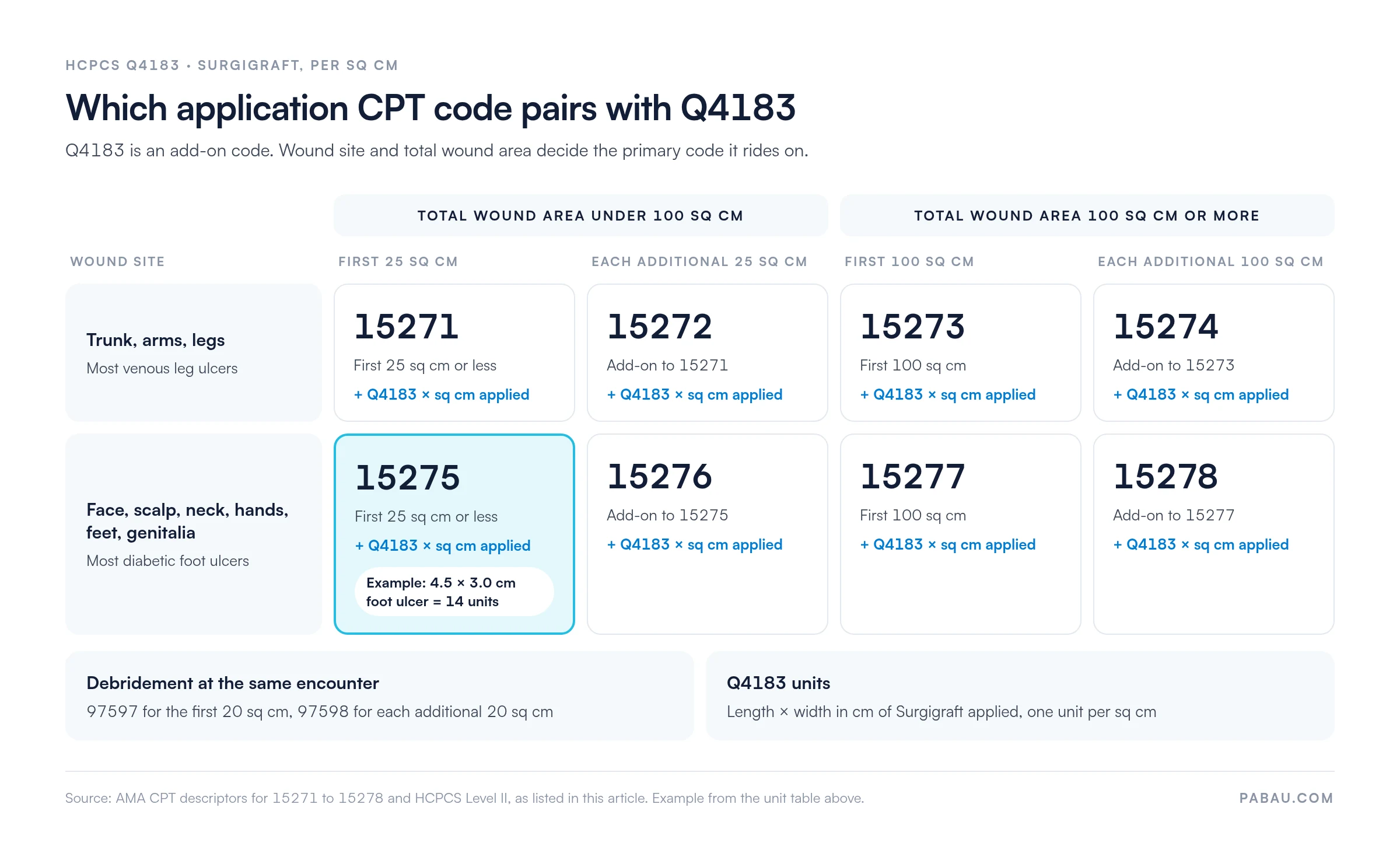
Accurate superbill documentation must list the primary CPT and Q4183 together, with wound measurements supporting both codes. Submitting Q4183 without a primary CPT is a common reason skin substitute claims are denied. The matrix below sorts the application codes by wound site and wound area.
Medicare Part B covers skin substitute products including Q4183 through Local Coverage Determinations issued by Medicare Administrative Contractors, not through a single national policy. Each MAC publishes its own LCD for skin and soft tissue substitutes, which means coverage criteria for Surgigraft vary by jurisdiction. Maintaining medical billing compliance for Q4183 requires knowing your specific MAC’s LCD, not just the general Medicare rule.
MACs including Noridian, CGS, and Palmetto GBA have published specific LCDs for skin substitutes. Each LCD lists the HCPCS codes in scope, the covered wound types, frequency limits per wound per year, and documentation requirements. Failure to meet even one LCD criterion is sufficient grounds for denial or recoupment on audit.
Medicare prior authorization for HCPCS Code Q4183 comes from the CMS WISeR model, which started on January 1, 2026. It runs in six states: New Jersey, Ohio, Oklahoma, Texas, Arizona and Washington. Within them, it covers skin substitute applications to lower-extremity chronic wounds, and only where an active skin substitute LCD applies.
Services on or after January 15, 2026 are reviewed, and the model runs through 2031. Practices in those states can request prior authorization before applying Surgigraft, or accept a medical review of the claim before payment. Outside the WISeR states, traditional Medicare sets no prior authorization requirement for Q4183.
CMS included skin substitutes because they have historically carried a higher risk of waste, fraud and abuse. In a WISeR state, the billing team needs to know whether each authorization is approved, pending or denied before the application date. Medical billing software that keeps the authorization on the patient’s case makes that status visible at scheduling.
Commercial payers outside Medicare often have their own PA requirements for skin substitute products that differ from WISeR. Confirm commercial plan requirements separately before each application. Skipping a required PA triggers a denial that is hard to appeal once the service has been rendered.
Before the first Surgigraft application, pull the patient’s MAC jurisdiction and check the active LCD for skin substitutes. Document wound measurements, wound duration, and conservative treatment history in the same clinical note. A complete note at application is easier to defend on audit than a retrospective addendum.
From January 1, 2026, CMS pays skin substitutes, Q4183 included, as incident-to supplies at a single national rate of about $127 per square centimeter. Products are split into three APCs by FDA pathway, with PMA, 510(k), and 361 HCT/P products each in their own group. The rate is set in the Medicare Physician Fee Schedule (MPFS) Final Rule and can change each January 1.
Use the CMS Physician Fee Schedule search tool to confirm the current payment amount for Q4183 by entering the code and selecting the year. Published sources differ by a few cents on the 2026 figure, so this reference gives no exact rate. Always verify against the official CMS tool before quoting a rate to a patient or practice stakeholder.
CMS treats skin substitutes as a higher-risk service for waste, fraud and abuse, so these claims draw more scrutiny than most Part B claims. They also stack several payer requirements in one claim:
Each failure point has a distinct fix.
Effective denial management in healthcare for skin substitute claims starts before the first application. See also the full reference on medical billing denial codes for CARC-level guidance on appealing rejected Q4183 claims.
The Q-code range for skin substitutes contains dozens of product-specific codes. A code that does not match the product applied triggers a denial, and fixing it takes a corrected resubmission. The table below covers frequently confused codes near Q4183.
Use the AAPC HCPCS code lookup or the PGM Billing HCPCS tool to verify that the code you are billing matches the specific product applied. The product name in the code descriptor must match the product label on the clinical documentation. If that label reads Apligraf, the claim needs Q4101 rather than Q4183.
This checklist covers the documentation payers look for on initial submission and in post-payment audits. Complete it before billing each encounter, because a claim paid on first submission beats any appeal. Our guide to clean claim submission covers the same discipline for every claim type.
Run this checklist as a standing pre-submission rule on every Q4183 claim. A missing measurement or CPT pairing caught before submission costs minutes, while the same error caught by the payer costs an appeal.
Many wound care billing teams run Q4183 claims across a clearinghouse portal, a prior authorization spreadsheet and the clinical note. Each hand-off is a chance for the PA number or the primary CPT code to drop off the claim.
Pabau, a practice management platform with built-in wound care claims management, keeps those steps in one record. US practices submit claims through Claim.MD and receive ERA remittances back against each claim. The authorization code, dates and approved sessions sit on the patient’s case, and Pabau warns staff when one is missing.
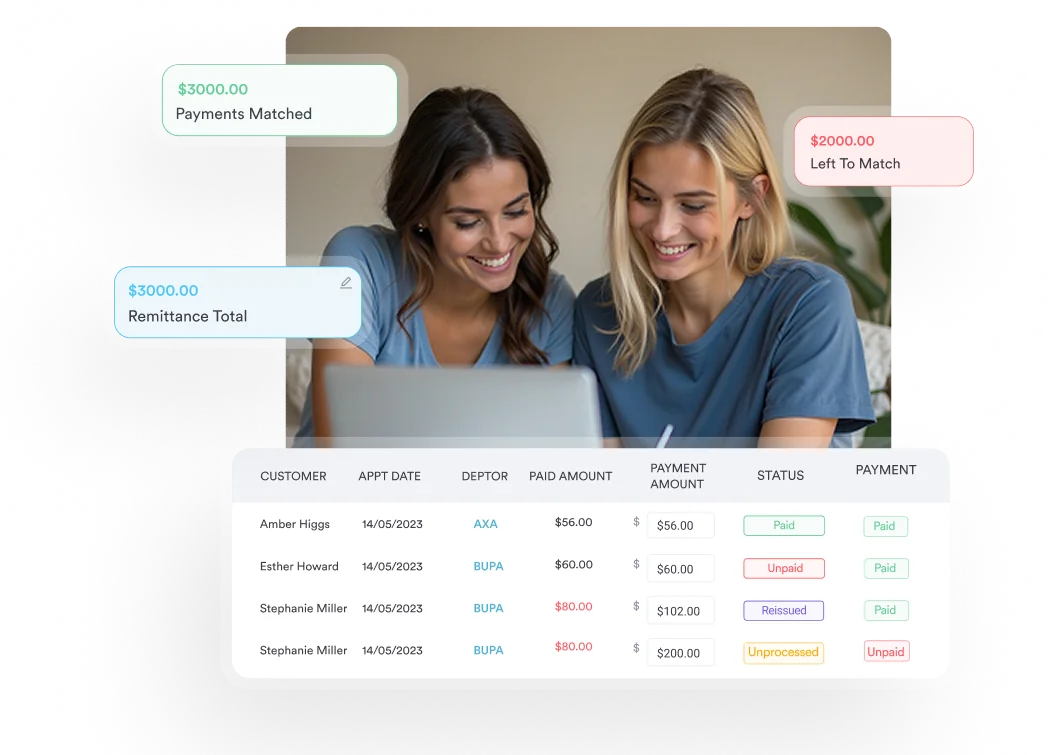
The result is fewer Surgigraft claims leaving the practice without an authorization on file. Matching each remittance to its claim also shows a short payment while there is still time to appeal it.

Pabau tracks prior authorization details on each case and sends US claims through Claim.MD. Your billing team submits cleaner Q4183 claims and spends less time on denials.

Q4183 gets paid when three records agree: the measured wound area, the primary CPT code, and the units billed. Build that check into the visit note itself, and the claim leaves the practice ready for an audit.
The bigger change in 2026 is payment and oversight. Skin substitutes now pay at a single national rate, and practices in the six WISeR states face prior authorization or pre-payment review. Confirm which rules apply in your state before the first application.
Book a demo to see how Pabau keeps prior authorizations and skin substitute claims together for wound care practices.

Need a full wound care billing workflow? What is revenue cycle management explains how to connect clinical documentation to clean claims and faster reimbursement.
Seeing repeated denials across your skin substitute claims? Denial management in healthcare covers CARC-level denial analysis and appeal strategies for high-volume wound care practices.
Want to benchmark your billing accuracy? What is medical billing breaks down the full claim lifecycle from coding to payment posting, with benchmarks for first-pass acceptance rates.
Billing another skin substitute Q-code? HCPCS code Q4139 walks through units and claim rules for a neighboring code in the same range.
Checking a second wound care product this month? HCPCS code Q4161 covers the billing checks for another skin substitute code.
HCPCS Code Q4183 covers one square centimeter of Surgigraft skin substitute applied to a chronic wound. Typical wounds are diabetic foot ulcers, venous leg ulcers, and pressure injuries. It is billed per square centimeter of product applied and must be reported alongside a primary CPT application or debridement code on the same claim.
Common ICD-10-CM codes for Q4183 include E11.621 (type 2 diabetes with foot ulcer) and E10.621 (type 1). Each is paired with an L97.- code for the ulcer site and depth. Venous leg ulcers use I83.0- or I87.31- codes, and pressure ulcers use L89.- codes at stage 3 or 4. Check the applicable MAC LCD for its covered list, and use the most specific code, including laterality and severity.
Yes, Q4183 is covered by Medicare Part B for medically necessary skin substitute applications to chronic wounds. Coverage depends on your MAC’s Local Coverage Determination for skin substitutes and, in the six WISeR states, on prior authorization or pre-payment review. It also requires documented wound duration, failed conservative therapy, and an appropriate ICD-10-CM diagnosis code.
In traditional Medicare, prior authorization applies only in the six WISeR model states: New Jersey, Ohio, Oklahoma, Texas, Arizona and Washington. There it covers lower-extremity chronic wound applications where an active skin substitute LCD applies, for services from January 15, 2026. Commercial payers set their own PA rules, which vary by plan. Submit wound documentation, ICD-10 codes, and the planned CPT/HCPCS codes with each request.
No. Q4183 is an add-on code, which means it cannot be reported alone. Every claim must include a primary CPT code for the application or debridement performed at the same encounter. That means CPT 15271-15278 for skin substitute application, or CPT 97597-97598 for wound debridement.
Q4183 is a temporary Q-series HCPCS Level II code, maintained by the CMS HCPCS Workgroup. Temporary Q-codes are reviewed annually and can be continued, deleted, or converted to a permanent alphanumeric code. Verify that Q4183 remains active each January 1 by checking the current CMS HCPCS code file before billing in a new calendar year.



