HCPCS code J7190: Factor VIII billing, units and reimbursement
HCPCS code J7190 bills human Factor VIII by the unit HCPCS code J7190 describes ...

Last Updated: Nov 10, 2026
90691 is the CPT code for typhoid vaccine, Vi polysaccharide (ViPS), intramuscular. It reports the vaccine product only, the single 0.5 mL injection sold as Typhim Vi, for patients aged 2 and older.
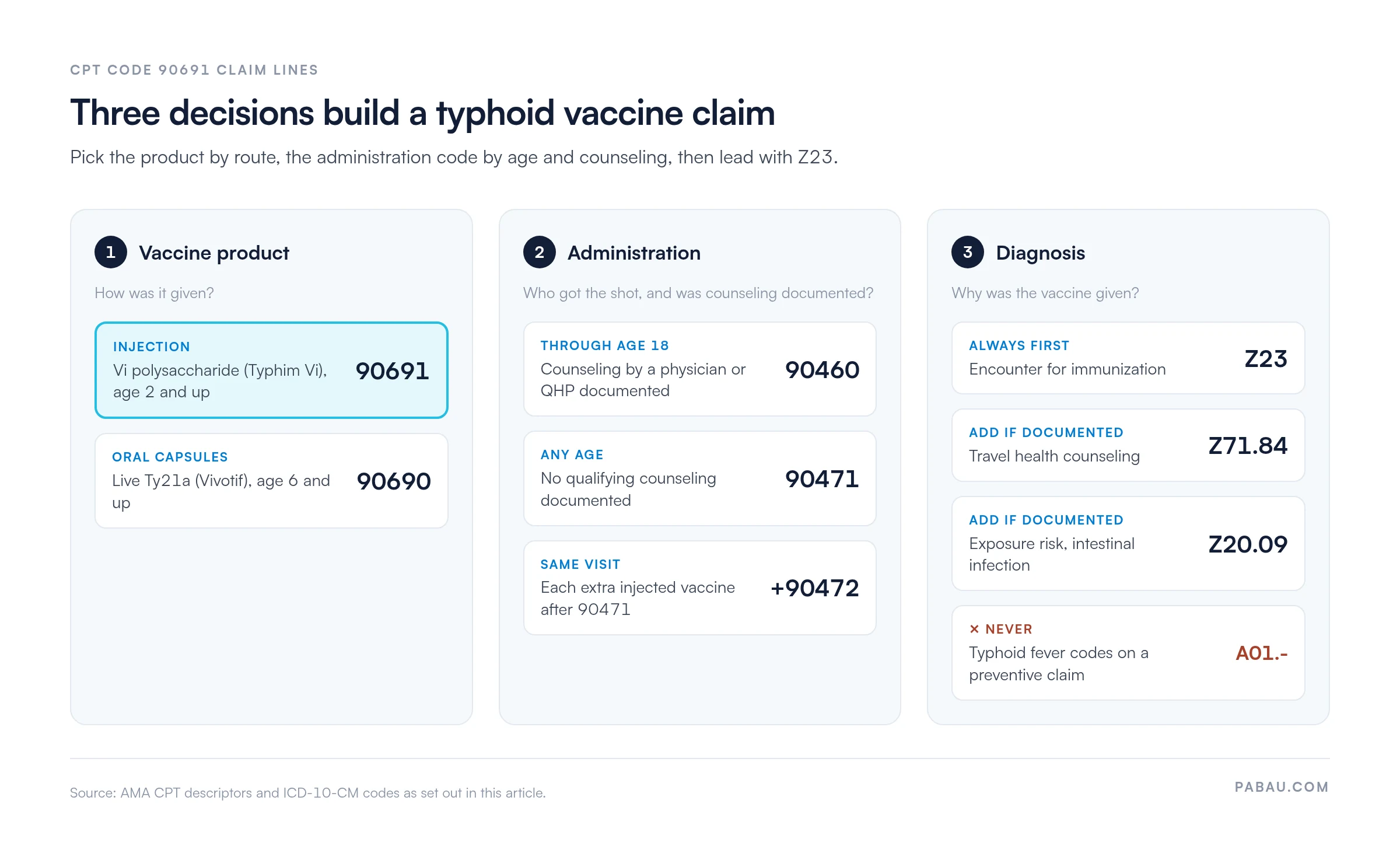
The injection itself is billed on a second line, usually 90471, or 90460 for a counseled patient through age 18. Z23 is the first-listed diagnosis. The oral live typhoid vaccine is a different code, 90690.
Let Pabau's smart automation suggest the right codes, reduce claim denials, and keep your practice compliant—effortlessly.
Automate repetitive tasks and focus on what matters most—your patients.
Reduce coding errors and ensure compliance with the latest regulations.
Clean claims, fewer denials, and faster reimbursements.
Powerful insights and reporting to help your practice thrive.
HIPAA compliant SOC 2 certified GDPR-compliant Trusted by 4,000+ clinics worldwide

CPT code 90691 reports the typhoid Vi polysaccharide vaccine product only, so the injection goes on a second line as 90471 or 90460.
90691 is the injectable vaccine and 90690 is the oral live Ty21a capsule series, and swapping them gets the claim denied.
Z23 is the first-listed diagnosis, with Z71.84 or Z20.09 added only when travel counseling or exposure risk is documented.
Medicare Part B doesn’t cover typhoid vaccine, but Part D covers it as a vaccine benefit with no cost-sharing for adults.
Pabau records lot and expiry against the appointment and sends claims through Claim.MD, with eligibility checks and ERA remittances.
CPT code 90691 is the code for the typhoid Vi polysaccharide vaccine, given as a single 0.5 mL intramuscular injection. The AMA CPT code set treats it as a vaccine-product code. It pays for the vaccine itself, while giving the injection goes on a separate administration line.
Typhim Vi contains no live bacteria, so it suits immunocompromised patients who can’t take the live oral vaccine. That clinical split is also why the two typhoid vaccine codes can’t stand in for each other.
Included in 90691: The vaccine product itself, meaning the vial, the antigen dose and its material cost.
Billed separately from 90691:
A claim with 90691 as its only line pays for the vaccine and nothing else. The administration code is the line that pays for your staff’s time with the patient.
Mixing up 90691 and 90690 is the most common coding error on typhoid vaccine claims. The two codes describe different vaccines, given by different routes, to different age groups.
A practical rule: If a needle went into the patient’s arm, the code is 90691. If the patient left with a blister pack of capsules, the code is 90690.
Every 90691 claim needs a companion administration code on the same claim and date of service. Here’s the order the work happens in at a typical travel medicine visit.
Steps three to five are where claims go wrong, and the chart below lays out each of those three decisions.
When a separate E/M service is performed and documented at the same visit, add modifier 25 to the E/M code. The vaccine and administration codes never carry a modifier in this situation.
Run a weekly report of vaccine claims where 90691 appears without 90471 or 90460 on the same date of service. Payers deny the product line when no administration code is present, and catching it before submission saves a resubmission cycle.
The CDC ICD-10-CM tool lists Z23 (Encounter for immunization) as the code for a visit made for vaccination. It’s the first-listed diagnosis on a 90691 claim.
When the visit is purely for vaccination, Z23 leads and the other codes are optional extras. Never list a typhoid fever code (A01.00 to A01.09) on a preventive claim. An active disease code on a healthy traveler invites a medical-necessity review.
Medicare Part B doesn’t cover CPT code 90691 for travel. The Part B vaccine benefit is limited to influenza, pneumococcal, hepatitis B and COVID-19 vaccines, so typhoid vaccine falls to Part D.
For most adult travelers under 65, 90691 is a commercial or self-pay service. Tell patients at booking, so the cost doesn’t arrive as a surprise balance after the trip.
Commercial rules for 90691 vary more than they do for routine childhood vaccines. Four things decide whether the claim pays.
Run through these seven checks before a typhoid vaccine claim leaves the practice. Each one maps to a denial reason in the next section.
Most 90691 denials fall into five groups, and each one has a clear fix. The table pairs each denial with its usual cause.
When the same denial repeats across several 90691 claims, look up the reason in our guide to denial codes. A repeating code usually points to a payer rule, which calls for a changed billing setup rather than one appeal at a time.
Meeting clean claim standards on the first submission prevents most of these denials. The checklist above covers the fields payers check first.
Good 90691 documentation does two jobs. It answers a payer audit, and it gives the next clinician a complete immunization record.
Every 90691 note should contain:
Build a vaccine template in your EHR that asks for each of these fields before the note can be signed. Then nobody has to remember the list during a busy session.
There’s no Part B rate to anchor on, because Part B doesn’t cover the vaccine for travel. Commercial payers set their own contracted amounts, and self-pay prices vary by practice and region.
The CMS Physician Fee Schedule lookup shows how Medicare lists 90691 for your locality. The AAPC Codify CPT lookup carries the full AMA descriptor and coding notes.
Most practices price a self-pay typhoid visit from three parts: the vaccine’s acquisition cost, a dispensing fee and an administration fee. Itemize all three on the superbill, so patients can claim out-of-network reimbursement from their insurer themselves.
Check the wholesaler invoice before you set the self-pay price for 90691. Typhim Vi list prices change, and a self-pay price below acquisition cost loses money on every dose.
A typhoid vaccine visit leaves a trail across three places: the stock log, the clinical note and the claim. Each hand-off is a chance to lose a lot number or drop the administration line.
Pabau, the practice management platform we build, records each vaccine’s lot and expiry against the patient and the appointment. Our claims software for practices then sends the claim electronically through Claim.MD, with eligibility checks before the visit.
Electronic remittances (ERAs) post back to the same claim. Your team sees a denial and its reason code without chasing paper, and can correct and resubmit the same day.
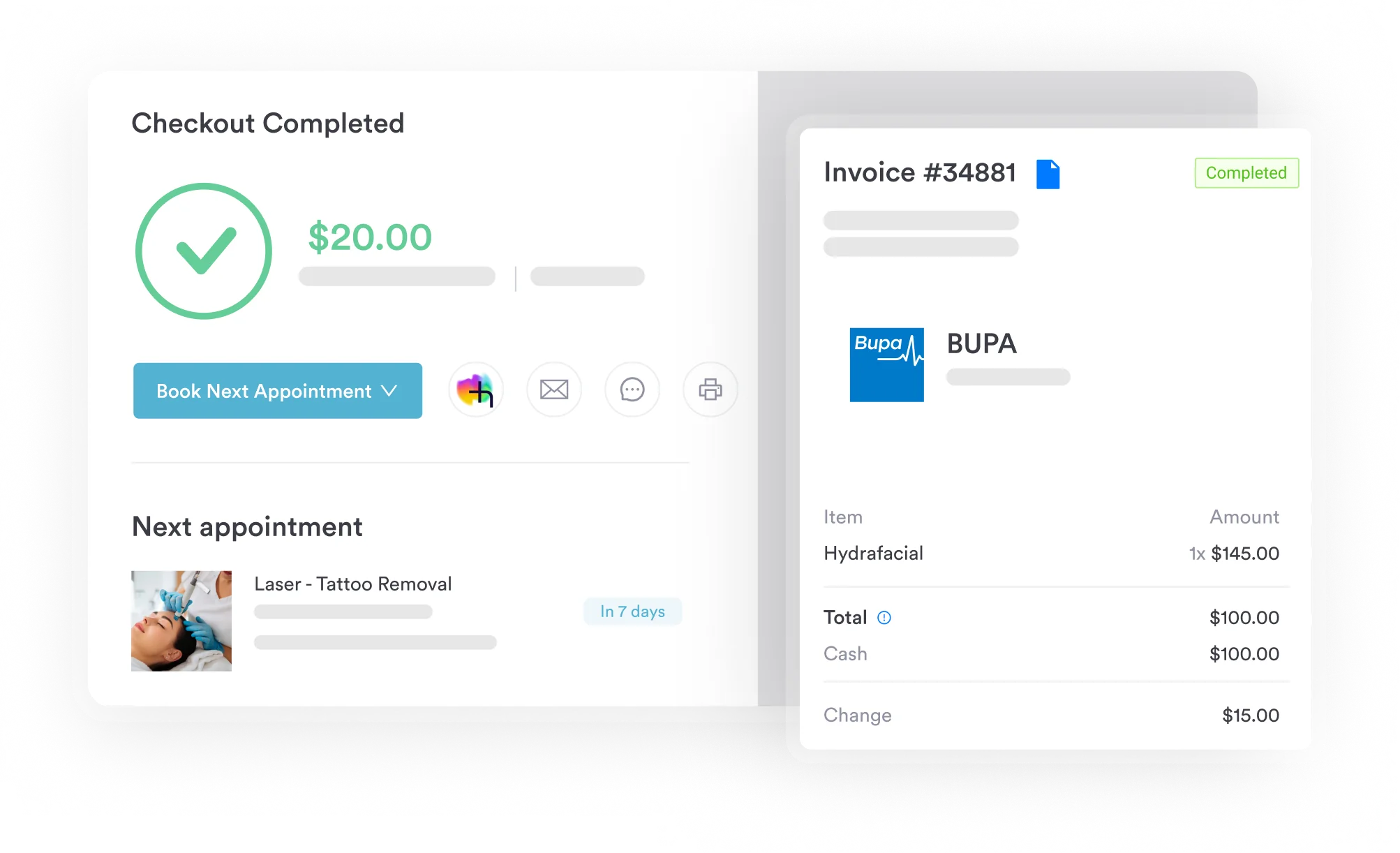

Pabau records vaccine lot and expiry on the appointment, checks eligibility and sends claims through Claim.MD. ERA remittances post back to the claim, so denials get worked quickly.

CPT code 90691 is a small line that fails for avoidable reasons. Get the route right, put the administration code beside it and lead with Z23, and most denials never happen.
The bigger risk is coverage. Check the travel benefit or the Part D route before the patient sits down. Quoting a price before the shot is far easier than collecting after a non-covered denial.
Book a demo to see how Pabau records each dose and sends vaccine claims through Claim.MD from the same patient record.

Need to see how clearinghouse checks catch errors before submission? Claim.MD clearinghouse overview explains how claim scrubbing works and what it checks.
Seeing unfamiliar denial codes on vaccine remittances? Electronic remittance advice explained shows how to read ERA files and act on CARC codes.
Building a repeatable process for working denials? Denial management in healthcare sets out how to track, appeal and prevent denied claims.
New to the billing side of a travel medicine practice? What is medical billing walks through how a claim gets from the visit to payment.
Want the full picture from booking to payment posting? Revenue cycle management guide covers each stage from encounter to payment posting.
Once per dose. CDC advises a Typhim Vi booster every 2 years for people who stay at risk. A repeat 90691 claim two years later is normal for frequent travelers.
Not under Part B. Typhoid vaccine falls under Part D, which covers ACIP-recommended adult vaccines with no cost-sharing since 2023. Bill it through the patient’s Part D plan or a pharmacy, and confirm the plan’s route first.
Z23 is the first-listed code. Add Z71.84 when travel counseling is documented, or Z20.09 for a documented exposure risk. Never use an A01 typhoid fever code on a preventive claim.
Yes. Each vaccine gets its own product code. Bill 90471 for the first injection and 90472 for each extra injected vaccine, or 90460 per vaccine for a counseled patient through age 18.
No. Typhim Vi is licensed from age 2, so a claim for a younger child doesn’t match the product. Record why the dose was deferred instead.