HCPCS code J7190: Factor VIII billing, units and reimbursement
HCPCS code J7190 bills human Factor VIII by the unit HCPCS code J7190 describes ...

Last Updated: Nov 10, 2026
88309 is the CPT code for Level VI - Surgical pathology, gross and microscopic examination. It is reported for the specimens the AMA lists at Level VI, such as total colectomy, lobectomy and radical prostatectomy.
The specimen type and the reason for the resection set the level, not the specimen's size. Most denials trace back to three errors. A Level V specimen goes out as 88309, the claim leaves before the report is signed, or the ICD-10 code misses the final diagnosis.
Let Pabau's smart automation suggest the right codes, reduce claim denials, and keep your practice compliant—effortlessly.
Automate repetitive tasks and focus on what matters most—your patients.
Reduce coding errors and ensure compliance with the latest regulations.
Clean claims, fewer denials, and faster reimbursements.
Powerful insights and reporting to help your practice thrive.
HIPAA compliant SOC 2 certified GDPR-compliant Trusted by 4,000+ clinics worldwide

CPT code 88309 is Level VI surgical pathology. It is reported for the specimens the AMA lists at that level, such as total colectomy and radical prostatectomy.
Core Level VI specimens include colon resection for tumor, esophagus, lung lobectomy or pneumonectomy, pancreas, radical prostatectomy and neoplastic uterus.
Nephrectomy, a neoplastic ovary and a prostate TUR are not Level VI, so billing 88309 for them is upcoding.
The ICD-10 code follows the pathologist’s final diagnosis, and the requisition indication is used only when no definitive diagnosis exists.
Pabau’s claims management software pre-fills claims from the record, offers CPT and ICD-10-CM lookup and checks required fields. It submits through Claim.MD with eligibility checks and ERA posting.
CPT code 88309 is the top level of surgical pathology. The American Medical Association descriptor reads “Level VI – Surgical pathology, gross and microscopic examination.” You report it for the specimens the AMA lists at Level VI, such as total colectomy, lung lobectomy and radical prostatectomy.
The claim carries the code, not the descriptor text. So report 88309 as listed, and keep the pathology report consistent with a Level VI specimen. The AMA form, “Level VI – Surgical pathology, gross and microscopic examination,” is the wording to quote in internal coding notes.
The code sits in the Pathology and Laboratory section, in the Surgical Pathology subsection (88300-88399). The six levels run from 88300 to 88309, starting with gross examination only at 88300. Each level is tied to a named list of specimens. That makes the level a lookup, not a judgment about how hard the case felt.
The AMA assigns specific specimens to Level VI. Its core is colon, esophagus, lung lobectomy or pneumonectomy, pancreas, radical prostatectomy and neoplastic uterus. Billing 88309 for a specimen that isn’t on the list is upcoding.
The table pairs each entry with the nearby specimen that coders most often confuse it with.
Two rules sit behind the list. The unit of service is the specimen, so each separately submitted Level VI specimen is its own unit. A specimen that appears on no list goes to the level whose listed specimens involve the closest physician work.
Neighboring codes such as 88304 follow the same logic further down the scale.
Choosing between 88309 and 88307 changes what the claim pays. Billing 88309 for a Level V specimen is upcoding, and billing 88307 for a Level VI specimen loses revenue. Neither size nor a malignant result decides it.
The level follows the AMA specimen list, which names the procedure and, for some organs, the reason it was done.
The pattern is easiest to see one organ at a time. Reading across each row below, the specimen climbs from biopsy to the resection the AMA places at Level VI, and the kidney never gets there.
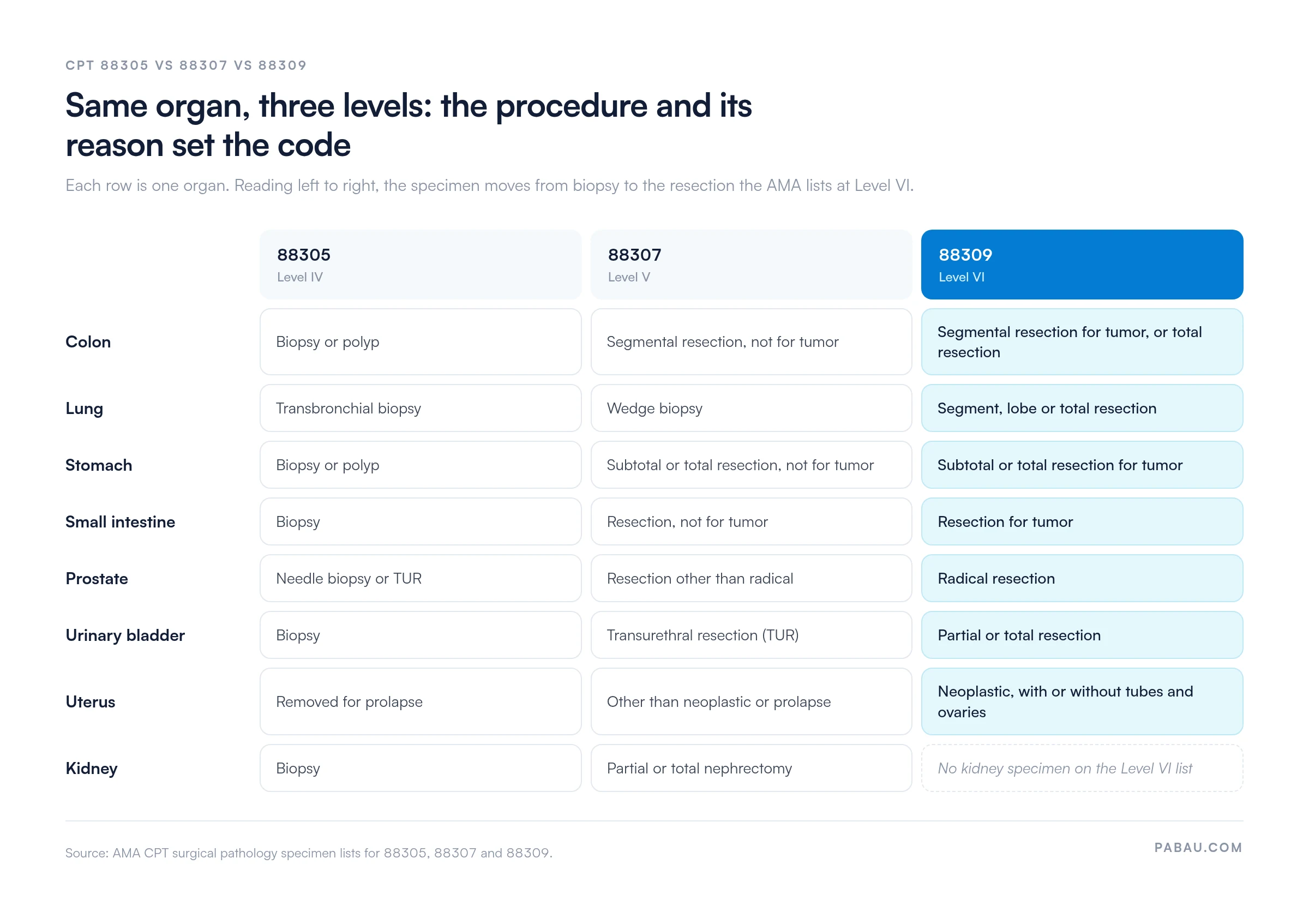
Mislevels run in both directions. A lung lobectomy or total colectomy billed as 88307 is a named Level VI specimen coded a step too low. A nephrectomy billed as 88309 goes the other way, because a kidney cancer case can feel like Level VI work. Kidney biopsies sit lower still, with the other Level IV specimens under 88305.
Before selecting 88309, ask two questions. First, is the specimen named on the AMA Level VI list? Second, does the requisition and report wording match that entry, including “for tumor” where the list requires it? A colon segment removed for diverticulitis fails the second test, however complex the case.
Payers expect a signed final report on a specimen from the Level VI list. Margin, lymph node and grade details support the pathology work, and they follow CAP reporting practice rather than a CPT requirement.
A complete resection report usually carries these elements:
Ancillary work on the same specimen is billed on its own line. Immunohistochemistry on a resected tumor, for example, is reported with 88342 for the first antibody. Check the CMS Medicare Coverage Database for any local policy or billing article in your jurisdiction before you submit.
A clean 88309 claim follows the specimen through seven steps. Each one catches a different denial, so the order matters.
Run this on every Level VI claim before it leaves the practice. Each point maps to one of the denials covered below.
Audit a sample of 20 to 30 recent 88309 claims every quarter. Check each for a signed final report and a specimen on the Level VI list. Then confirm the ICD-10 code matches the final diagnosis and the modifiers are right. A pattern you find yourself is cheaper than one a payer finds.
Most 88309 modifier questions come down to who did which part of the work. The rest come from billing several specimens for one patient on the same date.
CMS and commercial payers can apply different modifier policies, and misuse of -59 on pathology claims draws audits. Where a payer accepts the X modifiers, XS (separate structure) describes a separate specimen more precisely than -59.
The ICD-10 code on an 88309 claim reflects the pathologist’s final diagnosis. The ICD-10-CM outpatient guidelines (Section IV.K) say to code the confirmed diagnosis in the interpretation when the final report is available. The requisition indication is used only when the report gives no definitive diagnosis.
Level VI pays more than any other surgical pathology level, so payers look harder at it. Each denial below has its own correction. For what the reason codes on your remittance mean, keep a list of common denial codes to hand.
Most of these show up as patterns long before they show up as write-offs. A short weekly review of denied pathology lines, using the habits in denial management, catches the repeat offenders.
Medicare pays 88309 under the Medicare Physician Fee Schedule (MPFS). Each payment line multiplies its work, practice expense and malpractice RVUs by the locality’s geographic indexes, then by the conversion factor.
Use the current-year (2026) MPFS in the CMS Physician Fee Schedule lookup, since figures change every January 1.
Third-party rate tables often lag the annual update. Pull the figure for your own locality and payment line before you quote it to anyone.
On many billing teams, an 88309 claim passes through several manual hand-offs. Someone retypes the specimen and diagnosis into a billing system, or the claim leaves before anyone checks the report is final. Then the remittance comes back and sits unread for a week.
Pabau, the practice management and billing platform we build, keeps those steps in one place. Its claims management software pre-fills the claim from the patient record and offers CPT and ICD-10-CM lookup. It also checks required fields before the claim goes out.
Claims go to US payers through Claim.MD, with real-time eligibility checks before submission. Claim status is tracked after it leaves, and ERAs post back against the claim. Your team can see which 88309 lines were paid, reduced or denied, and work them from the same record.
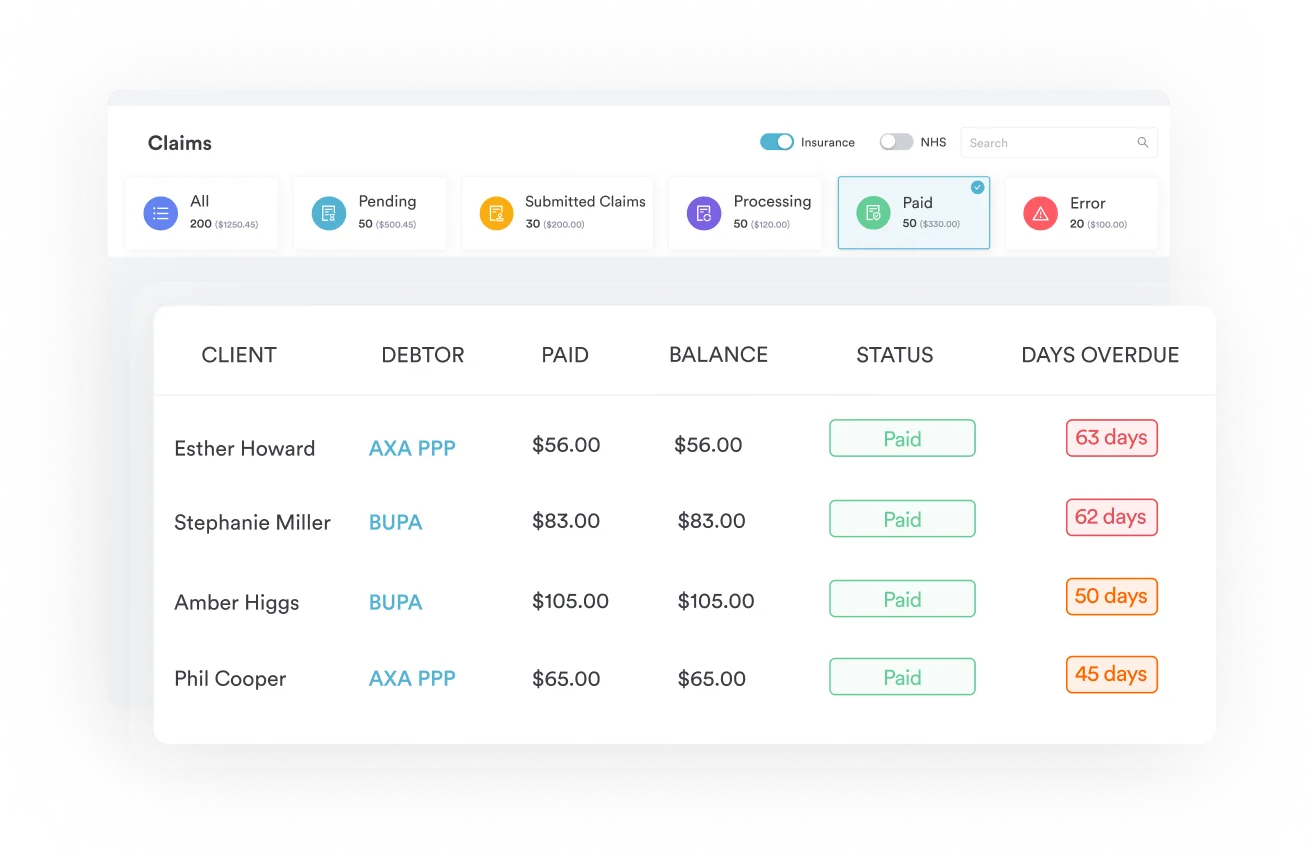

Pabau pre-fills claims from the record, checks required fields and submits through Claim.MD. Eligibility checks and ERA posting keep 88309 claims moving.

Treat 88309 as a lookup. If the specimen and the reason for the resection match a Level VI entry, the code is right, whatever the diagnosis. If they don’t, no amount of tumor detail moves it up. That one habit prevents both the upcode and the undercode.
Payers expect a signed final report on a listed specimen. Margin and node details support the pathology work, so keep them complete, but don’t wait on them to justify the level. Code the final diagnosis, and keep the requisition indication as the fallback.
Pabau checks required claim fields before submission, sends through Claim.MD, and posts ERAs, so fewer Level VI claims come back for avoidable reasons. Book a demo to see how it handles your pathology claims from record to remittance.

Looking to understand denial reason codes on pathology claims? Denial codes in medical billing explains the most common CO and PR codes that appear on surgical pathology remittances.
Want a framework for reducing claim errors upstream? Clean claim best practices covers the pre-submission checks that prevent most 88309 denials before they happen.
Billing a bone resection that needed decalcification? CPT code 88311 covers the add-on code reported with the surgical pathology level.
Adding more than one antibody stain to a tumor? CPT code 88341 explains the add-on for each additional immunohistochemistry stain.
One unit per separately identified specimen. The CPT unit of service for 88300-88309 is the specimen, so two separately submitted Level VI specimens support two units. Tissue sent as one specimen stays one unit, however many blocks the lab cuts.
No. An intraoperative frozen section is reported separately, with 88331 for the first block of a specimen and add-on 88332 for each additional block. The permanent examination of the same specimen is still reported with 88309.
Yes, when the specimen needs it. Add-on code 88311 covers decalcification and is reported in addition to the surgical pathology code, most often on bone resections. Record the decalcification step in the gross description.
Yes. Special stains and immunohistochemistry are separate services, reported with codes such as 88312, 88313 and 88342. Check NCCI edits and payer policy for unit limits before you submit.
CPT assigns an unlisted specimen to the level whose listed specimens involve the closest physician work. Record the reasoning in the report, because a payer reviewing the claim will compare it with the published lists.