



CCSD code G5100: Bypass of duodenum billing guide
CCSD code G5100 bills a bypass that leaves the duodenum in place CCSD code G5100...

Last Updated: Oct 16, 2026

CPT code 21554 covers excision of a subfascial soft tissue tumor of the neck or anterior thorax. The specimen must measure 5 cm or greater.
The closest miscode is 21556, which covers the same subfascial depth for tumors under 5 cm. Picking 21552 or 21555 instead is a depth error, since both are subcutaneous codes.
Documentation must specify tumor size, anatomical depth, and resection dimensions in the operative report to support a 21554 claim.
Claims management software like Pabau can validate the code against the operative note and scrub the claim before submission.
CPT code 21554 covers excision of a subfascial soft tissue tumor of the neck or anterior thorax measuring 5 cm or greater. Both facts have to appear in the operative note before the code holds up.
The American Medical Association (AMA) maintains the CPT code set. Its descriptor for 21554 reads: Excision, tumor, soft tissue of neck or anterior thorax, subfascial (e.g., intramuscular); 5 cm or greater. The code sits in the Musculoskeletal System section, under Neck or Thorax > Excision.
It applies to benign tumors such as lipomas and fibromas, and to malignant soft tissue tumors of the deep neck or anterior chest. Either way, the resected area has to meet both the size and the depth criteria.
Below you’ll find code selection against the adjacent codes, ICD-10 pairing, applicable modifiers, 2026 Medicare reimbursement, and the documentation a clean claim needs.
Excisions of this size land most often in plastic surgery and dermatology practices. The same size-and-depth rules shape billing in plastic surgery EMR and dermatology EMR workflows.
The table below consolidates the code’s key attributes for quick reference.
One clarification for billers. The parenthetical “(e.g., intramuscular)” in the descriptor is illustrative rather than exhaustive, so any subfascial plane qualifies. The fascia itself is the boundary that decides the code.
Most 21554 denials trace back to incomplete operative documentation rather than the wrong code choice. The operative report has to establish size and depth clearly enough for a payer auditor to confirm the code without ambiguity.
HIPAA-compliant documentation is the baseline for any surgical billing claim. Beyond that, a 21554 claim needs the operative note to include all of the following:
Digital operative report forms prompt for size, depth, and location at the point of care. That cuts the number of queries sent back to the surgeon, so a clean claim goes out the first time.

Run a documentation checklist before you submit any 21554 claim. Confirm the operative note names the subfascial plane, records the specimen measurement in centimeters, and identifies the exact anatomical site. Those three data points are what payer auditors check first.
The neck and anterior thorax excision family turns on two axes, tissue depth and tumor size. Get either one wrong and the claim carries the wrong code.
CPT code 21556 is the code most often confused with 21554. Both cover subfascial excision in the same anatomical region, and only the measurement separates them. A specimen under 5 cm codes to 21556, and 5 cm or greater codes to 21554.
Radical resection is a different pair of codes altogether. 21557 covers tumors under 5 cm, and 21558 covers tumors of 5 cm or greater.
21552 and 21555 and 21555 sit above the fascia, and they split at 3 cm rather than 5 cm. Choosing either one for a subfascial tumor means the dissection plane was read wrong, not the tape measure.
The back and flank family follows the same logic with different numbers. CPT 21931 covers subcutaneous tumors of 3 cm or greater. The subfascial equivalents are 21932 under 5 cm and 21933 at 5 cm or greater. Deep biopsy in that region codes to 21925.
Every 21554 claim needs a supporting ICD-10 diagnosis code that establishes medical necessity. The pairings below are commonly used examples rather than an authoritative list. Always assign the most specific code the pathology and clinical documentation support.
The codes above are examples drawn from coding reference platforms. Verify each one against the current CDC/NCHS ICD-10-CM web tool, and confirm it matches the pathology report for that patient encounter.
Modifier usage for 21554 depends on the clinical circumstance and on payer rules. No modifier is universally required, and payer-specific variation applies. The table below covers the modifiers most commonly used with this procedure.
Modifier logic carries across the musculoskeletal family, and 20103 follows a similar pattern for wound exploration. Always confirm modifier applicability with the individual payer before submission.
CPT 21554 carries a meaningful RVU value that reflects the complexity of deep tissue excision. The CMS Physician Fee Schedule lookup tool gives the current national payment amount for any locality.
For 2026 planning, use the tool directly rather than a published estimate, because geographic adjustment varies by MAC jurisdiction.
The Relative Value Unit (RVU) structure drives the Medicare payment calculation under the Resource-Based Relative Value Scale (RBRVS). The values below are indicative, based on publicly available CMS RVU data files. Verify current figures with the FastRVU 2026 RVU lookup tool.
Medicare pays different rates for 21554 depending on the site of service. Practice managers reviewing revenue expectations need both numbers.
Setting-specific differences belong in your revenue cycle management planning before you finalize a fee schedule. The PCC free 2026 RVU/RBRVS calculator models expected reimbursement for both settings. Private payer rates for 21554 are negotiated independently, so the Medicare rate makes a poor proxy for commercial reimbursement. Where a code carries an evaluation and management component, documented complexity sets the level billed. The authorization requirement sits with the plan, not the code, so it varies between patients.
Four error patterns account for most 21554 denials and audit flags.
A pre-submission review against a procedure fee schedule catches most of these. Build the modifier and bundling rules into that check, before the claim leaves the practice.
Code selection in this family creates a decision point on every claim. Depth and size both matter, and both live in the operative note rather than in the billing queue. Anyone rekeying those details by hand is one distraction away from a denial.
Practice management software like Pabau pulls that decision into one place. Pabau’s claims management software validates the code against the documented procedure detail, applies payer-specific modifier rules, and scrubs the claim before it goes out.
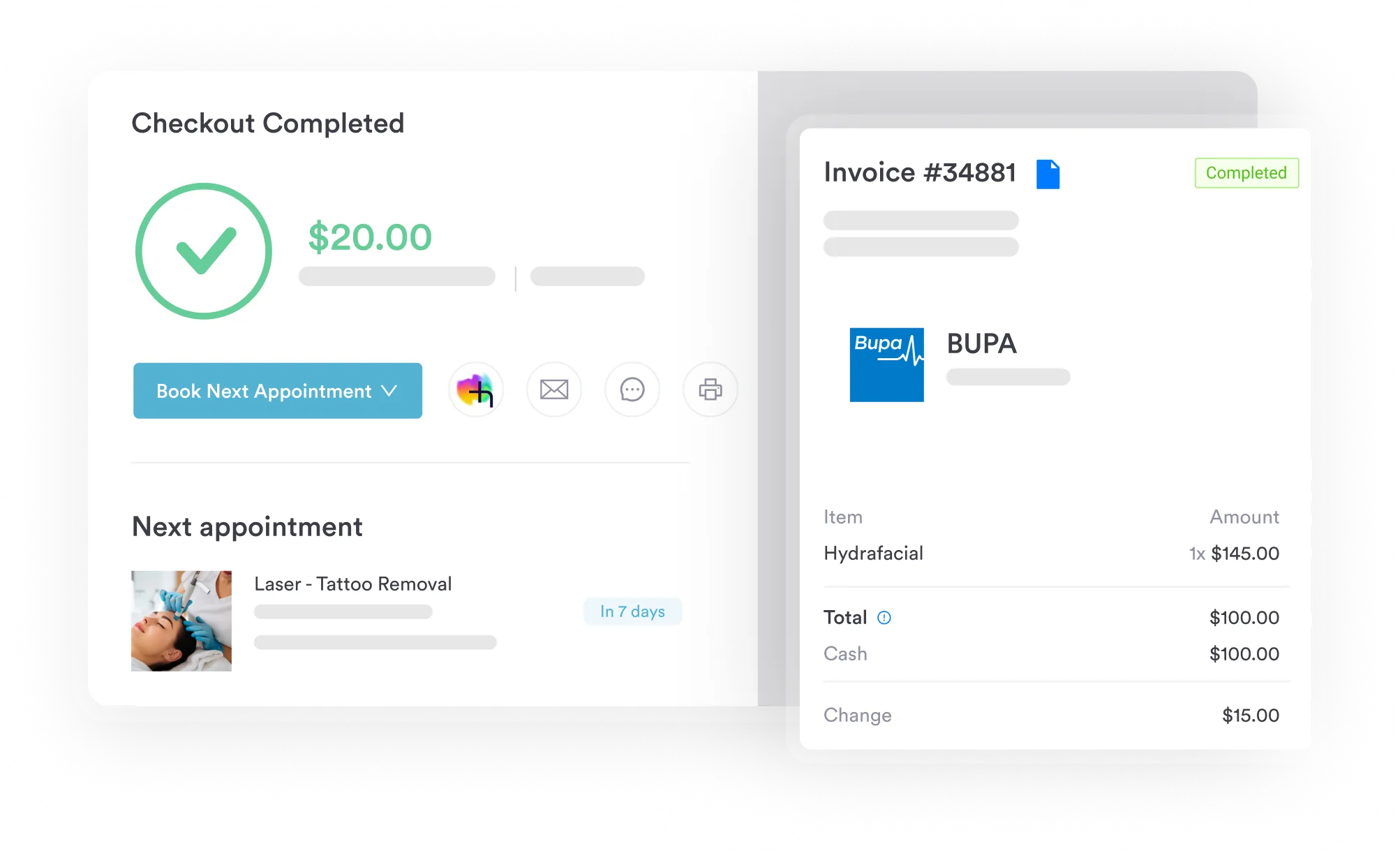
The practice management software layer keeps scheduling, clinical notes, and billing in one workflow. The specimen size and tissue depth your surgeon records flow straight into the claim, so nobody types them twice.
For a practice billing a steady volume of excisions, that removes the denial-rework cycle that eats billing hours every week.
Review your 21554 denial rate quarterly alongside your 21556 volume. If 21554 denials climb while 21556 claims rise, the problem is usually size documentation rather than code selection. The fix sits at the point of care, prompting surgeons to record the measurement during surgery.

Pabau’s claims management software helps practices automate CPT code selection, modifier application, and claim scrubbing for musculoskeletal excision procedures. Reduce denials and get paid faster.

Two documented facts decide whether a 21554 claim survives review. The tumor has to be subfascial, and the specimen has to measure 5 cm or greater.
Get both into the operative note while the surgeon is still writing it, and the coding question answers itself. Leave either one vague and the choice between 21554 and 21556 comes down to guesswork, which is where denials start.
So the fix belongs at the point of care rather than in the billing queue. Book a demo to see how Pabau keeps size and depth in the record where your coders can find them.

Coding a subfascial tumor higher up? 21013 applies the same depth logic to the face and scalp.
Need the full femur fracture code family? Femur fracture code family maps the S72 category by fracture location, side, and encounter type.
Coding a thigh muscle injury follow-up visit? Adductor muscle injury code covers a subsequent-encounter injury to the adductor muscle, fascia, and tendon of the left thigh.
Coding a tibia fracture that will not heal? Tibial shaft fracture nonunion code flags an open tibial shaft fracture with nonunion at a subsequent encounter.
Checking coverage before surgery? Insurance eligibility verification shows how to confirm benefits before the patient is on the table.
CPT code 21554 covers excision of a subfascial soft tissue tumor of the neck or anterior thorax measuring 5 cm or greater. It applies to benign tumors such as lipomas and fibromas, and to malignant soft tissue tumors. The resected specimen has to meet both the depth and the size criteria in the AMA descriptor.
They differ on depth as well as size, so they are not a like-for-like size comparison. 21555 covers a subcutaneous tumor of the neck or anterior thorax measuring less than 3 cm. 21554 covers a subfascial tumor measuring 5 cm or greater. The subfascial code for a tumor under 5 cm is 21556.
Size is the only difference. Both codes cover subfascial soft tissue excision of the neck or anterior thorax. 21556 applies when the excised specimen measures less than 5 cm, and 21554 applies at 5 cm or greater. Neither code describes a radical resection, which is coded 21557 under 5 cm and 21558 at 5 cm or greater.
The modifiers used most often are 22 for increased procedural services and 50 for a bilateral procedure. 51 covers multiple procedures in one session, and 59 covers a distinct procedural service. LT and RT identify laterality. Modifier requirements vary by payer, so verify with the specific payer before applying one to a 21554 claim.
The 2026 Medicare rate for 21554 varies by MAC locality and by site of service. Non-facility rates are higher because the physician practice absorbs overhead directly. Use the CMS Physician Fee Schedule lookup tool at cms.gov to retrieve the current rate for your locality. Geographic conversion factors move the final payment materially.
The operative report must document the anatomical site, the tissue depth, and the measured size of the excised specimen in centimeters. The site is the neck or anterior thorax with a specific location named. The depth is subfascial or intramuscular, and the specimen must measure 5 cm or greater. A pathology report confirming the tumor type supports medical necessity.
Common pairings include D21.0 for a benign neoplasm of connective and soft tissue of the head, face and neck. C49.0 covers a malignant neoplasm of the same region. M79.89 covers other specified soft tissue disorders, and D48.1 covers a neoplasm of uncertain behavior. Always assign the most specific code the documentation supports.
Yes. CPT 21554 applies to benign and malignant soft tissue tumors of the neck or anterior thorax. The excision must be subfascial and the specimen must measure 5 cm or greater. Radical resection of a malignant tumor is coded separately, 21557 for tumors under 5 cm and 21558 at 5 cm or greater.



