CCSD code F3070: Suture of palate billing guide
CCSD code F3070 covers stitching a wound in the palate CCSD code F3070 is the co...

Last Updated: Oct 12, 2026

CPT code 15260 covers a full thickness skin graft to the nose, ears, eyelids, or lips, 20 sq cm or less.
Direct closure of the donor site is written into the descriptor, so billing a separate repair code triggers an NCCI denial.
Once the graft passes 20 sq cm, add one unit of 15261 for each further block instead of reporting 15260 twice.
Site preparation at these four sites belongs to CPT 15004, not 15002, which covers the trunk, arms, and legs.
Pabau keeps the operative note, photos, and consent in one client record, so nothing is missing when the claim goes out.
CPT code 15260 reports a full thickness skin graft to the nose, ears, eyelids, or lips. The grafted area has to measure 20 sq cm or less. Direct closure of the donor site is part of the code, not a separate service.
That last detail is where the money quietly goes missing. Surgically, the procedure is routine for a reconstructive team. The claim depends on four separate facts. Those are the recipient site, the measured area, the donor closure, and the modifier. Leave one of them out of the note and the payer sends the claim straight back. A payer reviewing this code looks for the reasoning in the note, not only the conclusion, so the documentation level matters.
Almost every denial on this code traces back to what the operative note says, rather than to the code the biller picked. So the descriptor is the place to start.
The code lives in the Surgery section of the CPT code set, under the Integumentary System. Its subsection is Skin Replacement Surgery and Skin Substitutes, which runs from 15002 to 15278.
The American Medical Association maintains the code set and publishes the descriptor below.
A full thickness graft takes the epidermis and the whole depth of the dermis. Nothing is left behind to regrow, so the donor wound cannot granulate closed on its own. Primary repair is the only way to close it, which is why CPT builds that repair into the descriptor. Other specialties bundle a closure the same way. Vascular surgery writes the patch graft into 35301, so it is never reported on its own line.
Both have to be true before the code holds up. The recipient site must be one of four structures, and the graft must measure 20 sq cm or less. Fail either test and a different code applies.
Those four structures are the entire list. CPT splits the rest of the body three ways. Forehead, cheeks, chin, mouth, neck, axillae, genitalia, hands, and feet belong to 15240. Scalp, arms, and legs belong to 15220. The trunk belongs to 15200.
The cheek is the one that catches people out. It sits an inch from the nose and still falls under 15240. Reconstructive teams working in dermatology EMR software hit this boundary weekly, usually on post-excision defects that cross from the nasal sidewall onto the cheek.
Measure at the recipient site, not the donor site. That figure is what CPT counts, and it is the figure the operative note has to carry. Once total coverage across the qualifying sites passes 20 sq cm, add-on code 15261 handles each further block.
CPT 15261 is the add-on companion, and it is never reported on its own. Report 15260 once for the first 20 sq cm. Then add one unit of 15261 for each additional 20 sq cm, or part of a block.
Worked example. A 38 sq cm nasal reconstruction codes as 15260 plus one unit of 15261. The primary code covers the first 20 sq cm and the add-on covers the remaining 18. A second unit of 15261 appears only once the graft passes 40 sq cm.
The same first-block-plus-add-on pattern runs through the whole family. Trunk grafts pair 15200 with 15201, and the other facial sites pair 15240 with 15241. Learn the pattern once and it holds for every site.
Skin procedure documentation gets demanding fast, so plastic surgery EMR software with photo and consent tools helps.
Four families sit close enough to 15260 to be picked in error. Those are the other graft sites, the site preparation codes, the adjacent tissue transfer codes, and the skin substitutes. Teams running plastic surgery EMR workflows meet all four in a single post-Mohs list.
Two of these deserve a closer look. Site preparation at the nose, ears, eyelids. The code many billers reach for instead.
Skin is also not the only tissue grafted during facial reconstruction. Cartilage carries its own codes.
Missing or incorrect modifiers sit in the top three denial triggers for this code. Which one applies depends on the operative session, the side of the body, and whether a global period is already running. Payer contracts vary, so confirm the rules for each plan before submission.
Staged reconstruction is where -58 and -78 get confused. A planned second stage takes -58. An unplanned return to the OR for a complication takes -78. The word “planned” in the first operative note settles the argument.
Specimen source decides the culture code when a graft bed looks infected and the patient is taken back to surgery. A swab taken from the recipient site is reported as 87070, which excludes urine, blood, and stool. That lab line sits outside the modifier question entirely.
Medicare payment for 15260 comes from the Medicare Physician Fee Schedule, which the Centers for Medicare and Medicaid Services updates every January.
Three things move the number: your locality adjustment, whether the case was done in a facility, and whether a global period already applies.
A 90-day global period does not swallow unrelated services ordered while it runs. A urinary infection treated weeks after nasal reconstruction is a separate problem, so the culture reported as 87086 stays payable. Any office visit attached to it takes modifier 24.
Because the rates reset annually, check the current amount in the CMS fee schedule lookup tool for your own locality. Commercial rates are negotiated separately and usually differ from the Medicare average.
One setting sits outside all of this. If the surgeon has opted out of Medicare, the practice bills the patient directly under a Medicare private contract. The fee schedule stops being the reference point.
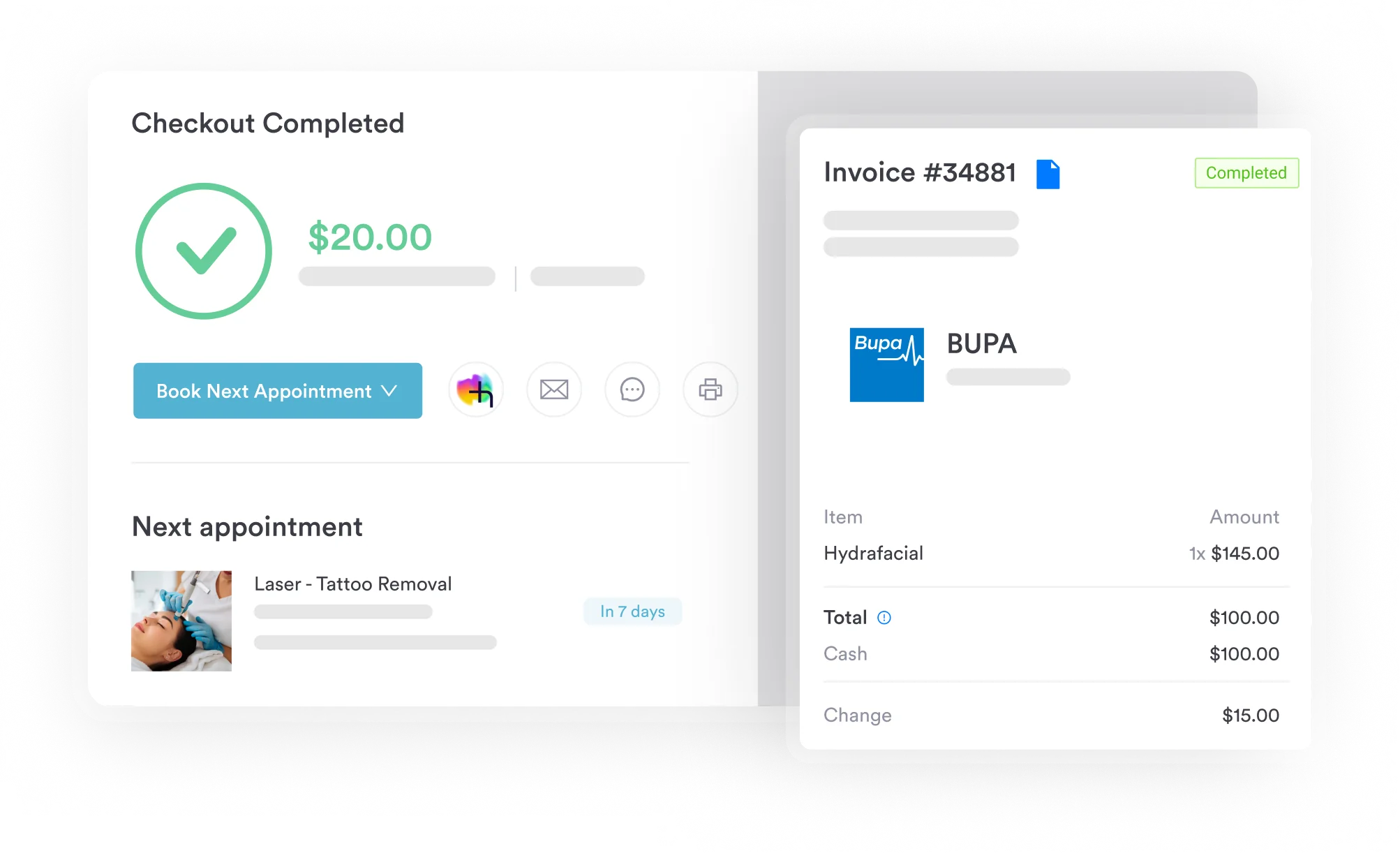
Every 15260 claim needs an ICD-10-CM code that shows why the tissue was missing in the first place. Post-excision defects, burns, traumatic wounds, and scar contractures are the usual reasons.
Whichever applies, the diagnosis has to sit at one of the four qualifying sites.
Code to the highest specificity the record supports. On post-Mohs cases, report the malignancy that prompted the excision rather than a wound code.
Payers want evidence that the defect came from necessary surgery. That is true whether the excision was reported under 17311 or under an excision code such as 11642.
Each lab line carries its own diagnosis, and it does not have to be the one supporting the graft. Serology drawn at the same visit, such as 86592, is judged against the sign or risk factor that prompted the order. Copying the surgical diagnosis across invites a medical necessity denial.
The note has to support every element of the descriptor before a payer will adjudicate the claim.
One missing element, usually the measured area, is enough to trigger a denial or a post-payment recovery. Structured note templates capture these fields far more reliably than free-text dictation.
Units on a lab line need the same evidence trail the measured area needs here. Blood typing is priced per test, so 86900 covers ABO alone and Rh typing bills on its own line. An auditor matching orders against results spots a padded unit count fast.
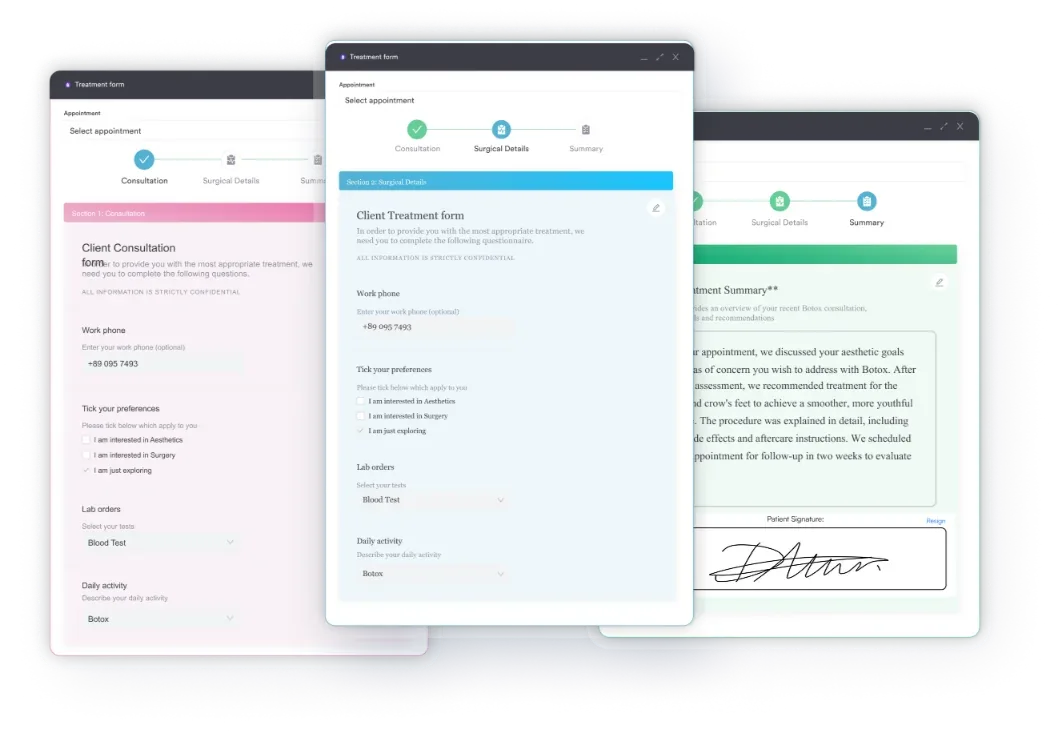
Keep the note, the photographs, and any pre-authorization correspondence together as one claim record. Practices that keep client records current spend far less time reassembling evidence when a payer requests it months later.
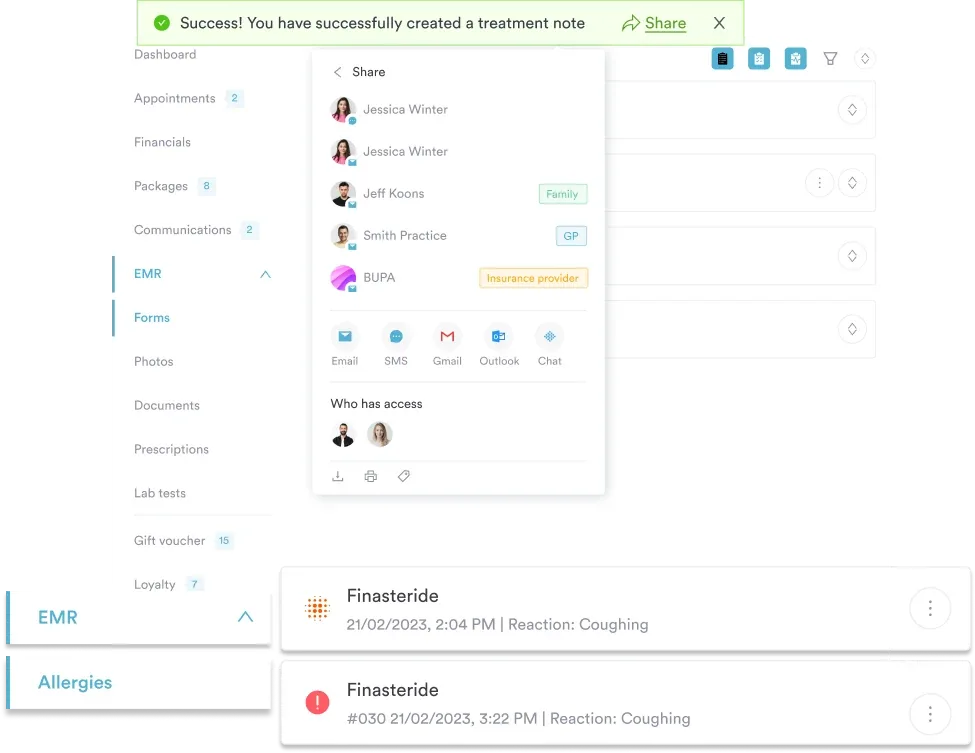
The denial patterns on this code are predictable, which is good news. Predictable problems get solved once at protocol level, rather than one remittance at a time.
Before you appeal any of these, read the edit that caused it. The NCCI edit tables tell you whether a modifier can separate the pair at all. That saves writing an appeal which was never going to land.
Frequency limits produce a different denial from the six above. Plans cap how often a screening lab may repeat, and the interferon-gamma release assay billed as 86480 is a familiar example. Read the interval in the policy before reordering, not after the remittance lands.
Audit your 15260 denials once a quarter. Pull 90 days of remittance detail and group it by reason code. CARC 4 points at a modifier problem, so start with your modifier protocol. CARC 16 with remark M76 points at a missing or invalid diagnosis. That usually means the note template needs fixing rather than the coder.
Almost every error on this code is front-loaded, which means it happens in the room rather than at the coding desk. Walking the claim end to end shows where each fact has to be captured.
Run these five questions over the claim before it leaves. Each maps to one of the denials above.
Teams working from a shared checklist like this catch most problems before submission. Moving from paper to a paperless practice removes the hand-offs where those details usually fall out.
Not every service splits into a first block and an add-on the way the graft family does. Tuberculin skin testing spans two encounters, placement and reading, yet 86580 is reported once. Knowing which codes absorb their own follow-up keeps duplicate lines off a claim.
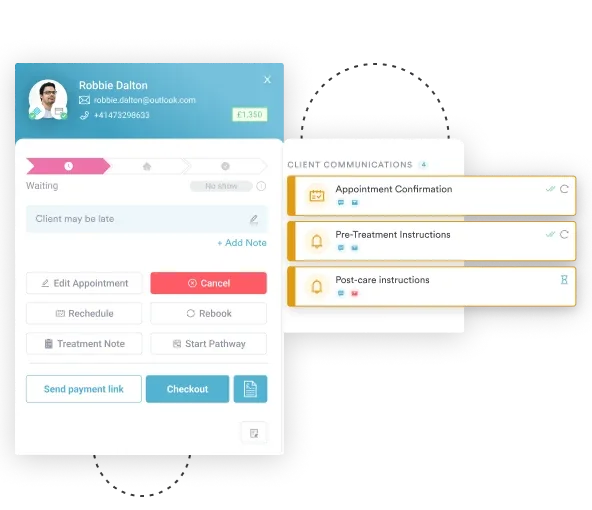
Most of the failure points above are record-keeping problems wearing a coding costume. The measurement lives in the surgeon’s memory, the consent is in a folder, and the before photos are on somebody’s phone. By the time a coder opens the chart, half of it has to be chased.
Practice management software like Pabau keeps all of it in one client record. The operative note, the photographs, the signed consent, and any pre-authorization correspondence sit against the same appointment. When a payer asks for documentation six months later, nobody has to search three systems to answer.
From there. It also checks the administrative fields that commonly stall a submission, such as membership and authorization numbers. Code and modifier selection stays with your coder, where it belongs.
What changes is the time spent assembling everything behind the code. The graft site, the measurement, and the consent are already in the file when the claim is built.

Pabau stores the operative note, photographs, and consent against the same client record. Your billing team then has the documentation on hand the moment a payer asks for it.

CPT code 15260 is a narrow code with a short list of conditions, and it pays reliably once those conditions are on the page. Four sites, one measurement, and a donor closure you never bill twice. That is the whole test.
So the work sits upstream of the claim. Fix the operative note template once and the denial rate falls for every case after it. Working remittances one at a time only ever fixes the claim in front of you.
Want to see how one client record cuts the paperwork behind a graft claim? Book a demo and we will walk your billing team through it.

Grafting the cheek or chin instead? 15241 explains how each additional 20 sq cm is reported at those sites.
Billing more than one Mohs stage? 17312 sets out how additional stages are counted after the first.
Treating premalignant lesions in the same practice? 17003 covers the destruction rules for lesions two through 14.
Using a skin substitute rather than an autograft? 15276 walks through how substitute grafts are measured and documented.
Defaulting to an unspecified keratitis code? ICD-10 code for unspecified keratitis It explains why H16.9 should be the last resort rather than the default keratitis code.
Yes. Add the areas together and report 15260 once for the first 20 sq cm. If the combined total passes 20 sq cm, add one unit of 15261 for each further block.
15260 covers skin only. When the graft also carries cartilage or subcutaneous tissue, as in an alar rim repair, the composite graft code 15760 applies instead.
It depends on the plan. Many commercial payers require prior authorization for reconstructive surgery, so check the policy before the date of service. Traditional Medicare rarely preauthorizes physician services, while Medicare Advantage plans often do.
The surgeon who places the graft reports 15260. Where a Mohs surgeon excises and a different surgeon reconstructs, each reports their own procedure on their own claim.