CCSD code F3070: Suture of palate billing guide
CCSD code F3070 covers stitching a wound in the palate CCSD code F3070 is the co...

Last Updated: Oct 12, 2026

CPT code 17003 is an add-on code for the second through 14th premalignant lesion destroyed in one session, and it always follows CPT 17000.
Billing 17003 without 17000 on the same claim denies the whole encounter, not just the add-on line.
At 15 or more lesions, CPT 17004 replaces the series and pays $162.33, against $149.02 for a full 14-lesion claim.
One unit of 17003 pays about $6.35 in 2026, so a miscount costs little while a missing primary code costs everything.
Structured lesion rows in the clinical note turn the documented lesion count into the billed unit count without manual re-entry.
CPT code 17003 reports the destruction of premalignant lesions, second through 14th lesion, each. In practice that means every actinic keratosis destroyed after the first one in the same session. It never travels alone. CPT 17000 covers the first lesion and has to sit on the same claim.
Among dermatology CPT codes, 17003 is both heavily used and heavily miscoded. Three errors cause most of the denials:
This reference gives the official descriptor and the whole destruction code family in one table. You also get the modifier decision points and 2026 Medicare rates for every code in the series. Each common billing error carries a price tag too. You will know which mistakes cost $6.35 and which cost the entire claim.
Any practice billing skin lesion destruction meets 17003 in nearly every multi-lesion encounter. How it pairs with your dermatology EMR software decides whether the count in the chart survives the trip to the claim.
CPT code 17003 describes destruction of premalignant lesions, second through 14 lesions, each. It is classified as an add-on code by the American Medical Association (AMA), the body that owns and maintains the CPT code set. In the CPT manual the descriptor comes in two halves, because 17003 sits indented under 17000. The shared parent text reads: Destruction (eg, laser surgery, electrosurgery, cryosurgery, chemosurgery, surgical curettement), premalignant lesions (eg, actinic keratoses). The code’s own text then adds: second through 14 lesions, each (List separately in addition to code for first lesion). What a superbill includes decides whether the patient insurer processes or rejects the reimbursement request.
The load-bearing phrase is “list separately in addition to code for first lesion.” CPT code 17003 carries the “+” designation in the AMA CPT manual, so it has no standalone billing rights. It must always accompany CPT 17000 on the same claim.
Note what the descriptor does not say. It does not say benign. Warts, molluscum, and seborrheic keratoses belong to a different code family, and that single word is behind a large share of misrouted destruction claims.
CPT code 17003 is the middle member of a three-code series that covers every lesion count from one upward. Code selection starts with the lesion thresholds, so count first and code second.
That three-code view is only half the picture. The series sits next to three other destruction families, and all four are worked by the same instruments. The table below maps them side by side, so you can confirm the family before you pick a code.
Read the counting column across the rows and the trap becomes obvious. Only the premalignant family bills per lesion. The benign family bills once for the whole session, so 17110 with 9 units is a claim that should never have left the office. Getting that wrong in a mixed session is what turns one encounter into two denials.
One more neighbor is worth naming. Photodynamic therapy for actinic keratoses is not a destruction code at all. It reports under 96567, and coders reach for the 17000 series out of habit when the chart says “actinic keratosis treated.” Read the method before the diagnosis. Our guide to CPT code 17000 covers the primary code in the same depth.
Count every lesion before you assign a single code. The sequencing follows from the total:
Take a patient with seven actinic keratoses destroyed in one visit. The correct claim is CPT 17000 at one unit, plus CPT code 17003 at six units. Never report a single unit of 17003 to stand in for several additional lesions.
Searches for a cryotherapy CPT code usually end in disappointment, because there isn’t one. The CPT code for cryotherapy is chosen by lesion type and lesion count, never by the instrument in your hand. Liquid nitrogen, a hyfrecator, and a curette all land on the same destruction codes when the target is premalignant. The method still has to appear in the note:
The same logic settles actinic keratosis cryotherapy CPT selection. Freeze one lesion and you report 17000. Freeze eight in the same session and you add seven units of 17003. The freeze itself never moves the code.
Where the instrument does mislead people is lesion type. The CPT code for wart destruction is 17110 or 17111, because a wart is benign rather than premalignant. Freezing a skin tag is different again. Same canister of liquid nitrogen, three separate code families.
Because CPT code 17003 is an add-on code, several standard modifier rules invert here. Work through four questions in order and the modifier decision resolves itself.
Modifier 51 deserves the sharpest warning. Appending it to CPT code 17003 tells the payer that your biller is treating an add-on as a primary code. That contradiction can trigger a denial or a documentation request. The AAPC CPT code lookup carries current modifier pairing guidance by payer type.
When you submit CPT code 17003 with an E/M on the same claim, modifier 25 belongs on the E/M line only. Check that the note documents the lesion destruction and the E/M decision-making as two distinct clinical activities. Missing that separation is the top reason same-day E/M claims are denied alongside destruction codes.
Surgeons billing these codes often run the whole workflow inside dedicated plastic surgery software.
A single unit of CPT code 17003 pays roughly $6.35 under the 2026 Medicare Physician Fee Schedule, in the office setting and before locality adjustment. That figure comes from a total of 0.19 RVUs multiplied by the 2026 conversion factor of $33.4009. CPT 17000 reimbursement is an order of magnitude higher, at about $66.47. The primary code carries the work and practice expense of the encounter itself.
Line the last two rows up and the 17004 threshold stops looking like a compliance chore. A maxed-out 14-lesion claim pays $149.02. One more lesion moves the encounter to CPT 17004 and pays $162.33. The series would need roughly 16 lesions to catch up, and the rules never let it get there.
So a practice that keeps stacking 17003 units past 15 lesions is losing about $13 an encounter on top of the compliance exposure. Verify your own figures with the CMS Physician Fee Schedule lookup tool, or run your ZIP code through the FastRVU lookup for the locality-adjusted amount.
Medicare coverage for lesion destruction is governed by Local Coverage Determinations, or LCDs. LCD L30330 and its contractor equivalents define which diagnoses support medical necessity. Cosmetic removal of a benign lesion is excluded.
The procedure note has one job on a 17003 encounter. It has to prove the count. Everything else follows from that, because the units on the claim have to be traceable to named lesions in the chart.
Strong destruction notes carry all of the elements below. Building them as structured fields in your digital procedure forms cuts omissions and speeds up charting at the point of care.

A practice using clinical record management tools that pre-populate procedure templates can make this the default destruction note rather than the careful exception. Structured templates also shorten audit responses.
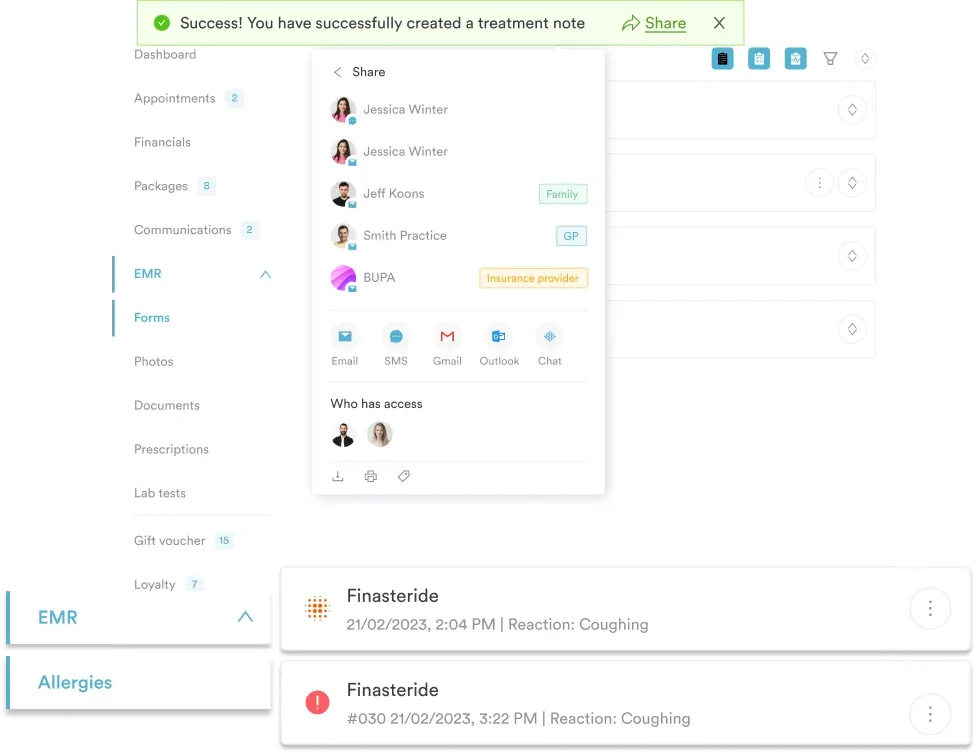
Destruction codes are a known Office of Inspector General audit target in dermatology, with lesion counting and code sequencing flagged as areas of billing vulnerability. Each error below carries a price tag, so you can see which mistakes cost pennies and which cost the whole claim.
Knowing the errors is easy. Catching them at four in the afternoon on a 28-patient day is the hard part. Keeping a medical coding cheat sheet by the billing desk puts the thresholds in front of whoever works the claim.
The specimen decides it. If tissue goes to pathology, an excision code applies, and a benign trunk or limb lesion lands on CPT code 11400. If the tissue is ablated in place with nothing sent, a destruction code applies, whatever instrument was used. A shave taken for diagnosis is a biopsy instead.
There is a second fork inside the destruction branch, and it catches more claims than the excision question does. Once you have settled on destruction, the lesion type still has to pick the family. CPT code 17110 covers benign lesions other than skin tags and vascular lesions, up to 14 of them, with 17111 taking over at 15.
The counting behaves differently too. CPT code 17110 is one charge for the whole session, however many warts you froze. CPT code 17003 is one unit per lesion. A biller who moves between the two families without resetting that habit will over-report one and under-report the other. Use the CrossCoder crosswalk to confirm the ICD-10 diagnosis supports whichever CPT code you land on.
Medicare sets the framework most coders use as a baseline, but commercial payers deviate from it in ways that decide whether a claim pays. These are the five places they diverge on 17003.
A practice with a mixed Medicare and commercial book should hold these rules in the workflow rather than in someone’s head. Capture lesion count, method. One structured note then satisfies every payer on your list.
Before you bill CPT code 17003 for a commercial payer, read that insurer’s own coverage policy for premalignant and benign lesion destruction. Most publish it online. The 15-lesion threshold for 17004 is a CMS rule. Some commercial payers cap the 17003 series at a different number, or want authorization beyond a set unit count. One check before the visit beats an appeal after it.
Almost every 17003 denial starts in the note rather than the billing screen. A practitioner writes “several AKs treated with liquid nitrogen to the face and forearms,” and the biller has to turn a sentence into a number. That translation step is where the units go wrong.
The fix is structural. Build the destruction note as one repeating lesion row rather than one free-text paragraph. Each row captures site, laterality, size in millimeters, clinical impression, and method. The row count becomes the lesion count, and nobody has to interpret prose.
Three rules then turn those rows into a clean claim:
Practice management software like Pabau is where that structure lives. Our digital forms let you build the repeating lesion row as a standard destruction template. The count is then recorded as data at the point of care. Pabau’s claims management software then works from that same record, so your biller reads the practitioner’s count instead of reconstructing it.
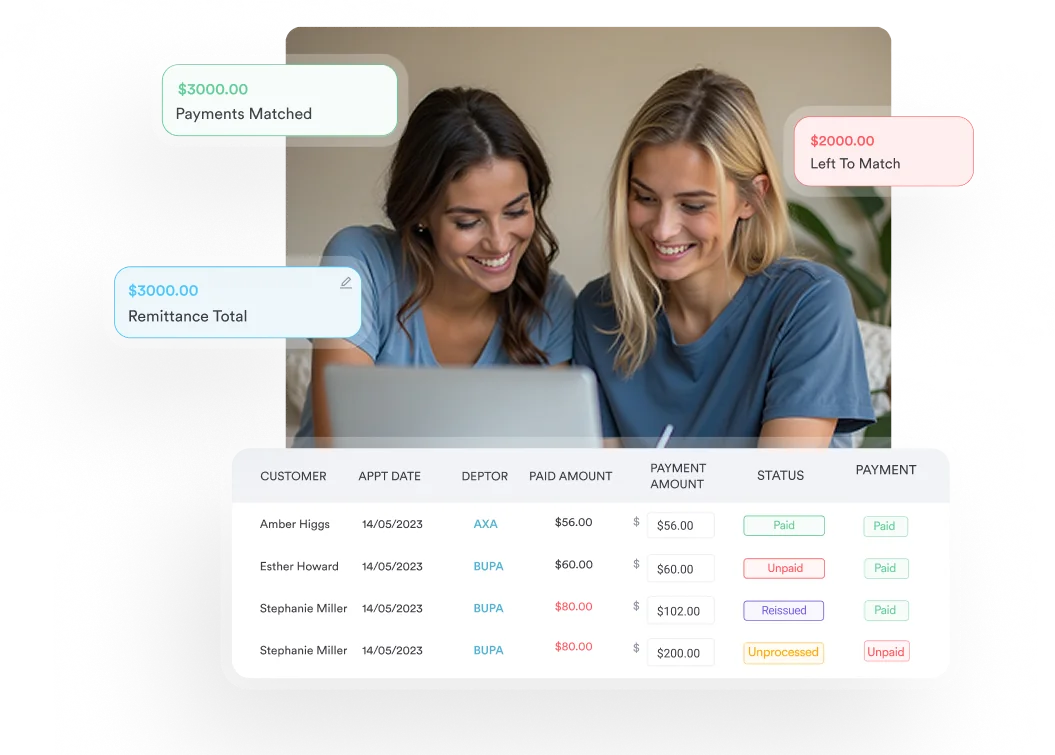
The outcome is narrow but valuable. Your practitioners chart the way they already chart. Your billers stop re-entering numbers by hand. And the count on the claim is the count a payer finds in the chart during an audit. Going paperless across the encounter is what makes that single source of truth possible.

Pabau lets you build a structured destruction note, so the site, size, and method of every lesion is captured once and flows into billing. Your team stops re-entering counts by hand and stops appealing denials caused by a miscounted claim line.

CPT code 17003 is a simple code with an expensive failure mode. The add-on line itself is worth $6.35, so the unit is rarely where the money goes. The damage comes from a missing primary code, an unnoticed 17004 threshold, or a benign lesion routed into the wrong family.
So the highest-value change here is a documentation one. Make the lesion count a recorded field rather than something read out of a paragraph. Once the count is data, the sequencing, the unit math, and the 17004 switch all follow from it.
There is a trade-off. Structured notes take longer to design and some discipline to adopt. Practices that accept that stop appealing claims they never needed to lose. Book a demo to see how Pabau ties destruction documentation to the claim line.

Need the primary code in the same detail? CPT code 17000 covers the first-lesion code that every 17003 claim depends on.
Billing wound coverage after a larger skin procedure? CPT code 15274 explains how skin substitute graft applications are sized, counted, and documented.
Coding a callus or corn rather than a keratosis? CPT code 11055 covers paring of benign hyperkeratotic lesions and the lesion-count rules with it.
Coding vertigo symptoms too? Vertiginous syndrome code guide explains why payers expect the underlying etiology sequenced first on the claim.
Coding hearing loss on the same claim? Bilateral sensorineural hearing loss code explains how it classifies cochlear or auditory nerve damage rather than middle ear issues.
CPT code 17003 means destruction of the second through 14th premalignant lesion in a single session, with each lesion reported as its own unit. It is an add-on code, so it only has meaning next to CPT code 17000, which covers the first lesion. Billed on its own it has no standing, and the claim denies.
It covers destruction by any method, including cryosurgery, electrosurgery, laser surgery, chemosurgery, and surgical curettement. Practices use it most on actinic keratosis visits, where several lesions are treated at once. The method never changes the code, only the lesion count does.
CPT 17000 covers the first lesion destroyed and is the primary code. CPT code 17003 is the add-on code that reports each lesion after the first, from the second through the 14th. For a patient with five actinic keratoses destroyed in one visit, you bill CPT 17000 once and CPT code 17003 four times. The two codes also pay very differently, at roughly $66.47 and $6.35 respectively in 2026.
Up to 13 units, one for each lesion destroyed after the first. Six actinic keratoses in one session means CPT 17000 once and five units of CPT code 17003. Never report a single unit to stand in for several additional lesions. At 15 or more lesions, CPT 17004 replaces the whole series.
No. CPT code 17003 cannot be billed as a standalone code under any circumstances. It carries the “+” add-on designation, so it must always accompany CPT 17000 on the same claim for the same date of service. Submitting 17003 without 17000 denies the claim, and repeat submissions without the primary code can flag the practice for compliance review.
Modifier 25 goes on the E/M code, not on 17003, when a separately identifiable office visit happens the same day. Modifier 51 should never be appended to CPT code 17003, because add-on codes are 51 exempt. Modifier 59, or an X-modifier such as XE, XS, XP or XU, can distinguish a separate same-day procedure. Check which one your payer prefers before submitting.
CPT 17004 applies when 15 or more premalignant lesions are destroyed in a single encounter. At that threshold 17004 replaces the entire 17000 and 17003 series, so never bill all three together. It also pays better, at $162.33 against $149.02 for a full 14-lesion claim in 2026. Count every lesion before assigning codes.
The procedure note must record the exact lesion count and the anatomic site of each lesion. It also needs the clinical classification, lesion size in millimeters, the destruction method, and the patient’s response. The documented count has to match the units billed for CPT code 17003 on the claim. Missing any of these elements raises both denial and audit risk.