

ICD-10 Code S42.444P: Medial epicondyle fracture, right humerus
ICD-10 Code S42.444P: full descriptor and code validity ICD-10 Code S42.444P car...

Last Updated: Oct 13, 2026
Billable Code Specific Code
W31.83XD is the billable ICD-10-CM code for contact with special construction vehicle in stationary use, subsequent encounter.
Four words in that descriptor do most of the work: in stationary use. If the machine was parked or under repair, W31.83 applies. If it was moving under its own power, or being towed, the claim belongs in the V chapter instead.
The index causes the rest of the trouble. Most of the machines people file under W31.83 are indexed somewhere else entirely, so the claim comes back. Start with the code's own record.
Let Pabau's smart automation suggest the right codes, reduce claim denials, and keep your practice compliant—effortlessly.
Automate repetitive tasks and focus on what matters most—your patients.
Reduce coding errors and ensure compliance with the latest regulations.
Clean claims, fewer denials, and faster reimbursements.
Powerful insights and reporting to help your practice thrive.
HIPAA compliant SOC 2 certified GDPR-compliant Trusted by 4,000+ clinics worldwide

ICD-10 code W31.83XD reports contact with a special construction vehicle in stationary use, subsequent encounter.
The 7th character D means active treatment has finished and the patient is back for routine follow-up care.
Only a parked or under-repair machine belongs here, because a vehicle in transport moves the claim to the V chapter.
The External Cause Index sends cranes and forklifts to W24.0 and drilling machinery to W31.0, not to W31.83.
W31.83XD is always a secondary code, and its approximate ICD-9-CM predecessor is E919.7.
The table below lists every field a claims system checks for this code.
W31.83XD sits five levels down the tabular list. Each level adds a rule you have to honor.
The X in the sixth position is a placeholder, not a wildcard. ICD-10-CM requires a 7th character here, so the X keeps the digit count right. Drop it and the code fails on submission.
Notes travel down that chain as well. An exclusion written at W31 binds W31.83XD too, which is where the next few sections come from. For the full tabular list by fiscal year, the CDC/NCHS ICD-10-CM web tool is the primary source.
Use D once the patient has finished active treatment and is back for routine care. That is the whole test. It has nothing to do with the visit number, and nothing to do with seeing the same provider twice.
A, initial encounter. The patient is receiving active treatment. That covers the emergency visit, the surgical repair, and the first evaluation by a treating physician.
D, subsequent encounter. Active treatment is done. The visit is a wound check, a cast change, a medication adjustment, or a therapy session during healing.
S, sequela. The injury has healed and left something behind, such as scarring or nerve pain. Code the late effect first, then W31.83XS.
A patient can switch providers and still earn the D character. If active treatment finished elsewhere, the new provider still codes the healing phase. The subsequent-encounter code W25.XXXD works the same way.
The ICD-10-CM Official Guidelines are explicit on this. The external cause 7th character should match the character on the injury code for that encounter. So the two codes move through the episode together.
That is simple when both codes use A, D, or S. Fracture codes complicate it. They carry a longer set, including G for delayed healing and K for nonunion.
Here is how it plays out. A laborer fractures the ulna shaft when a construction vehicle under repair shifts on its blocks. Three months later the fracture has not united, so the practice reports S52.262K.
K belongs to the subsequent-encounter group, not the sequela group. W31.83 has no K available, so the external cause code takes D. The claim goes out with the fracture code first and W31.83XD behind it.
Nothing needs translating when the injury code already ends in D. S62.211D pairs with W31.83XD as written.
One term. The External Cause Index routes “earth-scraping machine, in stationary use” to W31.83. Almost everything else people file here has an entry of its own somewhere else.
That catches coders out, because a construction site is full of machines that feel like they belong. The index does not work by category, though. It works by the term in the note, and the tabular notes then confirm it.
Agricultural machinery is not a W31 problem at all. It belongs to the separate W30 category, and W31 excludes it outright. So read the machine named in the note before you reach for a subcategory.
W31 carries three Excludes1 notes, and each one is a hard stop. A code named in an Excludes1 note is never reported alongside W31.83XD.
W31.83 then adds one of its own: special construction vehicle accident (V01-V99).
The transport exclusion causes the most trouble, because it is wider than people expect. It does not stop at public roads. If the machine was being used or towed as a transport vehicle, the V chapter applies, on a highway or off one. Nontraffic events count too, which is why codes such as codes such as V86.54XS exist.
W31.83 also carries an applicable-to note that settles most arguments. It reads: contact with special construction vehicle under repair, not on public roadway. Treat that as the picture of a qualifying encounter.
So ask the documentation one question. Was the vehicle doing transport work when contact happened? If the answer is yes, leave W31.83XD alone.
W31.83XD never leads. It rides behind the injury code that describes what the patient actually has, and a handful of secondary codes sit behind that. Box-by-box requirements on the professional claim form change by payer, so one filled sample is not a universal template.
Practices running physical therapy software or occupational therapy software meet this pattern constantly. The healing phase is where the D character lives, and it is their whole caseload.
Five questions catch almost every avoidable W31.83XD denial.
The common mistakes are just as predictable. A biller copies the initial claim forward and leaves the A character in place. A coder assigns W31.83XD from the word “construction” alone, without checking which machine was involved.
One more is quieter. W31.83XD appears on the present on admission exempt list, so an inpatient claim does not need a POA indicator for it.
Add one line to your work-injury intake template: was the machine moving, parked, or under repair? That single answer decides between W31.83XD and a V code, and it saves a trip back to the provider a week later.
Practices reconciling legacy records need the ICD-9-CM predecessor. The General Equivalence Mapping points W31.83XD back to E919.7, accidents caused by earth moving, scraping, and other excavating machines.
The mapping is approximate by design. ICD-9-CM had no episode-of-care character, so E919.7 covered the first visit, the follow-up, and the late effect with a single code. ICD-10-CM split that apart in FY2016.
Watch for E919.2 on older crosswalk sheets. That code covers lifting machines and appliances, and it maps forward to W24.0 rather than here. The ResDAC guide to GEM files explains how to read a GEM file properly.
W31.83XD entered ICD-10-CM on October 1, 2015, and no annual update has touched it since. The description, the classification, and the 7th character options all still read the same.
CMS and NCHS still publish update files each October, so the check is worth keeping in the workflow. The CMS ICD-10 code page hosts each release.
Check the fiscal year before filing a delayed workers’ compensation claim. A claim submitted in November for a September date of service uses the prior year’s code set. The October 1 update does not apply to it.
External cause coding fails at the handoffs. The provider documents the mechanism. The coder picks the 7th character. The biller checks the payer rule. Each step depends on a note somebody else wrote. A coding error surfaces as a cash flow problem weeks later, which is why the healthcare revenue cycle is measured end to end.
Practice management software like Pabau keeps those steps inside one record. Diagnosis codes are assigned against the clinical note and carried through to the claim, so claims management never involves retyping W31.83XD.
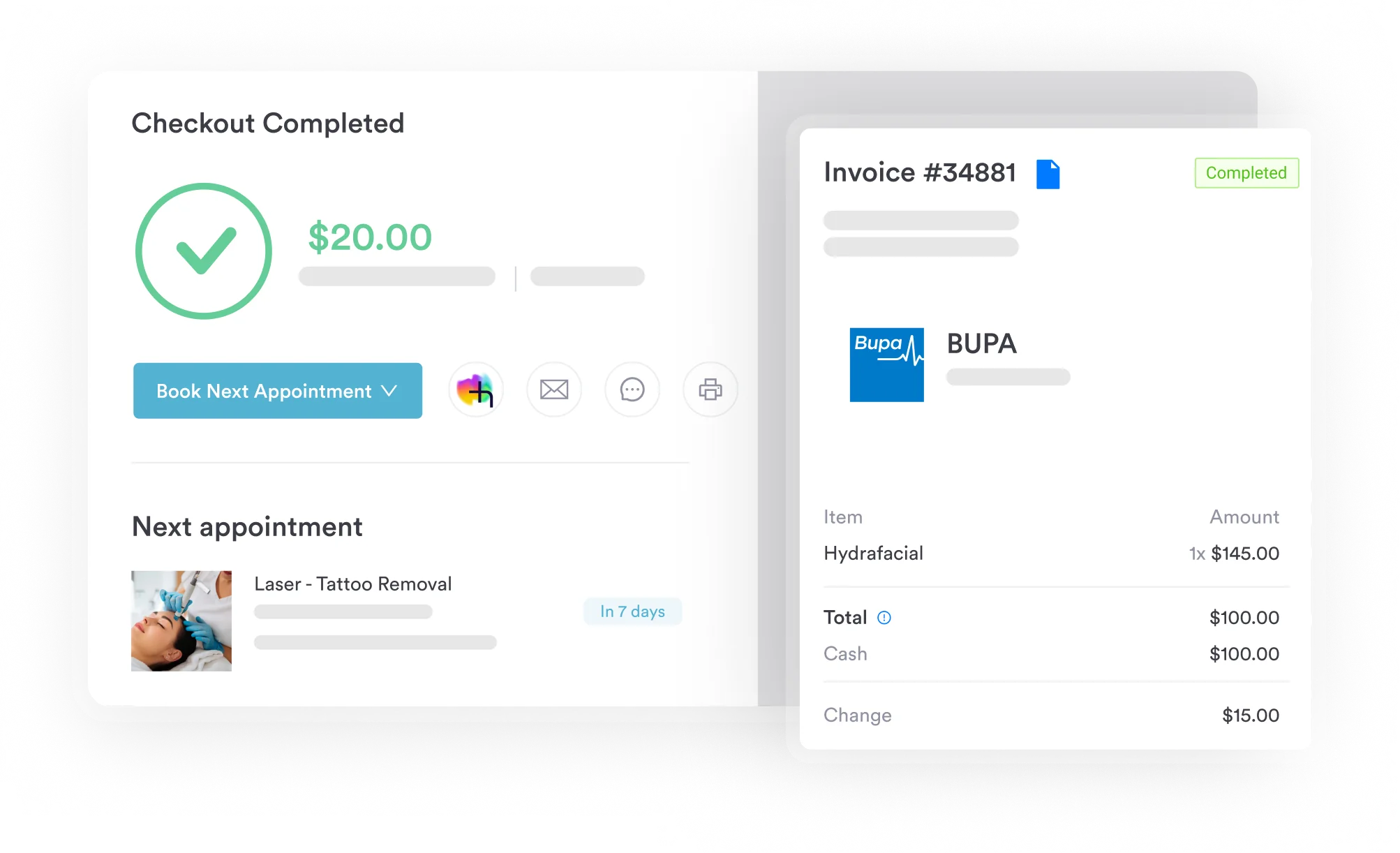
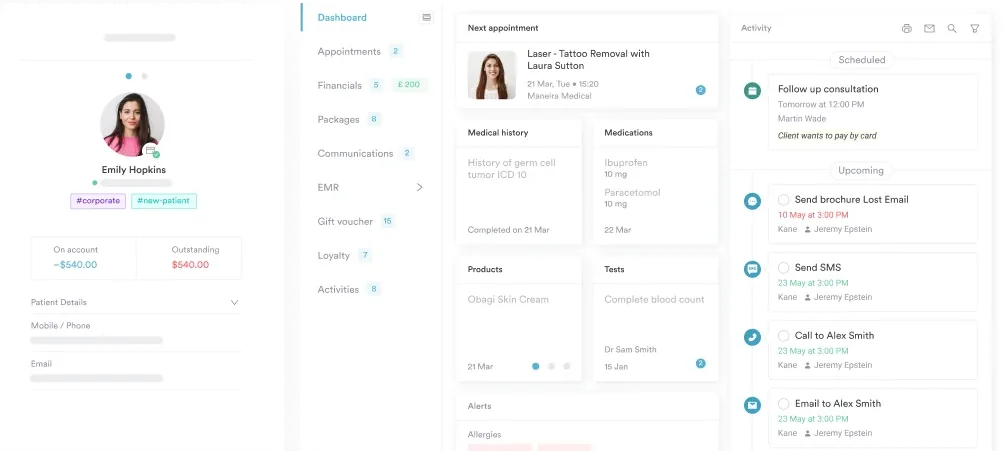
The client record holds the full encounter history in one place. Before assigning D, a coder can see when active treatment ended and who ended it. That is the evidence the character rests on.
Practices running more than one system can use EHR integration to move diagnosis data between them without duplicate entry. That also leaves the audit trail a payer asks for when it requests records.

Pabau links the diagnosis in the clinical note to the claim, so injury and external cause codes stay matched. Coders see the full encounter history before choosing a 7th character.

W31.83XD rewards one habit above all others. Read the machine and its state in the note before you reach for a code. Parked or under repair keeps you in W31.83, and anything in transport belongs to the V chapter.
The trade-off is worth naming. External cause codes rarely move what a claim pays, so they are easy to rush. They still decide whether a workers’ compensation payer accepts the record without asking for documentation.
Get the mechanism into the note once, and the 7th character can simply follow the injury code for the rest of the episode. Book a demo to see how Pabau keeps injury and external cause codes aligned from the first visit through discharge.

Need another external cause code with a D character? W49.09XD shows the same subsequent-encounter rule working in a different W subcategory.
Wondering what happens when the vehicle was in transport? V79.49XS walks through a transport accident code and its sequela character.
Looking for the injury code that leads the claim? S61.441D covers a puncture wound with a foreign body at the follow-up visit.
Coding a late effect months after the injury? S62.032S explains how the sequela character changes the sequencing.
Fracture not healing on schedule? S62.360G shows how a delayed-healing character affects the follow-up claim.
No. There is no national requirement for external cause code reporting. The obligation comes from a state mandate or a specific payer policy. Without one, reporting stays voluntary, and CMS encourages it because the data supports injury research.
Assign as many as you need to fully explain the cause. If the claim format limits the field, report the code most related to the principal diagnosis. Place, activity, and status codes are sequenced after the causal codes.
Y92.61 covers a building under construction. Assign it once, at the initial encounter, after the external cause code. Y92 takes no 7th character, so it does not travel with the injury through later visits.
W31.82 covers other commercial machinery, which is a catch-all for equipment used in business settings. W31.83 is narrower. It applies only to a special construction vehicle that was stationary or under repair when contact happened.
Rarely on its own. External cause codes describe the circumstance, not the condition treated, so they do not drive the payment. They do support medical necessity, liability decisions, and coordination of benefits on work injuries.




