



HCPCS code E0198: Water pressure pad billing guide
HCPCS code E0198 is a water pad for a standard mattress HCPCS code E0198 is the ...

Last Updated: Oct 13, 2026

CPT 19120 covers open excision of one or more breast lesions in a single operative session, without a separate unit per lesion.
Code selection between 19120, 19301, and 19125 hinges on surgical intent and whether a localization marker was placed preoperatively.
The 2026 Medicare non-facility rate for 19120 is higher than the facility rate, reflecting additional practice expense RVUs outside a hospital setting.
Practice management software like Pabau validates membership and authorization details in the background, then tracks each claim on a live status dashboard.
CPT Code 19120 is the procedure code for open excision of a breast lesion.
It covers cysts, fibroadenomas, benign or malignant tumors, duct lesions, nipple or areolar lesions, and aberrant breast tissue. The American Medical Association’s CPT code set defines it for one or more lesions in a single operative session.
Coders miscode 19120 more often than most breast surgery codes. The usual confusion is with CPT 19301, a partial mastectomy, and CPT 19125, an excision after preoperative marker placement. Each carries different documentation, different reimbursement, and different payer scrutiny.
This guide covers the part of the medical billing process specific to breast excision. That means applicable modifiers, ICD-10 linkage, the 2026 Medicare fee schedule, and the documentation elements that prevent denials.
CPT 19120 describes open excision of a breast lesion in a male or female patient, for one or more lesions. The AMA descriptor names cysts, fibroadenomas, benign or malignant tumors, aberrant breast tissue, duct lesions, and nipple or areolar lesions. It excludes 19300, which is mastectomy for gynecomastia.
That closing phrase, “one or more lesions”, is the part coders get wrong. You do not bill 19120 twice because two lesions came out in one operative session. It is one unit for the encounter.
The code sits in the Surgery section, under the Breast subsection of the CPT code ranges (19000-19499). Its parenthetical notes exclude CPT 19300 and CPT 19125/19126, which cover excision after preoperative localization. Those exclusions do most of the work in code selection.
CPT 19120 applies when a surgeon performs an open excision of a breast lesion without a primary intent to achieve clear surgical margins. That distinction separates it from CPT 19301. It fits three situations:
The operative report must identify the tissue type removed, the number of lesions excised, and the surgical approach. A report that says only “breast mass excised” gives a payer reason to query or deny the claim.
CPT 19301 describes a partial mastectomy, commonly called a lumpectomy. The surgical goal there is removing the lesion with the intent of achieving clear or negative margins. CPT 19120 is an excision where margin status is not the primary objective, and the distinction rests almost entirely on operative documentation.
Upcoding 19120 to 19301 is a known OIG audit trigger. If the report documents no margin assessment, no re-excision planning, and no intent to reach clear margins, 19120 is the correct code. Payer requirements still vary, so check the current Local Coverage Determinations (LCDs) for your MAC jurisdiction before submitting.
CPT 19125 applies when a surgeon excises a breast lesion that was preoperatively localized with a radiological marker. That marker is typically a wire, seed, or clip placed under imaging guidance before the operation. If one was placed, 19120 is excluded and 19125 is the correct code for the first lesion. Each additional localized lesion in the same session adds CPT 19126.
The documentation trigger is straightforward. Was an imaging-guided marker placed before the patient entered the operating room? If yes, use 19125 and 19126 rather than 19120. Billing 19120 when the operative report documents preoperative localization is a compliance exposure.
Both questions that separate these three codes are answered by the operative note. Work through them in order before you pick a code.
Tap what the operative note says
Which breast excision code the documentation selects
Code selection and documentation triggers as set out in the AMA CPT descriptor and the parenthetical notes for 19120, summarized in this article.
Modifier selection for 19120 depends on laterality, bilateral procedures, and whether services were distinct or separately identifiable. Most payers require a modifier on any breast procedure to prevent an automatic denial under the bilateral or laterality rules.
Every 19120 claim needs a supporting ICD-10-CM diagnosis code that justifies medical necessity. Payers cross-check the procedure and diagnosis pair automatically, and a mismatch is one of the most common denial triggers. Validate the combination against the ICD-10-CM code set before you submit.
Always specify laterality in the ICD-10-CM code on a 19120 claim. Unspecified laterality codes such as N60.09 are acceptable when the finding is genuinely bilateral or unspecified. Using them routinely on single-breast excisions triggers edits with many commercial payers. Match the ICD-10 laterality to the modifier laterality on every line.
The 2026 Medicare Physician Fee Schedule (MPFS) pays 19120 at different rates depending on where the procedure happens. The non-facility rate (physician office, POS 11) is higher than the facility rate (hospital outpatient or ASC, POS 22 or 24). In a non-facility setting the physician absorbs practice expense costs that a facility would otherwise cover.
For 2026 figures, verify current dollar amounts with the FastRVU 2026 RVU lookup tool, which reflects the current CMS MPFS data file. Geographic adjustment factors apply. A practice in a high-cost metropolitan area is paid more than a rural one billing the same code.
Private payer rates for 19120 vary by contract and are usually negotiated as a percentage of the Medicare rate. Do not assume your contracted rate matches the Medicare fee schedule. Verify amounts in each payer’s provider portal. A regular fee schedule audit across contracted payers catches underpayments before they compound.
The operative report is the primary audit defense for 19120. A payer pulling the claim for review checks the note against the code descriptor. Missing elements lead to claim adjustments, recoupment demands, or a prepayment review.
CPT 19120 appears consistently on payer prepayment review lists. The code sits next to higher-paying breast surgery codes, which is what draws the scrutiny. Catch these six errors before the claim goes out.
CPT 19120 carries a 90-day global surgery period, shown as indicator 090 in the CMS MPFS data. Pre-operative visits within one day of surgery, the procedure itself, and 90 days of related post-operative care are bundled into the payment. Billing a related E&M visit inside that window without the right modifier is the most frequent recoupment trigger in breast surgery audits.
Modifier 24 covers an unrelated E&M service during the global period. A patient’s diabetes management appointment is not part of the breast surgery global. Modifier 79 covers an unrelated procedure performed during the same window.
Modifier 78 applies to a return to the operating room for a related complication. Modifier 58 marks a staged procedure, and it requires documentation that the second procedure was planned or therapeutic.
Run a quarterly internal audit on your 19120 claim volume. Pull every claim billed as 19301 in the same period and compare the documentation. If the ratio of 19301 to 19120 looks unexpectedly high, your coders may be following surgeon habit rather than operative report language. A single-quarter correction prevents a payer-initiated prepayment review from turning into a full-year audit.
A surgeon documents a fibroadenoma excision. A day later a biller reads an ambiguous report and codes it as 19301. That handoff between the operative note and the claim is where 19120 revenue quietly goes missing.
Pabau bundles claims software for surgeons into the same record that holds the operative note. Membership numbers and authorization codes are validated in the background before submission. A detail the front desk mistyped gets caught before a payer rejects the claim.
Once a claim is out, a live status dashboard shows where each one sits. A biller can see which 19120 submissions are open, which have been paid, and which need resubmitting. That saves a daily round of portal checks across every payer the practice bills.
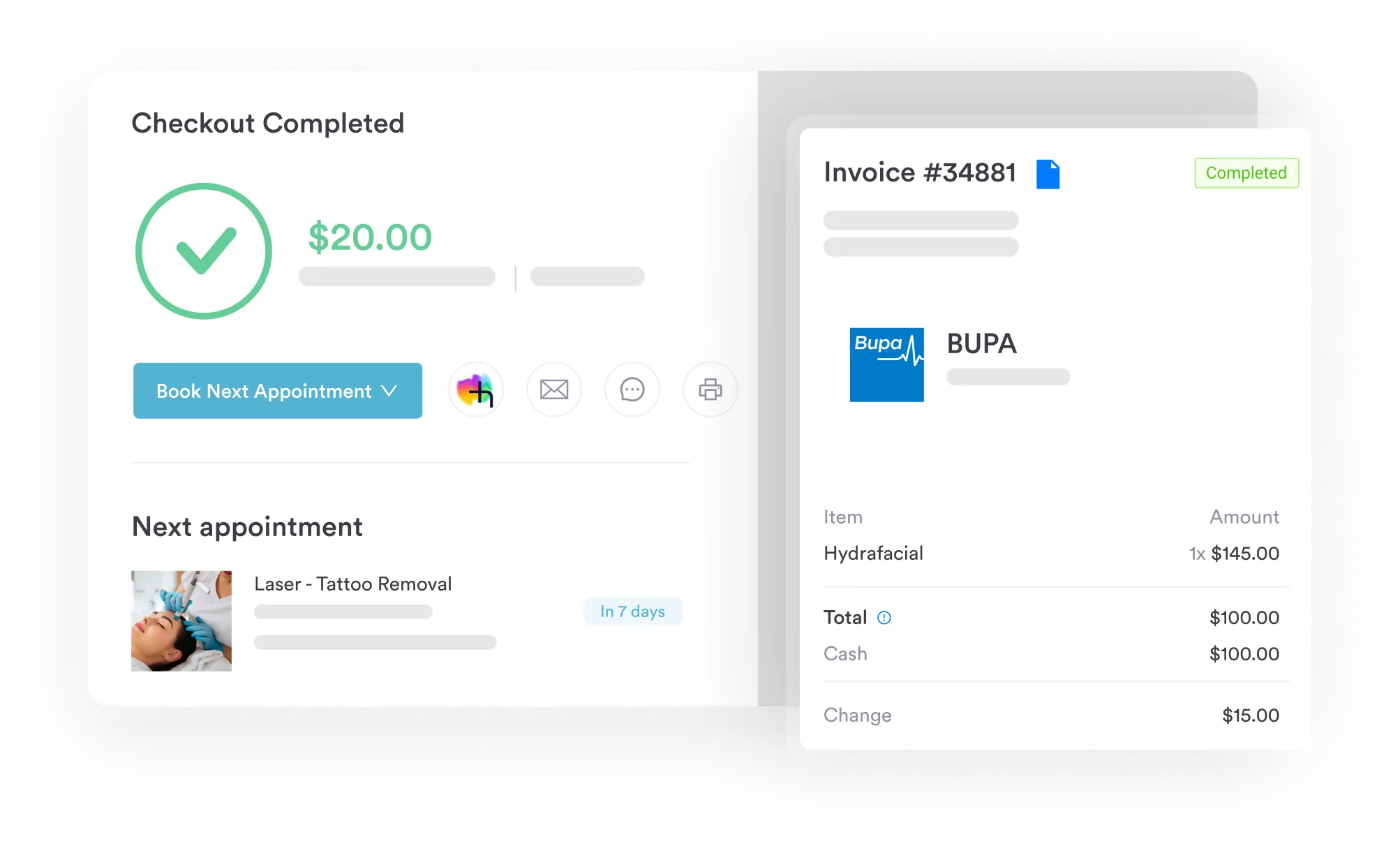
For a practice billing 19120 regularly, that means fewer claims sitting unpaid because nobody knew they had stalled. It also means the coder and the biller are reading the same record rather than two separate systems.

Pabau validates claim details in the background and submits through Claim.MD to thousands of US payers. A live status dashboard shows where every breast surgery claim sits.

CPT Code 19120 is the correct code for open breast lesion excision without margin intent or a localization marker. The three costliest mistakes are upcoding to 19301, missing the upgrade to 19125, and billing multiple units for one session.
Every one of those comes down to what the operative report says, which means the fix sits with the surgeon rather than the coder. Agree on the documentation language before the next case, and the coding follows on its own.
The trade-off worth remembering is that a clean 19120 pays less than a 19301, and survives the audit that a wrong 19301 will not. Book a demo to see how Pabau tracks breast surgery claims from the operative note to the remittance.

Need to understand how claims flow from documentation to payment? Claim.MD clearinghouse overview explains how electronic claim submission reduces manual errors and speeds reimbursement.
Dealing with denials on breast surgery claims? Denial codes in medical billing breaks down the most common CARC and RARC codes that follow a rejected 19120 claim.
Want a clean claim checklist for surgical procedures? Clean claim submission guide covers the elements every surgical claim needs before it reaches a payer.
CPT Code 19120 is the surgical procedure code for open excision of a breast lesion. It covers cysts, fibroadenomas, benign or malignant tumors, duct lesions, nipple or areolar lesions, and aberrant breast tissue. One unit covers one or more lesions removed in a single operative session.
CPT 19301 (partial mastectomy) requires documented intent to achieve clear surgical margins. CPT 19120 is an excision where margin status is not the primary surgical objective. The operative report’s language drives the code selection. Margin documentation points to 19301, and excision-only language points to 19120.
Yes, but only one unit of 19120 is billed regardless of how many lesions are excised. The AMA descriptor explicitly states “one or more lesions.” Billing multiple units of 19120 for separate lesions in a single session triggers automated claim edits.
Commonly used modifiers include LT (left side), RT (right side), 50 (bilateral procedure), 59 (distinct procedural service), 22 (increased complexity), and 51 (multiple procedures). Payer-specific bilateral billing rules vary. Some payers require modifier 50, while others want separate line items with LT and RT. Verify with each payer before submitting.
The 2026 Medicare rate for CPT 19120 varies by facility setting and geographic region. Non-facility rates (physician office, POS 11) are higher than facility rates (hospital or ASC). Verify current dollar amounts using the CMS Physician Fee Schedule lookup or the FastRVU 2026 RVU tool. Rates are updated annually and vary by location.
No. If a preoperative radiological marker was placed, the correct code is CPT 19125 (first lesion) plus 19126 (each additional lesion), not 19120. The AMA CPT parenthetical notes for 19120 explicitly exclude procedures that involve preoperative localization marker placement.



