Fertility clinic marketing: Strategies that attract & convert patients
Fertility clinic marketing is how a fertility practice attracts, educates, and c...

Last Updated: Oct 14, 2026
Weight loss clinic marketing is how a medically supervised weight loss practice attracts, converts and keeps patients. It has to work within HIPAA, FTC and FDA rules, which shape every channel from ad copy to email subject lines. The mix that works best is local SEO, paid search with compliant ad copy, educational social content and automated follow-up.
Demand isn’t the hard part. According to the CDC, more than 40% of US adults live with obesity. The hard part is turning those searches into booked consultations without breaking an advertising rule. This guide covers each channel in turn, plus the weight loss clinic software that automates patient follow-up.

Weight loss clinic marketing runs under HIPAA, FTC and FDA rules, so every channel needs a compliance check before launch.
Local SEO and an optimized Google Business Profile are the highest-ROI organic channels for most weight loss practices.
GLP-1 demand has split patients into drug-seeking and supervised-program segments, and each segment needs its own messaging.
Tracking pixels on booking pages or patient logins still carry HIPAA risk after the 2024 court ruling on the HHS bulletin.
Pabau, the practice management platform we build, triggers reminders, recall messages and review requests from visit data inside one system.
Weight loss clinic marketing is its own discipline because it sits where clinical trust, regulated treatments and personal patient psychology meet. A prospect searching for “medical weight loss near me” carries far more hesitation than someone booking a dental cleaning.
They may have tried and failed before, they may be managing stigma, and they are deciding whether to trust your practice with a vulnerable goal.
Three factors set it apart from general clinic marketing:
Understanding these layers upfront prevents wasted ad spend and compliance risk down the line.
A sustainable weight loss clinic marketing strategy starts with planning before any channel spend. Practices that skip this step run disconnected campaigns that generate impressions but not booked consultations.
Your ideal patient profile drives every downstream decision. A practice running a GLP-1 injection program targets a different patient than one focused on lifestyle coaching for metabolic syndrome. Ask: What is their age range, insurance status and primary motivation (drug-assisted weight loss versus behavioral change), and how far will they travel?
The GLP-1 surge has split the market into two segments that need separate messaging:
Running the same ad copy at both segments wastes budget. Once you know which segment (or both) you serve, set channel goals and a monthly marketing budget as a percentage of projected patient lifetime value.
Lifetime value depends on your clinic revenue streams, so map them before you fix the budget. Then decide which metrics matter. For most practices, those are cost per booked consultation, show rate and 90-day patient retention.
Organic search is the highest long-term ROI channel for most weight loss practices. A patient who finds you through Google and calls is already more qualified than one who clicked a banner ad.
Local SEO decides whether your practice appears in the map pack when someone searches “weight loss clinic near me.” Google Business Profile (GBP) is the main lever. Complete every field, starting with the business category. Use “Weight loss service” or “Medical clinic,” then add service areas, a keyword-rich description and photos of your facility and clinical team.
Four GBP optimization steps that move the needle fastest:
Beyond GBP, build service pages on your website for each offering (“medical weight loss consultation,” “GLP-1 program,” “metabolic testing”) with location-specific content. These pages capture long-tail searches that map-pack results miss.
Paid search delivers immediate visibility where organic SEO takes months. Weight loss clinic Google Ads campaigns also carry platform restrictions you need to plan around before launch.
Key rules before launching:
For campaign structure, run three separate campaigns. One covers branded searches for your practice name, one targets GLP-1 and semaglutide intent keywords, and one targets “medical weight loss [city]” terms. Each campaign needs a dedicated landing page with a single call to action: Book a consultation. Send ad traffic to your booking page, not your homepage.
Social media marketing for weight loss clinics works differently from other healthcare verticals. Transformation content, such as before-and-after visuals and patient journeys, is both the most engaging format and the most regulated.
Before-and-after content drives the highest engagement in the weight loss category. Used correctly, it builds trust. Used incorrectly, it attracts FTC enforcement.
Compliant before-and-after requirements:
The most effective social strategy for weight loss practices mixes three formats. Use patient stories (with consent), educational answers to common program questions and clinician-led video on the medical rationale. Educational content builds authority, and it carries fewer FTC and FDA risks than outcome-led posts, as long as it stays accurate.
GLP-1 clinic marketing needs its own strategic layer. The patient searching “semaglutide clinic near me” has a different mindset from one searching “medical weight loss program.” The first already knows the treatment they want. Your job is to show supervised access, clinical expertise and safe monitoring protocols.
Demand also varies by region, and GLP-1 usage by state shows where patients are already searching and paying. Use it to decide where local campaigns deserve the most budget.
What sets a winning GLP-1 marketing approach apart:
Build a dedicated landing page for your GLP-1 or semaglutide program that explains your monitoring protocol, qualification criteria and what the supervised experience includes. This page satisfies patient research intent and converts better than a generic weight loss service page, without naming a prescription drug in ad headlines.
Weight loss clinic email marketing works best when it follows the patient journey rather than broadcasting promotional offers. A patient three weeks into a GLP-1 program needs a progress check-in, not a discount email. Timing that well across hundreds of patients takes automation.
Generic CRM tools need manual exports before they can trigger patient messaging. Practice management software with built-in messaging can trigger messages from clinical events instead. Those events include the last visit date, a treatment milestone and the program week. That link between visit data and outreach is where marketing keeps paying off after the first booking.
Pabau’s automated patient messaging handles four workflows that directly support weight loss clinic marketing:
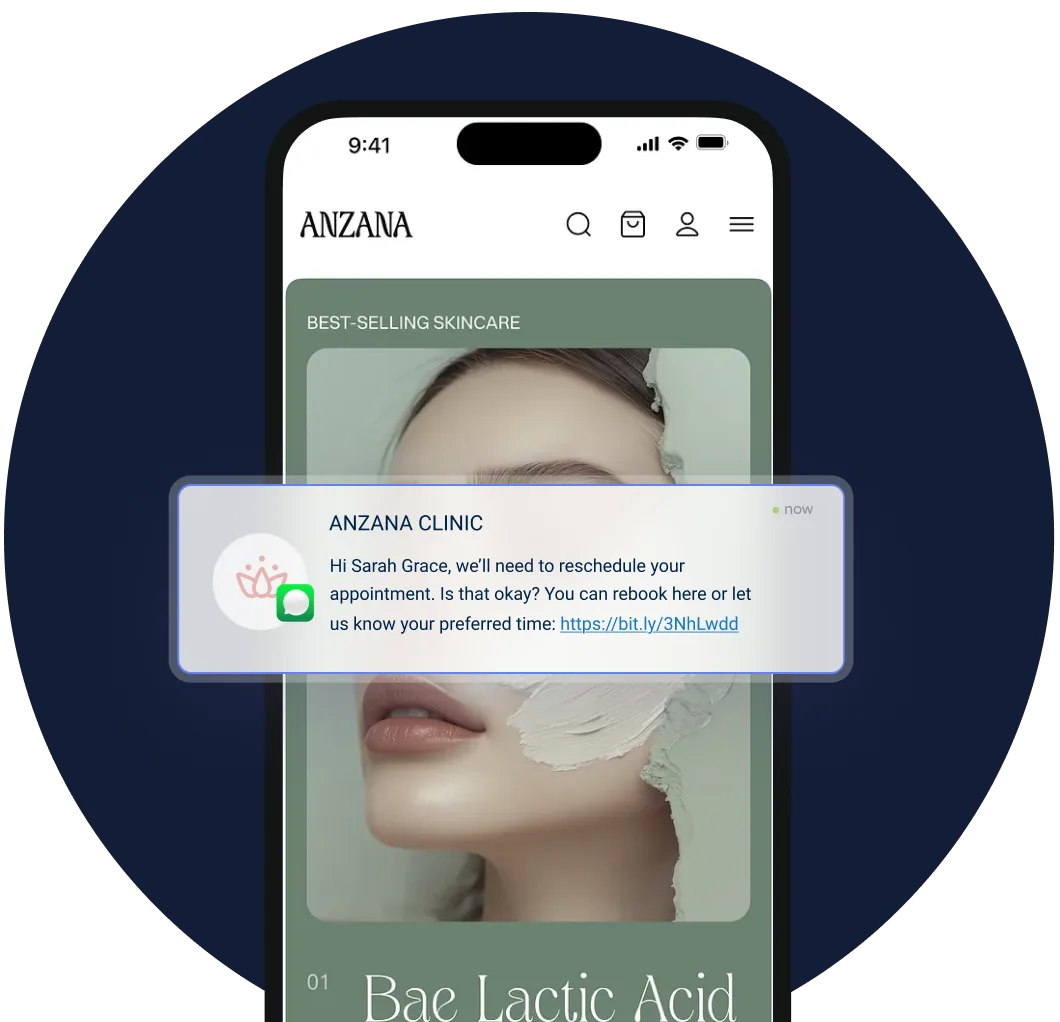
All patient email marketing must comply with HIPAA. Use only HIPAA-compliant messaging platforms with a Business Associate Agreement (BAA) in place. Keep specific health information (diagnosis, weight data) out of email subject lines, which are visible before opening.
Online reviews are the main trust signal for prospective weight loss patients. A practice with 4.8 stars and 80 recent reviews often outperforms a competitor with stronger clinical credentials but few reviews. Review volume and recency both factor into Google’s local ranking algorithm.
Review generation strategy that works for weight loss practices:
Referral programs extend the review strategy into active word-of-mouth. A structured patient referral scheme can offer a credit toward the next service for each successful referral. Check the incentive with your healthcare attorney first, because state anti-kickback rules on referral rewards vary.
Physician referral partnerships with primary care providers and endocrinologists are a separate, high-value channel. They need a formal relationship-building approach rather than an incentive scheme.
HIPAA-compliant marketing for weight loss clinics starts with the tracking tools on your website. The HHS Office for Civil Rights bulletin on tracking technologies was issued in December 2022 and revised in 2024. In June 2024, a federal court vacated its position on tracking visitors to public, unauthenticated pages.
Pixels such as Meta Pixel or Google Analytics still carry risk elsewhere. On authenticated pages or booking portals that capture patient identifiers, they can expose protected health information (PHI) without a Business Associate Agreement.
The four areas most likely to cause compliance violations in weight loss marketing:
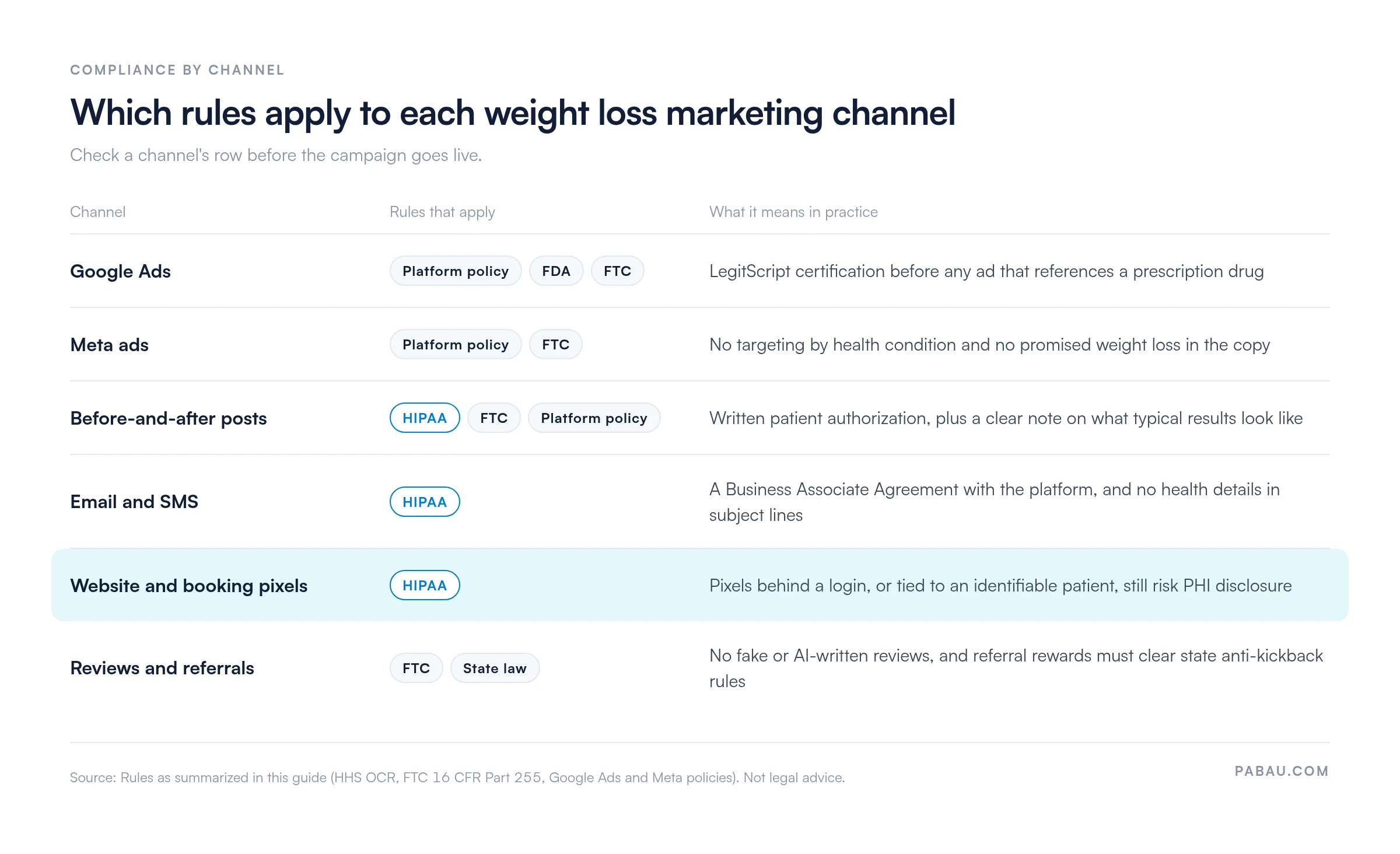
Each channel answers to a different mix of these rules, so check a channel’s row below before its campaign goes live.
The most expensive mistakes in weight loss clinic marketing share one root. They treat patient acquisition as a single event rather than a managed journey.
Mistakes that drain budget fastest:
Many weight loss practices generate leads through ads and SEO, then lose patients between the lead and the second appointment. Outreach in that stretch is manual, so it happens only when the front desk has time. Pabau connects clinical visit data to automated outreach inside one platform, so follow-up goes out on schedule.
Here is how that maps to the strategies in this guide:
Every plan includes the core marketing, messaging and reporting tools. SMS runs on usage-based credits, and current plans and credit costs are listed on Pabau’s pricing page.

Pabau triggers recall messages, review requests and appointment reminders from visit data, so patients hear from you at each step of their program.

Clinical care is rarely what holds a weight loss practice back. Patients drift away between appointments when follow-up depends on someone remembering it. Start with the channel that already brings patients in, usually local search, and fix the follow-up behind it before you add ad spend.
Keep compliance in view as you grow. Every new channel adds a rule to check, and one booking-page pixel or outcome promise can cost more than the campaign earns.
Book a demo to see how Pabau keeps program follow-up on schedule, so fewer patients drop out between their first and second visits.

Still setting up your program? How to start a weight loss clinic lays out the launch steps in order.
Choosing the system behind your marketing? Top 7 weight loss clinic software in the US compares the leading platforms.
Want intake data you can segment by? New patient weight loss intake form template gives you a ready-made form for the first visit.
Running a weight management practice in the UK? Weight management clinic business in the UK covers running one under UK rules.
Weight loss clinic marketing is the set of strategies a medically supervised weight loss practice uses to attract, convert and keep patients. It works within the rules set by HIPAA, the FTC and, for GLP-1 programs, the FDA. It differs from general healthcare marketing in its clinical trust requirements and its reliance on patient psychology around a stigmatized health goal.
The fastest route is a stronger Google Business Profile, Google Ads on “medical weight loss [city]” terms, and automated follow-up after each consultation. That follow-up prompts prospects who inquired but didn’t book. Many patients drop off between first contact and the second appointment, so retention outreach matters as much as new patient acquisition.
Yes. Marketing a GLP-1 program carries specific restrictions: Google Ads requires LegitScript certification to advertise prescription medications, and Meta prohibits health-condition-based targeting. FDA rules require truthful, balanced prescription-drug advertising and restrict unapproved or off-label claims. In ad copy, market “medically supervised weight loss” and “GLP-1 program monitoring” rather than drug names. Educational blog content can then capture drug-specific searches.
Local SEO and Google Business Profile optimization deliver the highest long-term ROI. Google Ads on “medical weight loss [city]” terms provide immediate volume. Instagram and Facebook suit educational content and patient journey stories. Email and SMS automation drives retention and re-engagement. Most practices grow fastest by mastering two channels well rather than spreading budget thinly across all four.
Patient messaging software automates the outreach that keeps patients engaged between appointments: Post-consultation follow-ups, program milestone messages, re-engagement campaigns and review requests after positive outcomes. When clinical events in the practice management system trigger the messages, the timing is accurate. The outreach also stays consistent, however busy the front desk is.