Cervix length during pregnancy chart
A cervix length during pregnancy chart records cervical length in millimeters ag...

Last Updated: Oct 14, 2026
A vegan based diet plan is a structured dietary plan that builds every meal around plant foods and excludes meat, fish, dairy, eggs, and honey. This free template gives dietitians and other health professionals a ready-made structure for recording intake, portions, adherence barriers, and substitutions.
Inside you get a seven-day sample menu, a food list grouped by category, and a nutrient checklist. Vitamin B12 is the one nutrient that needs a supplement by default, so the review prompts start there. Records built from scratch vary from one patient to the next, and a shared form keeps them comparable.
The PDF has a seven-day meal grid, a plant-based food list by category, a six-nutrient monitoring checklist, and space for adherence barriers and substitutions. Print it or save it to the patient record.
Download template
A vegan based diet plan excludes all animal products and centers meals on plant foods.
Well-planned vegan diets can meet nutritional needs, but B12 supplementation is strongly recommended.
Track iron, calcium, omega-3, vitamin D, and zinc alongside intake and portion detail.
Pabau stores the completed plan on the patient’s record, ready for the next review.
A vegan based diet plan is a written nutrition framework that organizes a patient’s meals, food choices, and nutrient targets around plant foods. It sits inside the wider plant-based category, which also covers vegetarian and flexitarian patterns.
The difference matters at review. A vegetarian diet plan still allows dairy and eggs, so calcium and B12 are easier to meet from food alone. A vegan plan removes both, which is why the monitoring checklist below runs longer.
Plans of this kind usually build protein from legumes, tofu, and tempeh, alongside whole grains, fruits, vegetables, and healthy fats. Fortified soy or oat milk replaces dairy.
Work through the form in order. Each step maps to a block on the PDF, so the finished plan reads the same way for every patient.
Step one is the step practitioners rush. Three days of a food diary gives a steadier baseline than recall at the appointment, and it surfaces the snacks patients forget to mention.
A clear food list keeps the plan practical for patients and easy to check at review. The table below groups common vegan choices by category.
Fiber-rich choices such as oats, potatoes with skin, and whole wheat bread support the fiber intake the plan tracks. Patients who want a longer runway can follow the 30-day plant-based diet plan alongside this form. It keeps the same food categories across four weeks.
Plant-based diets are associated with lower rates of heart disease and type 2 diabetes in peer-reviewed research. These findings are associations, and overall healthy lifestyle habits confound them.
A vegan diet can support weight loss, though caloric balance still governs the outcome. Document expected ranges rather than promised results.
A vegan plan excludes all animal-derived foods. Record these exclusions explicitly so patients and staff share the same understanding.
Vitamin B12 cannot be reliably obtained from plant foods alone, so supplementation is strongly recommended for every vegan patient. The other five nutrients on the checklist split into two groups.
Vitamin D and omega-3 sit in the middle. Ask about a supplement at each review, because fortified foods rarely cover both. Iron, calcium, and zinc are usually achievable from food, so the job there is verifying intake rather than prescribing.
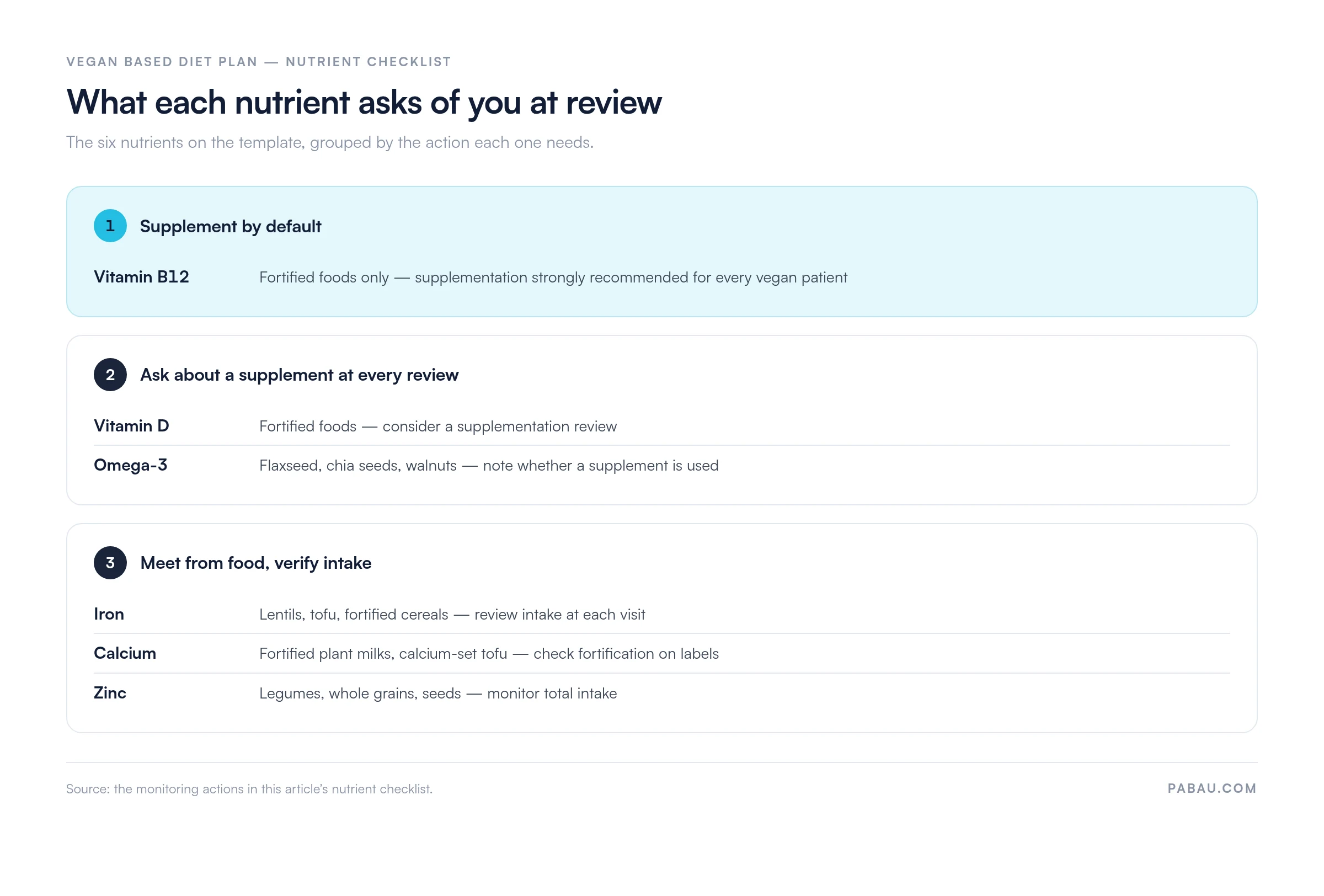
The table below gives the plant sources and the monitoring note the template asks you to record for each nutrient.
Pregnancy, childhood, and older age need additional clinical oversight, and plans for those groups should involve a registered dietitian. A patient managing diabetes alongside a vegan diet also needs carbohydrate distribution built in. The vegan diabetes meal plan adds that to the same structure.
A seven-day sample menu shows how the structure works in practice. Each day lists a breakfast, lunch, and dinner, which patients can swap within the same food categories.
A grocery list turns the plan into a weekly shop. Group items by category so patients can work through the store without backtracking.
Hand the list over with the menu. Practices that already issue a healthy grocery list can swap the animal-product rows for the five categories above.
Batch cooking makes a plant-based plan easier to follow during a busy week. Practitioners can recommend the same approach to patients who struggle with time.
Weight outcomes depend on caloric balance, and a plant-based structure alone does not guarantee loss. Record portion detail and satiety notes so the plan can be adjusted at review.
High-fiber, whole food choices can help patients feel fuller for longer. Set realistic ranges with the patient and review them over several weeks.
Where weight is the primary goal, the vegan weight loss plan sets calorie targets against the same seven-day grid.
Most practices save a completed diet plan as a PDF on a shared drive, then retype the highlights into the patient’s notes. The next clinician opens the record and finds a summary, while the plan itself stays in the drive.
Pabau, the practice management platform we build, stores the plan as a form on the patient’s record. Intake, portions, nutrient checks, and adherence barriers are fields on that form. You can filter for patients due a B12 review instead of opening files one by one.
Every subscription includes forms, charting, and reporting, so a practice running structured nutrition programs does not pay extra to track them. Teams that bill for those programs usually want weight loss clinic software rather than a shared drive and a reminder list.

Pabau turns the diet plan into a form on the patient’s file, with nutrient checks and adherence notes you can filter. Follow-ups get scheduled from the same screen.

Hand over the menu and the plan looks finished. The outcome turns on the detail underneath it. Portion sizes, the supplement already in use, and the weeks a patient ate out are what move at review.
So decide now where that detail will live. A PDF in a folder answers the question once. A structured record answers it at every appointment for the next two years.
Download the template, run it with your next three nutrition patients, and see which fields you keep reaching for. Book a demo to see how Pabau stores completed diet plans and nutrient checks on the patient record.

Need a baseline before the plan? Nutrition assessment form captures diet history, measurements, and biochemical markers in one pass.
Writing up the care plan itself? Nutrition care plan sets goals, interventions, and review dates against each nutrition diagnosis.
Want a shorter planning horizon? 7-Day nutrition plan gives you a one-week grid you can issue at the first appointment.
Patient keeping dairy and eggs? Vegetarian weight loss meal plan covers the same ground with a shorter nutrient checklist.
Stuck on what to cook each night? Weekly meal plan recipes turns seven dinners into a single grocery list.
A vegan based diet plan is a written nutrition framework built around plant foods that excludes meat, fish, dairy, eggs, and honey. It records intake, portions, and nutrient targets for review.
It can support weight loss, but caloric balance still governs outcomes. Plans should set realistic ranges rather than promised results.
A seven-day plan shows how the structure works, but it is a starting point. Longer reviews give a clearer picture of adherence and nutrient status.
Yes, supplementation is strongly recommended because vitamin B12 cannot be reliably obtained from plant foods alone. Confirm the plan with the patient’s own dietitian or physician.
Start with vitamin B12, then ask whether a vitamin D or omega-3 supplement is in use. Iron, calcium, and zinc are checked against intake rather than prescribed.