Pabau GO app

The new Pabau GO is heredownload on the App Store

Download on the App Store
Book a demo Book a demo
Metabolic Health

Healthy meal plan template for healthcare practitioners

Key takeaways

Key takeaways

A healthy meal plan sets out breakfast, lunch, dinner, and snacks for a week. The 2025-2030 Dietary Guidelines put protein, dairy, healthy fats, vegetables, and fruits first, with whole grains a smaller share.

The template covers seven days of meals, a grocery list by aisle, calorie guidance, and swaps for weight loss and heart health.

The same seven-day structure adapts to keto, vegetarian, dairy-free, Mediterranean, gestational diabetes, and older adult patients.

Document the plan in the patient record, share it through the portal, then book the review before the patient leaves.

That documented chain is also what supports nutrition counseling as a billable service, because advice and follow-up are both on file.

Download your free healthy meal plan template

Seven days of meals with breakfast, lunch, dinner, and snack slots, plus a grocery list grouped by aisle and calorie guidance. Swap sheets for weight loss, heart health, and special diets let you hand a patient a finished plan the same day.

Download template

Most patients leave a nutrition consultation with a printed sheet that never gets opened again. A handout only becomes a healthy eating menu plan the patient follows when someone documents it, shares it, and reviews it on a schedule.

This page gives you the template and the workflow around it. You get a seven-day structure, a grocery list, calorie guidance, and swaps for weight loss and heart health. It also covers gestational diabetes, older adult nutrition, and the DASH pattern for patients managing blood pressure.

The numbers on this page follow the 2025-2030 Dietary Guidelines. A patient who looks the graphic up today finds an inverted pyramid at RealFood.gov, not the old plate.

Paperless patient records keep every version of the plan tied to the patient file. The review then starts from what you wrote in the room.

What is a healthy meal plan?

A healthy meal plan is a structured guide that organizes meals across the day to meet one patient’s nutritional needs and health goals. It works from current federal food-group guidance rather than a fad diet, and it aims at habits the patient can sustain.

That federal guidance changed in January 2026. USDA and HHS published the Dietary Guidelines for Americans, 2025-2030, and the consumer graphic is now an inverted pyramid hosted at RealFood.gov.

The pyramid has two tiers. Protein foods, dairy, and healthy fats share the wide top tier with vegetables and fruits, side by side. Whole grains sit alone in the narrow point below.

Two numbers do most of the work in the template. Protein is set at 1.2 to 1.6 grams per kilogram of body weight a day, up from the old 0.8 gram baseline. Whole grains are held to two to four servings.

MyPlate has not disappeared. USDA still uses the branding on school-meal and Team Nutrition materials, so patients will keep seeing the plate. It is no longer the primary consumer model, so send patients to RealFood.gov instead.

The switch has one practical consequence in the consultation room. The old plate showed relative portions on a 9-inch dinner plate, while the pyramid only ranks the groups. Patients who used the plate as a portion cue now need written serving counts.

That is what this template supplies. The 2025-2030 pattern sets daily goals by calorie level, and the figures below cover the 2,000-calorie pattern most adult patients start from.

Food group Daily goal (2,000-calorie pattern) Serving size examples
Protein foods 1.2 to 1.6 g per kg of body weight 3 oz cooked meat, poultry, or seafood; 1 egg; 1/2 cup beans or lentils; 1 oz nuts
Dairy 3 servings 1 cup milk; 3/4 cup yogurt; 1 oz cheese
Healthy fats No fixed count, whole-food sources first Olive oil, avocado, nuts, seeds, full-fat dairy, eggs
Vegetables 3 servings 1 cup raw or cooked; 2 cups leafy greens
Fruits 2 servings 1 cup raw; 1/2 cup dried
Whole grains 2 to 4 servings 1/2 cup cooked oats, brown rice, barley, or quinoa; 1 slice bread

Scale those goals to the patient in front of you. Protein moves with body weight, while the produce and grain counts move with total calories.

Whatever the calorie level, an effective plan holds to the same principles:

  • Protein-forward: Every meal leads with a protein food, paired with healthy fats from whole foods
  • Produce-heavy: Three vegetable servings and two fruit servings a day, eaten close to their original form
  • Low in refined carbohydrates: Whole grains stay at two to four servings, and packaged snack foods drop out
  • Individualized: Built around the patient’s age, activity level, conditions, and taste
  • Sustainable: Aimed at habits that survive a bad week
  • Goal-oriented: Pointed at one outcome, such as weight loss, blood pressure, or glucose control

Meal planning also reduces food waste and lowers grocery costs, which answers two of the practical objections patients raise first. Protecting patient health data matters just as much once you write the plan down, because patients hand over sensitive dietary and medical detail.

How to personalize the template for each patient

Personalize it in five steps. You assess the patient, fill the meal slots, set the numbers, attach the grocery list, and share the plan through the portal.

  1. Download and read the structure first. The layout gives you seven days with dedicated breakfast, lunch, dinner, and snack slots. Mark the sample meals that suit your patient before you write anything.
  2. Assess goals and constraints. Ask about weight targets, diagnosed conditions, allergies, and food budget. Many patients cook for a household. A family healthy meal plan built around shared dinners sticks better than one that needs separate cooking.
  3. Fill in specific meals, not food categories. Write salmon with sweet potato rather than protein and a starch. Keep portions realistic and pick whole foods the patient already eats.
  4. Set calorie and protein targets. Adult calorie ranges usually fall between 1,600 and 2,400, depending on sex and activity. Put protein at 1.2 to 1.6 grams per kilogram of body weight. Then add any limit the condition demands, such as capped sodium for hypertension.
  5. Attach the grocery list and share it. Patient portals enable secure document sharing, so the plan sits on the patient’s phone in the grocery aisle. Save the same file to the care plan before they leave.

Practice management software like Pabau can collect dietary preferences, allergies, and household size on digital intake forms before the appointment starts. Step two then takes two minutes instead of half the consultation.
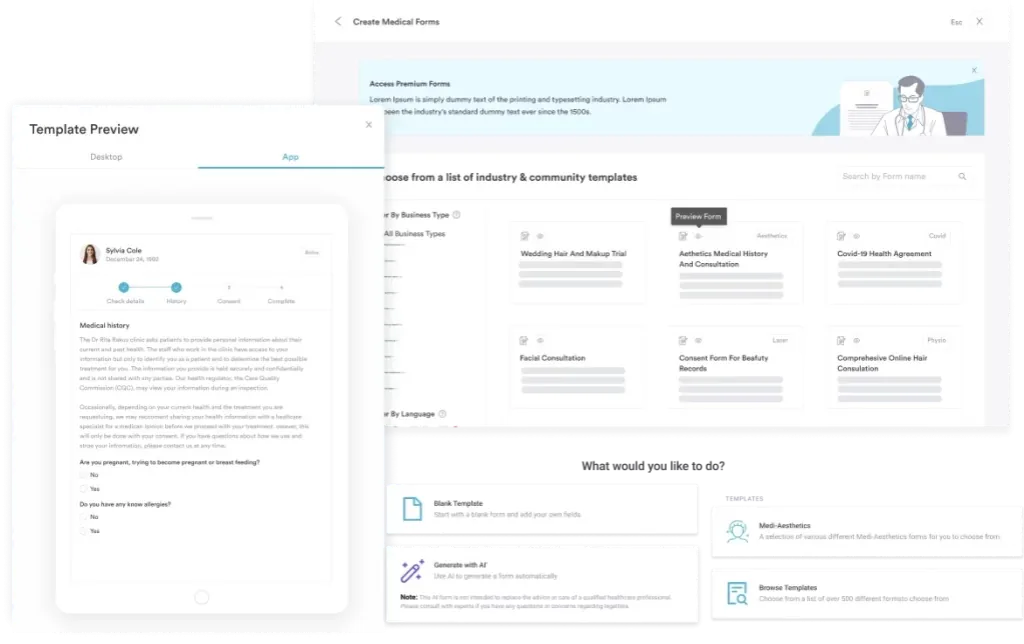
Pabau digital form builder with a patient-facing medical history form preview
Pabau’s digital forms collect allergies, dislikes, and household size before the visit, so you personalize the meal plan instead of interviewing.

7-day sample menu: What a balanced week looks like

Below is a sample week built on the template structure, with breakfast, lunch, dinner, and a snack for each of the seven days. Treat it as a bank of weekly meal plan ideas rather than a prescription, and swap in foods your patient already cooks.

Ask the patient to redo their food plan weekly, on the same day each week. Planning then becomes a routine rather than a one-off effort that fades by Thursday.

Day Breakfast Lunch Dinner Snack
Monday Oatmeal with berries and almonds Grilled chicken, brown rice, steamed broccoli Baked salmon with roasted sweet potato Greek yogurt with honey
Tuesday Scrambled eggs with whole wheat toast Turkey wrap with hummus and vegetables Lean ground turkey with quinoa and kale Apple with almond butter
Wednesday Greek yogurt parfait with granola Lentil soup with side salad Grilled tofu with stir-fried vegetables Carrot sticks with hummus
Thursday Smoothie: banana, spinach, protein powder Grilled chicken breast, wild rice, asparagus Baked cod with roasted root vegetables Almonds and dried cranberries
Friday Whole grain pancakes with berries Mediterranean chickpea salad Lean beef with sweet potato and green beans String cheese and whole grain crackers
Saturday Vegetable omelet with whole wheat toast Grilled chicken with falafel and tahini Baked salmon with barley pilaf Fresh fruit salad
Sunday Chia seed pudding with fruit Turkey meatballs with whole wheat pasta Herb-roasted chicken with roasted vegetables Mixed nuts and seeds

Customize the meals around patient preference, cultural foods, and what is in season. Variety across the week is what covers micronutrients, so avoid letting the same three dinners repeat.

Healthy meal plan for weight loss: Key adjustments

A healthy meal plan for weight loss keeps the same structure and changes the numbers. A deficit of roughly 500 calories a day supports about one pound of loss per week, the rate most guidance treats as sustainable.

  • Calorie target: A weight loss meal plan usually lands at 1,200 to 1,600 calories for women and 1,500 to 1,900 for men. Adjust for baseline metabolism and activity level
  • Protein target: Hold 1.2 to 1.6 grams per kilogram of body weight even in a deficit, which protects muscle and blunts hunger
  • Fiber and whole grains: Keep whole grains at two to four servings and cut refined carbohydrates first, since fiber slows the return of appetite
  • Portion control: The inverted pyramid carries no plate graphic, so work from the written serving counts in the template
  • Low calorie meals that still fill a plate: Build low calorie meals around volume, such as soups, salads with a protein, and vegetable-heavy stir-fries
  • Liquid calories: Cut sugary drinks, alcohol, and heavy condiments first, since patients rarely count them as eating

The link between meal planning and weight loss is mostly about removing decisions at the end of a long day. Improved patient engagement follows when you record weight milestones and adherence notes in the care plan.

Heart-healthy adjustments and the DASH eating plan

Three targets carry the heart-healthy version. Keep sodium under 2,300 mg, saturated fat under 6 percent of calories, and fiber at 25 to 30 grams a day. The American Heart Association guidelines set those targets. Adjust the template as follows.

  • DASH eating plan: This named pattern was developed to lower blood pressure. It fills each day with vegetables, fruit, whole grains, and low-fat dairy, and it holds back red meat and salt. It maps onto this template without a rewrite
  • Sodium limit: Under 2,300 mg daily, and ideally 1,500 mg. Processed foods and canned items with added salt are the usual culprits
  • Saturated fat: The AHA caps it at 5 to 6 percent of calories, roughly 11 g on a 2,000-calorie day
  • Fiber target: 25 to 30 g daily from whole grains, legumes, and vegetables
  • Omega-3 fats: Fatty fish such as salmon, mackerel, or sardines twice a week, with flaxseed and walnuts as plant sources
  • Potassium-rich foods: Bananas, sweet potatoes, and spinach support healthy blood pressure

Check kidney function before you load potassium. Patients with chronic kidney disease need the opposite, so a low potassium food list replaces that row for them.

Your practice’s personalized treatment plans should carry the heart-healthy version of the plan next to the medication and monitoring notes.

Weekly grocery list to shop the plan

This list matches the sample week above, grouped by aisle so patients are not zig-zagging across the store. Ask them to check the pantry against it before they leave the house.

Food group Items
Protein foods (1.2 to 1.6 g/kg daily) Chicken breast, ground turkey, salmon, cod, eggs, tofu
Dairy (3 servings) Plain yogurt, milk, and cheese with no added sugars, or fortified alternatives
Healthy fats Olive oil, butter, avocado, avocado oil, almonds, walnuts, chia and flax seeds, nut butter
Vegetables (3 servings) Spinach, broccoli, asparagus, kale, carrots, sweet potatoes, bell peppers, tomatoes, cucumbers
Fruits (2 servings) Bananas, apples, berries, oranges, grapes, lemons
Beans, peas, and lentils Lentils, chickpeas, black beans, kidney beans, canned or dried
Whole grains (2 to 4 servings) Rolled oats, brown rice, wild rice, barley, quinoa, whole grain bread and pasta
Pantry staples Herbs, spices, low-sodium broth, vinegar, honey used sparingly

Refined, packaged carbohydrates are missing on purpose. The 2025-2030 guidelines ask patients to drop crackers, white bread, and ready-to-eat breakfast products rather than portion them.

Print the list on the back of the meal plan. One sheet is harder to lose than two, and the patient can tick items off in the aisle.

Meal prep tips to make your plan stick

Time is the barrier that breaks most plans, so the meal prep ideas for weight loss below all cut a weeknight down to reheating. Batch cooking proteins and grains at the start of the week is the single change with the biggest payoff. Advise your patients to:

  • Pick a prep day: Sunday suits most people. Any day with one or two spare hours works
  • Cook proteins in bulk: Grill chicken, bake salmon, and brown ground turkey in one session, then portion into containers
  • Prepare grains ahead: Brown rice, quinoa, and barley keep four to five days in the fridge in separate containers
  • Chop vegetables early: Store cut raw vegetables in sealed containers with a paper towel to absorb moisture
  • Store visibly: Glass containers are microwave-safe and easy to see into. Label them with dates so nothing spoils unnoticed
  • Keep the freezer stocked: Batch-cook soups and stews and freeze them in single portions for the days that fall apart

Capturing patient feedback on which prep habits stuck tells you what to recommend to the next patient with the same schedule.

Adapting the template for special diets

Every adaptation below changes what fills the slots, never the seven-day structure. That is what lets one template serve a keto patient and a pregnant patient on the same day.

  • Keto, very low carb: Most keto diet meal plans replace grains with non-starchy vegetables. Fat rises to 75 to 80 percent of calories, and protein holds at 15 to 25 percent. Swap brown rice for zucchini noodles and oatmeal for eggs with avocado
  • Mediterranean: Patients often arrive with a 7 day Mediterranean diet meal plan printed off the internet, and it is usually close to this one. Keep it, switch the main cooking fat to olive oil, and add a second fish night
  • Vegetarian: Vegetarian meal plans replace animal protein with legumes, tofu, tempeh, nuts, seeds, and eggs. Pair complementary proteins across the day, such as rice with beans or hummus with whole wheat bread
  • Dairy-free: Coconut or almond yogurt for dairy yogurt, plant-based milk for cow’s milk, and nutritional yeast or dairy-free cheese in place of cheese
  • Diabetic-friendly: Favor low glycemic index foods, keep fiber high, hold carbohydrate portions steady, and line meals up with medication timing
  • Gestational diabetes: Spread carbohydrate out rather than cutting it, and keep the daily total at or above the 175 gram pregnancy minimum. Three meals plus two or three snacks works better than three large meals. Breakfast is usually the tightest slot, and glucose is checked one or two hours after eating
  • Older adults: Nutrient density matters more than volume, because appetite and portion size both shrink. Keep protein at the upper end of the 1.2 to 1.6 gram range, because muscle loss accelerates with age. Soften textures where chewing is hard, and put a drink beside every meal. A hydration handout helps, since thirst signals fade with age
  • Low-sodium for hypertension: Cut processed foods, season with herbs and spices instead of salt, and choose fresh produce over canned

Weight loss and wellness practices that keep these adaptations written down spend less time improvising. The patient hears a specific answer about their own condition instead of a general one.

In a metabolic health program, where the plan is revisited monthly, that written version is what the next visit starts from.

How Pabau turns a meal plan handout into a tracked care plan?

Pabau keeps the plan, the portal share, and the follow-up appointment on one patient record. Handing over a printout is the easy part. What turns nutritional planning into a service worth billing is the chain that comes after it.

You document the plan in the care record, share it through the portal, book the review, and log what changed. Each step is a field in the same file, so the review starts from the plan you wrote rather than from memory.
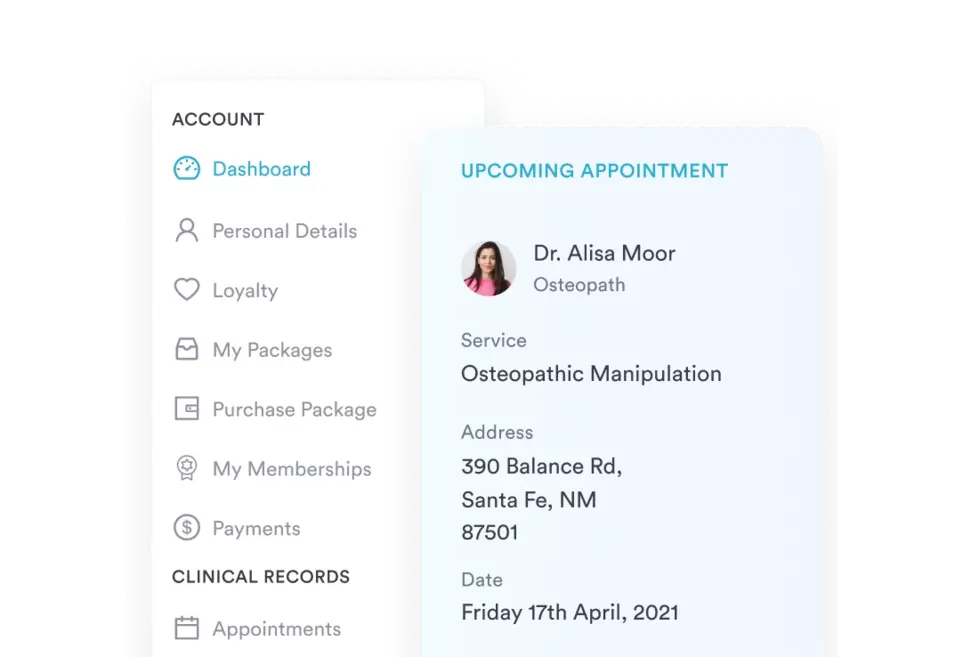
Pabau patient portal showing a patient's upcoming appointment and clinical records menu
Pabau’s patient portal keeps the meal plan and grocery list on the patient’s phone, so the sheet cannot be left in a coat pocket.

Six steps turn the handout into something you can audit and bill for.

  • Document it in the care plan: Note the plan version, the swaps you made, and the goal you agreed. A colleague picking up the follow-up then sees exactly what you saw
  • Share it through the portal: The patient portal holds the file. Patients can open it in the store or forward it to whoever cooks at home
  • Book the review before they leave: Two to four weeks suits most patients. Gestational diabetes needs a tighter loop, often weekly while glucose readings settle. Older adults do better with a gentler six-week check-in
  • Collect the detail up front: Digital intake forms capture allergies, conditions, and household size, so personalization starts from data rather than from recall
  • Automate the nudges: Practice automations send the prep-day reminder and the appointment prompt, so nobody at the front desk is chasing them by hand
  • Record the outcome: Weight, blood pressure, glucose, or a plain adherence note. Three data points across three visits show whether the plan is working

That trail is also what supports nutrition counseling as a billable service. The assessment, the written plan, the patient’s acknowledgment, and the review are all dated and attached to one record.

Share and track every meal plan in one record

Pabau keeps the meal plan, the portal share, and the follow-up appointment on one patient timeline. Your team stops rebuilding plans from scratch and starts reviewing the ones already on file.

Pabau clinic management dashboard

Conclusion

Diet moves weight, blood pressure, and glucose. That is why nutrition advice belongs in the patient record and not only in the conversation.

The template gives every clinician in your practice the same starting structure. What a patient walks out with no longer depends on who happened to be in the room that morning.

The trade-off worth remembering is simple. A plan nobody reviews is a plan nobody follows, so book the check-in at the same visit. Book a demo to see how Pabau keeps meal plans, portal shares, and follow-ups on one patient timeline.

Continue your research

Continue your research

Want to automate patient reminders? Automated workflows send scheduled meal prep and check-in messages, keeping patients accountable without manual effort.

Need a way to document nutrition consultations? Safer clinical notes set out a framework for recording nutrition counseling, goals, and adherence in the care plan.

Working up a metabolic or hormonal complaint? Endocrine review of systems walks through the symptom questions that decide whether diet alone explains the picture.

Is someone else doing the cooking at home? Caregiver care plan records who prepares meals and what they need to know before the plan leaves your room.

Running nutrition coaching as a paid program? Coaching contract sets the scope, fees, and review cadence before the first session starts.

Frequently asked questions

What is a healthy meal plan?

A healthy meal plan is a weekly guide that matches current federal food-group guidance to one patient’s goals. It sets breakfast, lunch, dinner, and snacks, and it flexes for weight loss, heart health, or diabetes.

Has MyPlate been replaced?

MyPlate is no longer the primary consumer model, though USDA still uses the branding on school-meal materials. The 2025-2030 Dietary Guidelines put an inverted pyramid at RealFood.gov in its place. Point patients there for current serving counts.

How do I build a personalized plan for a patient?

Start with their goal, conditions, allergies, and budget, then fill the template with meals they already eat. Set a calorie range, attach the grocery list, share it through the portal, and book the review.

How many calories should a patient’s daily plan include?

Most adults sit between 1,600 and 2,400 calories a day, depending on age, sex, and activity level. For weight loss, subtract 500 to 750 calories from that baseline for roughly one to one and a half pounds a week.

How much protein should a patient’s meal plan include?

The 2025-2030 Dietary Guidelines set protein at 1.2 to 1.6 grams per kilogram of body weight a day. That is roughly 84 to 112 grams for a 70 kg patient, up from the older 0.8 gram baseline. Spread it across every meal rather than loading dinner.

How does the DASH eating plan fit into a heart-healthy meal plan?

It slots straight into the template, since the pattern changes what fills each slot rather than the structure. This heart-healthy eating pattern was designed to lower blood pressure, so it loads each day with vegetables, fruit, whole grains, and low-fat dairy. Cap sodium at 2,300 mg a day, or 1,500 mg for patients who need a tighter target.

Can I adapt this template for special diets like keto or vegetarian?

Yes. Keto swaps grains for non-starchy vegetables and raises fat. Vegetarian swaps animal protein for legumes, tofu, and eggs. Dairy-free uses plant-based alternatives. The seven-day structure stays the same in every case.

How do I adapt a healthy meal plan for gestational diabetes?

Spread the carbohydrate out rather than cutting it, because the pregnancy minimum is 175 grams a day. Gestational diabetes meal planning works best across three meals and two or three snacks, with breakfast kept smallest. Check glucose one or two hours after eating and adjust the tightest meal first.

How do I adapt a 7 day meal plan for elderly patients?

Raise nutrient density and protein, then let the volume drop. Keep protein at the upper end of the 1.2 to 1.6 gram per kilogram range, because muscle loss accelerates with age. Soften textures where chewing or swallowing is hard, and put a drink with every meal.

How often should patients follow a meal plan?

Treat it as an ongoing guide rather than a fixed diet. Review it every two to four weeks, adjust what did not work, and keep what did. Habits that survive a bad week are the ones that last.
×