GLP-1 usage by state: Who’s taking, searching and paying in 2026
GLP-1 usage by state peaks in West Virginia, America’s GLP-1 capital, with...

Last Updated: Oct 16, 2026
A vegan keto meal plan asks a patient to hit ketogenic macros without a single animal product, which is harder than it looks. Fat comes from avocado, nuts, seeds and oils. Protein comes from seitan, tofu and tempeh, because the beans and lentils most plant-based eaters rely on carry too many carbs.
Sourcing is where these plans fall apart. A patient can eat well all week and still never reach ketosis. Below you get the macro split, the food lists, a seven-day plan with net carbs per meal, and a prep routine.
Seven populated days of plant-based keto meals, with net carbs shown for every meal. It also carries daily macro targets, a shopping list grouped by aisle, and a prep-day routine you can hand over.
Download template
A vegan keto meal plan runs 70-75% fat, 20-25% protein and 5-10% carbohydrate, using plant foods only.
Most people reach ketosis within 2-4 days of holding net carbs under 20-50g, though some take a full week.
Seitan, tofu and tempeh carry the protein, because beans, lentils and chickpeas spend too much of the carb budget.
The downloadable PDF holds seven populated days, macro targets, a shopping list by aisle and a prep-day routine.
Undereating fat and ignoring electrolytes cause most week-one failures, not a lack of willpower.
Vegan keto combines the ketogenic macro split with plant-based eating. Fat runs 70-75% of calories, protein 20-25%, and carbohydrate 5-10%. No eggs, no dairy, no honey.
The target is ketosis, the state where the body burns fat rather than glucose for fuel. Patients choose the plant-based route for ethical, religious or environmental reasons. They still want the fat loss and steadier blood sugar that keto delivers.
Omnivorous keto leans on eggs, meat and dairy for its fat and protein. Take those away and the sourcing gets tight fast. Most legumes sit too high in carbohydrate for a strict ketogenic day, so the protein has to come from somewhere else.
Ketosis begins once daily net carbohydrate falls below 20-50g, which pushes the liver to turn fat into ketone bodies. The macro split behind that is the same one omnivorous keto uses. Only the food sources change.
Net carbs are total carbohydrate minus fiber. That subtraction is why chia seeds, flaxseed and leafy greens stay on the plan despite their total carb count. Most people reach ketosis within 2-4 days, though a patient coming off a high-carb diet can take a week.
The food list does most of the work here. Carb creep comes from foods a patient assumes are safe, not from an obvious slice of bread. A patient portal lets you share these lists alongside the plan, so the reference sits with them between appointments.
Peanuts get banned more often than the numbers justify. At roughly 7-13g net carbs per 100g they fit a keto day in a measured portion, unlike the beans and lentils above. Peanut butter counts too, as long as it carries no added sugar.
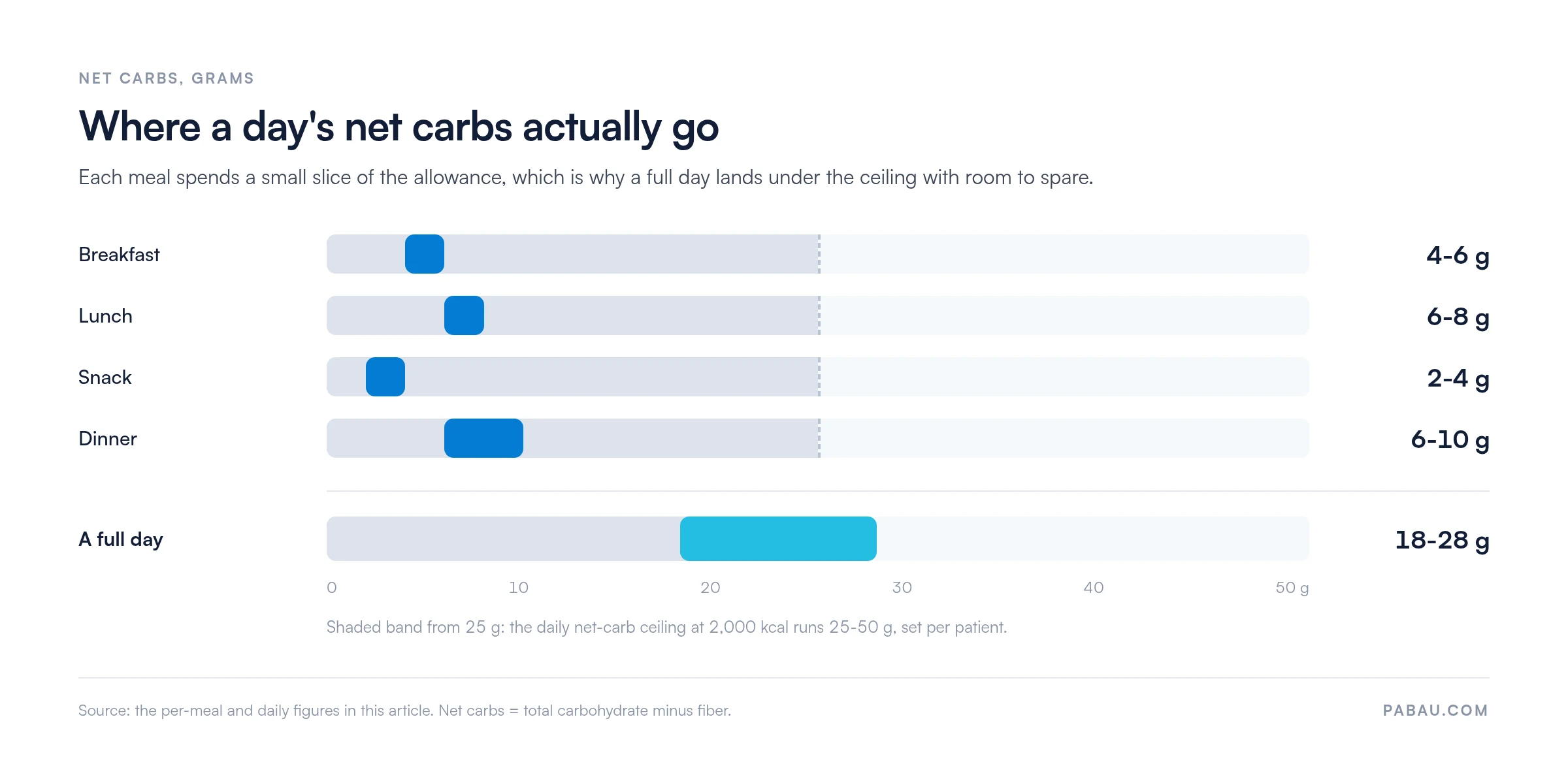
The downloadable plan names every meal for seven days and prints the net carbs beside it. Each day lands between 20g and 26g of net carbs, which leaves headroom for an extra vegetable portion. Here is how a typical day reads.
Laid out against the daily allowance, no single meal is the problem. The whole day fits inside the ceiling with space left over, which is worth showing a patient who expects to feel deprived.
The seven days rotate different combinations so the week does not repeat itself. Patients who eat animal products can follow the standard 7-day keto meal plan instead, which holds the same carb ceiling with eggs, fish and dairy.
Protein is the question practitioners hear most, and the answer is narrower than patients expect. Seitan, tofu and tempeh do the heavy lifting. Hemp seeds and nutritional yeast top up the rest of the day.
Note the tempeh line. It carries good protein but the highest carbs of the three anchors, so it belongs at dinner rather than twice in one day. Spread the sources instead: seitan at lunch, hemp seeds on a salad, nutritional yeast in a sauce. That makes 100-125g of daily protein realistic without a single legume.
Carb restriction on top of a vegan diet narrows the nutrient supply twice over. Agree the list below at the first consultation, not after symptoms appear.
Send patients to a dietitian or their physician before they start any of these, particularly where there is an underlying condition or existing medication.
Vegan keto asks for more cooking than the diet a patient left behind. Batch cooking answers that. Roasting the tofu, seitan and vegetables in one 60 to 90 minute session takes the decision out of every weeknight.
The PDF sets out the order to cook in, what keeps for how long, and a shopping list grouped by aisle. Automated reminders can prompt the prep session and a mid-week check-in, so the routine survives past the first Sunday.

Three errors account for most abandoned attempts, and all three are fixable in a consultation.
Raise all three before the patient leaves with the plan. A two-minute warning about keto flu prevents most of the week-one dropouts.
Done properly, vegan keto produces steady fat loss, calmer blood sugar and fewer cravings, since ketones change how satiety registers. Patients with joint pain or autoimmune symptoms often report lower inflammation as well.
None of that shows up in week one. Fat adaptation takes 4-12 weeks, so set the review dates accordingly and warn patients that the first fortnight feels worse than the fourth.
Vegan keto works best for health-conscious adults who are already committed to plant-based eating and have not held results on other diets. It fits functional medicine, metabolic health and weight loss practices, which usually run the whole program in software for weight-loss programs rather than a spreadsheet.
It is a poor fit for endurance athletes who need carbohydrate, for pregnant or nursing patients, and for anyone with a history of restrictive eating. Where the carb ceiling is the obstacle rather than the diet, a plant-based vegan meal plan gives you a gentler starting point.
Before you hand the plan over, check four things:
Most practices email the plan as an attachment and hear nothing until the next appointment. Adherence stays invisible for six weeks, and so does the reason a patient quit on day four.
Practice management software like Pabau closes that loop. Digital forms capture restrictions, medications and goals before you set anyone’s macros. The plan then goes out through the patient portal, so it sits with the record instead of an inbox.
Automated messages handle the prep-day prompt, the week-two review and the electrolyte check. Replies land on the patient record, so the next consultation opens with the adherence history already in front of you.
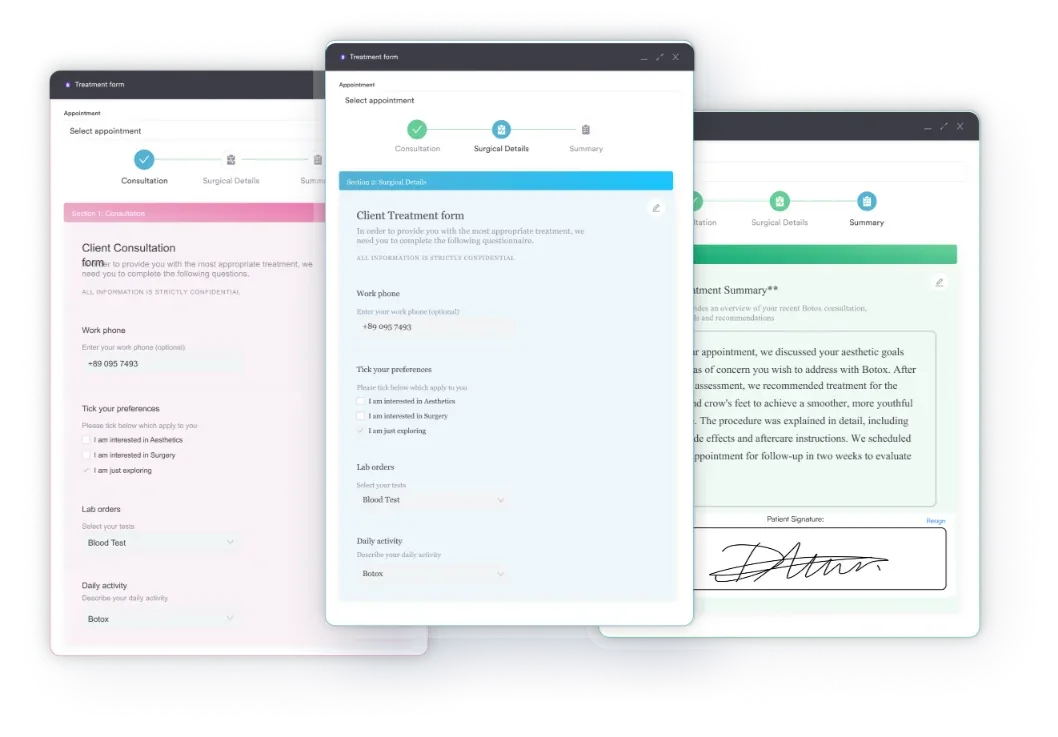

Pabau’s digital forms, patient portal and automated messages share the meal plan, prompt the review dates, and log every reply on the patient record.

Writing the plan is the easy part. Whether a patient reaches ketosis comes down to three things: enough fat, replaced electrolytes, and surviving week one without quitting.
Hand over the PDF during the consultation, book the week-two review before the patient leaves, and check fat intake first when progress stalls. Book a demo to see how Pabau shares the plan and tracks adherence between appointments.

Treating a plant-based patient with type 2 diabetes? Vegan diabetes meal plan sets the same plant-based meals against blood sugar targets rather than ketosis.
Need a gentler plant-based starting point? 30-day plant-based diet plan builds the habit over a month with no carb ceiling to police.
Comparing low-carb protocols? Atkins diet template shows how a phased low-carb plan differs from holding ketosis all the way through.
Managing joint pain or autoimmune symptoms too? Anti-inflammatory meal plan covers the food swaps that target inflammation directly.
For most adults, yes. Tofu and tempeh appear daily in this plan and current evidence does not link moderate soy intake to hormonal harm. Patients on levothyroxine should leave several hours between the dose and a soy-heavy meal.
Dry wine and plain spirits carry almost no carbohydrate, so they fit the numbers. Beer and mixers do not. Alcohol also pauses fat burning while the liver clears it, which slows progress even when the carb count looks fine.
Results vary by individual. Because the fat here is mostly unsaturated, LDL often moves less than it does on animal-based keto. Order a lipid panel at baseline and again at three months rather than predicting the direction.
Check portion drift and hidden carbs in sauces and nut butters first. Then look at total calories, since fat is dense and easy to overeat. A stall after four to six weeks is usually intake, not a broken metabolism.