GLP-1 diet plan
A GLP-1 diet plan is a structured eating framework for patients taking semagluti...

Last Updated: Oct 13, 2026

A high protein diet plan typically delivers 25-35% of daily calories from protein — roughly 1.2-2.2g per kg of body weight, depending on your goal (the standard RDA baseline for general health is 0.8g/kg, well below a high protein range).
Protein increases satiety, preserves lean muscle, and boosts the thermic effect of food — making it particularly effective for weight loss when combined with a calorie deficit.
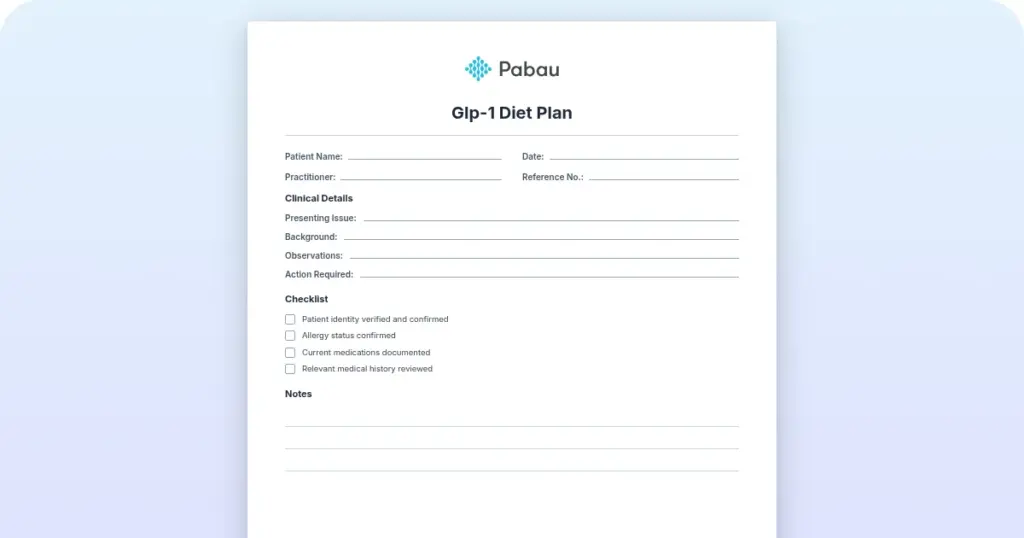
This guide covers daily protein targets and the best food sources, plus a printable patient intake and meal-diary form you can fill in with patients during a visit.
Practice management software like Pabau brings digital forms and automated workflows that help practices capture patient dietary preferences, track progress, and send follow-up nutrition reminders automatically.
A printable patient intake and meal-diary form for recording nutrition goals, allergies, and daily meals – use it alongside this guide’s protein targets, best food sources, and meal-prep tips to walk patients through a high protein diet plan in person.
Download templateA structured high protein diet plan is a practical tool for practices guiding patients on weight management, muscle preservation, and metabolic health. This guide covers daily protein targets and evidence-based food lists, plus a printable patient intake and meal-diary form you can fill in with patients during their visit.
A high protein diet plan emphasizes foods rich in protein to meet elevated daily intake targets. Most high protein diet plans deliver 25-35% of total daily calories from protein — roughly 1.2g per kg of body weight for weight loss, up to 2.2g/kg for athletes or muscle-building goals. That’s well above the standard 0.8g/kg RDA baseline for general health, which sits closer to 10-11% of daily calories.
The mechanism is straightforward: protein increases satiety (fullness), preserves lean muscle during weight loss, and has a higher thermic effect than carbohydrates or fat — meaning your body burns extra calories digesting protein. These properties make a structured high protein diet plan especially useful for practices advising patients on sustainable weight management.
Daily protein targets vary by individual goals. Use this reference table to guide patient conversations:
Sources: National Academies of Sciences, Engineering, and Medicine Dietary Reference Intakes for protein and Academy of Nutrition and Dietetics position statements on protein for weight loss and aging.
A successful high protein diet plan balances animal and plant-based sources. This ensures variety, affordability, and nutritional completeness for your patients.
Here’s a snapshot of what a typical day looks like on a high protein diet plan targeting 100-130g of protein – useful as a talking point when you sit down with a patient:
Use this structure as a starting point, then repeat it across the week – swapping protein sources based on each patient’s preferences and dietary restrictions to prevent meal fatigue. The downloadable intake and diary form gives you space to record a patient’s own meals and protein targets as you work through this together.
Between-meal hunger derails adherence. These portable snacks work for practice waiting rooms or patients on the go:
Batch cooking saves time and removes daily decision fatigue. Use this workflow to help patients stick to their high protein diet plan:

The same high protein diet plan framework works for both goals, but emphasis differs. This comparison helps practices tailor conversations to each patient’s outcome:
Both approaches use the same food sources and meal structure — the intake form is flexible enough to serve both populations. Practices can use digital forms to quickly capture patient goals and note the right protein target on the form before sharing it.
When a patient’s goal is losing weight, a high-protein weight loss plan sets daily grams by body weight and maps out a sample week.
Breakfast sets the tone for daily protein intake. A protein-rich breakfast reduces mid-morning hunger and improves adherence. Here are practice-approved options:
High protein intake is safe for healthy individuals without pre-existing kidney disease. The myth that protein damages healthy kidneys lacks scientific support. Large-scale reviews confirm that up to 2.2g/kg poses no risk to kidney function in people with normal renal function.
However, always note: patients with chronic kidney disease (CKD), dialysis history, or unmanaged diabetes should consult their nephrologist before increasing protein intake. Mayo Clinic’s guidance on high-protein diets and National Kidney Foundation resources provide patient-friendly education.
The downloadable high protein diet plan intake form is designed for practice workflows, particularly at wellness and nutrition practices. Here’s how to use it with each patient:

Pabau helps practices capture dietary goals in digital forms, track patient progress with automated reminders, and store templates in each patient’s record for consistency across your team.

A structured high protein diet plan is a practical framework for practices guiding patients toward weight loss, muscle preservation, or metabolic health. The downloadable intake and diary form gives you a simple way to record a patient’s nutrition goals and daily meals in-session, while the protein targets and food guidance above help you build each patient’s plan on solid evidence rather than shifting diet trends.
Implement this template into your practice’s nutrition pathway: capture protein goals during intake, share the customized plan at the consultation, and track outcomes in your patient records for evidence-based follow-up. Combined with software for weight-loss practices, a template-driven approach scales across your team and improves patient consistency week to week.

Building a plan for a male patient? Diet plan for men covers calorie and macro targets tailored to male patients’ body composition goals.
Guiding a patient toward whole-food eating? Clean eating meal plan gives you a printable framework for cutting processed foods from a patient’s diet.
Working with a patient managing flare-ups? Diverticulitis diet plan walks through phased fiber reintroduction for GI symptom recovery.
A low carb high protein diet plan combines elevated protein intake (1.2-2.2g/kg) with reduced carbohydrate intake (typically 50-100g daily). This variation appeals to some patients for rapid initial weight loss, though long-term results are similar to standard high protein diets. The main difference is that low carb versions emphasize non-starchy vegetables and healthy fats instead of whole grains and fruit.
Lean animal proteins (chicken breast, eggs, fish, Greek yogurt, cottage cheese) and plant-based proteins (lentils, chickpeas, tofu) are all excellent. The best choice for each patient depends on budget, cultural preferences, and taste. This guide’s food table lists protein grams per serving to make selection easier for your patients.