Despina Petrushevska

Support system worksheet: Free PDF and session guide
Download your free support system worksheet A ready-to-use assessment form for m...

1
Last Updated: Nov 9, 2026
Free PDF 2 pages, print-ready Clinician-reviewed
This Zepbound diet plan PDF is a free, printable 7-day meal planner for patients on tirzepatide. It has space for goals, medical history and five eating slots each day. The eating guidance sits on this page. It covers protein targets of 25-35 g per meal, foods that worsen nausea, and eating on the weekly shot day. Practices can fill in the planner with each patient at the start of treatment. Marking the shot day and the day after keeps those meals lighter.
A printable, fill-in 7-day meal planner with space for goals, medical history and daily meals. Each day has slots for breakfast, two snacks, lunch and dinner.
Start from scratch, or upload this PDF or any form you already use, and Pabau's AI Form rebuilds it with tick boxes, text fields and a signature. Attach it to the treatment once, and every patient gets it on time.
AI Form rebuilds the consent, history and aftercare forms you already use. You review each one, then publish.
Patients complete forms on their phone before they arrive, so the front desk stops retyping paper.
Every signed form is versioned and attached to the treatment record, ready when you need it.
Set how long a consent stays valid. Returning patients skip forms they have already signed.
Supports HIPAA and GDPR compliance AES-256 encryption 4.8 on G2 4.7 on Capterra Trusted by 4,000+ practices worldwide

The Zepbound diet plan PDF is a printable 7-day meal planner, and the food lists, shot-day and nausea guidance sit on this page.
Aim for 25-35 g of lean protein per meal to help preserve muscle during rapid weight loss on Zepbound.
High-fat, sugary and ultra-processed foods are the most common dietary triggers for nausea and GI discomfort on tirzepatide.
Zepbound is injected once a week, so mark the shot day and the day after on the planner for lighter meals.
Pabau sends the planner through digital forms and aftercare instructions, and logs weight and measurements at each visit.
A Zepbound diet plan is an eating plan built around the effects of tirzepatide. Tirzepatide is a dual GLP-1/GIP receptor agonist approved by the FDA in 2023 for chronic weight management. A standard calorie-restricted plan ignores three effects that Zepbound patients live with every week:
Food choices shape how well patients tolerate the medication. Patients who eat high-fat or ultra-processed foods tend to report more nausea and GI discomfort, and that can lead to missed doses. A clear weekly plan takes those foods off the table before the first shot.
The downloadable planner gives each patient a page to record goals and medical history, then map out every meal for the week. If your practice also prescribes semaglutide, the GLP-1 diet plan covers the wider drug class.
The goal is nutrient density at smaller volumes. Zepbound shrinks portions, so every meal needs to deliver protein, fiber or micronutrients.
Some foods worsen tirzepatide’s GI side effects or undo the calorie deficit the medication helps create. The Obesity Medicine Association’s Obesity Algorithm covers nutrition alongside anti-obesity medication, and the list below follows the same principles.
Zepbound is injected once a week. Many patients notice GI side effects most in the day or two after the shot, especially during dose escalation. Eating lighter and earlier in the day helps.
Tirzepatide suppresses appetite strongly enough that some patients struggle to eat the minimum they need. Too little food, and protein in particular, speeds up muscle loss and can bring fatigue, hair thinning and micronutrient deficiencies.
When appetite is very low, small nutrient-dense portions work better than trying to finish full meals. Put protein first at every eating occasion, then add the rest.
Aim for at least 60-80 g of total protein a day, even on low-appetite days. If solid food feels impossible, drinkable protein such as shakes, broth or yogurt smoothies can bridge the day.
Nausea is the most commonly reported side effect of tirzepatide, and it tends to flare after each dose increase. Diet is one of the few levers patients control directly.
The plan below targets about 25-35 g of protein per meal, moderate healthy fats and fiber-rich carbohydrates. Portions are deliberately modest to match a smaller appetite, and every meal can be swapped for a like-for-like option.
The PDF is a blank two-page planner, so the guidance above is what goes into it. Fill it in with the patient at the start of treatment, then review it at each follow-up.
Laid out across a week, the plan has one clear pattern. The two days around the shot are lighter, and the protein floor holds every day.
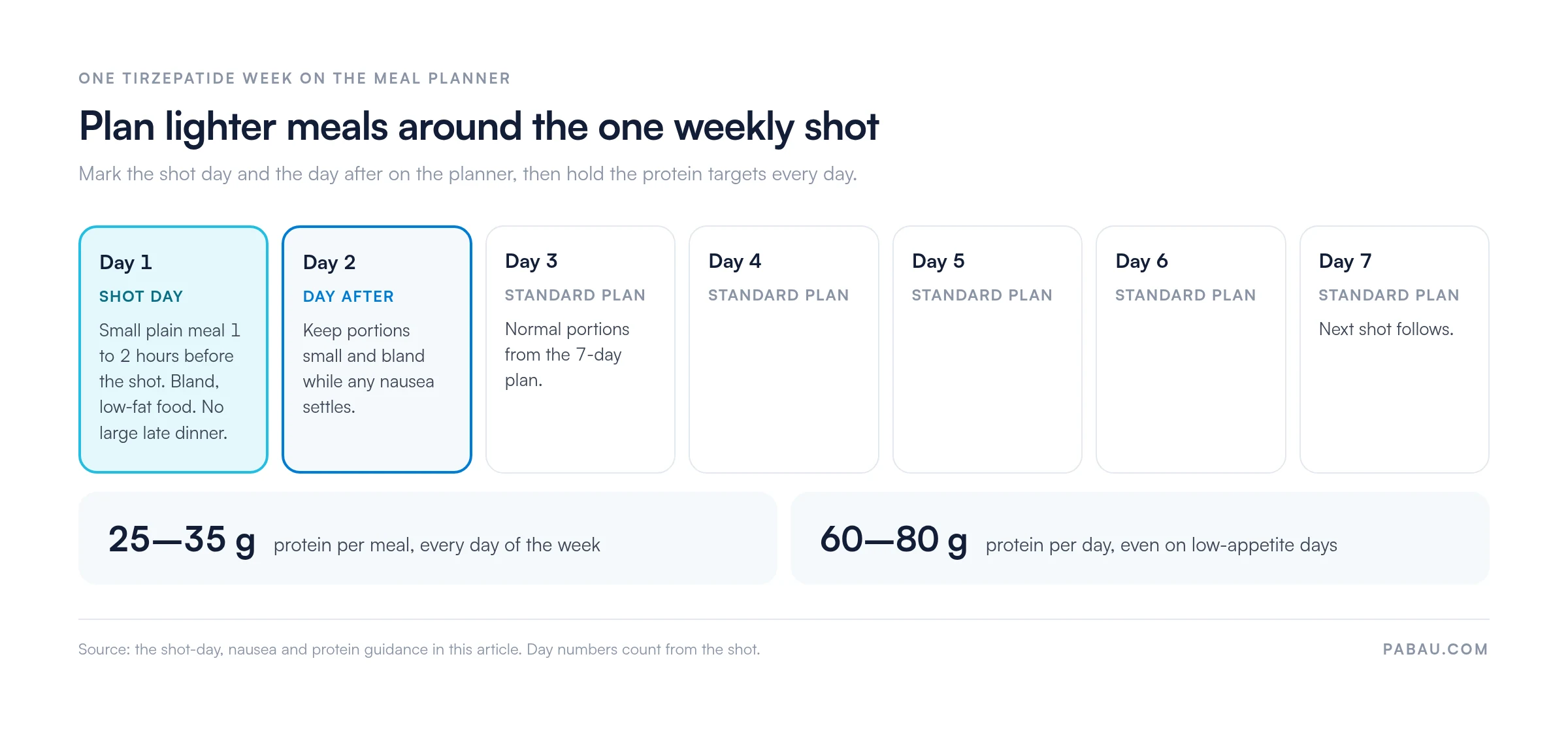
Print the planner and write the patient’s injection day at the top before you hand it over. Color-code the weekly shot day (and the day after) so patients can plan lighter meals. Small formatting cues like this help most in the first weeks of treatment.
Tirzepatide-driven weight loss happens quickly, and part of it can come from lean muscle rather than fat. A body-composition substudy of the SURMOUNT-1 trial found that lean mass made up part of the weight participants lost. The diet plan covers protein, and resistance training protects the muscle that protein builds.
Practices that want to hand patients a structured routine can pair this planner with the weight-loss workout plan.
A printed planner gives patients a fixed structure while their hunger cues are unreliable. For clinicians, it creates a consistent, documented baseline for nutrition counseling.
Important clinical note: This planner and guide are general resources and do not replace individualized medical nutrition therapy or advice from the prescribing clinician. The National Institute of Diabetes and Digestive and Kidney Diseases advises pairing weight-management medication with a healthy eating plan and regular activity.
Many GLP-1 programs still hand out diet sheets on paper or email them by hand after the prescribing visit. Sheets get lost, and nobody can see which patient received which version.
Pabau, the practice management platform we build, moves that handout into the patient record. Its digital forms send the planner at the point of prescription, alongside the intake questionnaire and the tirzepatide consent form.
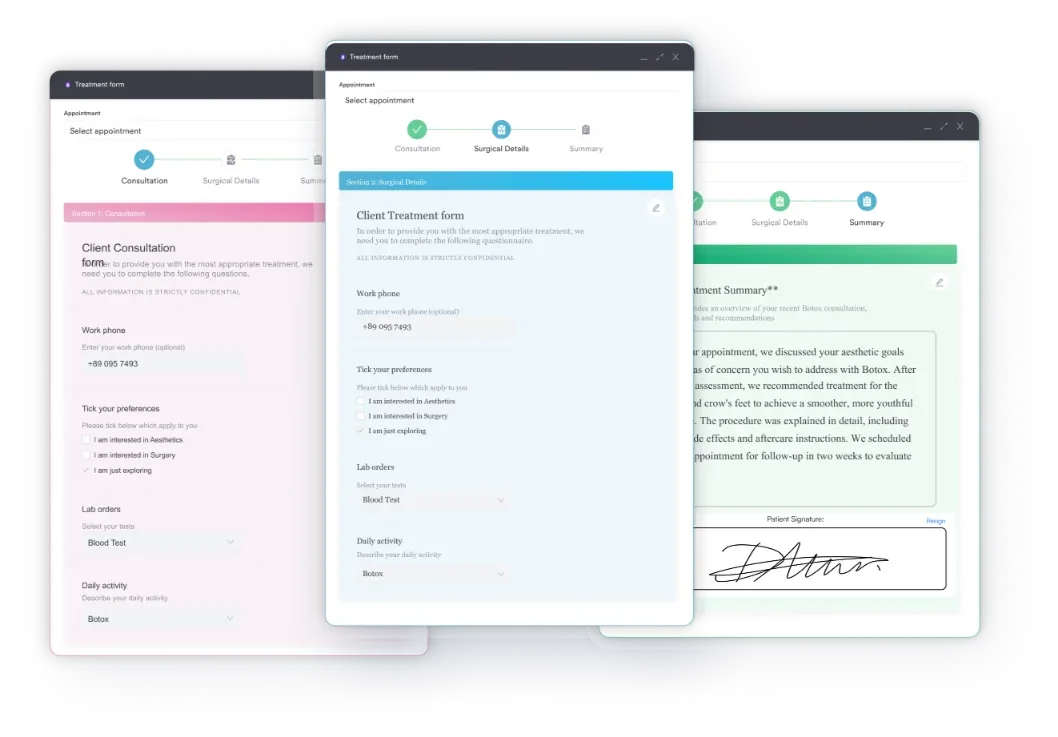
After each visit, pre- and aftercare instructions can resend the plan with shot-day reminders. At follow-ups, measurements tracking logs weight, BMI and body measurements, so patients see their progress visit by visit.
Practices that run several GLP-1 programs can manage scheduling, records and follow-up in streamlined weight-loss clinic software. Teams treating diabetes and other metabolic conditions can use Pabau’s metabolic health software to keep outcomes in one record.

Pabau sends the planner with intake and consent forms, delivers aftercare instructions after each visit, and logs weight at every check-in. Your team spends less time chasing paperwork and more time with patients.

Patients who start Zepbound without food guidance are more likely to hit avoidable nausea and to lose muscle along with fat. The planner works best when you fill it in with the patient on day one and mark the shot day before they leave.
The trade-off is time at the first visit. A short session on the plan up front saves repeated calls about nausea later, and it gives every follow-up a record to review. Book a demo to see how Pabau sends the plan, the reminders and the weight check-ins from one patient record.

Looking for software built for weight-loss programs? Weight-loss clinic software from Pabau covers scheduling, treatment plans, patient records and follow-up in one platform.
Prescribing more than one GLP-1 medication? GLP-1 medication list gives your team a printable reference to the drugs in the class.
Need more high-protein meal ideas? High-protein meal plan offers more protein-first meal ideas to rotate into the planner.
Want to understand how weight-loss practices generate revenue? How weight-loss clinics make money outlines the service and pricing models behind profitable GLP-1 programs.
A Zepbound diet plan PDF is a printable, fill-in weekly meal planner for patients taking tirzepatide (Zepbound). It has space for goals, medical history and every meal of the week. The food lists, shot-day strategies and nausea guidance that go into it are on this page.
Eat small, bland, low-fat meals and avoid fried foods, spicy dishes, carbonated drinks and alcohol. Plain proteins and simple carbohydrates are usually the easiest to tolerate. Eating slowly and staying upright for at least 60 minutes after meals also helps.
Eat a small, plain meal one to two hours before injecting, and keep meals light and bland for the rest of the day. Avoid high-fat foods and alcohol, and sip water or ginger tea steadily. Skip a heavy evening meal, because tirzepatide already slows stomach emptying.
Choose soft or drinkable high-protein options such as Greek yogurt, protein shakes, cottage cheese, bone broth with shredded chicken, or edamame. Aim for at least 60-80 g of protein a day, even on very low-appetite days, to limit muscle loss.
Yes. Pabau offers a free weekly meal planner for tirzepatide patients at the top of this page. The PDF is a fill-in planner, and the food lists, shot-day and nausea guidance are on this page. You can print it or share it with patients through your practice’s patient records.