GLP-1 diet plan
A GLP-1 diet plan is a structured eating framework for patients taking semagluti...

2
Last Updated: Oct 13, 2026

Hypoglycemia is blood glucose below 70 mg/dL, and it needs assessment and treatment straight away to prevent patient injury.
The NANDA diagnoses that apply are Risk for Unstable Blood Glucose Level, Deficient Knowledge, Risk for Injury, and Ineffective Self-Health Management.
For a conscious patient, start with the 15-15 rule. Give 15 grams of fast-acting carbohydrate, then recheck the glucose in 15 minutes.
Grade the episode on the reading and on whether the patient needed help, because the number alone can understate it.
Practice management software like Pabau standardizes the assessment with digital intake forms and holds every reading in the client record.
A ready-to-use care plan covering NANDA diagnoses, assessment findings, and the 15-15 rule. It also carries the IV dextrose and glucagon steps, desired outcomes, patient education content, and evaluation criteria.
Download templateA hypoglycemia nursing care plan is a structured document that guides assessment, treatment, and evaluation for a patient with low blood glucose. It sets out the NANDA diagnoses that apply, the immediate interventions, and the measurable outcomes you chart against.
The template below follows the order you already work in at the bedside. Assess, diagnose, treat, set goals, teach, then evaluate. Adapt it to your facility’s protocols before you take it on a shift.
Hypoglycemia occurs when blood glucose falls below 70 mg/dL. The care plan standardizes how nurses find, assess, treat, and monitor the patient. It covers the patient at risk of an episode and the one already in it.
It maps NANDA nursing diagnoses onto the patient’s problems and sets measurable goals for each one. From there it structures the interventions, from the first carbohydrate dose to closer monitoring, a medication review, and patient teaching. The aim is stable glucose and no seizure, no loss of consciousness, and no fall.
Severity changes both the treatment and the charting. A reading of 54 to 70 mg/dL is the alert range, and anything below 54 mg/dL is clinically significant. Treat any episode where the patient needed someone else’s help as severe, whatever the meter said.
For the team, a shared template keeps documentation consistent enough to hold up in a Joint Commission review. For the individual nurse, it removes the guesswork at 3 AM, when the patient is diaphoretic and the meter reads 48.
NANDA International’s taxonomy gives you four diagnoses that apply to hypoglycemia management:
The template moves through five steps, whether you are working an active episode or documenting a risk assessment:
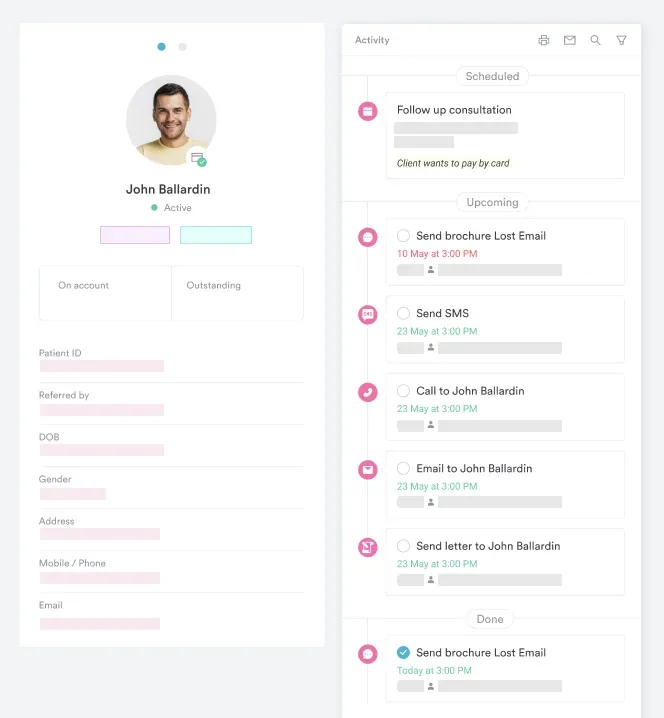
Structured client records and automated monitoring workflows take some of the load off. Assessment fields arrive pre-populated, and the follow-up reminder fires on its own, so nobody slips through.
Assessment is the foundation of the care plan. Gather the symptoms the patient reports and the findings you can measure, then grade the severity from both:
The first few minutes decide whether this stays a resolved episode or becomes an emergency. For a conscious patient who can swallow, the 15-15 rule is the standard:
For severe hypoglycemia, or any patient who is unconscious, escalate immediately:
Document every intervention with the exact time, the glucose readings either side of it, and any provider order you carried out.
Every hypoglycemia care plan needs goals that are specific, measurable, achievable, relevant, and time-bound. Examples:
Write each goal so the proof of it lands somewhere in the chart. Clear nursing documentation is what turns a goal on paper into an outcome you can evidence.
Teaching is what keeps the next episode from happening. Cover these topics before the patient leaves your care:
Use plain-language handouts and a return demonstration to confirm the patient understood. Many practices improve patient engagement by sending the same material through a patient portal after the visit.
Evaluate your interventions against the goals you set. Answer these in the chart:
Your documentation is the legal record of the episode. Whether you chart in a hospital system or in primary care software, the note needs the same content. That means times, readings, interventions, patient response, provider notifications, and the teaching you gave. An AI medical scribe drafts most of that from the conversation while it is still fresh.
A missing timestamp is the detail that undoes an otherwise solid note. Compliance management software flags the fields you left blank before the chart closes. You finish the record while the patient is still in front of you.
In most practices the care plan lives as a photocopy in a folder. The glucose readings sit in one place, the teaching note in another, and the follow-up check depends on whoever remembers to book it. Two nurses treating the same episode end up with two different records of it.
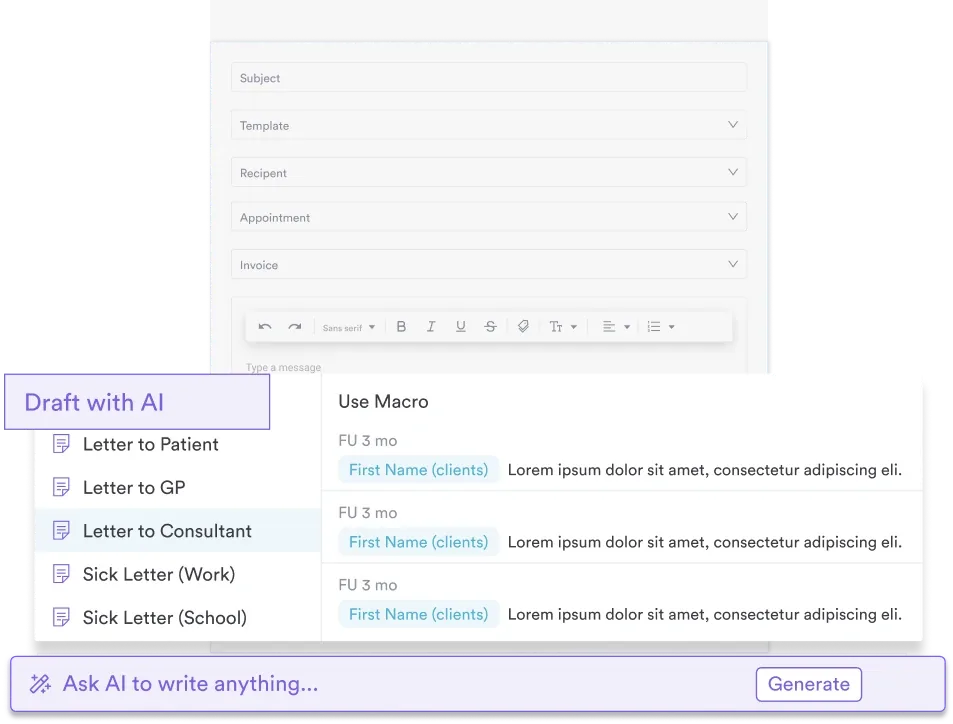
Pabau loads the care plan into the client record as a digital form instead. The assessment fields, the NANDA diagnoses, and the intervention checklist arrive already structured, and each entry is timestamped as you fill it in. Practices running diabetes and weight management programs on metabolic health software can adapt the same form to their own protocols. These programs often run on weight loss clinic software that also handles bookings, medical records, and payments.
Pair it with automated documentation workflows and the recheck reminder, the follow-up appointment, and the education record all handle themselves. You get one consistent record of every hypoglycemic episode, not just the ones a senior nurse happened to chart well.

Pabau’s digital forms and structured client records keep every glucose reading, intervention, and teaching note on one patient timeline. Automated reminders chase the follow-up check, so a recurrence gets caught early.

A hypoglycemia nursing care plan succeeds or fails in the first few minutes of an episode. Recognize the warning signs, then apply the 15-15 rule or escalate without hesitation. The times and readings you write down are what separate a resolved episode from a preventable complication.
Download the template, then adapt it to your facility’s protocols before you rely on it at the bedside. Update the glucagon route, the dextrose concentration, and the monitoring schedule to match what your team actually does. Nurses fill in a plan that matches reality, and work around one that does not.
The payoff is a consistent record of every episode your team manages. Book a demo to see how Pabau keeps care plans, glucose logs, and patient education records in one place.

Building an exercise plan around glucose control? The fat burn heart rate chart gives target heart-rate zones, BPM ranges, and the calculation formula by age.
Also treating a hyperglycemic patient? The hyperglycemia nursing care plan covers the escalation and insulin-correction side of glucose management.
Worried the episode is progressing to ketoacidosis? The diabetic ketoacidosis nursing care plan covers assessment and interventions for that more severe presentation.
Also tracking a bariatric surgery patient? The gastric sleeve weight loss chart tracks weight reduction, dietary milestones, and recovery data after sleeve gastrectomy.
Managing the patient’s diabetes beyond this episode? The diabetes mellitus nursing care plan covers the ongoing NANDA diagnoses and long-term goals.
The four primary NANDA diagnoses are Risk for Unstable Blood Glucose Level, Deficient Knowledge, Risk for Injury, and Ineffective Self-Health Management. Risk for Unstable Blood Glucose Level appears in every hypoglycemia care plan. The patient is either at risk of a low glucose episode or already in one.
The 15-15 rule is the standard protocol for treating mild-to-moderate hypoglycemia in a conscious patient. Give 15 grams of fast-acting carbohydrate, wait 15 minutes, then recheck the glucose. Repeat the dose if it is still below 70 mg/dL. Once the glucose is stable, follow with a mixed meal to prevent a rebound.
Glucagon is indicated when the patient cannot take carbohydrate by mouth, because of unconsciousness, seizures, severely altered consciousness, or an unsafe swallow. Give 1 mg IM, SC, or IV, and 0.5 mg for patients under 25 kg. IV dextrose (D50W) is preferred where IV access already exists, since it works faster and more reliably.
Record the time you found the episode, the glucose reading, and the symptoms the patient described. Log every intervention with its dose, route, and timestamp, then the repeat glucose check and the response to treatment. Finish with the provider notification and the teaching you gave, including how the patient confirmed they understood it.
Cover carbohydrate counting, meal timing, medication adherence, and sick-day rules. Then work through the warning signs, the steps of the 15-15 rule, and when to call the provider. Finish with the glucagon kit, the medical alert ID, and alcohol safety. Verify all of it with a return demonstration or the teach-back method.