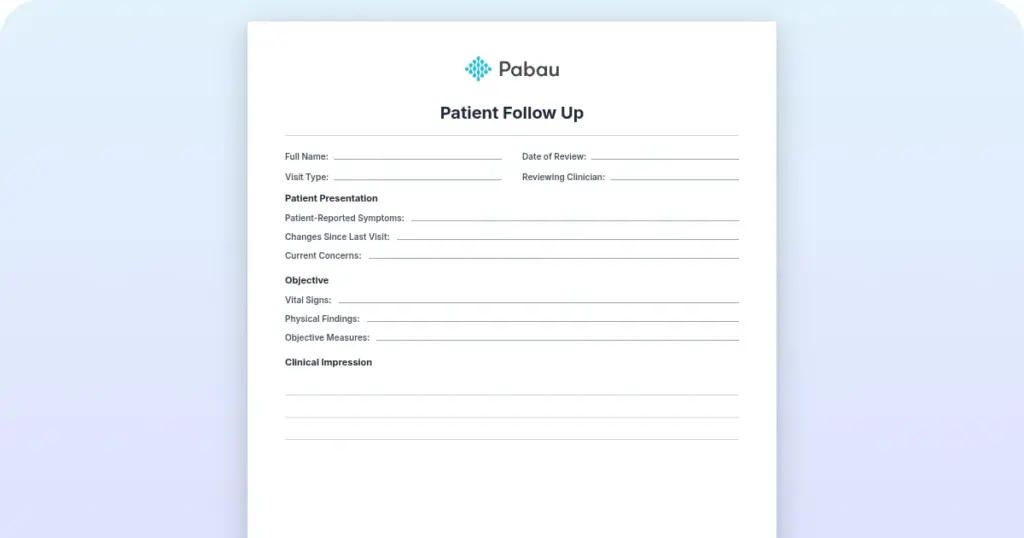
Patient follow up letter template
A patient follow up letter template lets your practice confirm a patient’s...

2
Last Updated: Oct 21, 2026

A life coach intake form collects essential client information before the first session, setting the foundation for a productive coaching relationship.
Effective intake forms gather a client’s goals, challenges, lifestyle, and commitment level, preventing misalignment and saving session time.
This template doesn’t include GDPR consent language, so add your own data-handling and consent section before using it with UK or EU clients.
Pabau’s digital intake forms automate delivery, store client data in secure records, and sync responses directly into client profiles without manual data entry.
This ready-to-use template covers client and emergency contact details, coaching goals, current challenges, and previous coaching experience. It also covers expectations, preferences, lifestyle, well-being, strengths, weaknesses, commitment, and motivation, ending with a signature line.
Download template (PDF)A life coach intake form is a foundational client onboarding document that gathers essential information before the first coaching session. This template provides all the fields and questions coaches need to understand their clients’ situations, goals, and expectations. It sets a clear, professional tone from day one.
A life coach intake form collects critical client information in a structured format before the coaching relationship begins. Unlike therapy intake forms, which assess clinical symptoms and mental health diagnoses, a life coach intake form focuses on personal and professional context. It covers goals, obstacles, and coaching expectations.
This distinction matters. Coaching is not therapy. The form’s role is to help coaches tailor their approach, establish expectations, identify potential conflicts, and document informed consent. It does not screen for clinical conditions or protected health information.
Sending an intake form before session one transforms the coaching process. It saves time, prevents misalignment, and builds professional trust.
An effective intake form contains nine core sections. Each one serves a specific purpose in understanding the client and shaping the coaching relationship.
Use these categorized questions as a foundation. Adapt language to match your coaching style and niche.
Some challenges have a physical root.
While the core sections above apply universally, different coaching niches require tailored questions. Here’s how to adapt.
Add questions about current health status, medical history, medications, fitness level, nutrition habits, sleep patterns, and stress management. Ask about barriers to behavior change (time, motivation, family support) and any health concerns that might affect coaching.
Many health and wellness coaches now run their practice on the same wellness clinic software used by nutritionists. That means these answers sync straight into a shared client profile. A nursing nutrition assessment template can add clinical depth if a client’s goals involve a significant dietary change.
Include questions about career aspirations, leadership challenges, team dynamics, work-life balance, current role satisfaction, and professional development goals. Ask about past performance reviews, feedback from colleagues, and specific career transitions they’re considering.
Add questions about current relationships, relationship history, communication patterns, attachment style insights, and specific relational challenges. Ask about past therapy or counseling experience and any trauma background (without requiring diagnostic detail).
For clients who need more structured coping support alongside coaching conversations.
Paper forms create admin burden and lost data. Digital delivery is faster, more professional, and ensures client information flows directly into your records.
Pro tip: Send the form immediately after booking confirmation. This gives clients time to reflect before session one and ensures you have their responses before you meet.
This template does not include a GDPR consent section, so add one yourself before sending it to clients in the UK or EU. A consent section protects both you and your client by documenting how you handle their information.
Add a section stating:
Add a checkbox asking the client to confirm they’ve read and understood this section. This documents their informed consent, which matters if questions ever arise about data handling.
The intake form isn’t just a bureaucratic step. It’s a coaching tool. Review the form before each session and reference it during the conversation: “I noticed you mentioned feeling stuck in your career. Let’s dig into that.” This shows you listened, builds rapport, and keeps sessions focused on what matters most to the client.
Store the form in a secure client record system so you can access it anytime without printing or searching through files. This keeps your coaching practice organized and professional, and frees you to focus on the client instead of paperwork.
Most life coaches still collect intake forms by email or paper. They then copy client answers into a separate notes document or spreadsheet before the first session.
Practice management software like Pabau removes that extra step.
This means you walk into every session with full context, and your records stay organized and audit-ready without extra admin work.

Pabau’s digital intake forms send automatically at booking, and responses sync directly into secure client profiles. This keeps every client’s coaching history organized in one place, so you can focus on the session instead of paperwork.

This template earns its place once a client actually fills it out. You walk into session one already knowing their goals, their history, and where they’re likely to get stuck.
Add your own GDPR consent section before you send it to any UK or EU client. Deliver it digitally rather than on paper, so responses land straight in your records instead of a stack of printouts.
Ready to streamline your entire client onboarding? Book a demo with Pabau to see how digital intake forms, automated delivery, and secure client records keep your coaching practice organized and professional.

Working with families affected by addiction? Family roles in addiction worksheet helps clinicians evaluate how each family member adapts to addiction-related stress.
Want to keep coaching and therapy clearly separated? This interoceptive exposure worksheet shows the kind of clinical tool that belongs with a licensed therapist, not a coach.
Assessing a client for autism spectrum traits? ADOS-2 assessment covers module selection, scoring, and administrator qualifications for the diagnostic report.
Ideally 2-3 pages (or 15-20 minutes of form-filling time). Shorter forms get higher completion rates. If clients feel the form is too long, many won’t finish it. Prioritize contact details, coaching goals, current challenges, and commitment and motivation, then cut anything that doesn’t directly inform your coaching approach.
Coaching intake forms focus on goals, aspirations, and life context. Therapy intake forms screen for mental health diagnoses, trauma history, and clinical symptoms. Coaching is not therapy. Do not ask clients to disclose diagnosed conditions or protected health information unless you’re a licensed therapist with the proper HIPAA infrastructure in place.
Yes. Include a section documenting how you’ll handle client data, confidentiality limits, and informed consent to coaching. This protects you legally and shows clients you take their privacy seriously. If you operate in the UK or EU, GDPR requires explicit consent before processing personal data.
Digital is better. Clients complete forms faster on a web link, responses auto-populate into your client records, and you save hours of data entry. Most modern practice management systems include digital intake form builders with secure data handling built in.
Send it immediately after booking confirmation (or at least 3-5 days before the first session). This gives clients time to reflect on their answers without feeling rushed. If you send it too early, they may forget. If you send it the day of the session, they’ll be scrambling to fill it out before you meet.