Nursing narrative note template
A nursing narrative note template is a structured PDF that guides you through re...

3
Last Updated: Oct 21, 2026

Distress tolerance is a DBT skill module that helps clients survive crises without making situations worse, covering both crisis survival and reality acceptance techniques.
The downloadable worksheet focuses on one crisis survival skill: ACCEPTS. It walks clients through identifying distress, trying an opposite action, and working the acronym step by step.
Marsha Linehan developed DBT specifically to treat emotional dysregulation in borderline personality disorder. It has since expanded to depression, PTSD, eating disorders, and suicidal ideation.
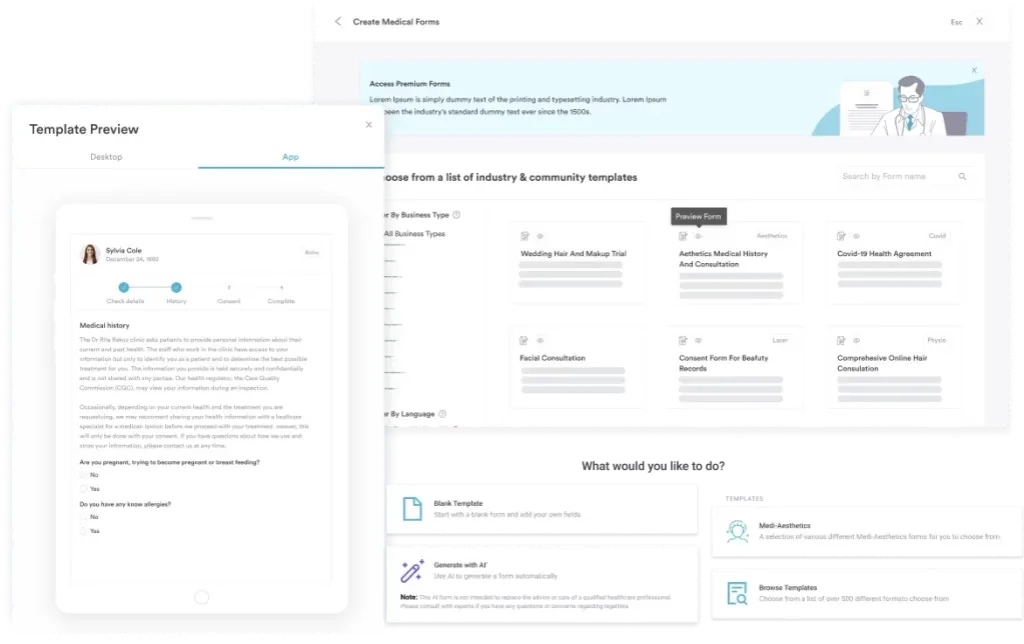
Pabau’s digital forms and client portal let therapists deliver, track, and securely store completed distress tolerance worksheets within one integrated practice management platform.
A ready-to-use, two-page PDF worksheet covering three DBT distress tolerance activities: Identifying Distress, Opposite Actions, and Accepting and Improving Distress. The last activity uses the ACCEPTS acronym.
Download templateDistress tolerance is one of the four core skill modules in Dialectical Behavior Therapy (DBT). Emotion regulation teaches clients to change their emotional response. Distress tolerance skills, in contrast, help clients survive and accept painful situations without engaging in harmful coping behaviors.
This free downloadable worksheet gives clients a structured, three-part exercise built on Marsha Linehan’s DBT model:
The sections below cover the broader family of DBT distress tolerance skills so you can build out a fuller toolkit alongside the worksheet.
Distress tolerance refers to the ability to tolerate painful emotions and survive crises without making situations worse. Marsha Linehan developed distress tolerance as a core DBT skill in response to the reality that change cannot always happen immediately. Sometimes clients need to get through a crisis moment first.
DBT divides distress tolerance into two clusters:
The downloadable worksheet above focuses on one crisis survival skill, ACCEPTS, alongside identifying distress and practicing an opposite action. The sections below also cover other crisis survival skills: TIPP, Self-Soothe, IMPROVE, and Pros and Cons. They cover reality acceptance skills too: Radical Acceptance, Turning the Mind, and Willingness vs. Willfulness. You may want to teach these alongside this worksheet, using your own session materials.
Distress tolerance complements the other three DBT modules: mindfulness (present-moment awareness), emotion regulation (changing emotional response), and interpersonal effectiveness (managing relationships). Together, these four modules create the full DBT framework used by therapists across mental health, personality disorders, eating disorders, and substance use treatment.
Therapists who want a baseline on that mindfulness module can use the Mindfulness Attention Awareness Scale. Its 15 items score how often someone runs on autopilot, which no distress tolerance worksheet captures.
Crisis survival skills are designed for acute moments of emotional overwhelm. Unlike deeper therapeutic work. Each skill targets a different pathway to relief.
TIPP stands for Temperature, Intense exercise, Paced breathing, Progressive relaxation. These skills work by triggering the parasympathetic nervous system. This system acts as your body’s built-in brake for emotional escalation.
ACCEPTS is an acronym for Activities, Contributing, Comparisons, Emotions, Pushing away, Thoughts, Sensations. When crisis survival skills aren’t enough, ACCEPTS helps clients redirect their attention away from painful emotions through distraction and acceptance.
Self-soothe skills use the five senses to create comfort and calm. Unlike distraction, self-soothing is gentler and more nurturing.
IMPROVE stands for Imagery, Meaning, Prayer, Relaxation, One thing in the moment, Vacation, Encouragement. This skill helps clients transcend immediate pain by connecting to something larger than the crisis.
The Pros and Cons skill asks clients to weigh the advantages and disadvantages of using versus not using distress tolerance skills. This technique is particularly useful for clients tempted by harmful coping (self-harm, substance use, impulsive decisions) during crisis.
Clients can complete this table during or before crisis moments, providing a rational anchor when emotion threatens to override good judgment.
Reality acceptance skills address the fundamental DBT principle that change is not always possible in the moment. When crisis has passed and the painful situation persists, these skills help clients accept reality without catastrophizing or giving up. They are often practiced after emotion regulation has begun to stabilize.
Radical Acceptance is the cornerstone reality acceptance skill. It means fully accepting (not approving of) a painful reality, letting go of the fantasy that things “should” be different. Radical acceptance does not mean liking what happened. It means ceasing the internal struggle against unchangeable facts.
Radical acceptance gets harder when the unchangeable fact is a wrong another person did. The letting go of resentment worksheet gives that work a sequence, moving from naming the harm to choosing how to release it.
Other reality acceptance skills round out the module:
If your current platform cannot handle digital worksheets, compare Carepatron alternatives before committing.
The distress tolerance skills worksheet works best when integrated into a structured DBT treatment. Here’s how therapists typically use it:
Step 1: Introduce the skill module. Present distress tolerance as the “survive the crisis” skill set, distinct from emotion regulation. Explain that the goal is not to feel better immediately, but to get through the moment without causing additional harm.
Step 2: Complete the worksheet collaboratively. Walk through the three activities in order:
Write specific, concrete examples directly on the worksheet so the client can revisit them later.
Step 3: Practice between sessions. Assign homework: try one ACCEPTS technique during a low-stakes moment before the next session, rather than saving it for a full crisis. Ask clients to note on the worksheet what worked and what didn’t.
Step 4: Introduce other DBT skills separately. Once the worksheet’s activities feel familiar, layer in radical acceptance and other reality acceptance skills using your own session materials. These are not part of this worksheet, but they build naturally on it once emotional intensity has begun to decrease.
Step 5: Integrate with secure documentation. Store completed worksheets in safer clinical documentation systems that track client progress. Digital forms allow clients to pre-complete worksheets before sessions or add reflections asynchronously via the secure client portal.
The distress tolerance skills worksheet is highly effective in group settings. Therapists can:
Clinical decision-making matters: not every client needs distress tolerance skills in every session.
Introduce distress tolerance skills early if the client presents with any of the following:
These clients need immediate survival tools before deeper emotional work can proceed.
Sequence after foundational work if the client fits one of these situations:
Trying to teach skills to someone in acute psychosis or unmanaged ADHD is clinically futile.
How emotion regulation differs from distress tolerance: Emotion regulation skills (emotion thermometer, opposite action, checking the facts) teach clients to change their emotional state. Distress tolerance skills teach clients to survive emotional pain instead. Introduce emotion regulation first if the client has the capacity to learn, and introduce distress tolerance first if the client is in active crisis.
A well-integrated therapy practice management system tracks which skill modules clients have completed, so therapists can sequence new skills appropriately and avoid redundant repetition.
The distress tolerance skills worksheet becomes a living document. Clients return to it session after session, adding new examples, refining skills, and building a personalized crisis toolkit. Over time, the worksheet transitions from a therapy handout into a client’s own reference guide for moments when professional support isn’t immediately available.
A worksheet completed on paper often goes missing between sessions. A therapist then has no record of whether a client tried ACCEPTS or skipped the homework entirely. Across a busy caseload, that gap makes it hard to sequence skills consistently for any one client.
Practice management software like Pabau replaces that paper trail with digital forms. Clients can complete these before a session or add to them between visits through the secure client portal. Every entry attaches to the client’s chart automatically, so the worksheet becomes part of the permanent record instead of a loose page.
That visibility lets a therapist open each session already knowing which technique a client tried and how it went. Group practices get the same tracking across every clinician, so skill-module progress stays consistent even when a client sees more than one therapist.

See how Pabau’s digital forms and client documentation system streamlines distress tolerance skills delivery, tracks client progress, and keeps therapy notes secure.

Distress tolerance only works if a therapist introduces skills in the right order. Crisis survival comes first, then reality acceptance once a client’s emotional intensity has genuinely dropped. Start every client on the worksheet’s three activities before layering in TIPP, Self-Soothe, or the reality acceptance skills. Resist teaching the whole module in a single session.
The worksheet only earns its place as a client’s own reference guide if someone can find the version from three sessions ago. Store each completed copy alongside the session note it belongs to. That way, the pattern across a client’s crises becomes visible instead of scattered across loose paper. Book a demo to see how Pabau supports DBT documentation from intake through discharge.

Helping clients set boundaries in intimate relationships? Sexual boundaries worksheet gives clients a structured, non-judgmental space to explore limits, preferences, and non-negotiables.
Working with clients outside clinical therapy? The life coach intake form template gives coaches a structured way to capture goals and history at the first session.
Screening a child for ADHD? SNAP-IV assessment is a print-ready rating form with 15 scored items across inattention, hyperactivity, and defiance.
Treating a client with a co-occurring substance use disorder? Substance abuse treatment plan template covers DSM-5 severity classification, treatment goals, and relapse prevention planning.
Working with younger clients too? Therapy worksheets for kids turn abstract concepts like anxiety and coping skills into concrete exercises for young clients.
Distress tolerance skills split into crisis survival skills (TIPP, ACCEPTS, Self-Soothe, IMPROVE, Pros and Cons), which help clients tolerate acute emotional pain without harmful coping. Reality acceptance skills (Radical Acceptance, Turning the Mind, Willingness, Half-Smiling, Mindfulness of Current Thought) help clients accept unchangeable situations long-term.
Yes. Radical acceptance is the primary reality acceptance skill in DBT. It means fully accepting a painful reality without approving of it, and letting go of the internal struggle against unchangeable facts.
TIPP stands for Temperature, Intense exercise, Paced breathing, and Progressive relaxation. Temperature uses cold water to trigger the parasympathetic nervous system, while intense exercise burns off stress hormones through vigorous activity. Paced breathing activates the vagus nerve through slow, deliberate breaths, and progressive relaxation tenses and releases muscle groups. TIPP is a crisis survival skill targeting physical distress.
Therapists introduce distress tolerance skills collaboratively during sessions, working with clients to identify recent crises and brainstorm which skill would have helped. Clients then practice one skill between sessions in lower-stakes moments and report back on what worked. The worksheet serves as both a teaching tool and a tracking document.
Yes. Distress tolerance worksheets are highly effective in group settings. Therapists can run skills-training groups where each session covers one technique, or use the worksheet as a discussion prompt. They can also create peer accountability for practicing skills between sessions.
Marsha Linehan developed Dialectical Behavior Therapy (DBT) and its four skill modules, including distress tolerance. DBT was originally created to treat borderline personality disorder and has since been adapted for depression, PTSD, eating disorders, and suicidal ideation.