CPT code 36468: Injection sclerotherapy of telangiectasia billing guide
CPT code 36468: Official descriptor and code family CPT code 36468 is defined by...

Last Updated: Nov 13, 2026
J7611 is the HCPCS Level II code for albuterol inhalation solution, FDA-approved final product, non-compounded, administered through DME, concentrated form, per 1 mg. It covers the multi-dose concentrate, typically 0.5% (5 mg/mL), that is diluted with saline before each nebulizer treatment.
Ready-to-use unit-dose vials bill under J7613 instead, and compounded albuterol concentrate bills under J7610. Levalbuterol concentrate is J7612, billed per 0.5 mg. Matching the product to the right code, then counting milligrams, decides whether the claim pays.
Let Pabau's smart automation suggest the right codes, reduce claim denials, and keep your practice compliant—effortlessly.
Automate repetitive tasks and focus on what matters most—your patients.
Reduce coding errors and ensure compliance with the latest regulations.
Clean claims, fewer denials, and faster reimbursements.
Powerful insights and reporting to help your practice thrive.
HIPAA compliant SOC 2 certified GDPR-compliant Trusted by 4,000+ clinics worldwide

HCPCS code J7611 bills FDA-approved, non-compounded albuterol in concentrated form, the multi-dose solution diluted before each nebulizer treatment.
Ready-to-use unit-dose vials, such as 2.5 mg in 3 mL, bill under J7613, and compounded concentrate bills under J7610.
One unit equals 1 mg of albuterol, so a 20 mL bottle of 0.5% concentrate holds 100 mg and bills as 100 units.
KO, KP and KQ are unit-dose modifiers and don’t belong on a J7611 claim line.
Medicare covers J7611 under the nebulizer LCD L33370 and policy article A52466 when a covered nebulizer and qualifying diagnosis are on file.
HCPCS code J7611 covers albuterol inhalation solution, FDA-approved final product, non-compounded, administered through DME, concentrated form, per 1 mg.
Medicare’s nebulizer policy article A52466 sorts these drugs into concentrated and unit-dose codes, and counts albuterol at 1 mg per unit. The official wording sits in the J7601-J7686 inhalation solutions range, alongside its compounded and unit-dose neighbors.
In practice, that means the multi-dose concentrate, most often albuterol sulfate 0.5% (5 mg per mL) in a 20 mL bottle. The patient or caregiver draws up a measured dose and dilutes it with sterile saline before each treatment.
That detail is where most of the confusion starts. The pre-diluted single-use vials patients know best are a different code, J7613. If the pharmacy dispensed vials, J7611 is the wrong code however the order was written.
J7611 covers the drug alone. The nebulizer is a separate DME item, billed as E0570 for a nebulizer with compressor or E0571 for a battery-powered aerosol compressor. Saline used for dilution is its own supply line too.
Six codes sit close together here, and they split along three questions. Is it albuterol or levalbuterol? Is it FDA-approved or compounded? Is it concentrated or unit-dose?
Here’s a quick test to run at the dispensing record:
The drug name on the order rarely settles it. The NDC on the dispensed product does, so match the code to the NDC, not to the prescription shorthand.
Every unit of J7611 is 1 mg of albuterol. With concentrate, the math starts from the bottle strength. A 0.5% solution holds 5 mg per mL, so a 20 mL bottle carries 100 mg.
A typical adult order is 2.5 mg, which is 0.5 mL of concentrate diluted in saline, three or four times a day. Work out the milligrams the order supports for the supply period, then check the dispensed quantity against it.
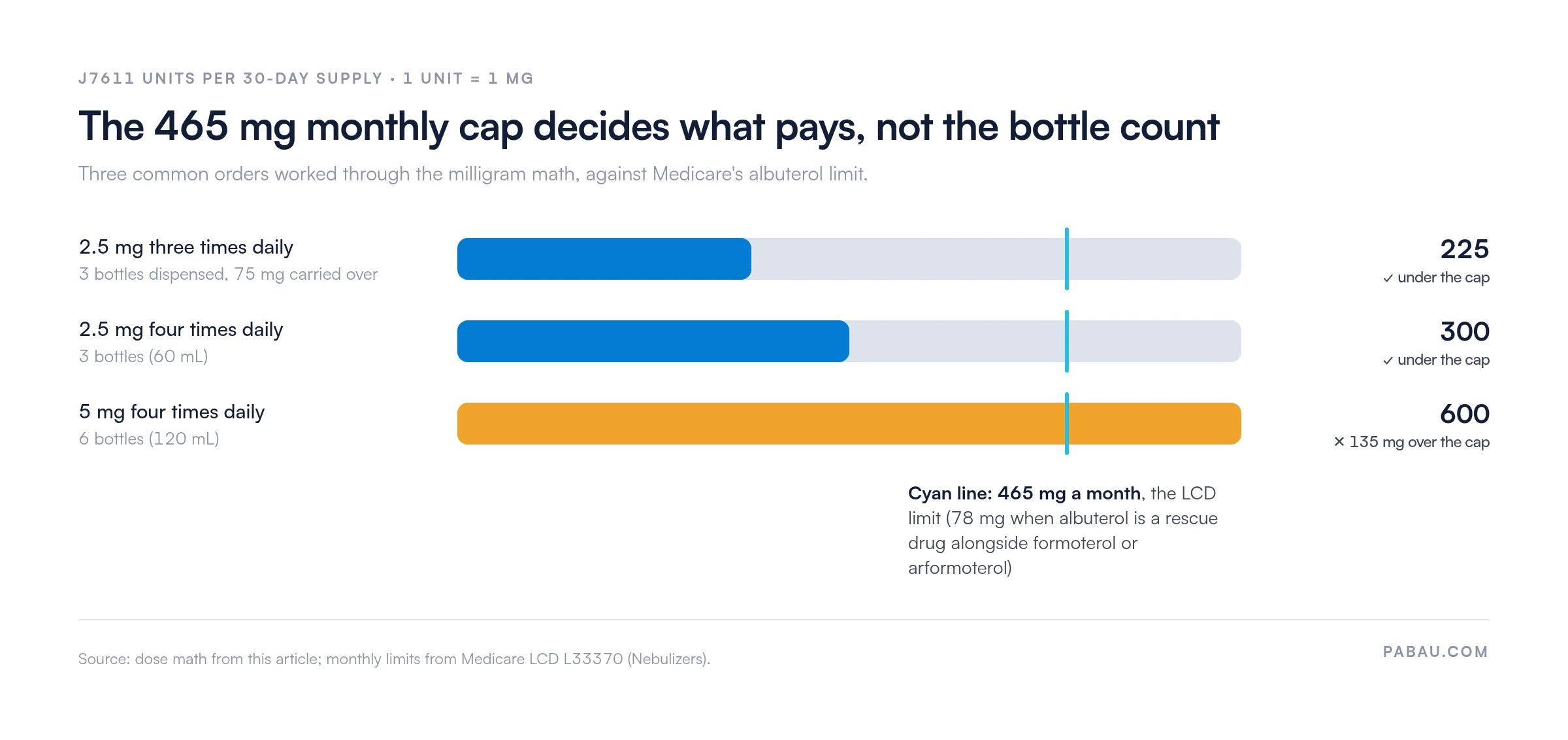
That last row is the one that bites. Three bottles hold more than the order uses in a month. Bill what the order supports for the period, and count the leftover against the next refill.
Medicare also caps albuterol at 465 mg a month, or 78 mg when it’s a rescue drug alongside formoterol or arformoterol. Units above the cap are denied as not reasonable and necessary, so the 5 mg order can’t bill all 600. Here’s how the three monthly orders sit against that line.
Compare that with J7613. A 2.5 mg unit-dose vial is 2.5 mg of albuterol, so vial counting and milligram counting give different numbers there too. Either way, the unit is the milligram, never the container.
Most J7611 claims come from a DME supplier or pharmacy, not the prescriber’s office. The steps below follow one claim from start to finish.
Each step leaves a record behind. If an auditor asks later, those records are the claim’s defense.
Medicare pays for J7611 under the Part B DME benefit. The rules come from the Nebulizers LCD L33370 and its policy article A52466, published by the DME MACs. Albuterol is covered for obstructive pulmonary disease when it’s given through a covered nebulizer.
The diagnosis on the claim has to match the policy article’s covered code list. These are common examples, so confirm each one against the current article before relying on it.
Medicaid works differently. Each state sets its own fee schedule, preferred products and prior authorization rules. Some states prefer unit-dose vials, so check whether the concentrate needs approval first.
Commercial plans may ask why a nebulizer is needed instead of an inhaler. Keep the practitioner’s reason on file before you submit, not after the denial.
KO, KP and KQ only describe FDA-approved unit-dose inhalation drugs. They tell the payer whether a unit-dose drug was given alone or as part of a combination. Concentrated J7611 isn’t a unit-dose product, so none of them apply.
The mix-up usually happens when a team switches between concentrate and vials for the same patient. Here’s how the two codes compare:
If a combination regimen pairs albuterol with ipratropium, the albuterol code still carries its own modifier rules. Don’t copy a modifier from the ipratropium line onto J7611.
The only FDA-approved combination preparation is J7620, a single unit-dose vial billed without KO, KP or KQ. Medicare’s LCD also denies J7611 billed alongside J7620 as not reasonable and necessary.
J7611 denials are predictable, which makes them preventable. Each row below pairs the mistake with the fix.
Our reference on denial codes explains what each CARC means and how to appeal it.
Run through this list for every new J7611 claim and every refill. It takes two minutes and catches most of the denials above, so you send a clean claim the first time.
When a patient switches from vials to concentrate, update the order before the next refill ships. The old order still describes unit-dose vials, and it no longer supports the J7611 line.
Most J7611 errors come from information sitting in different places. The order is in one system, the dispensing record in another and the claim in a third.
Pabau, the practice platform we build, brings those into one patient record. Its claims software for practices pre-fills the claim from that record. Authorization codes, dates and sessions sit on the patient’s case, with a warning when one is missing.
Before a claim sends, Pabau checks that required fields, such as membership numbers and authorization codes, are complete. In the US, CMS-1500 and 837P claims route through Claim.MD, with eligibility checks, ERA remittances and secondary claims. Your team still chooses the code and units, but they work from one record.
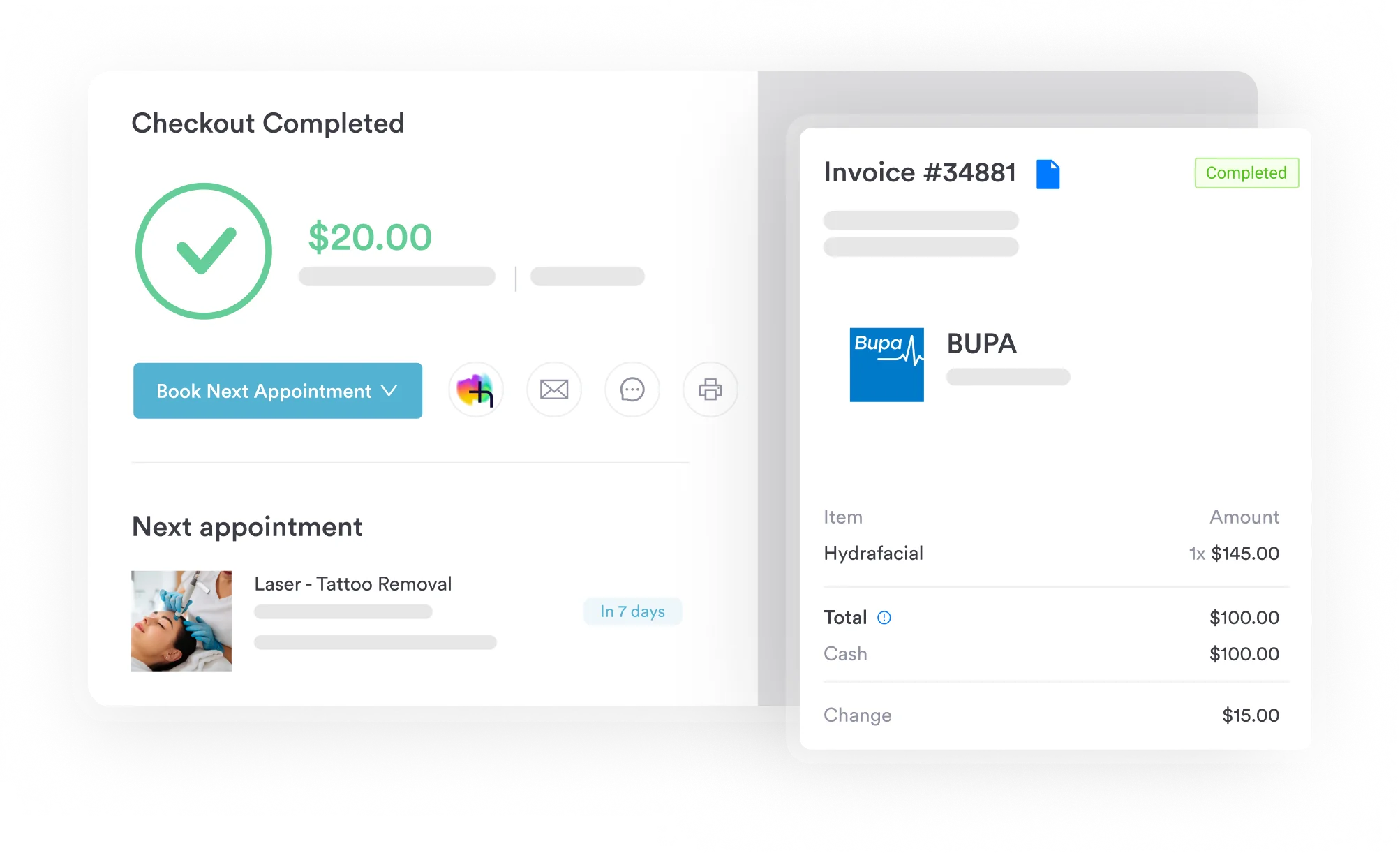

Pabau pre-fills claims from the patient record, checks required fields before sending and tracks each claim through to remittance.

J7611 is a narrow code. It fits one product, albuterol concentrate from a drug manufacturer, and no other member of the albuterol family.
If your team builds one habit, make it matching the code to the NDC before anyone counts units. That single check prevents the vial-versus-concentrate denial, which is the costliest one to unwind.
After that, the milligram math and the empty modifier field follow on their own. Book a demo to see how Pabau keeps the order, the dispensing record and the claim on one patient record.

Billing ipratropium alongside albuterol? HCPCS code J7644 covers the ipratropium unit-dose vials that pair with albuterol in combination regimens.
Need a broader denial resolution framework? Denial management in healthcare covers how to build a denial prevention and appeals workflow across your billing team.
Looking for the full medical billing picture? What is revenue cycle management? explains how a claim moves from order to payment across the revenue cycle.
Handling electronic claim submission? 837 file submission guide covers how claims are structured and transmitted electronically to payers.
Reconciling the claim with the visit record? What is a superbill? explains what the itemized form carries and how it feeds the claim.
Yes. J7611 is an active HCPCS Level II code, and no Q-code has replaced it. Check the quarterly CMS HCPCS update for any future change.
Yes. Albuterol sulfate 0.5% inhalation solution holds 5 mg per mL and is the concentrate J7611 describes. It’s diluted with saline before use.
No. J7611 covers the albuterol only. Sterile saline or water for dilution bills as a separate supply code, within the policy article’s quantity limits.
No. J7611 is for nebulizer solution given through DME. A metered-dose inhaler is a pharmacy benefit item and is billed through Part D or the plan’s drug benefit.
No. Xopenex is levalbuterol, a different drug. Bill J7612 for levalbuterol concentrate and J7614 for unit-dose vials, both per 0.5 mg.
At 2.5 mg four times a day, one 100 mg bottle covers 10 days. Use that figure to sanity-check refill timing.