

CCSD code G5100: Bypass of duodenum billing guide
CCSD code G5100 bills a bypass that leaves the duodenum in place CCSD code G5100...

Last Updated: Oct 16, 2026
J2175 is the HCPCS Level II code for injection, meperidine hydrochloride, per 100 mg.
Let Pabau's smart automation suggest the right codes, reduce claim denials, and keep your practice compliant—effortlessly.
Automate repetitive tasks and focus on what matters most—your patients.
Reduce coding errors and ensure compliance with the latest regulations.
Clean claims, fewer denials, and faster reimbursements.
Powerful insights and reporting to help your practice thrive.
HIPAA compliant SOC 2 certified GDPR-compliant Trusted by 4,000+ clinics worldwide

HCPCS Code J2175 covers injection of meperidine hydrochloride, sold as Demerol, billed per 100 mg administered.
Billing units equal the dose in mg divided by 100, so a 150 mg dose is 1.5 units.
Wastage from a single-use vial needs a second claim line carrying modifier JW.
Modifier JZ reports zero waste, and CMS has required it for dates of service since July 1, 2023.
Practice management software like Pabau tracks J-code units and modifier assignments, so fewer claims come back denied.
HCPCS Code J2175 is a Level II J-series code maintained by the Centers for Medicare and Medicaid Services (CMS). J-codes cover drugs given by injection or infusion that a patient cannot self-administer. That makes them a staple of physician office and hospital outpatient billing.
A premixed meperidine and promethazine injection has its own combination code, HCPCS Code J2180. That product is discontinued, and Medicare allows zero units of J2180 per day. Separate vials bill as J2175 for meperidine and J2550 for promethazine.
CMS publishes the full Level II code set and its annual update files through the HCPCS program. Use those release files to confirm J2175’s status and effective dates at each annual refresh. The same system also carries service codes such as G0152, which follow different payment rules.
Meperidine hydrochloride is a synthetic opioid analgesic, sold as Demerol. The Drug Enforcement Administration classifies it as a Schedule II controlled substance.
Its use in outpatient and procedural settings has narrowed over recent decades, mainly because the normeperidine metabolite builds up with repeated dosing. It is still billable in specific acute-pain scenarios.
Practices running IV therapy workflows should capture the route, the dose in mg, and the clinical indication at the point of care. Recording those fields after the fact is what turns a clean encounter into a denied claim.
Schedule II administration also needs an audit trail, which is where prescription management software with controlled substance logging earns its place.
Post-operative pain is a common indication, including after breast surgery billed under breast surgery billed under 19316. Whatever the setting, the note must name the indication that justifies an opioid analgesic.
J2175 is billed per 100 mg of meperidine administered. The units on the claim equal the dose in mg divided by 100. Partial units are acceptable and should reflect the dose given, not a rounded figure.
The dose documented in the clinical record must match the units billed. A mismatch between the mg in the administration note and the units on the claim is a common audit trigger. Document the exact dose at administration and let the billing system convert it.
Medicare pays for J2175 under Part B using Average Sales Price (ASP) methodology. CMS recalculates ASP each quarter from manufacturer-reported sales data, then pays ASP plus a percentage add-on. For most physician-administered drugs that add-on is 6%.
Because rates move every quarter, pull the current figure from the CMS ASP pricing files rather than from a static reference page.
The CMS fee schedule lookup lets coders search J2175 by code and by Medicare Administrative Contractor (MAC) jurisdiction. Facility and non-facility rates can differ depending on where the drug is given.
Meperidine is a Schedule II controlled substance, so some MAC jurisdictions attach extra documentation conditions to coverage. Check your MAC’s Local Coverage Determinations (LCDs) in the Medicare Coverage Database before you submit.
Accurate J2175 billing follows the same workflow every time, from dose capture to claim submission. Skip a step and the claim either denies or surfaces later in a post-payment audit. Structured medical forms at the point of care handle most of it automatically.
CMS requires route-of-administration modifiers on Part B drug claims where they apply. For J2175, the two route modifiers you will use most are JA and JB.
J2175 pays for the drug only. A separate CPT administration code covers the act of injecting or infusing it. Bundling rules vary by payer, so check with your MAC before submitting.
Document the administration method and route in the clinical note before you generate the claim. A claim listing CPT 96374 for IV push, against a note describing an IM injection, triggers a pre-payment review. Align the administration code, the modifier, and the clinical note before submission.
Meperidine usually comes in single-use vials. When part of the vial is given and the rest discarded, CMS wants the discarded amount on its own claim line with modifier JW.
Modifier JZ goes on the administered line when nothing is wasted. CMS has required JZ for dates of service on or after July 1, 2023. Reporting was voluntary from January 1, 2023, and CMS began rejecting non-compliant claims on October 1, 2023.
This two-modifier system applies to every J-code billed from a single-use vial. Practices choosing an EMR for injectable workflows should confirm the billing module supports separate lines for administered and wasted quantities. Modifier fields should populate from the administration record rather than from manual entry.
Here is how a claim looks when 50 mg is given from a 100 mg single-use vial.
When the full 100 mg vial is administered with nothing left over, bill one line for J2175 at 1.0 unit. Add modifier JZ, which has been mandatory since July 1, 2023, and skip the second line. The payer reads JZ as an explicit statement that nothing was discarded.
Medicare requires a National Drug Code (NDC) on Part B drug claims, J2175 included. The NDC identifies the product, the manufacturer, and the package size. Numbers differ by manufacturer, concentration, and container, so the NDC on the claim must match the vial used.
Good EHR integration links the dispensed product’s NDC to the J-code at the point of administration. That removes a manual entry step at claim time.
NDC numbers are product specific and change when a manufacturer updates a package configuration. Pull the NDC from the physical vial label, never from memory or a previous claim. The FDA NDC Directory lets you confirm a code against the labeler and package size on file.
Every J2175 claim needs an ICD-10-CM diagnosis code that establishes medical necessity for the meperidine. Payers deny claims where the diagnosis does not justify an injectable opioid analgesic. The code you pick has to match the documentation for that encounter.
The code has to reflect the pain condition documented, not a generic unspecified pain code. Claims that pair a non-specific pain code with an injectable Schedule II opioid draw review at a higher rate.
Choose the most specific code the note supports. Sports medicine practices treating acute traumatic injury usually land on G89.11, and the note has to name the injury behind it.
Naloxone, the opioid antagonist given to reverse an overdose, once billed under HCPCS Code J2310. CMS deleted that code effective July 1, 2025, so its last valid date of service was June 30, 2025.
Medicare Part B covers J2175 when medical necessity is documented and the claim meets the administering MAC’s LCD requirements. Coverage is not automatic. Meperidine’s narrowing clinical profile has prompted some MACs to publish coverage articles on injectable opioid analgesics specifically.
Commercial payers vary widely. Some require prior authorization for Schedule II injectables, especially outside a surgical episode. Meperidine records carry a billing audit dimension and a DEA compliance dimension at once. Your HIPAA compliance routine therefore shapes how you answer a payer audit request.
Who tracks these payer rules depends on the ownership model. The billing split between a group practice and a solo one is worth settling before you build the workflow.
Coders rarely get the code itself wrong. Denials and audits usually trace back to a clinical note that does not support what the claim says. Every J2175 claim should rest on documentation covering the elements below.
Practices that model injectable encounters on their IV therapy intake form capture most of these fields during the clinical workflow. Digital intake forms that prompt for route, dose, and indication at the point of care remove most retroactive corrections.
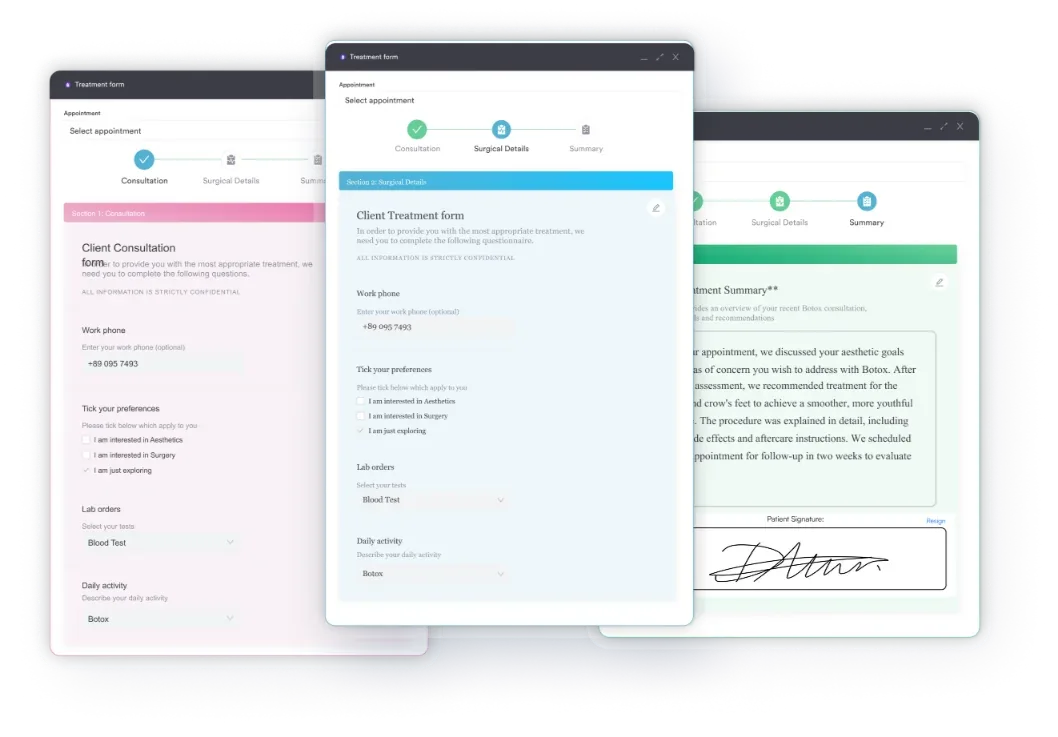
Teams moving to paperless documentation tend to see J-code accuracy improve once the clinical record and the billing record draw on one data source.
Run a quarterly internal audit on J2175. Pull 10 to 15 random claims and check three things against the clinical note. Do the units match the mg documented, does the modifier match the route, and does the NDC match the product dispensed? This three-point check finds the common denial triggers before a payer does.
In most practices the administration note lives in the clinical system and the claim is keyed somewhere else. A nurse writes 75 mg in the chart, and a biller later types 1.0 unit into the claim. Nobody notices until a payer does.
Practice management software like Pabau keeps both records in one place. The dose, route, wastage, and NDC captured at administration feed the claim directly, so the unit count follows the chart. Your billing team works from claims management screens fed by the same record, not a re-keyed copy.
The outcome is fewer corrections. Wastage lines get built from the wastage the clinician recorded, and the NDC comes from the product recorded at administration. Every Pabau subscription includes the whole platform, so billing accuracy is not something you buy as an upgrade.

Pabau keeps HCPCS units, modifiers, NDC entries, and wastage records in one workflow. Your billing team spends less time fixing claims and more time on patients.

J2175 is a small line on a claim that carries a lot of conditions. The code itself is easy. Proving the dose, the route, and the wastage is where the work sits.
If you change one thing after reading this, make it the point of capture. A note that records mg, route, indication, and discarded volume at the bedside removes almost every reason a J2175 claim comes back.
The trade-off worth remembering is that stricter capture costs a few seconds per administration and saves hours of rework each quarter. Book a demo to see how Pabau ties drug administration records to J-code billing in one workflow.

Billing another single-use vial drug with wastage? J9267 walks through unit calculation and JW reporting for paclitaxel injections.
Need the same workflow for another injectable? J0800 covers dosing units, coverage rules, and the documentation payers expect.
Collecting the patient share after Part B pays? Patient self-pay billing sets out how to quote, collect, and record balances without awkward conversations.
Billing the equipment as well as the drug? K0455 explains how infusion pump claims are documented and priced.
Coding chest wall pain after surgery? Tietze syndrome diagnosis code explains how ICD-10 code M94.0 covers both Tietze syndrome and costochondritis without a separate code.
HCPCS Code J2175 is used to bill for injection of meperidine hydrochloride, sold as Demerol, per 100 mg administered. It applies when a clinician injects meperidine in a physician office or outpatient setting. The patient does not self-administer the drug.
Divide the dose administered in mg by 100. A 50 mg dose is 0.5 units. A 150 mg dose is 1.5 units. Partial units are billable and must match the dose documented in the clinical record, not a rounded figure.
Medicare pays J2175 under Part B using Average Sales Price (ASP) methodology, typically ASP plus a percentage add-on. Rates change every quarter. Check the current CMS ASP quarterly pricing file, or the Physician Fee Schedule lookup, for the MAC-specific allowable amount.
Submit two claim lines. The first carries the dose administered, with its units and route modifier. The second carries the wasted portion with modifier JW and the wasted unit count. When nothing is discarded from a single-use vial, add modifier JZ to the administered line instead. CMS has required JZ for dates of service on or after July 1, 2023.
CMS updates the J2175 rate every quarter, based on the Average Sales Price of meperidine. For current figures, use the CMS Physician Fee Schedule search tool at cms.gov. You can also contact your MAC directly, since rates vary by jurisdiction and care setting.
Four modifiers cover most J2175 claims. JA marks the intravenous route and JB marks subcutaneous. JW reports drug discarded from a single-use vial, and JZ reports zero waste. CMS has required JZ for dates of service on or after July 1, 2023. Pick the route modifier from how the drug was given, and the wastage modifier from whether anything was discarded.
Yes. The Controlled Substances Act places meperidine hydrochloride, sold as Demerol, in DEA Schedule II. That means a high potential for abuse and accepted medical use under severe restrictions. Schedule II drugs also need controlled substance dispensing records kept separately from the billing record.



