

CCSD code G5100: Bypass of duodenum billing guide
CCSD code G5100 bills a bypass that leaves the duodenum in place CCSD code G5100...

Last Updated: Oct 16, 2026
G0152 is the HCPCS Level II code for services performed by a qualified occupational therapist in the home health or hospice setting, each 15 minutes.
G0152 rarely generates a payment on its own. Medicare pays home health by the 30-day period of care, so the code mostly reports what happened during the visit. Accuracy still matters, because those lines drive audits, low-utilization payments, and your cost report.
Denials cluster around three things: the wrong provider type, miscounted minutes, or a plan of care that nobody signed. Each one is preventable at the desk, before the claim leaves.
Let Pabau's smart automation suggest the right codes, reduce claim denials, and keep your practice compliant—effortlessly.
Automate repetitive tasks and focus on what matters most—your patients.
Reduce coding errors and ensure compliance with the latest regulations.
Clean claims, fewer denials, and faster reimbursements.
Powerful insights and reporting to help your practice thrive.
HIPAA compliant SOC 2 certified GDPR-compliant Trusted by 4,000+ clinics worldwide

HCPCS code G0152 covers occupational therapy delivered by a qualified OT in a home health or hospice setting, reported in 15-minute increments.
Only a licensed OT may bill G0152, and OT assistants report their visits under G0158 instead.
Every claim needs a physician-certified plan of care, documented medical necessity, and timed treatment minutes in the visit note.
Home health visits are paid under the prospective payment system, so G0152 usually reports time rather than triggering its own payment.
Practice management software like Pabau captures treatment times and flags missing documentation before a home health claim goes out.
G0152 is a HCPCS Level II G-code maintained by the Centers for Medicare and Medicaid Services (CMS). It applies to skilled occupational therapy furnished under the Medicare home health benefit, and to OT written into a hospice plan of care.
Medicare pays for judgment the patient cannot supply alone: assessment, treatment planning, adaptive technique training, and caregiver instruction. A visit that only repeats a routine the patient already manages will not meet the skilled standard.
G0152 belongs to a small cluster of home health G-codes running from G0151 to G0158. Each one maps to a discipline and a license level. Reaching for the wrong member of that cluster is one of the most common home health submission errors.
A qualified occupational therapist is the only provider who may bill G0152. An OT assistant who delivers the same visit reports it under G0158, and billing G0152 instead is a compliance problem rather than a clerical one.
Reviewers spot it quickly, because the credential attached to the visit does not match the code on the line. Qualifying providers for G0152 generally include:
And OT assistants? An OTA can deliver the visit wherever state law and the plan of care allow it. Only the claim line changes, from G0152 to G0158. Its physical therapy equivalent is physical therapy equivalent is G0157.
Supervision rules and local edits vary by Medicare Administrative Contractor (MAC), so check your own jurisdiction before you configure the billing system.
CGS publishes its home health OT coverage guidance online, and other MACs do the same. Therapy aides may not bill G0152 under any circumstance.
Thin documentation is the leading reason these claims get denied or recouped after payment. Medicare’s list of required elements is short and specific.
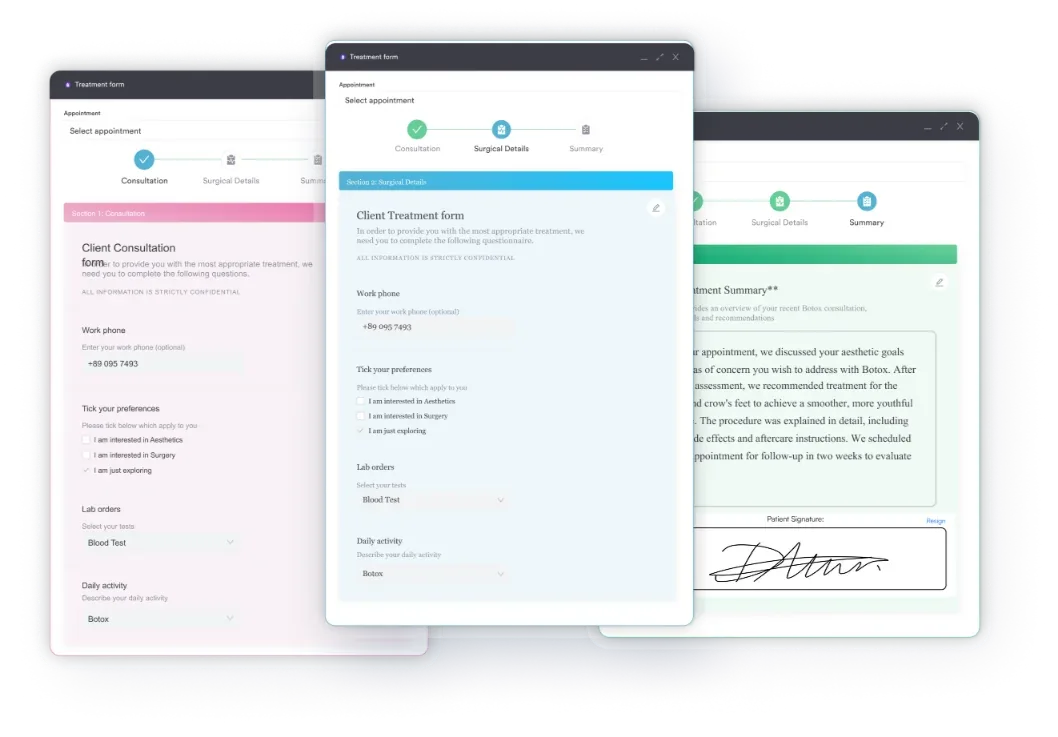
Every record needs a date, a signature, and secure storage. HIPAA-compliant workflows matter more in home health than almost anywhere else, because notes get written on a laptop in someone’s living room.
Structured note templates cut down on missing fields, and the time entries matter most, because they decide the unit count. Practices running on occupational therapy software keep the template and the timer on the same screen, so the therapist is not reconstructing minutes that evening.
Commercial payers write their own rules, so check a plan’s policy before you assume Medicare’s document set is enough. Annual HIPAA training also keeps a field team consistent about what belongs in a note and what does not.
Audit your visit notes quarterly. Pull ten random G0152 claims. Check each one for a signed plan of care, recorded minutes, and a functional goal tied to an ADL. That is exactly what a MAC looks for in a targeted home health review.
Medicare does not pay a fee-schedule amount for G0152. Home health runs on the Home Health Prospective Payment System, which pays for a 30-day period of care rather than for each visit inside it.
So in a normal period, your G0152 lines report the discipline and the minutes. Payment comes from the case-mix-adjusted amount for that period, and reporting one more unit does not change it.
The exception is a low-utilization payment adjustment, known as a LUPA. When a period has fewer visits than its threshold, Medicare pays per visit instead, at a rate set for occupational therapy. The wage index for the service area then adjusts that rate.
CMS publishes those per-visit amounts and the case-mix weights each year in the home health payment rule. Check that rule for the current year rather than a physician fee schedule lookup, which does not price these codes.
Billers still count minutes carefully, because unit math is where audits start. A 20-minute OT visit is one unit. A 25-minute visit is two. Claiming two units for 20 minutes is overbilling, and a repeated pattern of it gets flagged.
Reporting accuracy still earns its keep in a full period, even with no payment attached to the line. Those entries feed LUPA determinations, Medicare Advantage per-visit contracts, your cost report, and the visit history a reviewer reads first.
Two variables separate these four codes. The first is the therapy discipline, and the second is whether a therapist or an assistant delivered the visit. Everything else matches, including the 15-minute unit.
Take a mixed caseload for one week. A PT visits on Monday, an OTA on Wednesday, and the OT on Friday. That single week produces three codes: G0151, G0158, and G0152. The unit math never changes, only the code on the line does. Not every schedule counts minutes that way. Where G0152 bills in 15-minute units, CCSD code T8700 pays once per procedure at a rate each UK insurer sets by contract.
Every biller covering a mixed caseload should know that table by heart. It is a small piece of therapy practice management that pays for itself the first time it stops a recoupment.
Descriptors do get revised, so check your MAC’s current code file rather than a cheat sheet from two years ago. The AAPC HCPCS lookup is a quick way to confirm a short and long descriptor.
In hospice, the agency bills G0152 rather than the therapist, and the service has to be palliative. Once a patient elects the Medicare hospice benefit, care related to the terminal diagnosis becomes the hospice’s financial responsibility.
Occupational therapy is still covered in that setting, but only where it appears in the hospice plan of care. Four points shape how it gets billed:
Hospice coverage runs on its own rulebook, and home health documentation habits do not transfer cleanly. Chapter 9 of the Medicare Benefit Policy Manual, CMS Publication 100-02, is the section to read first.
Home health OT denials repeat themselves, which is good news for anyone building controls. Once you know the pattern, you can catch each one inside the workflow instead of chasing a recoupment months later.
Software helps with the part it can see. Claims management software checks that the fields a claim needs are complete before it will let that claim go out. The credential question and the minute count still start with the person in the home.
Run this list before the claim leaves the building. It takes about a minute per claim, and it catches nearly everything a reviewer would pull you up on.
Anything that fails the list goes back to the therapist the same day, not at month end. A note is far easier to correct while the visit is still fresh in someone’s memory.
Keep last year’s per-visit amounts out of your forecasting spreadsheets. Home health rates change every January, and one stale LUPA figure quietly distorts every revenue projection built on top of it.
Most home health teams still run this on memory and paper. A therapist writes minutes into a visit note, and someone retypes them into the billing system. Then a third person chases whether the signed plan of care ever came back.
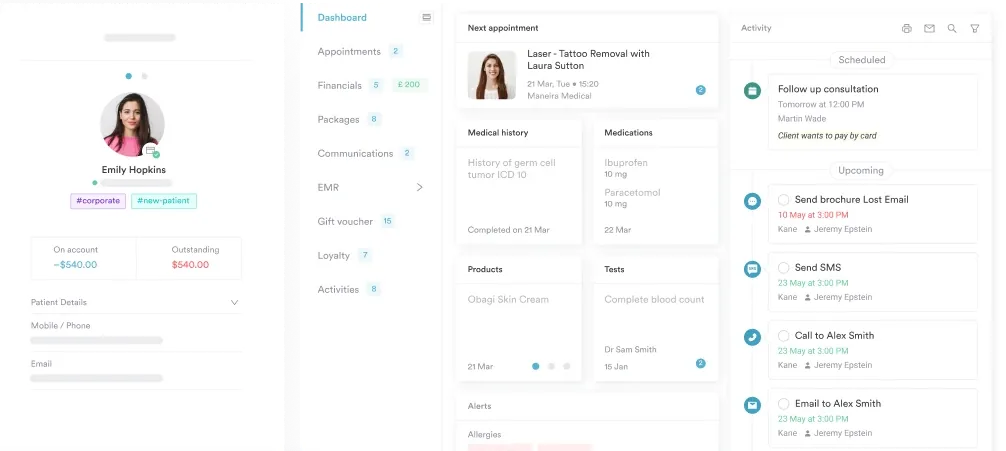
Practice management software like Pabau, an all-in-one system for clinical care and business operations, puts those steps in one place. Therapists record treatment times against the client record at the point of care. Billers then read the same minutes the therapist wrote, with no retyping in between. Eligibility, referral status and time thresholds all sit inside the Medicare Benefits Schedule descriptor rather than the code itself. When a claim on this code comes back unpaid, the denial reason codes on the remittance name the cause.
Signed forms, consents, and visit notes sit in that same file, so a documentation check becomes a look rather than a hunt. Automated workflows handle the routine chasing around a visit, and the claim itself is built from the record instead of a second data entry.
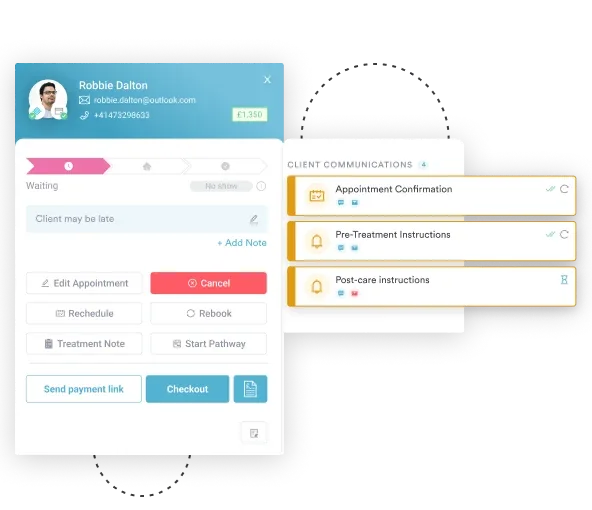
The outcome is fewer claims pulled back for a missing signature, and a shorter denial list at the end of the month. Practice management software will not decide which code fits a provider’s license, and it should not be asked to. What it removes is the retyping where most of the errors creep in.

Pabau records treatment times, consents, and visit notes in one client file. Your billers can see what is still missing before a G0152 claim goes out the door.

G0152 is an unforgiving code. Three people have to get their part right before it clears. The therapist records the minutes, the physician signs the plan, and the biller reads both correctly.
Fix the workflow once and the code stops being a monthly problem. Build in the credential check, the signature hold, and a timed-minute field, and your denials shrink to the ones you genuinely cannot control.
Building that structure from scratch takes time you probably do not have. Book a demo to see how Pabau keeps treatment times and documentation together for home health teams.

Billing the assistant-level visit instead? G0157 sets out how physical therapist assistant time is reported in the home.
Running a maintenance program at home? G0159 covers how those physical therapy visits are documented and billed.
Coding a brachytherapy source for radiation oncology? brachytherapy source billing guide explains how to bill each non-stranded HDR iridium-192 source as one unit.
Billing a combination pacemaker-defibrillator lead? pacemaker-defibrillator lead billing guide covers the implanted lead that delivers pacing and defibrillation from one component, billed under OPPS.
Also billing wound care in the same episode? 11043 explains the depth and surface-area rules that decide the debridement code.
No. Nursing, physical therapy, or speech-language pathology has to establish eligibility first. Once one of them does, occupational therapy can continue the case even after that qualifying service ends.
Revenue code 0430 covers occupational therapy on the home health claim, and G0152 sits on that line. Your MAC publishes the accepted revenue code and HCPCS pairings, so check them before configuring your billing system.
No. Medicare does not count a service delivered by telecommunications technology as a home health visit, so it cannot be reported under G0152. The technology can still appear on the plan of care.
Not directly. The patient-driven groupings model removed therapy thresholds from case-mix in 2020, so visit volume no longer lifts the period payment. Visit counts do still decide LUPA thresholds and draw audit attention.
Yes, where occupational therapy is ordered alongside physical therapy or speech-language pathology. The OT may then complete the initial assessment at the start of care. An OT-only referral still needs a qualifying discipline first.



