

CCSD code G5100: Bypass of duodenum billing guide
CCSD code G5100 bills a bypass that leaves the duodenum in place CCSD code G5100...

Last Updated: Oct 16, 2026
J0800 is the HCPCS Level II code for injection, corticotropin, up to 40 units. CMS terminated it with effect from 30 September 2023, so it is no longer valid for claims after that date.
HCPCS code J0800 carried the official description "injection, corticotropin, up to 40 units." It was the Level II J-code used to bill corticotropin (adrenocorticotropic hormone, or ACTH) given by injection in a physician office or outpatient setting. CMS deleted it effective September 30, 2023.
The replacement is not a single code. On October 1, 2023, CMS activated two product-specific codes: J0801 for H.P. Acthar Gel and J0802 for Purified Cortrophin Gel. Which one belongs on the claim depends on which product the practice bought and administered.
Because J0800 is deleted, submitting it on a new claim draws a rejection from Medicare and from commercial payers. The Centers for Medicare and Medicaid Services (CMS) HCPCS system assigns and retires codes on a quarterly and annual cycle. Confirm the active code set in the current CMS HCPCS release file before submitting any corticotropin claim.
Let Pabau's smart automation suggest the right codes, reduce claim denials, and keep your practice compliant—effortlessly.
Automate repetitive tasks and focus on what matters most—your patients.
Reduce coding errors and ensure compliance with the latest regulations.
Clean claims, fewer denials, and faster reimbursements.
Powerful insights and reporting to help your practice thrive.
HIPAA compliant SOC 2 certified GDPR-compliant Trusted by 4,000+ clinics worldwide

HCPCS code J0800 (injection, corticotropin, up to 40 units) was deleted on September 30, 2023 and is no longer billable
CMS replaced it with two product-specific codes on October 1, 2023: J0801 for H.P. Acthar Gel and J0802 for Purified Cortrophin Gel
The “(ani)” in J0802 stands for ANI Pharmaceuticals, the maker of Cortrophin Gel, not for an animal source
Both products are porcine-derived ACTH gels, so the code follows the brand in the vial, not the drug’s origin
Practice management software like Pabau tracks J-code crosswalks, NDC data, and prior auth status so buy-and-bill claims clear on the first submission
CMS retired J0800 on September 30, 2023 and activated J0801 and J0802 the next day. The split was made by product, not by drug source. Each successor code is tied to one brand of repository corticotropin injection, and payer policies enforce that tie.
The crosswalk from J0800 is therefore conditional. Claims that would once have gone out under J0800 for Acthar Gel now go out under J0801. Claims for Cortrophin Gel now go out under J0802. Everything else about the claim carries over: the unit convention, the buy-and-bill model, and the NDC requirement.
Historical claims paid under J0800 before the deletion date need no corrective action. Practices reprocessing a denied legacy claim should follow the payer’s adjustment guidelines for the original date of service.
For every current date of service, the code has to be J0801 or J0802. Tracking code crosswalks inside an updated claims management workflow stops this type of denial from repeating across accounts.
The “(ani)” in J0802’s descriptor is short for ANI Pharmaceuticals, the company that makes Purified Cortrophin Gel. It identifies a manufacturer, not a drug source. Reading it as “animal” is what sends most misrouted corticotropin claims to the wrong code.
Animal sourcing cannot separate the two codes, because it does not separate the two products. Acthar Gel and Cortrophin Gel are both porcine-derived ACTH gels. The brand in the vial is the only thing that puts a claim on J0801 rather than J0802.
Payer billing guidance says so directly. Commercial and Medicare Advantage policies state that J0801 applies to Acthar Gel only, and that J0802 applies to Cortrophin Gel only. A claim that pairs an Acthar Gel NDC with J0802 fails that product edit even when the diagnosis, units, and authorization are all correct.
Check the code against the NDC on the vial before the claim goes out. A Mallinckrodt Acthar Gel NDC belongs on a J0801 line, and an ANI Cortrophin Gel NDC belongs on a J0802 line. If your charge master still carries one generic corticotropin entry left over from J0800, split it into two entries now.
Corticotropin, also called adrenocorticotropic hormone (ACTH), is a pituitary hormone that stimulates the adrenal cortex to produce cortisol and other corticosteroids. In practice it is given as repository corticotropin injection, a gel formulation that releases the hormone slowly after a subcutaneous or intramuscular dose.
Two branded products carry that formulation in the United States. H.P. Acthar Gel comes from Mallinckrodt Pharmaceuticals and bills under J0801. Purified Cortrophin Gel comes from ANI Pharmaceuticals and bills under J0802. Both are prescription-only, and practices usually acquire both for buy-and-bill administration.
Their FDA-approved indications overlap heavily. Both labels cover:
Two indications sit on only one label, and those two decide the code by themselves:
Corticotropin claims come from a narrow set of settings. Neurology and rheumatology offices bill most of them. Dermatology practices use it for severe erythema multiforme and Stevens-Johnson syndrome. IV therapy practices handle the doses given on site.
Coverage under Medicare and commercial plans usually narrows to a subset of the label. Local Coverage Determinations (LCDs) and payer medical policies set that narrower list. Verify the supported diagnoses against the current LCD from the relevant Medicare Administrative Contractor before submitting a claim.
Medicare Part B covers physician-administered drugs, including repository corticotropin injection, when medical necessity is established and the drug is given in a covered setting. Coverage applies to J0801 and J0802 when a qualifying diagnosis is documented and the claim meets every submission requirement.
Reimbursement follows the Average Sales Price (ASP) methodology, at ASP+6% of the drug’s acquisition cost per unit billed. J0801 and J0802 are priced separately, so each carries its own payment limit in the quarterly ASP file. CMS republishes those limits every quarter, so the allowable amount moves across the year.
Published dollar figures for these codes go stale within a quarter. Verify the current rate in the CMS Physician Fee Schedule lookup tool and the current ASP pricing file before submitting claims or projecting revenue.
Key Medicare Part B coverage criteria for corticotropin injection:
Traditional Medicare fee-for-service does not require prior authorization for corticotropin in every case, but Medicare Advantage plans frequently do. Billing staff should confirm authorization requirements with the specific plan before the drug is acquired, not after it is administered. Effective medical office compliance workflows treat payer-specific prior auth checks as a mandatory pre-administration step.
Every corticotropin injection claim needs a supporting ICD-10-CM diagnosis code that establishes medical necessity. Submitting J0801 or J0802 without a covered diagnosis results in denial.
The codes below map to FDA-approved and Medicare-covered indications, but coverage still depends on each payer’s LCD and medical policy. Verify with the AAPC HCPCS code lookup and the applicable LCD before billing.
Documentation has to support the diagnosis code you select. Infantile spasms claims typically need EEG findings and the clinical diagnosis note. MS exacerbation claims should have MRI and neurological assessment records in the chart.
Payer auditors scrutinize corticotropin claims because the drug cost is high. Comprehensive clinical record documentation is the front-line defense against retrospective denials.

Acthar Gel and Cortrophin Gel are both usually billed under the buy-and-bill model. The practice acquires the drug, administers it, and then bills the payer for the drug and the administration. That differs from a specialty pharmacy model, where the payer reimburses the pharmacy directly.
The Office of Inspector General (OIG) treats high-cost buy-and-bill drugs as a compliance risk area. Billing staff should handle every step as a potential audit touchpoint. The steps below reflect standard practice, so confirm current CMS claim submission requirements before you build them into a workflow.
For practices managing several buy-and-bill drugs, this process gains a lot from integrated procedure code tracking and workflow automation. Other office-administered injectables such as injectables such as J1450 move through the same six steps. Manual NDC logging is slow and error-prone at scale.
The “up to 40 units” language in the descriptor defines the billing unit rather than the dose. One billing unit represents up to 40 USP units of corticotropin. An 80-unit dose is therefore reported as 2 units. This convention is identical for J0801 and J0802, and it carried over unchanged from J0800.
Other J-codes phrase their unit the same way. J1460 is defined in cc rather than USP units, so read the descriptor before converting any dose.
Incorrect units reporting on a J-code buy-and-bill claim is a leading cause of line-level denials and post-payment audits. Billing 80 where the payer expects 2 can look like a 40-fold overbill. Accurate per-administration records in the prescription management workflow keep what was administered and what was billed in step.
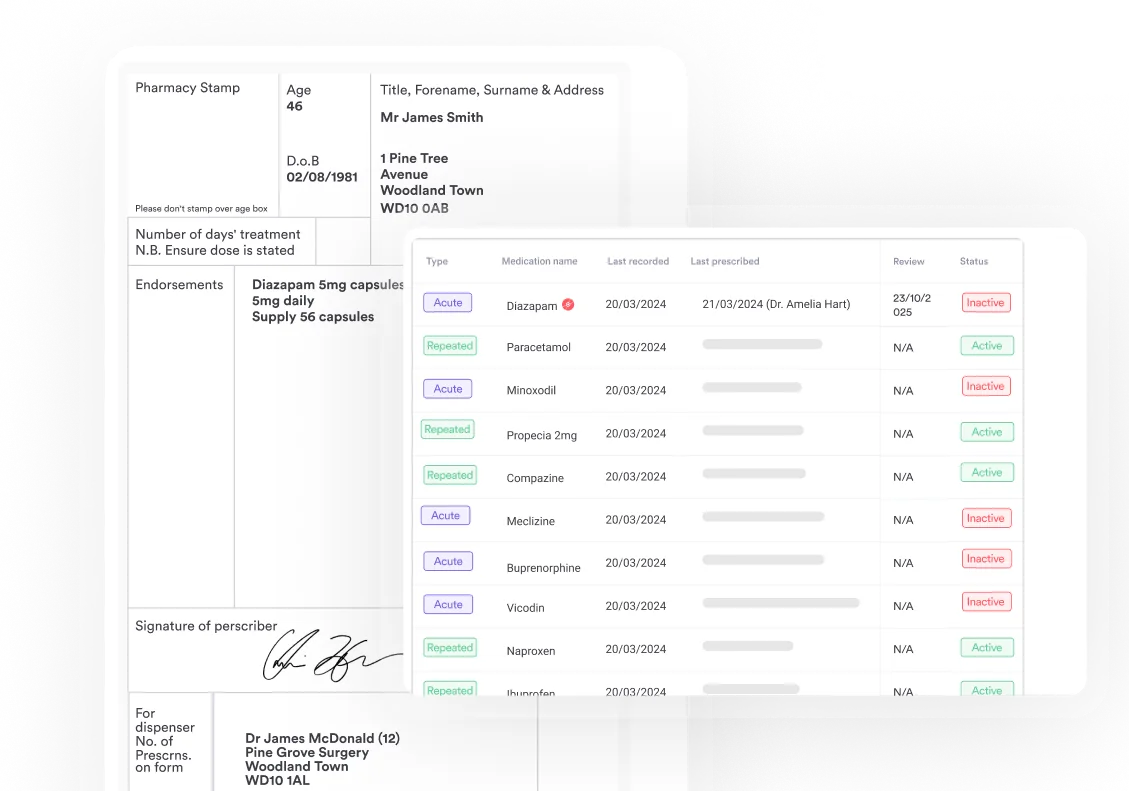
Repository corticotropin injection is among the most expensive drugs billed under the buy-and-bill model. Prior authorization requirements are strict and close to universal as a result. A practice that administers either product without confirmed PA faces a full denial and keeps the acquisition cost.
Authorizations are usually issued for a named product, so an approval for one gel does not automatically cover the other. If the practice switches between Acthar Gel and Cortrophin Gel, confirm the PA still matches the product before the next dose.
PA requirements vary substantially by payer type:
Standard PA documentation includes the prescriber’s clinical notes supporting the diagnosis and, where applicable, EEG or MRI results. Payers also want evidence of prior treatments tried and failed, plus the proposed dose, frequency, and duration.
Tracking PA numbers, expiration dates, and reauthorization timelines is a heavy load for practices billing high-cost J-codes. The same load applies to other expensive biologics, including J1562. A procedure code billing workflow works best when PA records link to the appointment and the claim.
Flag PA expiration dates in your billing system at least 30 days before the authorization period ends. Corticotropin approvals often run for three to six months. Administering a dose after the PA expires, even by one day, results in a full denial with no right of appeal on authorization grounds.
Several HCPCS modifiers apply to corticotropin injection claims. Picking the right one lowers denial risk and satisfies CMS documentation requirements for Part B drug billing. The modifiers below are the ones most relevant to J0801 and J0802, and historically to J0800.
JW and JZ are tied to the container, not to the code. Both corticotropin gels ship in multiple-dose 5 mL vials, and a multiple-dose vial is outside the JW and JZ policy. Check the vial size and type on the packaging before appending either modifier.
Place of service (POS) affects reimbursement under Medicare. Corticotropin injection is most often given in a physician office (POS 11) or a hospital outpatient department (POS 22). The distinction matters because Medicare applies different payment rules:
An incorrect POS code is a common claim editing error on buy-and-bill drugs, and it can trigger a reduced payment or a medical review request. Confirm the actual setting of service on every encounter before submission. When J-code billing runs across several locations, reviewing your broader procedure code billing accuracy surfaces systemic errors before they accumulate.
The billing workflow for high-cost J-code drugs involves more interdependent steps than most procedure-based claims. One break in the chain produces a full denial on a drug that can cost thousands of dollars per vial.
An expired authorization, a mismatched NDC, or a retired code left in the charge master will each do it. Practice management software like Pabau closes several of those failure points. Pabau’s claims management supports the billing cycle end to end, from the clinical note through claim submission and payment reconciliation.
The J0801 and J0802 workflow benefits most from software that handles these requirements:
Practices administering specialty drugs also benefit from digital records that stay audit-ready. The OIG reviews high-cost J-code billing patterns, so a system-supported workflow is the fastest route through a review.
Connecting your digital intake and consent forms to the clinical record keeps every touchpoint traceable. The trail runs from consent through administration to claim submission, which is exactly what an auditor asks to see.


Pabau’s claims management tools help practices track J-code crosswalks, NDC requirements, and prior authorization status. Complex buy-and-bill claims clear on the first submission.

J0800 is gone, and it did not leave one successor behind. Any practice that still sees it on a claim form, a superbill, or a charge capture template has to replace it. Two entries take its place: J0801 for Acthar Gel and J0802 for Cortrophin Gel.
Read the descriptors literally and the choice is simple. J0801 names Acthar Gel, and J0802 names ANI, the maker of Cortrophin Gel. Neither code has anything to do with animal sourcing, since both gels are porcine-derived.
Corticotropin billing is high-stakes work. Acquisition costs are large, PA rules are strict, and the OIG treats high-cost buy-and-bill drugs as a compliance priority. The practices that avoid denials keep the code, the NDC, and the authorization in one place. Book a demo to see how Pabau handles the full billing cycle for complex injection claims.

Billing another high-cost Part B product? P9021 covers blood product units under the same Part B reporting rules.
Administering a drug through equipment? K0455 covers infusion pump billing, which is where the KD modifier applies.
Coding a vein disorder without specifics? ICD-10 code I87.9 covers the catch-all code coders use when a vein abnormality lacks a precise diagnosis.
Documentation not enough for a precise diagnosis? ICD-10 code I99.9 covers the fallback code for circulatory findings that lack a confirmed diagnosis.
HCPCS code J0800 was a Level II J-code that described “injection, corticotropin, up to 40 units.” It was used to bill repository corticotropin (ACTH) injections under the Medicare Part B buy-and-bill model. CMS deleted it on September 30, 2023 and replaced it with two product-specific codes, J0801 and J0802.
Yes. J0800 was deleted effective September 30, 2023, and there are two replacements rather than one. J0801 covers “injection, corticotropin (acthar gel), up to 40 units” and J0802 covers “injection, corticotropin (ani), up to 40 units.” Both took effect on October 1, 2023.
Acthar Gel claims go under J0801. Payer billing guidance states that J0801 applies to H.P. Acthar Gel only and that J0802 applies to Purified Cortrophin Gel only. Billing Acthar Gel under J0802 is a product mismatch, and payers deny it even when the diagnosis and units are correct.
It stands for ANI Pharmaceuticals, the manufacturer of Purified Cortrophin Gel. It does not mean animal-derived. Both Acthar Gel and Cortrophin Gel are porcine-derived ACTH gels, so drug source is not what separates the two codes. The brand of product in the vial is.
One billing unit represents up to 40 USP units of corticotropin, the same convention J0800 used. Divide the administered dose by 40 and round up, so an 80-unit dose is reported as 2 units. Report the NDC quantity separately, in the vial’s own unit of measure.
Prior authorization is required by most payers for both products, including virtually all Medicare Advantage and commercial plans. Traditional Medicare fee-for-service may not require PA in every case, but LCD documentation standards still apply. Authorizations are product-specific, so confirm the approval names the gel you plan to administer.
Shared supporting codes include G35 (multiple sclerosis), N04.9 (nephrotic syndrome), M05.79 (rheumatoid arthritis), M32.9 (systemic lupus erythematosus), and D86.9 (sarcoidosis). G40.821 and G40.822 for infantile spasms sit on the Acthar Gel label, so they support J0801. M10.9 for acute gouty arthritis sits on the Cortrophin Gel label, so it supports J0802.
Modifier GA applies when an Advance Beneficiary Notice is on file, and GY is used when billing a non-covered indication for denial documentation. JW and JZ report drug wastage, but they apply to single-dose containers only. Both gels ship in multiple-dose 5 mL vials, so check the vial before appending either one.



