

HCPCS code E0198: Water pressure pad billing guide
HCPCS code E0198 is a water pad for a standard mattress HCPCS code E0198 is the ...

Last Updated: Oct 13, 2026
H2012 is the HCPCS Level II code for behavioral health day treatment, per hour.
Let Pabau's smart automation suggest the right codes, reduce claim denials, and keep your practice compliant—effortlessly.
Automate repetitive tasks and focus on what matters most—your patients.
Reduce coding errors and ensure compliance with the latest regulations.
Clean claims, fewer denials, and faster reimbursements.
Powerful insights and reporting to help your practice thrive.
HIPAA compliant SOC 2 certified GDPR-compliant Trusted by 4,000+ clinics worldwide

HCPCS Code H2012 covers behavioral health day treatment and is billed in one-hour units, mostly on Medicaid claims.
Only credentialed behavioral health providers working inside a licensed day treatment program can bill it, and eligibility rules differ by state.
Missing treatment plans, thin time logs, and the wrong modifier cause most H2012 denials. All three are preventable at the point of service.
Medicare does not pay H2012, so the federal fee schedule will never return a rate for it. Your state Medicaid agency and your MCO contract are the only sources.
Practice management software like Pabau keeps HCPCS fields, note templates, and denial tracking in one place, so fewer H2012 claims come back.
H2012 is the official code for behavioral health day treatment, per hour. It belongs to the HCPCS Level II H-series, maintained by the Centers for Medicare and Medicaid Services (CMS).
The H-series exists so state Medicaid programs can bill behavioral health, mental health, and substance use services that standard CPT codes do not cover.
The per-hour unit is what separates H2012 from codes billed per session or per day. One unit equals one hour of structured day treatment delivered to a patient. Payers usually round to the nearest full hour, and many state manuals set a minimum service duration before a unit can be claimed.
That makes time tracking part of the clinical record rather than an afterthought. It is worth checking how mental health EMR software stamps session start and end times before you commit to a system.
State Medicaid agencies set the credentialing rules for H2012, so eligible provider types vary. Most states expect a licensed or certified behavioral health professional working inside a formally recognized day treatment program. Billing outside those parameters is one of the fastest routes to a denial or a post-payment audit.
Provider records are the cheapest place to catch this. Configure psychiatry EMR software to flag any mismatch between the rendering provider’s license type and your state’s H2012 eligibility criteria.
Provider types that commonly qualify across state Medicaid programs include:
Always verify against the current state Medicaid provider manual before a new clinician starts billing. Check the code as well as the credential, because assessment work by a non-physician belongs under H0031 and counseling sessions under H0004.
The place of service (POS) code on an H2012 claim must match the setting where treatment is delivered. A mismatch between the POS code and the facility type is a common denial trigger. The table below shows the POS codes most often accepted with H2012, though payer-specific exceptions apply.
Incomplete clinical documentation is the main reason H2012 claims fail audits and trigger recoupment demands. Payers want a contemporaneous record showing that the service was medically necessary, delivered by a qualified provider, and tied to the patient’s treatment goals. Digital forms built for day treatment standardize that record and stop required fields going missing.
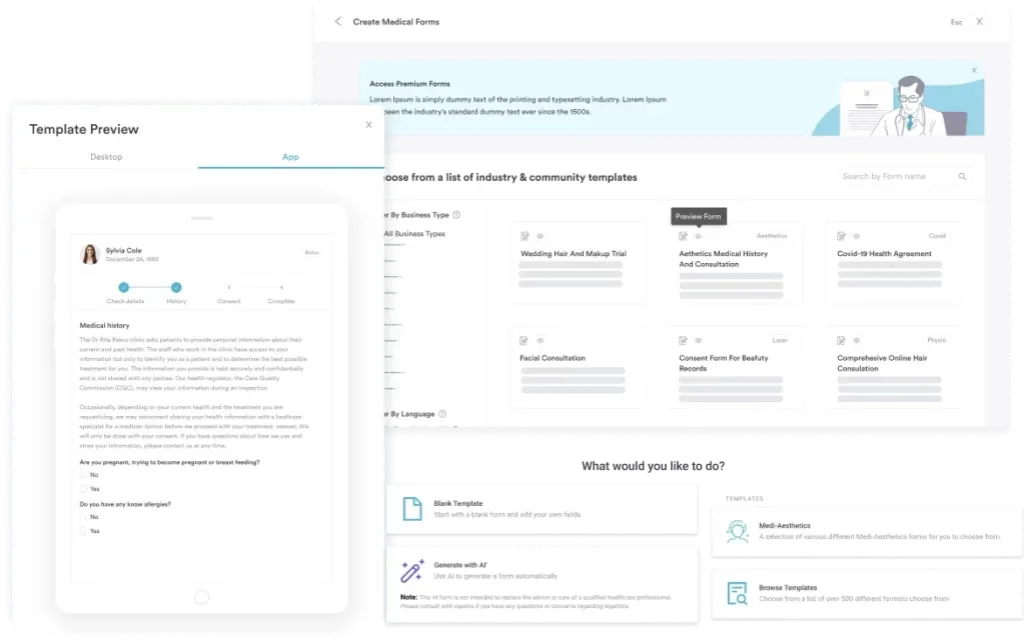
Sound clinical documentation workflows capture the same elements for every hour billed. Keeping them in a structured format makes audit responses faster and claim submission cleaner. Records also have to meet HIPAA compliance standards, and substance use records carry extra confidentiality protections under 42 CFR Part 2.
The treatment plan is the element auditors pull first, so it pays to work from a consistent format. A psychology treatment plan template gives every clinician the same goal structure to write against.
Modifiers add the specificity some payers require before they will process an H2012 claim. Applying the wrong one, or leaving a required one off, is among the top three denial causes for this code. The right modifier depends on the payer, the service context, and in some states the specific Medicaid managed care organization (MCO) contract.
Check the AAPC HCPCS Level II code reference for the current modifier list, then cross-check it against your state Medicaid provider manual. The manual wins where the two disagree.
H2012 has no single national reimbursement rate. H-codes are administered by state Medicaid agencies, so payment amounts are set at state level and updated on state fee schedule cycles. Rates also shift depending on which MCO manages behavioral health benefits in your region.
One shortcut worth abandoning: do not go looking for H2012 in the Medicare Physician Fee Schedule. Medicare does not pay this code, so the federal lookup tool will never return a rate for it. The state Medicaid fee schedule and your MCO contract are the only sources that will.
Medicaid is the primary payer for H2012 across all states. Commercial coverage varies widely. Some Blue Cross Blue Shield plans and managed behavioral health organizations accept H2012 from contracted day treatment providers. Others want equivalent CPT codes or a separate program approval.
Verify payer-specific policy before you submit H2012 on a commercial claim. Confirm whether your state runs fee-for-service or managed care too, since MCO contracts often carry H2012 rates that differ from the state fee-for-service schedule.
Many Medicaid MCOs and commercial payers require prior authorization (PA) for H2012. PA rules are among the most inconsistently documented parts of behavioral health billing. A claim submitted without an active authorization is also hard to appeal after the fact. Build the PA step into intake for every new day treatment patient.
A workable PA routine has three parts:
Build a PA expiry tracker into your scheduling system. Flag the account for renewal when a patient’s H2012 authorization is within two weeks of its end date, or close to its approved unit limit. Services delivered after the authorization lapses are usually non-payable, however clear the medical necessity was.
Each code in the H2010 to H2015 range describes a different service and a different billing unit. Submitting H2012 for something an adjacent code describes better creates audit exposure and possible recoupment.
For the full official descriptions, cross-check the NLM HCPCS Level II API or your billing software’s code lookup.
Two neighboring choices trip billers up most often. A program running at partial hospitalization intensity for less than 24 hours belongs under H0035 rather than H2012. The diagnosis has to match the service as well, whether that is F20.9 or another behavioral health diagnosis carried on the treatment plan.
H2012 denials cluster around a handful of predictable problems, and most can be prevented at the time of service. The table below maps the most common triggers to their root causes and corrective actions, for both claim corrections and front-end process changes.
Run a pre-submission scrub for H2012 every week. Filter open H2012 claims by modifier, POS code, and authorization number, then hold any claim missing all three until the data is corrected. A 15-minute weekly audit stops one denial pattern repeating across a whole billing cycle.
Manual H2012 billing breaks down at scale. Once a program runs 20 or more patients a day across several clinicians, the spreadsheets take over. Treatment plan renewal dates, authorization limits, modifier rules, and time logs all sit in separate files. Every one of them is a chance to lose a claim.
Purpose-built practice management software features take that work off the spreadsheet. Good systems let you configure payer-specific billing rules and flag missing documentation before a claim goes out. They also track denial rates by code, so you can see which H2012 problem costs you most.
Behavioral health programs often sit inside a larger organization. The same billing team may also handle medical and surgical claims. Then the system has to hold rules for codes like CPT 21920 and CPT 20937 alongside the H-series.
One shared code library covers procedure and diagnosis entries alike, from H2012 to ICD-10 S56.125S. That spares your billers from rekeying the same claim data in two places.
Practice management software like Pabau brings those pieces together. Pabau’s claims management software carries built-in HCPCS code fields and payer-specific rule sets that cut manual coding errors. Its clinical note templates capture the documentation an H2012 claim has to stand on.
Reporting then shows practice managers H2012 submission and denial rates by provider. A credentialing problem or a modifier error surfaces in days instead of after a full month of revenue has gone out the door.
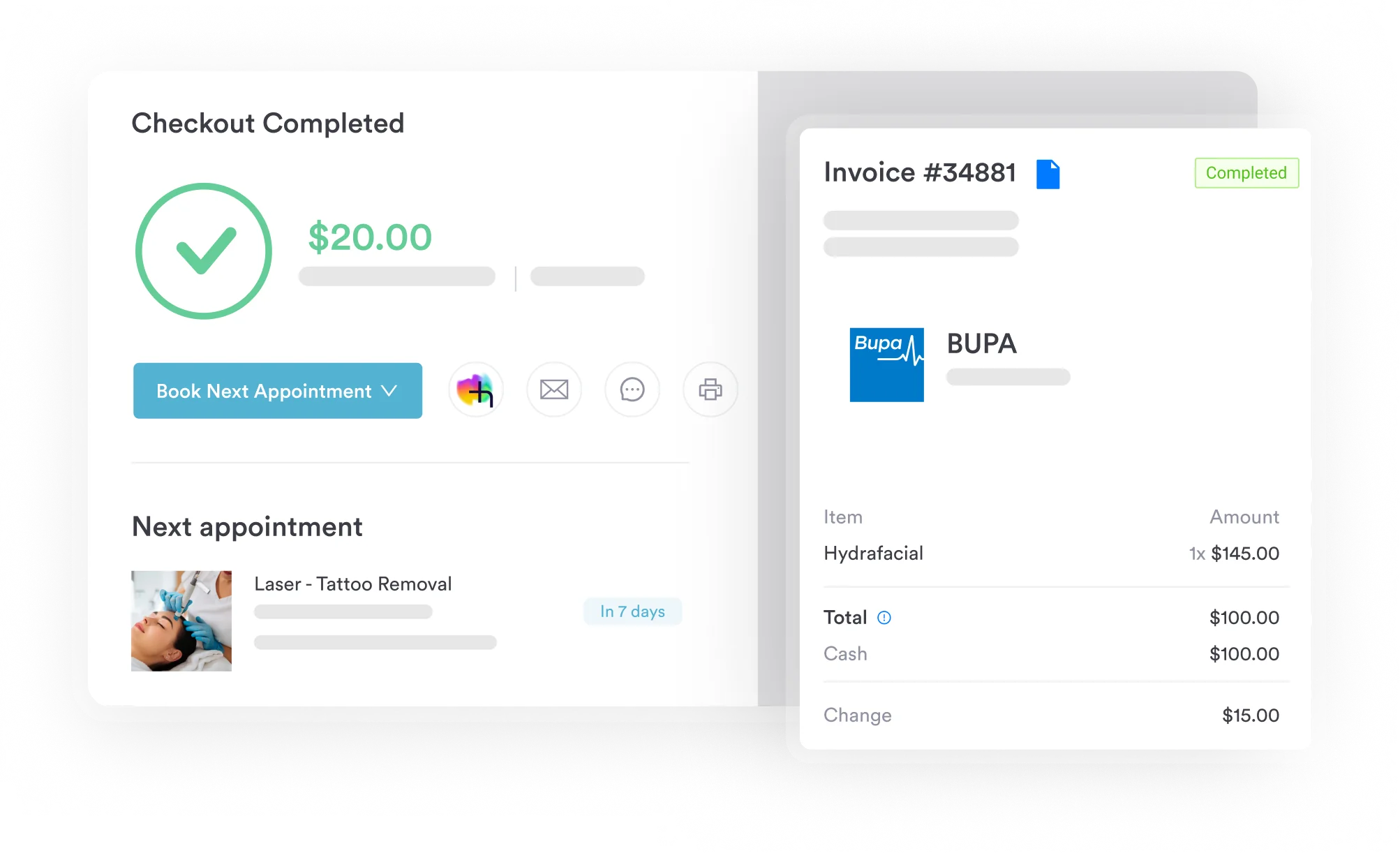
Consolidating notes and billing in one platform also cuts the reconciliation work between clinical records and claim data. It lowers the HIPAA exposure that comes with moving behavioral health records between disconnected systems, a common source of patient data security problems.

Pabau’s claims management tools support behavioral health billing with built-in HCPCS code fields, structured note templates, and denial tracking across your day treatment caseload. Your team spots a coding problem in days, not at month end.

H2012 rewards programs that treat billing as part of the clinical day rather than a task for the end of the month. The signed treatment plan, the time log, the authorization number, and the modifier all exist before the claim does. Capture them at the session and the claim writes itself.
The trade-off worth remembering is that H2012 rules are local. What your state Medicaid agency and your MCO publish beats any national reference, including this one. Keep the provider manual close and re-check it each fee schedule cycle.
Start with the denial reason that costs you most this quarter and fix the workflow behind it. Book a demo to see how Pabau connects day treatment notes, authorizations, and H2012 claims in one place.

Coding a combined language disorder? Mixed language disorder code explains when F80.2 applies instead of F80.9 or F80.1 for combined deficits.
Billing a program that runs under 24 hours? H0035 sets out the partial hospitalization alternative when your program runs at a higher intensity than day treatment.
Documenting rehabilitation time in 15-minute units? H2017 covers psychosocial rehabilitation services and the unit rules that come with them.
Coding developmental coordination disorder? Motor function disorder code explains when F82 applies to developmental coordination disorder and developmental dyspraxia.
Coding an ADHD diagnosis? ADHD diagnosis codes covers the F90 series and how it distinguishes ADHD presentations for accurate billing.
HCPCS Code H2012 is a HCPCS Level II code used to bill behavioral health day treatment services by the hour. Credentialed behavioral health providers use it to claim structured day treatment for patients with mental health or substance use disorders. Medicaid is the main payer, and some commercial payers accept it as well.
Each state Medicaid agency sets its own eligibility list. It usually includes licensed clinical social workers, licensed professional counselors, licensed marriage and family therapists, psychologists, and psychiatrists working in an approved day treatment program. Some states also allow supervised mental health technicians or certified peer support specialists to bill. Check the current state Medicaid provider manual before a new clinician starts.
Yes. Medicaid is the primary payer for H2012 across all states. Coverage rules, rates, and prior authorization requirements vary by state and by the managed care organization running behavioral health benefits in each region. Commercial coverage varies widely, so verify it with each payer before you submit a claim.
There is no national rate. H2012 is administered by state Medicaid agencies, so rates are set at state level. The figure depends on the state fee-for-service schedule, the contracted MCO rate in managed care states, and any value-based arrangement in place. Medicare does not pay H2012, so the federal fee schedule will not list it. Contact your state Medicaid agency or behavioral health MCO for the current rate.
H2012 is an HCPCS Level II code for structured day treatment, billed per hour and used mainly on Medicaid claims. Partial hospitalization is billed differently. Hospital outpatient PHP claims carry revenue code 0912 or 0913. Those pair with the service codes delivered that day. Examples include 90853 for group psychotherapy and 90847 for family therapy. The practical differences are the billing unit, the payer rules, and the medical oversight each level of care requires.
It depends on the payer. Many Medicaid MCOs and some commercial payers require prior authorization before day treatment starts. The authorization has to name the approved HCPCS code, the number of approved units or hours, and the authorized date range. Claims for services delivered without an active authorization are usually denied, and that denial is hard to appeal after the fact.
The most common causes are a missing or expired treatment plan and an incorrect or omitted modifier such as HE or HQ. A place of service mismatch and no prior authorization on file follow close behind. Progress notes without time stamps and providers not enrolled with the payer round out the list. Each one has a specific correction and a front-end process fix that stops it recurring.



