

HCPCS Code G0163: Skilled nursing observation and assessment
What is HCPCS Code G0163? HCPCS Code G0163 is a deleted Level II code for skille...

Last Updated: Oct 15, 2026
H2011 is the HCPCS Level II code for crisis intervention service, per 15 minutes. It pays for unplanned, face-to-face work that stabilizes someone in an acute behavioral health crisis, from a mobile crisis visit to a walk-in assessment.
The code belongs to state Medicaid, not Medicare, so each state sets its own rate, modifiers and daily unit cap. Most H2011 denials trace back to the units, the modifier or the time notes. The sections below follow the claim from the crisis call to payment.
Let Pabau's smart automation suggest the right codes, reduce claim denials, and keep your practice compliant—effortlessly.
Automate repetitive tasks and focus on what matters most—your patients.
Reduce coding errors and ensure compliance with the latest regulations.
Clean claims, fewer denials, and faster reimbursements.
Powerful insights and reporting to help your practice thrive.
HIPAA compliant SOC 2 certified GDPR-compliant Trusted by 4,000+ clinics worldwide

HCPCS code H2011 covers unplanned, face-to-face crisis intervention in 15-minute units, billed almost entirely to state Medicaid programs.
Record exact start and stop times in every note, because the units on the claim have to match those minutes.
Credential modifiers such as HO, HN and HM set the payment tier, and many states add program modifiers of their own.
Same-day therapy codes, missing enrollment and exceeded daily caps cause many H2011 denials, so check all three before you submit.
Rates, unit caps and telehealth rules come from your state Medicaid fee schedule and provider manual, not a national schedule.
HCPCS code H2011 is the Healthcare Common Procedure Coding System Level II code for “crisis intervention service, per 15 minutes.” The Centers for Medicare and Medicaid Services maintain it as part of the H-series behavioral health codes.
H2011 isn’t a Medicare Part B code. Payment comes from state Medicaid fee-for-service plans, Medicaid managed care organizations and some state-only behavioral health programs.
State Medicaid agencies use H-codes for mental health and substance use services that CPT doesn’t describe well. H2011 sits beside codes like H2015 for comprehensive community support and H2019 for therapeutic behavioral services. Each one covers a different service, with its own documentation and billing rules.
H2011 covers acute, short-term crisis stabilization delivered face to face during a psychiatric or behavioral health emergency. The service has to address an immediate threat to the person’s safety or functioning.
Typical covered scenarios look like this. A mobile crisis team responds to a suicidal crisis in the community. A clinician runs an emergency assessment at a community mental health center. A crisis counselor de-escalates an acute episode in an outpatient setting.
Knowing what falls outside the code matters just as much for clean billing.
Eligible provider types vary by state Medicaid program. These categories are authorized in most state plans.
Enrollment is the eligibility check that gets skipped most often. A fully licensed clinician still gets denied if their organization isn’t enrolled with the patient’s Medicaid program or managed care plan. Confirm enrollment before the first claim, and keep your state’s provider manual open for the definitive list of eligible provider types.
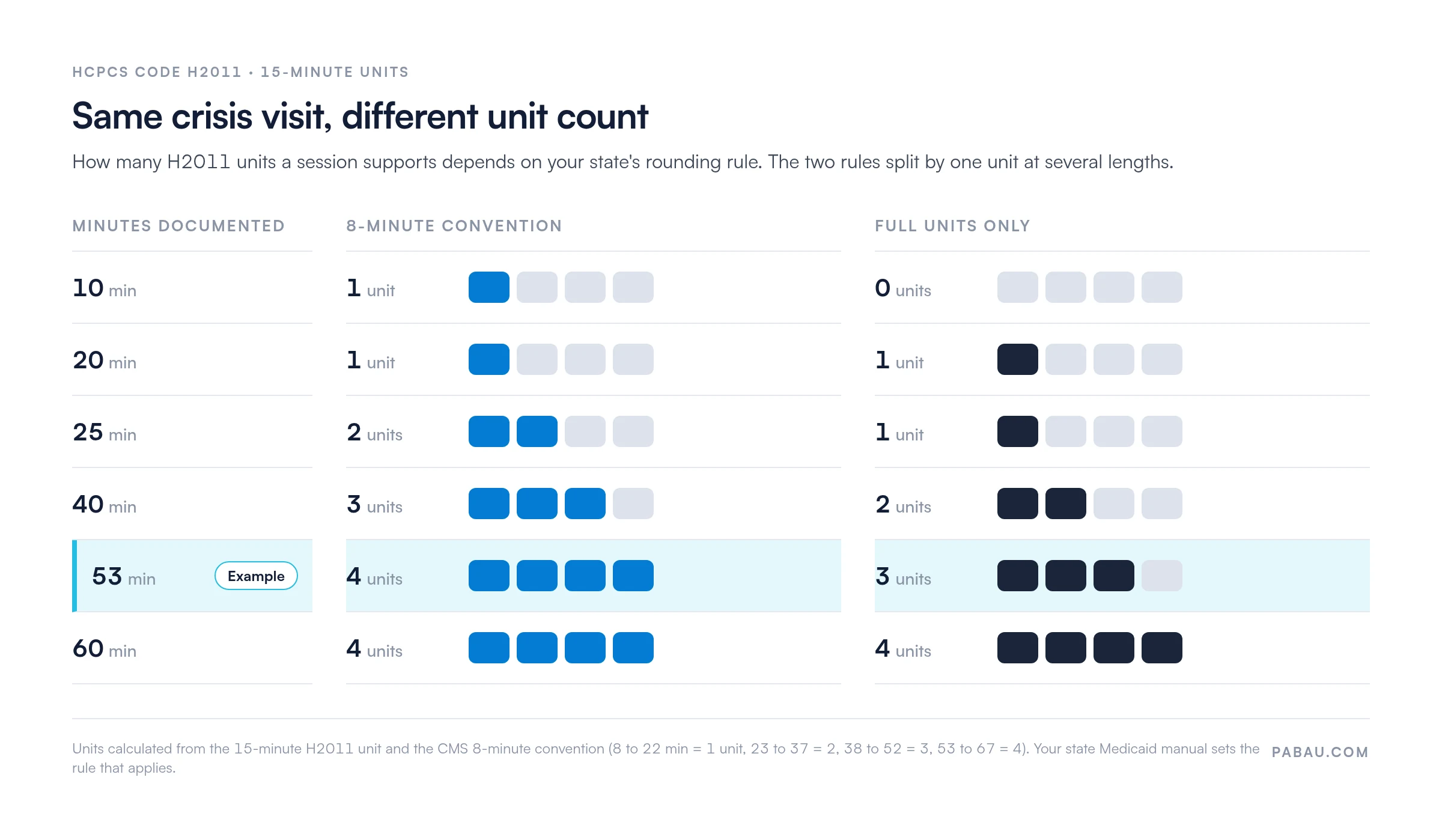
H2011 is time-based. Each unit stands for 15 minutes of direct crisis intervention. Rounding varies by state. Some Medicaid programs follow the CMS 8-minute rule (a unit is billable if at least 8 minutes were delivered), while others only pay full units.
Here’s how that plays out. A mobile crisis clinician arrives at 2:10 PM, and the person is stable at 3:03 PM. That’s 53 minutes. Under the 8-minute convention it supports four units, but a full-units state pays three. The grid below shows where else the two rules part ways.
Once you know the units, the claim line comes together in six steps.
Prompt clinicians to log start and stop times before the patient leaves, not at the end of the day. Reconstructing times after the fact is a frequent audit finding on H2011 claims.
Most state Medicaid plans want at least one modifier on every H2011 claim line. It signals the delivering clinician’s credential level or the type of program, and payers use it to set the reimbursement tier.
States also layer on their own modifiers. Oregon is a good example. Its Medicaid program lets providers add HE or HT to H2011 only for certified mobile crisis intervention services. For other crisis work, the state recovers payments billed with those modifiers.
Check your state’s behavioral health billing manual before you finalize the modifier stack. A wrong modifier, such as HO when the clinician holds a bachelor’s degree, is the kind of error auditors flag in post-payment review.
There’s no national reimbursement rate for H2011. Each state Medicaid program publishes its own fee schedule, and the rate can change with the modifier billed and the provider type.
To find your rate, go straight to your state Medicaid agency’s published fee schedule and look up the H2011 line. Managed care organizations (MCOs) that contract with Medicaid may pay different rates, so check your MCO contract for patients enrolled in managed care.
Commercial insurers rarely pay H2011, and Medicare Part B doesn’t cover it. When Medicare is primary and Medicaid is secondary, H2011 is paid on the Medicaid side only. A few Medicare Advantage plans with behavioral health carve-outs may pay it, but that depends on the plan contract.
Weak documentation is the leading audit trigger for H2011. Because the code is time-based, the note has to support every unit billed. A note that says “one-hour crisis session” without start and stop times leaves the auditor nothing to verify.
Every H2011 note should capture these elements to hold up in a payer audit or a medical billing compliance review.
Put the start time and stop time fields at the top of your crisis note template, above the narrative. When time comes first, clinicians record it in the moment instead of rebuilding it after the session.
H2011 is often confused with neighboring behavioral health codes. Picking the wrong one is a billing error, even when the clinical content looks alike, and it can lead to recoupment after an audit.
Residential crisis stays belong on H0018, which pays per day rather than per 15 minutes.
The distinction that matters most is between H2011 and CPT 90839. Both describe crisis care, but they sit in different payer systems. H2011 runs through Medicaid and state programs. CPT 90839 is psychotherapy for crisis, billed to Medicare and commercial plans by qualified mental health professionals.
Billing H2011 to Medicare creates a payer-code mismatch that ends in denial. Some state Medicaid programs accept 90839 as well, so confirm which code your state lists for crisis work. Then check each patient’s coverage before you pick the code.
Once submitted, an H2011 claim goes to the clearinghouse, then to the state Medicaid program or MCO. The payer checks enrollment, the modifier, the unit cap and same-day overlaps. Any miss comes back on the remittance with a denial reason code.
Good denial management for H2011 means tracking claim adjustment reason codes (CARCs) across claims, not working each denial alone. When the same CARC keeps showing up across clinicians or sessions, the problem sits in the workflow.
CMS maintains the H2011 descriptor, but each state Medicaid program writes its own coverage policy, prior authorization rules and enrollment requirements. A crisis contact covered in California may be handled differently in Georgia.
These are the areas where state variation hits H2011 billing hardest.
Your state’s Medicaid behavioral health provider manual is the definitive source for H2011 policy. Read it alongside any bulletins from the MCOs you contract with, and set up your billing workflow only after both agree.
A two-minute check before submission catches the errors behind most H2011 rework.
Crisis claims often carry other H-codes too, and our HCPCS code library lists their descriptors and billing rules.
Most H2011 problems start in the note, well before the claim. A clinician finishes a crisis visit, writes the narrative hours later and estimates the minutes. The biller then has to turn that estimate into units.
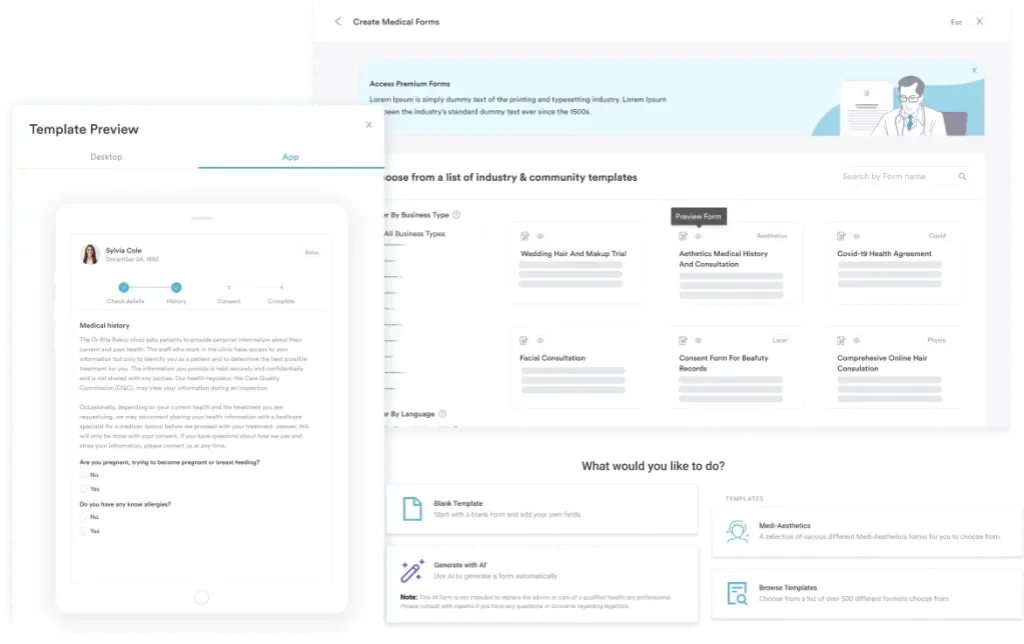
Pabau, the practice management platform we build for healthcare practices, keeps the note and the claim in one system. Its digital forms can include required start and stop time fields, so clinicians record the minutes before they close the note.
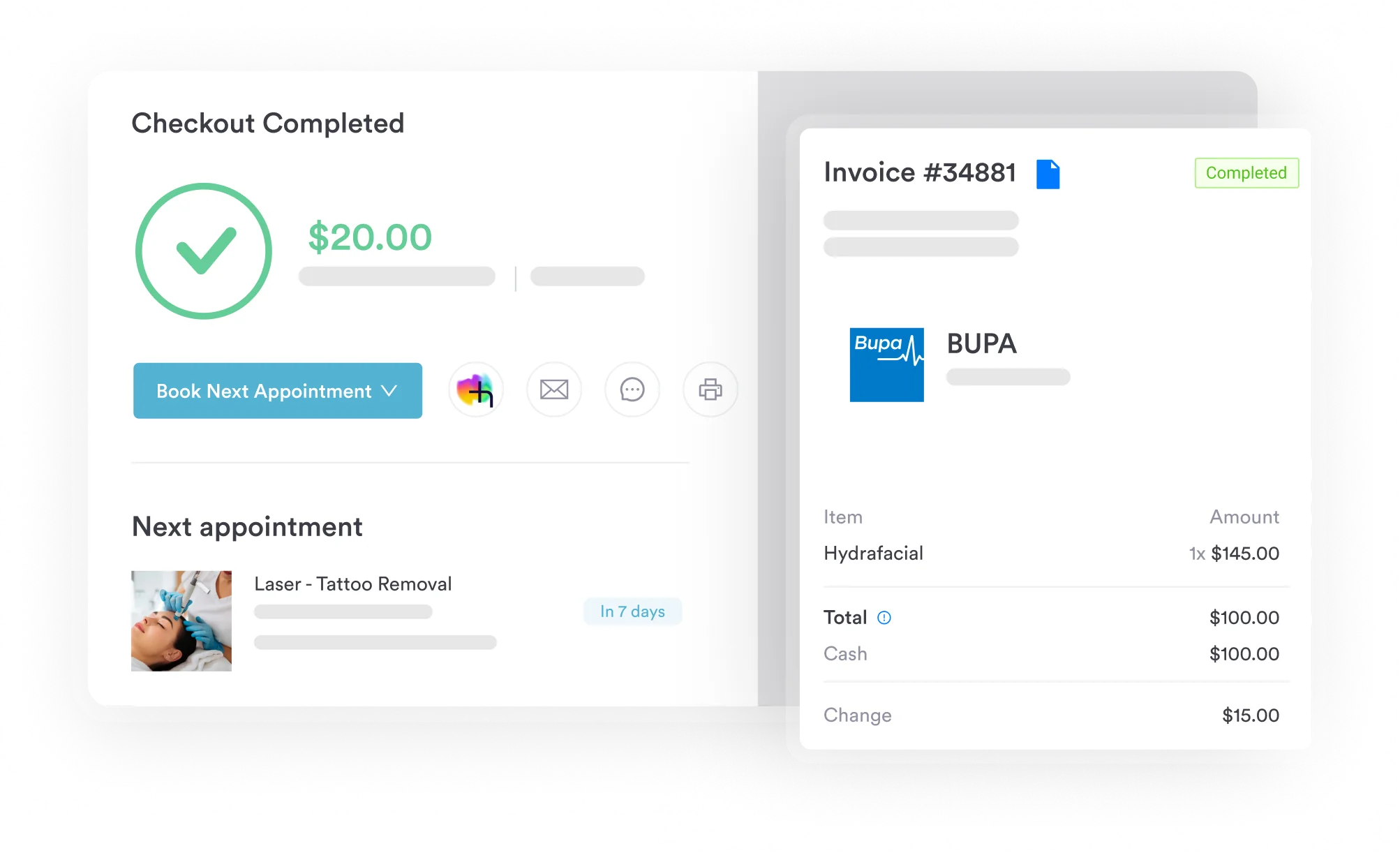
Pabau’s claims management software helps practices submit and track claims to payers, including through Claim.MD in the US. That keeps the note, the unit count and the claim status on one record, so a denial can be traced back to where it started.

Pabau keeps crisis notes, required time fields and claim submission in one system. Every H2011 unit is documented before it’s billed.

With H2011, the time note is the claim. The payer can only pay what the minutes, the modifier and the enrollment record support. Practices that bill it cleanly settle those three before the first crisis call, not after the first denial.
Start with your state’s provider manual and write down three numbers: the rounding rule, the daily unit cap and the required modifiers. Build them into your note template and your pre-submission check. That setup takes an afternoon, while a post-payment audit can claw back months of crisis work.
Book a demo to see how Pabau links crisis notes to clean H2011 claims for your behavioral health practice.

Billing the call that comes before the visit? HCPCS code H0030 covers behavioral health hotline service billing, including how it differs from face-to-face crisis work.
Running a structured day program as well? HCPCS code H2012 explains how behavioral health day treatment is billed by the hour.
Seeing the same denial reason again and again? Denial codes in medical billing breaks down the top 20 CARC codes and how to fix each one.
Want to reduce claim errors across your practice? Revenue cycle management explained covers how to build a billing workflow that catches errors before submission.
New to billing Medicaid and private payers? What is medical billing? walks through how a claim moves from encounter to payment.
Often, yes. Many states bill mobile crisis visits as H2011 plus a program modifier. Others use S9484 (crisis intervention mental health services, per hour) or S9485 (per diem). Since April 2022, the American Rescue Plan has offered states an 85% federal match for qualifying mobile crisis services, so state rules here change often.
Use the ICD-10-CM code that matches the documented crisis. That might be the underlying condition, such as F32.9 for a single episode of major depression, or R45.851 for suicidal ideations. Whichever you choose, it has to match the risk findings in the note.
No. A crisis line call is usually billed, where it’s billable at all, as H0030, the behavioral health hotline code. H2011 starts when face-to-face crisis work begins, for example when a mobile team arrives after the call. Document the handoff time so the two services don’t overlap.
Yes, if they cover separate time. A scheduled 90834 session in the morning and an unplanned crisis visit that evening can both be billed. Document each with its own start and stop times. Some states don’t allow both on one day, so check your provider manual first.




