

HCPCS code E0198: Water pressure pad billing guide
HCPCS code E0198 is a water pad for a standard mattress HCPCS code E0198 is the ...

Last Updated: Oct 13, 2026
H2019 is the HCPCS Level II code for therapeutic behavioral services, per 15 minutes.
HCPCS Level II codes are maintained by the Centers for Medicare and Medicaid Services, known as CMS. They cover non-physician services, supplies, and procedures that CPT codes do not capture. H2019 sits in the H-code series, which is reserved for mental health and behavioral health services.
Let Pabau's smart automation suggest the right codes, reduce claim denials, and keep your practice compliant—effortlessly.
Automate repetitive tasks and focus on what matters most—your patients.
Reduce coding errors and ensure compliance with the latest regulations.
Clean claims, fewer denials, and faster reimbursements.
Powerful insights and reporting to help your practice thrive.
HIPAA compliant SOC 2 certified GDPR-compliant Trusted by 4,000+ clinics worldwide

HCPCS Code H2019 describes therapeutic behavioral services billed per 15-minute unit under Medicaid.
Reimbursement rates vary by state Medicaid program, typically from about $3 to $15 per unit. Always verify against your state fee schedule.
Accurate documentation of session start and end times, treatment goals, and provider credentials is required for a clean claim.
Practice management software like Pabau prefills claim details from the patient record and runs validation checks before submission.
H2019 covers a range of therapeutic and behavioral interventions delivered in community mental health and behavioral health settings. The code is not restricted to a single modality, which makes it broadly applicable across behavioral health organizations.
Coverage specifics vary by state Medicaid program. A service that qualifies under one state’s H2019 policy may require a different code in another. Always confirm covered service definitions with your state Medicaid agency before billing.
Group sessions add a documentation step. Each participant needs their own note and their own unit count, even though the session ran once. Practices billing group and individual work side by side usually track both in their therapy practice management system.
Provider eligibility for H2019 is state-determined. There is no single national standard for who can bill this code. The following provider types are commonly eligible, depending on state Medicaid policy and supervision requirements.
Practices using a mental health EMR should confirm their credentialing status reflects the correct provider type for H2019 billing.
Supervision structures matter. A behavioral health technician billing H2019 under an LCSW’s NPI requires documentation of that supervisory relationship. Missing that documentation is a leading cause of denied claims in this code category.
Provider rules differ sharply from one time-based code to the next. Advance care planning under 99497 is reported by a physician or other qualified health professional, not by a supervised paraprofessional. Check the eligible provider list before assuming a credential carries across codes.
H2019 is not a Medicare-covered code in most contexts. Reimbursement comes through state Medicaid programs and, increasingly, Medicaid managed care organizations (MCOs) that contract with states to administer behavioral health benefits. The spread between states is wide, and the top of the range can be several times the bottom.
Published fee schedule data puts typical H2019 rates between roughly $3 and $15 per 15-minute unit. Treat those numbers as a starting point. Confirm current rates against your state fee schedule on Medicaid.gov or in your MCO contract.
Important: These are illustrative ranges derived from publicly available fee schedule data. Do not use them as billing benchmarks without confirming current rates with your state Medicaid agency or MCO. Rates change with annual fee schedule updates.
Comparing rates across code families needs care. Care management work under 99487 resolves into one payment for the calendar month, while H2019 pays each documented 15-minute unit. Per-unit and per-month figures are not comparable.
Run an H2019 rate audit before your annual Medicaid contract renewal. Pull your previous 12 months of H2019 claims, calculate your average reimbursed rate per unit, and compare it against your current state fee schedule. A rate discrepancy of even $1 per unit adds up fast in a high-volume behavioral health practice billing 200+ units per week.
Modifiers communicate additional clinical context to the payer. Submitting H2019 without a required modifier is a fast path to a denial, and the wrong modifier does the same.
The modifiers below are commonly applied to H2019 claims. State Medicaid programs may require or restrict specific ones, so confirm with your payer before billing. Keep a payer-by-payer modifier list in your billing documentation, and revisit it whenever a plan updates its behavioral health policy.
The HQ modifier for group services appears throughout billing guidance. How it applies, and the group size that triggers it, differs by state Medicaid program. Check your state’s behavioral health policy before you apply it routinely.
Poor documentation is the leading cause of H2019 denials and audit failures. Medicaid auditors look for specific elements in every note, and missing one can trigger a recoupment demand.
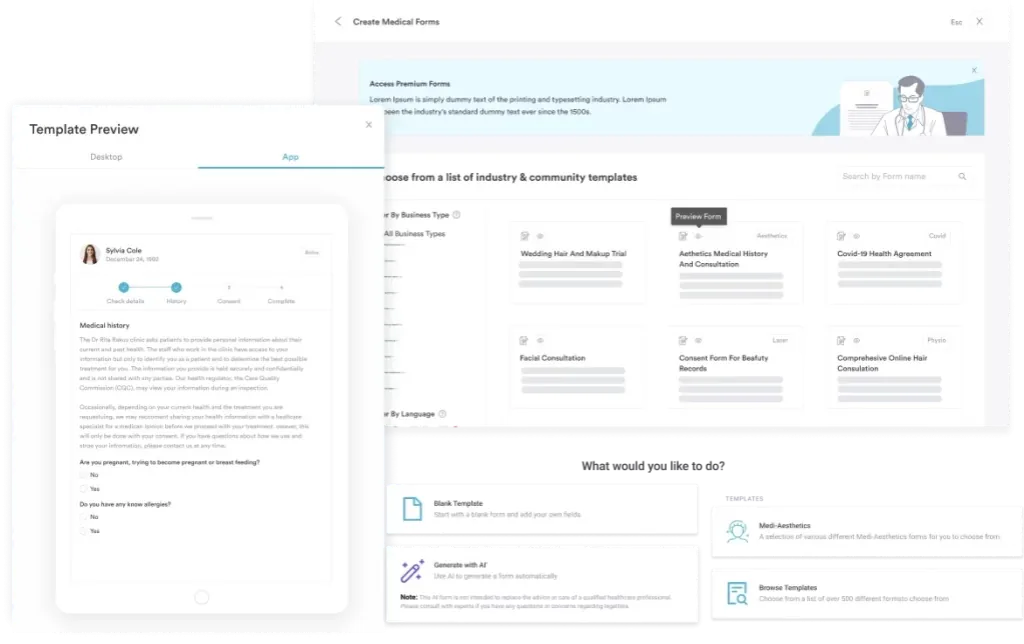
Practices that use digital forms and structured session notes cut that risk. The required fields sit inside the clinician’s workflow, so the note is complete before it reaches billing. Pair that with HIPAA-compliant documentation to protect the claim and the patient record.
These documentation elements are representative requirements commonly cited across state Medicaid behavioral health policies. Verify requirements with your state agency or MCO.
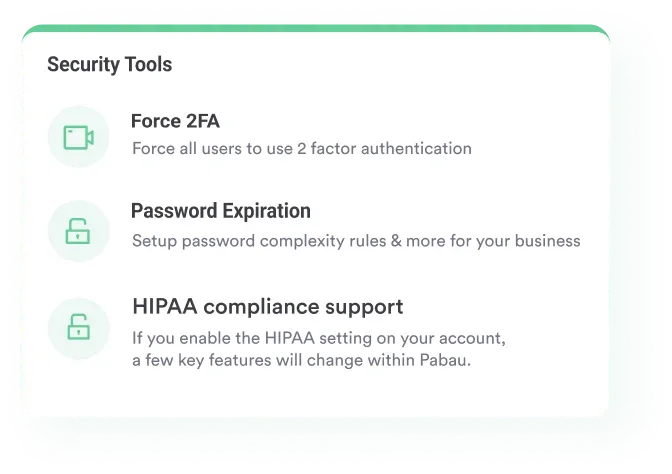
Protecting that documentation takes solid compliance management processes. Behavioral health records carry a second obligation as well. Protecting patient data under HIPAA and 42 CFR Part 2, which governs substance use records, sits alongside the billing rules.
What auditors ask for depends on what you billed. A supply claim such as A4221 is defended with an order and a dispensing record, while H2019 is defended with timed session notes. Neither set of proof substitutes for the other.
A clean H2019 claim requires attention at every stage of the billing cycle, from session start to claim submission. These guidelines represent standard practice across Medicaid behavioral health billing. State-specific requirements may add steps.
Unit limits are payer- and state-specific. Some Medicaid programs cap daily H2019 units; others set annual limits tied to the treatment plan. Never assume a universal unit cap applies to your program.
Frequency rules take different shapes depending on the code. Device supply under 99454 is limited to one claim in a 30-day period, with a minimum number of transmission days. H2019 limits are set by your state instead.
Denials for HCPCS Code H2019 cluster around a predictable set of errors. Knowing them in advance is the fastest way to lift your clean-claims rate. Automated eligibility checks and pre-claim scrubbing catch most of them before a claim leaves the building.
H2019 and H2020 are companion codes for the same service category, therapeutic behavioral services. Their billing structures differ. Choosing the wrong one for your service delivery model creates both underpayment and compliance risk.
Using H2020 for standard outpatient sessions, where length varies week to week, usually results in overbilling. Using H2019 for a structured day program tends to underpay against the per-diem rate. Match the code to how you actually deliver the service.
Unit structure divides the fee schedule more broadly than these two codes suggest. A consumable part such as A4286 is paid per item supplied, with no time element at all. H2019 and H2020 both price a service, by minute or by day.
Behavioral health billers work across a mix of HCPCS and CPT codes, depending on payer, service type, and provider credential. The AAPC code lookup is a useful reference for checking current descriptors.
Diagnosis pairing matters as much as the service code. F32.9 is a common diagnosis on behavioral health claims and supports H2019 where the treatment plan backs it. Crisis sessions billed to a commercial payer usually go out as CPT 90839 instead.
Billing teams inside multi-specialty groups work with two unit models at once. Time-based codes like H2019 count minutes, while procedure codes such as CPT 27606 and CPT 21920 bill once per procedure. Keeping the two rules apart on your billing checklist prevents unit errors.
Discharge follow-up carries its own reporting period. Transitional care management under 99496 covers a 30-day window that begins at discharge and includes one face-to-face visit. It pays once for that period rather than by the minute.
Most behavioral health teams document a session in one system, then re-key the details into a billing platform. Every handoff is a chance for unit counts to drift, modifiers to go missing, and authorization dates to go unchecked.
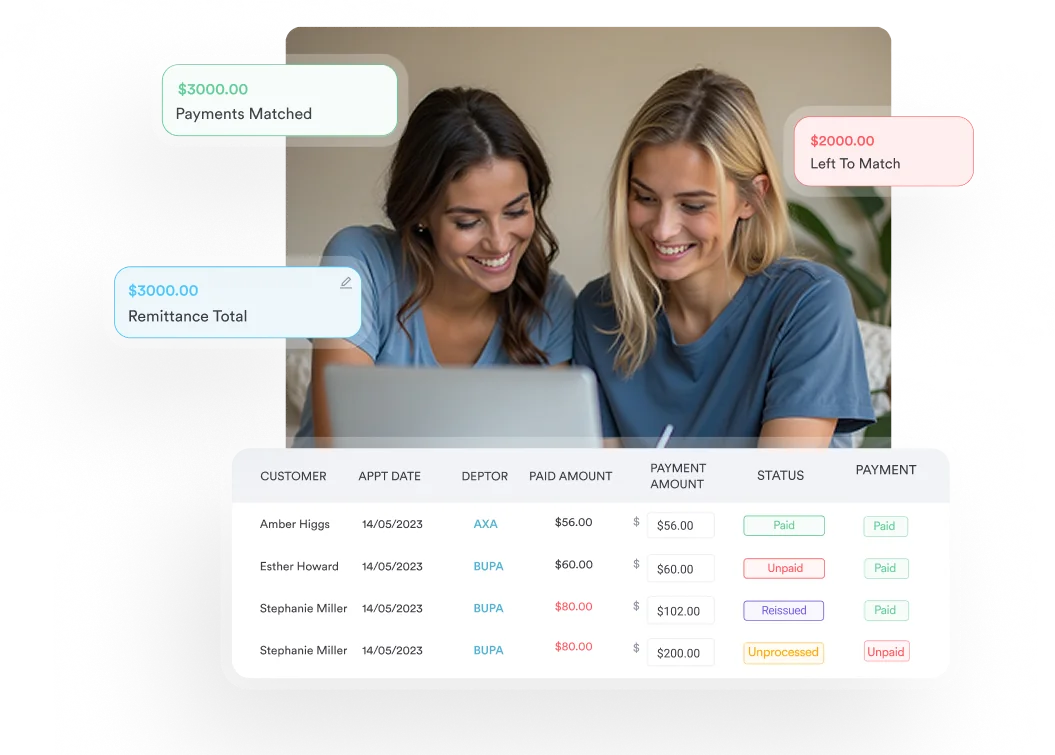
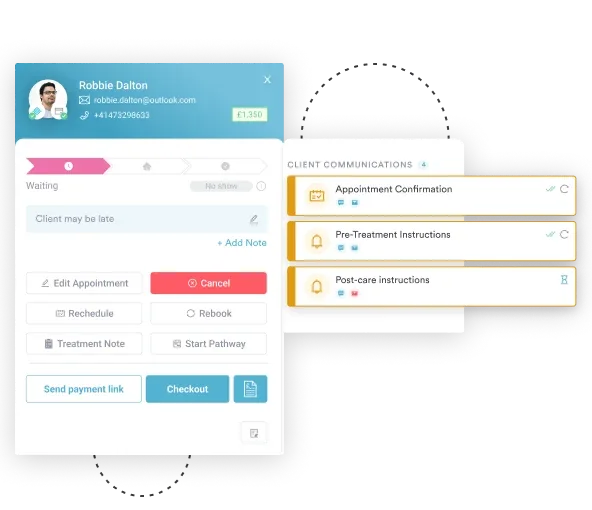
Practice management software like Pabau keeps the record and the claim in one place. A patient’s insurer and policy sit on their record, so every invoice routes to the right payer without re-keying. When the invoice is ready, Pabau pulls the patient, treatment, and payer details into a pre-filled claim for review.
Pabau then runs validation checks in the background each time you send a claim. If a required detail such as a membership number or authorization code is missing, the send button stays disabled until it is fixed. US practices submit through the Claim.MD connection, which also covers real-time eligibility checks and remittance posting.
Pabau’s claims management dashboard then gives every claim a live status of pending, submitted, processing, paid, or error.
You can filter by date, payer, or invoice ID, so an aged H2019 claim surfaces before the filing deadline passes. Automated workflows can chase the unpaid ones for you.
Claims sitting in the error stage stay visible until someone fixes them, which is where most recoverable revenue hides. Practices weighing up a change can compare what practice management software covers across the revenue cycle.
Audit your H2019 modifier setup before every payer contract renewal. Pull a 90-day sample of claims, group them by modifier, and compare denial rates across the combinations. A quarterly check like this usually turns up a misconfigured rule that has been quietly costing you paid claims.

Pabau links each patient to their payer, prefills the claim from the record, and runs validation checks before it goes out. That means fewer rejections, less re-keying, and a live status on every claim.

H2019 rewards practices that treat time as a billable record rather than an afterthought. If your notes carry exact start and end times, the rest of the claim tends to fall into place. If they do not, no amount of modifier discipline will save it.
So pick one thing to tighten this quarter. Get your state’s rounding policy in writing, then audit a month of H2019 notes against it. A single audit tells you whether your unit counts are costing you money or exposing you to recoupment.
The rest is a systems question, and it gets easier when notes and claims live in the same place. Book a demo to see how Pabau handles H2019 notes, units, and claim submission in one workflow.

Coding the residual effects of past polio? Postpolio syndrome coding guide This guide covers postpolio syndrome, its clinical criteria, and how the code relates to the earlier B91 diagnosis.
Coding a movement disorder diagnosis? Movement disorders coding guide This guide covers G26, billable only when the underlying disease is coded first on the claim.
Coding a late-onset Alzheimer’s diagnosis? ICD-10 code G30.1 It explains the required F02 manifestation code pairing and sequencing that prevent denials.
Coding for a multi-specialty group? ICD-10 S53.116D covers the documentation rules for an injury code your billing team may also handle.
HCPCS Code H2019 is a Level II HCPCS code that describes therapeutic behavioral services billed per 15-minute unit. It is maintained by CMS and used mainly by community mental health centers. They bill Medicaid with it for individual and group therapeutic work delivered by qualified providers.
H2019 is primarily a Medicaid code and is not covered by Medicare in most contexts. Some Medicaid managed care organizations also cover it under behavioral health benefit carve-outs. Check with your payer before assuming Medicare coverage. Most CMS guidance does not include H2019 in the Medicare physician fee schedule.
Daily unit limits for H2019 are payer- and state-specific. There is no universal federal cap. Some state Medicaid programs set a daily limit, such as eight units per day for individual services. Others apply annual limits tied to the treatment plan authorization. Always verify unit limits with your state Medicaid agency or MCO contract.
H2019 bills therapeutic behavioral services per 15-minute unit, making it suitable for outpatient sessions with variable durations. H2020 bills the same service category per diem, meaning per full day. It suits structured day treatment programs, partial hospitalization, and residential settings. Using the wrong code for your service delivery model creates both compliance risk and reimbursement problems.
Required documentation for H2019 usually includes session start and end times, the date of service, and the client’s name and Medicaid ID. The note must also record the treatment goals addressed, the interventions used, the client’s response, and the provider’s name and credentials. Add supervisor details when a paraprofessional delivers the service, plus a medical necessity statement. Requirements vary by state, so verify yours with the state agency.
Five habits prevent most H2019 denials. Verify Medicaid eligibility before each session. Document start and end times in every note. Apply the correct modifier for the setting and the provider level. Track prior authorization expiry dates, and audit your documentation monthly. Building the eligibility check into your booking workflow removes the step teams skip most often on a busy day.



