ICD-10 Code S42.444P: Medial epicondyle fracture, right humerus
ICD-10 Code S42.444P: full descriptor and code validity ICD-10 Code S42.444P car...

Last Updated: Oct 13, 2026
Billable Code Specific Code
E50.1 is the billable ICD-10-CM code for vitamin A deficiency with Bitot's spot and conjunctival xerosis.
Let Pabau's smart automation suggest the right codes, reduce claim denials, and keep your practice compliant—effortlessly.
Automate repetitive tasks and focus on what matters most—your patients.
Reduce coding errors and ensure compliance with the latest regulations.
Clean claims, fewer denials, and faster reimbursements.
Powerful insights and reporting to help your practice thrive.
HIPAA compliant SOC 2 certified GDPR-compliant Trusted by 4,000+ clinics worldwide

ICD-10 Code E50.1 is a billable ICD-10-CM diagnosis code for Vitamin A deficiency with Bitot’s spot and conjunctival xerosis, valid for FY2026 claims.
Both Bitot’s spot and conjunctival xerosis must be clinically present to justify E50.1; conjunctival xerosis alone maps to E50.0 instead.
E50.1 sits within the E50 parent category (E50.0 to E50.9), which covers all Vitamin A deficiency manifestations from ocular to systemic.
Digital intake forms and AI-powered documentation in practice management software like Pabau help practices capture nutritional deficiency diagnoses accurately and keep them tied to the encounter record.
ICD-10 Code E50.1 is a billable, claim-valid ICD-10-CM code for the 2026 fiscal year. It identifies a specific clinical presentation: Vitamin A deficiency accompanied by both Bitot’s spot and conjunctival xerosis. Because both findings must be present, this code carries diagnostic precision that payers and clinical documentation systems rely on.
The AAPC’s ICD-10-CM code reference confirms E50.1 as billable and valid for submission in the current fiscal year. Coders should not use the E50 parent code for claim submission, as it is a non-billable category header.
The two clinical findings encoded in ICD-10 Code E50.1 are distinct but related signs of hypovitaminosis A. Understanding each is essential for accurate code assignment.
Bitot’s spot is a superficial, foamy or cheesy-looking lesion on the conjunctiva, typically appearing on the temporal (outer) side of the eye. It forms when dead epithelial cells accumulate on a dry conjunctival surface. The lesion is named after French physician Pierre Bitot, who described it in the 19th century as a reliable marker of Vitamin A deficiency.
Conjunctival xerosis is the drying and thickening of the conjunctival membrane caused by inadequate Vitamin A (retinol). The normally moist, transparent conjunctiva becomes dry, opaque, and loses its normal luster. It is an early-stage manifestation of xerophthalmia, the broader term for Vitamin A-related eye disease.
Xerosis conjunctivae precedes more serious damage. If retinol deficiency is not addressed, xerophthalmia can progress from xerosis to corneal involvement and eventually irreversible blindness. Coders documenting patients with conjunctival xerosis alone (without Bitot’s spot) should consider E50.0 rather than ICD-10 Code E50.1.
ICD-10 Code E50.1 belongs to the E50 category, which covers all manifestations of Vitamin A deficiency. The E50 ICD-10 parent code is non-billable, so coders must select a specific subcode. Clinicians working in IV therapy EMR software environments frequently encounter E50 subcodes when documenting deficiency states alongside infusion protocols.
The following table lists every E50 subcode with its description and billable status. Use this to identify which subcode matches a patient’s confirmed clinical presentation. Refer to the CDC/NCHS official ICD-10-CM web tool for the full tabular listing.
Night blindness cases linked to retinol deficiency map to E50.5, not ICD-10 Code E50.1. When a night blindness icd 10 code lookup is needed for a Vitamin A-deficient patient, E50.5 is the correct and specific selection if no conjunctival findings are present.
In software for weight loss clinics, E-code diagnoses connect to dosing schedules, measurements, and check-ins.
The Includes/Excludes notations for the E50 category live in the ICD-10-CM Tabular List, maintained by the CDC’s National Center for Health Statistics (NCHS). These govern how E50.1 interacts with other codes and what it excludes.
Misreading these notes is one of the most common reasons ICD-10 Code E50.1 claims are questioned during audits. The same Excludes1 logic applies to other single-vitamin deficiency codes such as E54.
Coders documenting a resolved Vitamin A deficiency with a current residual condition must assign E64.1, the sequela code, rather than an active E50 subcode. Verify the current notes in the WHO’s ICD-10 browser for international context.
Check whether Bitot’s spot is documented as current and active in the clinical notes before assigning ICD-10 Code E50.1. In adults, Bitot’s spots can persist as inactive residual lesions after Vitamin A status is corrected. Assigning E50.1 requires current deficiency with active bilateral or unilateral conjunctival involvement, confirmed by the treating clinician.
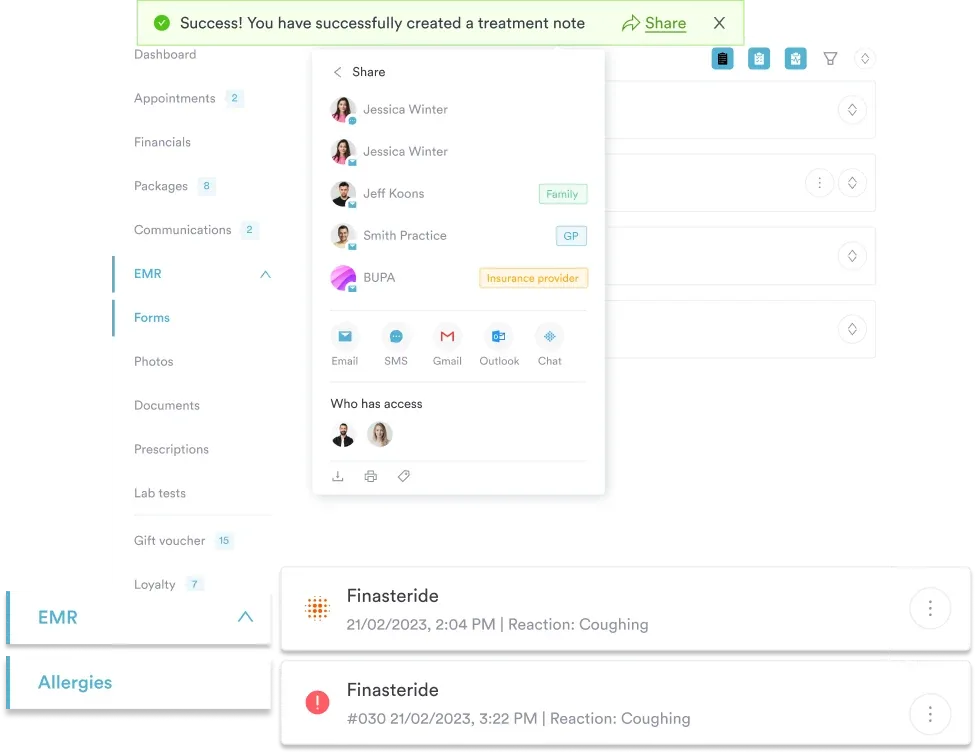
Using E50.1 for reimbursement depends on accurate clinical documentation. The diagnosis must be supported by the clinician’s documented findings, not inferred from lab values alone. Pabau’s structured intake forms and EMR-linked client records keep the coded diagnosis tied to the encounter note, giving coders a clear, audit-ready documentation trail to work from before a claim goes out.

E50.1 sometimes appears as a secondary diagnosis on a surgical claim. Anesthesia is billed on its own line, so a lower posterior abdominal wall case uses CPT code 00820.

Pabau helps practices link ICD-10 codes directly to patient records, reducing errors and saving time on every nutritional deficiency encounter.

The E50 category is granular by design. Coders frequently ask where ICD-10 Code E50.1 ends and adjacent codes begin. The differentiation hinges on which specific clinical findings the clinician has documented.
Reviewing related nutritional therapy practice workflows can help practices build intake protocols that capture these distinctions at the point of care.
Assigning E50.9 when the clinical record contains specific findings is a documentation failure. Coders should query the clinician if the encounter note describes symptoms consistent with E50.1 but lacks explicit confirmation of Bitot’s spot.
The E50-E64 block covers all major nutritional deficiency diagnoses beyond Vitamin A. Coders encountering patients with multiple deficiencies, or those reviewing nutritional deficiency ICD-10 coding workflows, benefit from seeing how E50.1 fits within the broader range. The same specificity principle applies across ICD-10-CM more broadly.

For practices managing patients with chronic malnutrition or those in weight management programs, these adjacent codes often appear together. Pabau’s client record system supports multi-code documentation per encounter, which is critical when a patient presents with overlapping diagnoses.
When a patient presents with both Vitamin A deficiency (E50.1) and Vitamin D deficiency (E55), both codes may be reported on the same claim if both are documented, evaluated, and treated at the encounter. Review your payer’s multi-diagnosis submission rules before filing. Use a claims management system that validates multi-code submissions automatically to reduce manual review time.
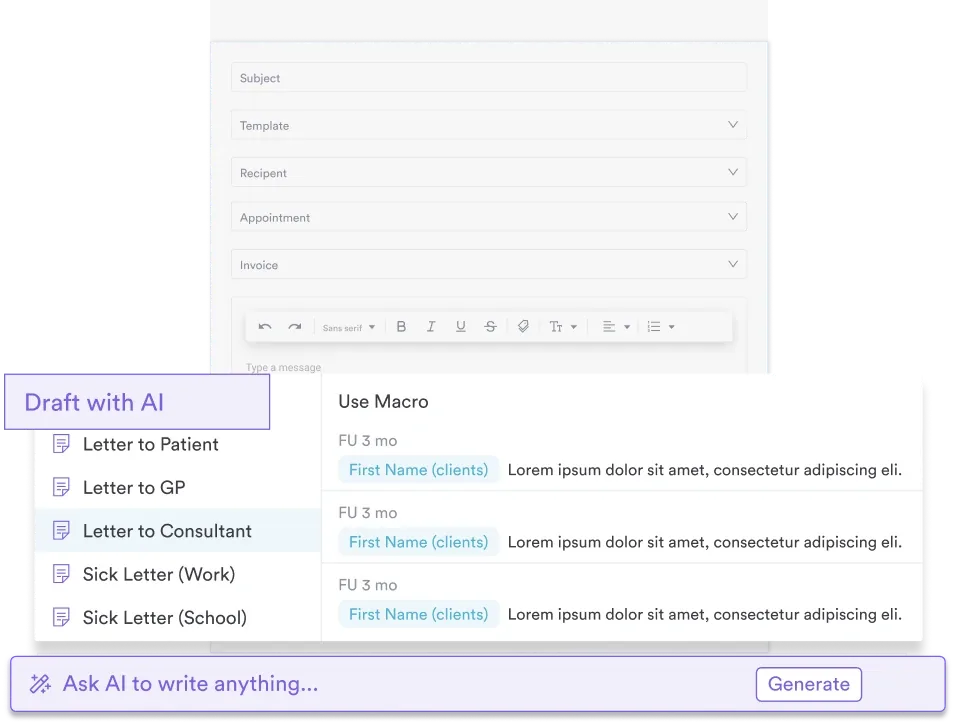
Practices that regularly encounter nutritional deficiency diagnoses, including those running weight management, integrative, or IV therapy programs, need documentation systems that make ICD-10 Code E50.1 assignment straightforward, not an afterthought. Pabau’s AI-powered clinical documentation captures the clinical findings from the consultation and structures them into the patient record, reducing the risk of undercoded or missing diagnoses. The authorization requirement sits with the plan, not the code, so it varies between patients.
For practices in wellness and integrative medicine settings, Pabau’s EMR-linked client records keep the documented diagnosis tied to the encounter note, so coders can review the supporting clinical detail in the same workflow rather than cross-referencing a separate system.
Explore how Pabau supports practice management software workflows for practices that handle diagnostic coding alongside clinical care delivery.
ICD-10 Code E50.1 is a billable, claim-valid code that requires both Bitot’s spot and conjunctival xerosis to be documented in the clinical record. Getting this distinction right matters. Assigning E50.0 when both findings are present undercodes the encounter, and assigning E50.1 without documented Bitot’s spot creates an audit risk.
The E50 subcategory hierarchy gives coders the granularity to document exactly what the clinician found.
Pabau’s digital intake forms and structured clinical documentation make accurate nutritional deficiency coding part of the standard charting process. To see how Pabau handles ICD-10 code documentation for your practice, book a demo.

Coding a direct laryngoscopy with airway dilation? direct laryngoscopy dilation billing guide CPT code 31528 covers the first dilation of a narrowed airway at or below the larynx under direct visualization.
Coding a recently added diagnosis this week? ICD-10 Code C41.3 guide covers documentation requirements for malignant neoplasm of the ribs, sternum, and clavicle.
Need another current ICD-10-CM reference? ICD-10 Code C68.0 guide explains billable status and documentation requirements for malignant neoplasm of the urethra.
ICD-10 Code E50.1 is a billable ICD-10-CM diagnostic code for Vitamin A deficiency with Bitot’s spot and conjunctival xerosis. It is valid for FY2026 claim submission, having become effective October 1, 2025. Both clinical findings must be documented to justify this code over the adjacent E50.0.
Yes. E50.1 is a billable and specific ICD-10-CM code valid for reimbursement. It can be used as a principal or secondary diagnosis on a claim, provided both Bitot’s spot and conjunctival xerosis are documented in the clinical record for the encounter.
E50.0 covers Vitamin A deficiency with conjunctival xerosis only, without Bitot’s spot. E50.1 requires both conjunctival xerosis AND Bitot’s spot to be present and documented. Assigning E50.1 when only xerosis is confirmed is incorrect; query the clinician if the note is ambiguous.
Conjunctival xerosis is the drying and keratinization of the conjunctival membrane caused by Vitamin A deficiency. When it appears alone (no Bitot’s spot), it maps to E50.0. When it appears alongside Bitot’s spot, use ICD-10 Code E50.1. Broader Vitamin A eye disease is classified under the xerophthalmia ICD-10 grouping (E50 block).
The 2026 edition of ICD-10-CM E50.1 became effective on October 1, 2025. This follows the standard annual ICD-10-CM update cycle maintained by the CDC National Center for Health Statistics. No structural changes to E50.1 were introduced in the FY2026 revision cycle.