HCPCS Code G0163: Skilled nursing observation and assessment
What is HCPCS Code G0163? HCPCS Code G0163 is a deleted Level II code for skille...

Last Updated: Oct 15, 2026
H0029 is the HCPCS Level II code for alcohol and/or drug prevention alternatives service (services for populations that exclude alcohol and other drug use e.g., alcohol free social events).
The full descriptor names the example the code was written for: alcohol-free social events for populations that exclude alcohol and other drug use. That wording tells a biller two things. The service is delivered to a population, and it carries no time increment.
Plenty of behavioral health H-codes are timed, and H0004 and H0038 say "per 15 minutes" in their own descriptors. H0029 does not. Reporting invented 15-minute units against it is the fastest way to turn a paid claim into a recoupment.
Let Pabau's smart automation suggest the right codes, reduce claim denials, and keep your practice compliant—effortlessly.
Automate repetitive tasks and focus on what matters most—your patients.
Reduce coding errors and ensure compliance with the latest regulations.
Clean claims, fewer denials, and faster reimbursements.
Powerful insights and reporting to help your practice thrive.
HIPAA compliant SOC 2 certified GDPR-compliant Trusted by 4,000+ clinics worldwide

HCPCS code H0029 covers alcohol and/or drug prevention alternatives service, such as alcohol-free social events for populations that exclude substance use.
The official CMS descriptor carries no time increment, so H0029 is reported per service or event rather than in 15-minute units.
The Medicare 8-minute rule does not reach H0029, because H-codes are not payable under the Medicare physician fee schedule.
State Medicaid programs and their managed care plans define the unit and set the rate, so the state fee schedule is the authority.
Practice management software like Pabau links each claim to the right payer and validates the fields before it goes out.
Mental health EMR and behavioral health billing teams meet H0029 whenever a program bills substance-free activities. The descriptor maintained by the CMS Healthcare Common Procedure Coding System reads:
H0029 – Alcohol and/or drug prevention alternatives service (services for populations that exclude alcohol and other drug use, e.g., alcohol-free social events).
Read the parenthetical closely, because it defines the service. The service is aimed at a population rather than a diagnosed patient. Its purpose is to supply an activity that displaces alcohol and other drug use. That is why an alcohol-free social event is the example CMS chose.
Note what the descriptor does not say. There is no “per 15 minutes”, no “per diem”, and no “per encounter”. The unit is left to the payer, and for H0029 that payer is almost always a state Medicaid program.
H0029 covers structured, substance-free activities delivered as part of a prevention program. It is not a treatment code. The qualifying test is whether the activity gives participants an alternative to drinking or using, in a setting where alcohol and other drugs are excluded.
Services commonly reported under H0029 include:
What H0029 does not cover is equally clear. Direct substance use disorder treatment, individual psychotherapy, medication-assisted treatment, assessment, and screening all belong to other codes. If the encounter treats a diagnosed condition, H0029 is the wrong code.
Prevention education is the nearest boundary to H0029. A session whose purpose is to change knowledge or attitudes is H0025, even if no alcohol is present in the room.
Provider eligibility for H0029 is set by each state, not by CMS. The provider types below are the ones states commonly recognize. Teams running therapy practice management workflows should confirm their own state’s credentialing rules first.
Some states restrict H0029 to agencies carrying a prevention services certification. Others let community organizations bill it directly. The provider manual is the only reliable answer, and your team records should hold the credential data that supports the check.
Before your first H0029 claim, pull the state provider manual and search for the code by number rather than by name. The manual entry tells you the unit, the modifier set, and any per-day service limit. Submit one test claim with full documentation before you scale volume.
H0029 has a narrow payer footprint. Knowing which payer owns the service before you deliver it saves the write-off later.
The funding question matters more here than it does for a treatment code. An alcohol-free community event serves everyone who turns up, and only some of those people are Medicaid members. That is why prevention grant dollars often pay for the activity while H0029 records what was delivered.
Settle the funding source before the event, not after. Billing Medicaid for a service the block grant already paid for is a duplicate-payment finding, and it is one auditors look for.
Report one unit of H0029 for the service delivered, exactly as your state defines it. There is no minute count to convert, because the descriptor sets no time increment at all.
The H-series mixes timed and untimed codes, and the descriptor is where the difference is declared. If the words “per 15 minutes” are not in the descriptor, the code is not a timed code. Compare the neighbors:
The 8-minute rule is a Medicare Part B rule for timed outpatient therapy codes. It tells a therapist how many units to report when the treatment time falls between increments.
Two things put H0029 outside it. The code is not timed, and H-codes are not payable under the Medicare physician fee schedule in the first place. Applying an 8-minute calculation to H0029 produces a unit count no payer asked for.
The same goes for rounding conventions. If a state does set its own unit for H0029, that instruction appears in the fee schedule footnotes or the billing manual. Read it there instead of borrowing a rule from another program.
There is no national rate for H0029. Each state Medicaid program sets its own, and managed care contracts add another layer on top. Two prevention specialists doing identical work in neighboring states can be paid very differently.
Published schedules show what a per-service rate looks like. The UnitedHealthcare Community Plan of Colorado behavioral health schedule for July 2024 to December 2025 listed H0029 at $40.42 for a doctoral-level licensed psychologist. A licensed master’s-level provider or certified addiction counselor was paid $35.78.
The same schedule shows why the unit matters. H0004, the timed counseling code, was listed at $23.70 and $15.74 for each 15 minutes. H0029 carried one flat figure because there is nothing to multiply.
Treat those numbers as an illustration rather than your rate. Fee schedules are reissued annually, so pull the current one for your state and plan before you quote anything to a funder.
AAPC is useful for confirming the descriptor and its annual status. Payment figures only ever come from your state’s published schedule or your plan contract.
Apply modifiers to H0029 only where your state requires them. Some programs want a provider-level modifier on every prevention claim, and others want none at all. The set below is what states most often ask for.
Confirm every modifier definition in your state’s provider manual before you use it on live claims. Modifier meanings can change in the annual HCPCS revision cycle.
Because H0029 is not timed, the documentation burden shifts away from the clock. A payer or auditor wants to see that a qualifying activity happened. They also want the delivering staff member, the attendance record, and the authorized program it belonged to.
HIPAA compliance still applies to every record you create. Attendance rosters for a community event are participant records, and they need the same handling as a clinical note.
Documentation elements to capture for each H0029 service:
Start and stop times are worth recording, but be clear about why. They support program reporting and staff time allocation. They do not create billable units on an H0029 claim, and a note built around them can obscure the detail an auditor checks.
Digital intake and event forms close most of the documentation holes. A template that captures the activity type, roster, and authorization reference at the point of service leaves an audit-ready record without a second pass.
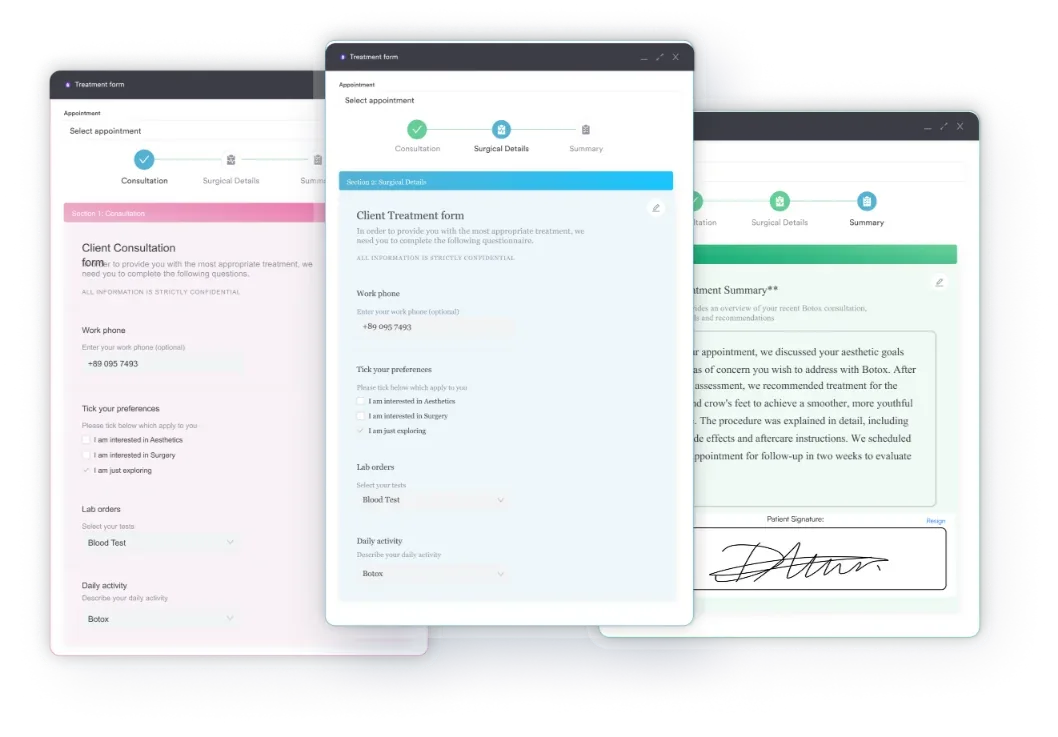
H0029 follows the standard HCPCS Level II professional claim workflow. The steps that trip up prevention programs are the ones specific to population-level services. Work through this sequence for each claim.
End-to-end claim tools remove most of the manual handoffs in that sequence. If your team still moves claims between a notes tool and a clearinghouse by hand, behavioral health software is worth a look.
H0029 often has no diagnosable condition to report, and that is by design. The descriptor targets populations that exclude alcohol and other drug use, so most participants have nothing to code.
States handle this in one of two ways. Some accept prevention claims without a person-level diagnosis. Others require a Z-code from the encounter and factors chapter, and name the acceptable options in the billing manual.
Two cautions apply. The state manual is the authority on which pairing it accepts, so do not carry a habit across from another state. And avoid the F-code abuse and dependence diagnoses here, because a finding at that level points to an assessment or treatment code instead of H0029.
H0029 denials cluster around a short list, and the unit question sits at the top of it. A monthly chart audit on unit counts catches most of them before a payer does.
Pull the remittance advice adjustment reason code before you resubmit anything. The CARC names the element that triggered the rejection, which saves a round of guesswork on appeal.
H0029 sits inside the prevention cluster that HCPCS reserves for behavioral health. Those codes divide prevention work by strategy rather than by setting, which is where selection errors start.
H0026 and H0027 are the two most often misquoted in billing guidance, so check them against the source. H0026 is the community-based process service, and H0027 is the environmental service that works on systems and policy.
Use the HCPCS code range lookup when you are unsure which prevention strategy a service matches. Specificity here protects both the payment and the audit response.
Audit your H0029 claims monthly and sort them by units reported. Anything above one unit per service is your first review queue, because it usually means someone converted the activity’s length into 15-minute increments. Fix the workflow that produced it rather than the individual claim.
For a prevention program, the hard part of H0029 is keeping one consistent record. The team works in schools, community centers, and evening events. One coordinator logs the roster and the authorization reference, and the next logs neither.
Practice management software like Pabau handles that with structured forms and note templates. The fields your state expects sit in the record itself. The activity type, the roster, and the funding source get captured while the event is still fresh.
Claims management software takes it from there. Pabau links each claim to the right payer, validates the fields before it goes out, and tracks it through to payment. A denial surfaces in the system rather than in a stack of remittances.
The outcome is fewer resubmissions and less waiting between the event and the payment. Every Pabau subscription includes the full platform, so scheduling, records, forms, and claims all work from the same data.
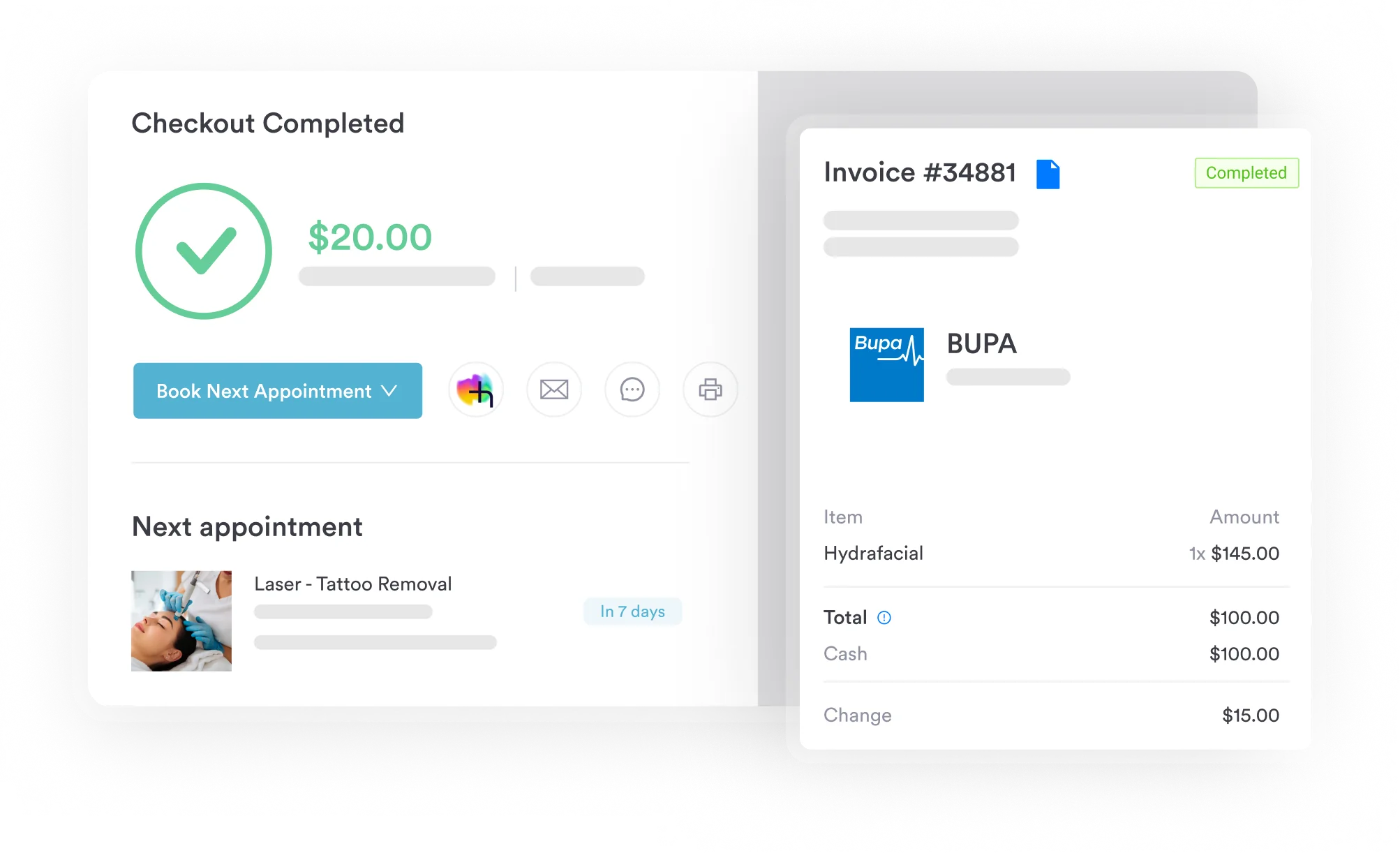
Prevention work runs on a calendar of recurring events rather than a day of booked appointments. Scheduling those events in the same system that holds the records means the roster, the note, and the claim all point at the same service.
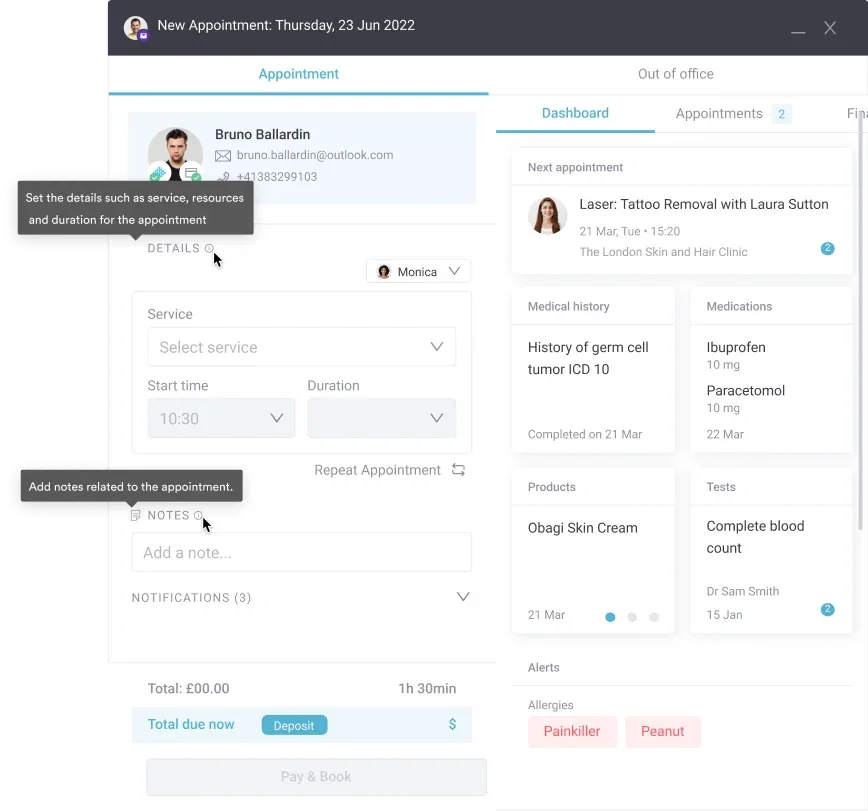
Programs that also run automated workflows alongside their documentation shorten the distance between service and claim. That distance is where prevention programs quietly lose revenue to stale claims.

Pabau captures the activity type, roster, and funding source in the record itself. Each claim is then linked to the right payer and validated before it goes out, so your team spends less time on resubmissions.

The descriptor is the whole answer on H0029. It names a population-level activity and sets no time increment, so one service is one unit and the state fills in the rest.
Programs that treat it as a timed code report units the payer never defined, which converts today’s payment into next year’s recoupment. Reading the descriptor and the state footnote takes ten minutes and settles the question permanently.
The trade-off worth remembering is that a per-service unit puts all the weight on your record of the event. Get the activity, roster, authorization, and funding source into one place and the claim looks after itself. Book a demo to see how Pabau structures prevention documentation and validates claims before they go out. Practices outside a payer network hand the claim work to the patient, so a superbill form has to be complete.

Billing a screening rather than a prevention event? H0049 covers alcohol and drug screening as a service in its own right.
Coding another diabetes complication? ICD-10 code E11.69 covers type 2 diabetes with another specified complication not covered elsewhere.
Moving a participant from prevention into intervention? H0022 covers alcohol and drug intervention, the planned facilitation that follows a prevention contact.
HCPCS code H0029 is a Level II code covering alcohol and/or drug prevention alternatives service. The official descriptor describes services for populations that exclude alcohol and other drug use, and names alcohol-free social events as the example. Prevention programs report it for substance-free activities rather than for treatment.
H0029 is not billed in 15-minute units. The official CMS descriptor sets no time increment, so the code is reported per service or event. A three-hour alcohol-free event is one service. Your state fee schedule defines the unit, including any per-day limit on prevention services.
The 8-minute rule does not apply to H0029. That rule governs timed outpatient therapy codes under Medicare Part B, and H-codes are not payable under the Medicare physician fee schedule. H0029 is not a timed code either. Applying the rule produces a unit count no payer defined, and an audit will reverse it.
Medicare fee-for-service does not pay H0029, because the H-series sits outside the Medicare physician fee schedule. State Medicaid programs and their managed care plans are the primary payers. A Medicare Advantage plan may cover prevention activities as a supplemental benefit, so check the individual plan policy.
Apply modifiers only where your state requires them. The usual candidates are HQ for group delivery, HF for a licensed substance use program, and HA for a youth program. Provider-level modifiers HN, HO, and HP cover bachelor’s, master’s, and doctoral qualifications. Several states add their own U1 to U9 modifiers, which the provider manual defines.
Reporting 15-minute units on an untimed code is the leading cause. Other frequent causes are a missing state-required modifier and a provider credential that does not match the enrollment record. Claims also deny for a missing program authorization, a per-day service limit, or a grant-funded activity billed to Medicaid. Read the remittance CARC before resubmitting.
The prevention cluster runs H0025 for prevention education and H0026 for the community-based process service. H0027 covers environmental work on policy and systems, and H0028 covers problem identification and referral. H0023 covers outreach and H0030 covers hotline services. Choose by prevention strategy, since H0029 is specifically the substance-free alternative activity.