

HCPCS code E0198: Water pressure pad billing guide
HCPCS code E0198 is a water pad for a standard mattress HCPCS code E0198 is the ...

Last Updated: Oct 13, 2026
H0025 is the HCPCS Level II code for behavioral health prevention education service (delivery of services with target population to affect knowledge, attitude and/or behavior).
Two details decide whether the claim is paid and survives a later audit. The first is how your state defines a unit of service. The second is how precisely your record names the target population you served. Coding sits in the middle of the revenue cycle, between registration and payment posting.
Let Pabau's smart automation suggest the right codes, reduce claim denials, and keep your practice compliant—effortlessly.
Automate repetitive tasks and focus on what matters most—your patients.
Reduce coding errors and ensure compliance with the latest regulations.
Clean claims, fewer denials, and faster reimbursements.
Powerful insights and reporting to help your practice thrive.
HIPAA compliant SOC 2 certified GDPR-compliant Trusted by 4,000+ clinics worldwide

HCPCS Code H0025 covers behavioral health prevention education delivered to a target population to affect knowledge, attitude, or behavior.
H0025 is billed to Medicaid in practice, and Medicare coverage is generally limited or unavailable.
Rates are set by each state Medicaid program rather than nationally, so verify your state’s current fee schedule.
Unit definitions differ by state, so check whether one unit means 15 minutes, one session, or one participant.
Practice management software like Pabau keeps H0025 session records and claim status together, which shortens audit responses.
The Centers for Medicare and Medicaid Services (CMS) maintains H0025 as an active Level II code in the H-series behavioral health group. The official descriptor reads:
H0025: Behavioral health prevention education service delivery, of services, with target population to affect knowledge, attitude, and/or behavior.
The phrase “target population” sets the boundary of the code. The service goes to a defined group, not to one patient in a one-on-one clinical encounter. The stated aim has to be a change in knowledge, attitudes, or behavior around behavioral health risk.
Each of these fits H0025 when the provider is enrolled with Medicaid and the state program covers the service.
H0025 eligibility is set at the state Medicaid level, not federally. No single national credentialing standard applies in every jurisdiction. These provider types are commonly authorized across multiple state programs.
Confirm your Medicaid enrollment type before you bill H0025. Some state programs require prior authorization or program approval before prevention services become reimbursable. Check your managed care organization (MCO) contract for credentialing requirements beyond baseline enrollment.
The line between a prevention education session and individual counseling is a frequent audit trigger. A one-on-one session belongs to a treatment code, not to H0025. Practices running a mental health practice management system can separate the two service types at setup.
Medicaid is the dominant payer for H0025. Medicare coverage is generally unavailable, because its benefit structure pays for medically necessary treatment rather than population-level prevention education.
Because Medicaid is administered by each state, H0025 policy differs meaningfully between jurisdictions. Some states have expanded prevention benefits under 1115 waivers or Certified Community Behavioral Health Clinic (CCBHC) frameworks. Others do not reimburse H0025 under fee-for-service at all, routing prevention money through block grants instead.
Always confirm your state’s current Medicaid coverage policy before you submit. Providers who have opted out of Medicare bill beneficiaries directly under a Medicare private contract, which is separate from any Medicaid claim.
Solid practice management software for medical teams means every miscellaneous code carries the notes a payer will ask for.
No national reimbursement rate applies to H0025. Medicare’s Physician Fee Schedule publishes RVU-based national rates, but H-series prevention codes are priced independently by each state. Rates usually reflect the cost per unit of service, and the definition of a unit varies too.
Your state Medicaid agency’s published fee schedule is the only source for the rate you will be paid. H0025 does not appear on the Medicare Physician Fee Schedule, so a national lookup returns nothing.
To check that the descriptor and status are current, use the CMS HCPCS quarterly update. The AAPC HCPCS database adds descriptor and category context for the wider H-series.
Bill H0025 by the unit definition in your state’s Medicaid billing guide, not by the session. Treating a per-session rate as a 15-minute unit is a common overpayment finding in audits. Record start and end times for every session so the units billed are supported.
H0025 is delivered across several settings, and the place of service (POS) code follows the physical location of the session.
Units for H0025 are usually time-based, and one unit per 15 minutes is the most common convention. Some states bill per session, and others bill per participant. Because the definition varies, configure your billing module to match your state’s interval. A therapy practice management platform can hold that rule per payer.
Submitting four units for a one-hour group session is an audit risk when the state expects a single per-session unit. The total dollar amount can still match.
Modifiers clarify the circumstances of the service, and some payers require them to clear claim edits. These are commonly applicable to H0025 claims.
Modifier requirements for H0025 are payer-specific. A claim submitted without a required modifier draws a CO-4 denial. Appending a modifier the payer does not recognize causes edits too. Confirm the required set with your MCO contract or the payer’s behavioral health billing guide before first submission.
Insufficient documentation is the most common reason H0025 payments are recovered, and that usually happens on audit rather than at submission. Many state programs pay the claim and then reclaim the money during a retrospective review.
These elements are required in most state Medicaid programs. Confirm your state’s list in the Medicaid provider manual, because some programs mandate extra fields.
Standardize the session record across every H0025 encounter with digital forms rather than a paper sign-in sheet. Sheets kept apart from the clinical record are a frequent audit failure point. Prevention session records still hold protected health information.
When the documentation sits in the same system as the claim, the audit trail is complete and retrievable.
H0025 is a prevention code, so the ICD-10-CM codes paired with it describe at-risk status rather than an active disorder. Payers differ on which diagnoses justify prevention services. These codes appear most often alongside H0025 in Medicaid claims.
Confirm accepted ICD-10-CM pairings with your state Medicaid program or MCO before you submit. Some payers want a diagnosis on the claim even for population-level prevention.
Others accept H0025 without a beneficiary-level diagnosis when the service is billed at program level. When in doubt, use the most specific applicable Z-code for the at-risk population.
H0025 sits inside the H-series behavioral health group. Several adjacent codes are confused with it or used in complementary billing. Knowing the boundaries prevents upcoding and undercoding.
H0026 is the code most often confused with H0025. H0025 is the direct delivery of prevention education to a group. H0026 covers the coordination and care management that supports the program. Both can be billed in the same program, but each needs its own documentation.
Billing both for the same session on the same date, without distinct records, is a common denial trigger. Setting them up as separate service types in your behavioral health software keeps the templates apart.
The H0024 boundary is easy to miss. A one-way session that hands out information without a defined target population belongs to H0024, not H0025.
H0025 claims deny for predictable reasons. Knowing them shortens the correction cycle and protects revenue for programs that cannot absorb payment delays.
Payer-specific rules inside automated billing workflows can flag these errors before submission. Catching a missing modifier at the draft stage takes seconds, and correcting it after a denial adds weeks.
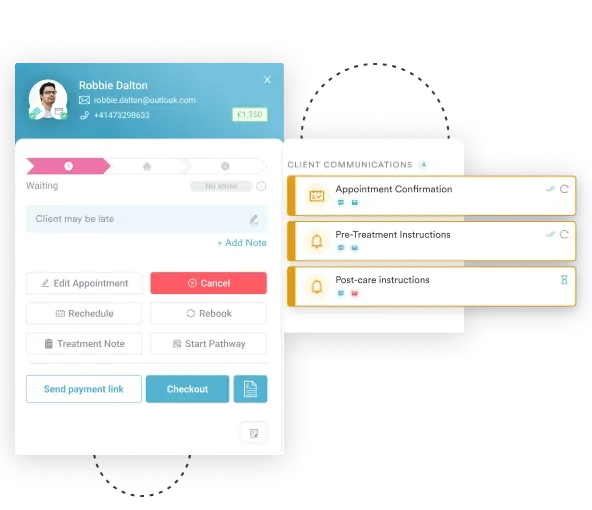
A code reference tells you what H0025 means. It does not tell you whether the claim paid, or whether your record would survive a review. That is the job of the system you bill from.
Practice management software like Pabau is built for practices billing mixed payers, Medicaid included. For behavioral health teams submitting H0025 and adjacent H-series codes, the payoff shows up in three places.
Programs running individual therapy, group therapy, and prevention education side by side gain the most here. Keeping every billing scenario inside one practice management software platform lowers the risk of cross-coding errors.
Audit your own H0025 submissions monthly. Pull the claims billed in the prior 30 days and check the denial rate by payer, modifier combination, and provider type. A denial rate above 15% almost always points at a documentation or modifier configuration problem you can fix in an hour.

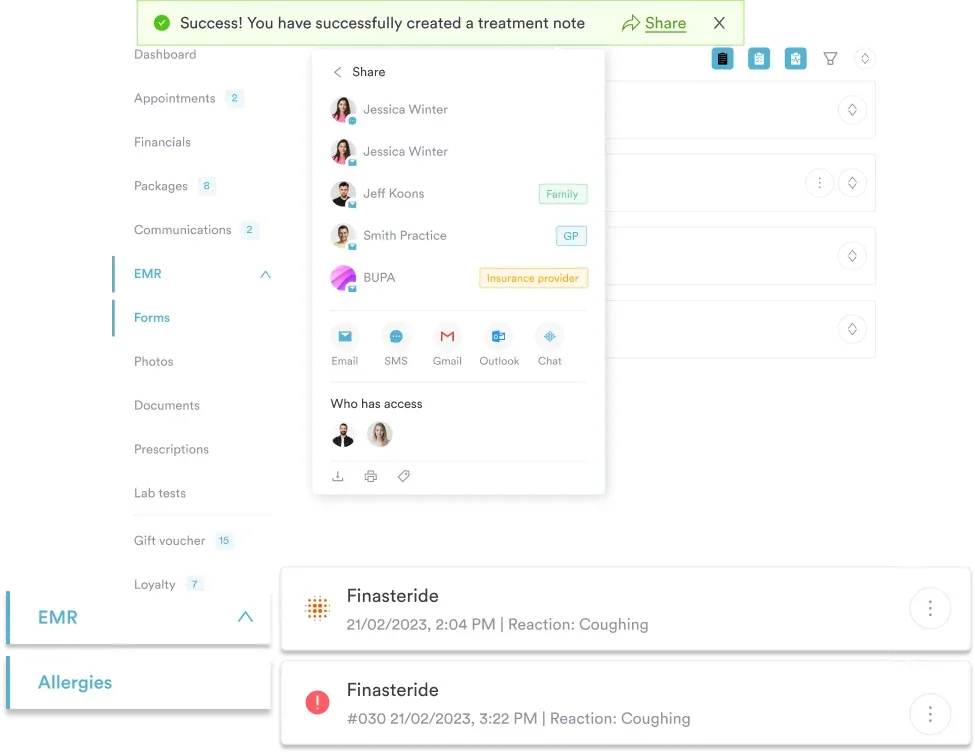
Pabau tracks claim status, denial reasons, and the session documentation behind each H0025 claim, so your billing team works in one place.

H0025 is straightforward to bill and easy to get wrong, and the two failure points repeat. Get the unit definition right for your state, and describe the target population precisely enough that a reviewer can see who attended.
State-level variation is permanent, so treat your state fee schedule and billing guide as documents you re-read every year. The programs that keep prevention revenue write their records for the audit as well as the claim. Book a demo to see how Pabau tracks H0025 claims and session documentation for behavioral health programs.

Also billing outreach to the same population? H0023 covers the planned approach used to reach a targeted group, and it bills separately from prevention education.
Coding a red blood cell disorder? ICD-10 code D75.0 covers familial erythrocytosis, a genetic condition often confused with polycythemia vera.
Need a blood disorder code instead? ICD-10 code D77 is a manifestation code for blood disorders such as malaria or amyloidosis.
Coding a thyroid function diagnosis? ICD-10 code E02 covers subclinical hypothyroidism caused by inadequate dietary iodine intake.
Documenting unspecified hypothyroidism instead? ICD-10 code E03.9 covers hypothyroidism, unspecified, one of the most common endocrine disorders in practice.
H0025 bills behavioral health prevention education delivered to a target population. The goal is a change in knowledge, attitudes, or behavior around behavioral health risk. It covers group and community sessions, such as substance use prevention programs, mental health workshops, and school-based curricula. The provider must be enrolled with the state Medicaid program.
Medicare generally does not cover H0025. Its benefit structure pays for medically necessary treatment, and population-level prevention education sits outside that definition. Medicaid is the primary payer for this code. Some Medicare Advantage plans may cover prevention services, so confirm coverage with the plan before billing.
There is no national reimbursement rate for H0025. Each state Medicaid program sets its own rate. Amounts vary by jurisdiction, by provider type, and by whether you bill fee-for-service or through a managed care plan. CCBHC-designated providers may be paid a cost-based prospective rate instead of a per-unit fee. Check your current state fee schedule.
Each state Medicaid program defines the unit for H0025. Many states use a 15-minute unit, so a one-hour session bills as four units. Others bill per session or per participant. Check your state’s Medicaid provider manual or MCO billing guide before you submit.
Payers commonly accept Z-codes that describe at-risk status rather than an active disorder. Frequent pairings include Z71.41, Z71.51, Z13.30, Z81.1, and Z81.3. The accepted list varies by state Medicaid program and by MCO, so confirm with your payer before submitting.
Use the POS code for the place the session physically happened. Common choices are 03 for school, 11 for office, 49 for independent clinic, and 99 for other community settings. Some state Medicaid programs restrict H0025 to specific settings, so check your state’s billing guidance.



